Bathroom Remodeling in Wauwatosa, WI
Bathroom remodeling in Wauwatosa, WI mostly happens in prewar rooms, where the cast-iron stack, original hex tile and a heavy cast tub decide the scope before any design does. Owners Teli and John Karampetsos of T and J All In Remodeling inspect those three things first, then put a fixed price on the room.
City permits filed · Cast-iron stacks scoped first · No deposit
4.9 ★
60+ Google reviews
A+
BBB Accredited
30+
Years combined experience
Our work in Wauwatosa
What Goes Into Remodeling a Prewar Wauwatosa Bathroom?
Remodeling a prewar Wauwatosa bathroom means working with what the house already has: the iron stack is checked, sound tile is kept or renewed to the period, and the cast tub comes out before a walk-in shower, vanity, ducted fan and new wiring go in. The bathroom remodeling services page shows each step.
Stacks
Cast-Iron Stack Inspection and Replacement
Replace a Wauwatosa cast-iron stack only if it has failed. Most went in during the 1920s and 1930s, so T and J scopes each one from the cleanout for scale, cracked hubs and weeping joints, keeps sound iron and swaps failed sections for PVC while the wall is open.
Assessment
Checked before demolition
Sound iron
No-hub coupling to new pipe
Failed iron
Replaced in PVC and inspected
Original tile
Original Hex Tile: Keep It or Renew It
Keep original Tosa hex tile if its mortar bed is still sound, and renew the whole floor if it is not, because new glaze never matches 80-year-old tile up close. Renewals use a period-correct hex and four-inch wainscot format.
Keep
Tap-tested and regrouted
Renew
Period hex and subway formats
Approach
Whole-floor renewal, never a patch
Removals
Cast-Iron Tub Removal and Replacement
A cast-iron tub weighs more than 300 pounds and rarely survives a 1920s Tosa stair in one piece, so it is cut up in the room under sheeting, with the stair, newel and floor below wrapped first. A new tub or walk-in shower then goes into the cleared alcove.
Method
Sectioned inside the bathroom
Protection
Plaster and trim covered
Removal
Hand-carried out in pieces
Full rebuild
Full Prewar Bathroom Renovation to the Studs
A prewar Tosa bath opened to the studs usually shows galvanized branches off the iron stack, a fan vented nowhere, mud-set tile on wire lath and a floor settled around the toilet flange. Each is renewed and signed off by the inspector before new board goes up.
Reach
Framing, floor and iron stack
Systems
Supply lines, drains, vents and wiring
Sign-off
Rough-in before drywall
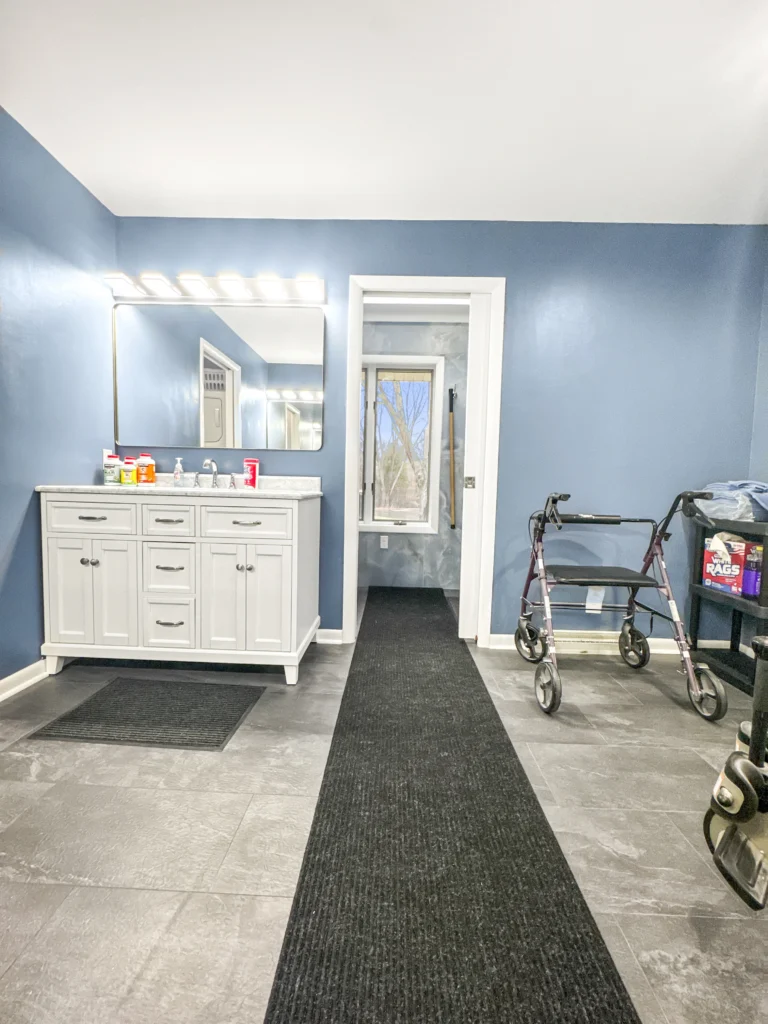
Second bath
Adding a Second Bathroom to a Tosa Home
Yes, most one-bath Tosa houses can add a second bathroom, usually in a back bedroom corner, on a stair landing or over a rear entry, wherever a new drain can reach the existing stack.
Location
Drain run to the existing stack
Footprint
Half bath or a compact full
Framing
Inspected where walls move
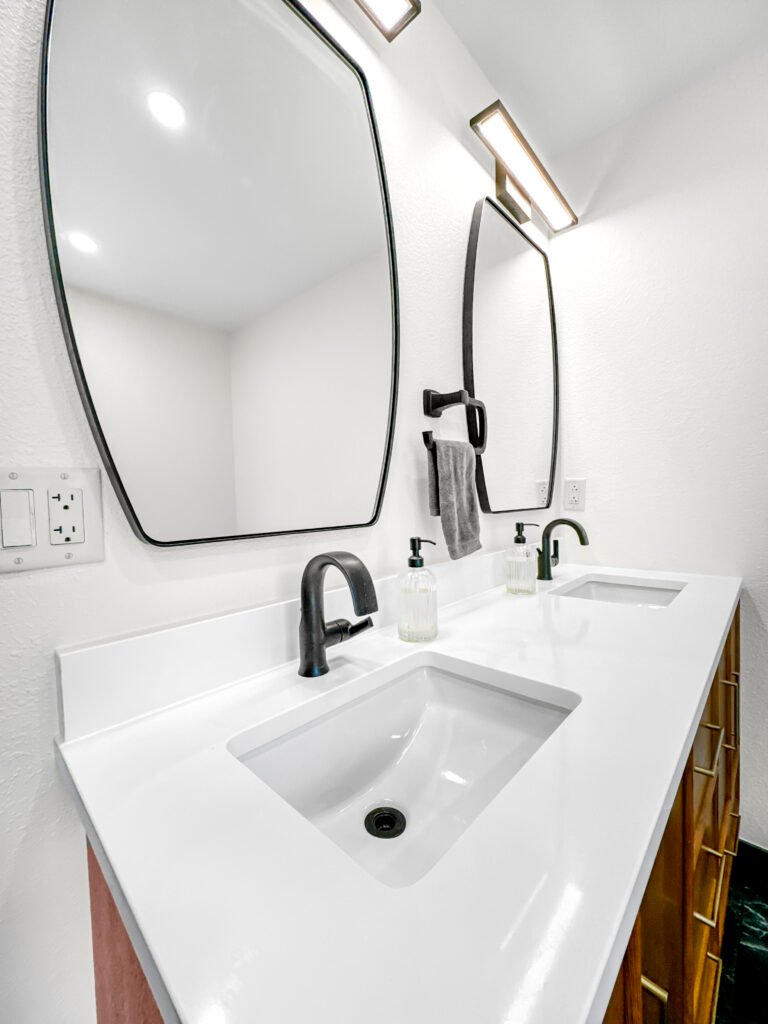
Fit-out
Bathroom Exhaust Fans for Prewar Baths
Prewar Tosa bathrooms need an exhaust fan added, because they were built with only a window, which is why paint peels and plaster stains above the tile line. T and J ducts a fan sized to the room to the outdoors and adds wet-rated shower lighting and GFCI outlets.
Exhaust
Added and run to open air
Lighting
Wet-location light above the shower
Circuits
Own permit, ground-fault protected
Finished work
Old-House Bathrooms T and J Has Rebuilt
Bungalow and Tudor bathrooms, walk-in shower conversions and second baths designed and built by T and J across the Milwaukee and Waukesha County suburbs.
Stack renewed
Failing cast-iron waste stack replaced while the bathroom wall was open
Hex renewed
Original hex floor replaced in a period-correct format rather than patched
Cast tub out
Cast-iron tub cut in place and carried out through a 1920s stair
Second bath added
New bathroom fitted off a back bedroom on the existing stack
Wainscot rebuilt
Four-inch wall tile reinstated to the original height with a capped edge
Walk-in shower
Tiled walk-in built into the footprint of the old tub alcove
Exhaust fan added
Ducted fan run to open air in a bath that never had one
Tile detail
Pencil-trimmed niche in a rebuilt 1920s-style surround
More cast-iron tub conversions, renewed hex floors and second bathrooms in the T and J gallery.
Price factors
What Affects Bathroom Remodel Costs in Wauwatosa?
In Wauwatosa, the cast-iron stack sets a bathroom’s price more than its size does: sound iron keeps the job a tile-and-fixture renewal, while failing iron turns it into a rebuild. Original tile and the cast tub come next, and all three are checked at the free visit.
Housing
Prewar
About 29 percent of Wauwatosa homes were built before 1940, and the median home dates to 1954.
Bath unavailable
1–5 weeks
A prewar Tosa bungalow or Tudor often has one full bathroom, so T and J plans the shortest possible closure.
Cast-iron stack
Common here
Original iron still carries the waste line in many prewar Tosa houses.
Tosa pricing
How Much Does a Bathroom Remodel Cost in Wauwatosa?
Most Wauwatosa bathroom remodels cost $20,000 to $32,000, within a range of $12,000 to $45,000 and up. Sound cast iron keeps a job in the lower tiers, while a failing stack or a second bathroom moves it to a full rebuild. Tier details are in the Tosa bathroom price guide.
7 to 10 days
Surface update
$12k–$18k
- Vanity, sink and top
- Faucets, trim and shower pan
- Sound tile kept and regrouted
- Lighting, paint and flooring
Typical prewar job
About a month
Standard rebuild
$20k–$32k
- Cast tub out, tiled walk-in in
- Hex and wainscot renewed
- Galvanized branches replaced
- Exhaust fan added and ducted out
3 to 5 weeks plus review
Full Rebuild
$45k and up
- Opened to studs and the iron stack
- Cast-iron stack replaced
- Second bathroom added
- Step-free shower or wet-room floor
Estimate a Tosa bathroom
Get a working budget in a minute, then book the free measure for a fixed Wauwatosa price.
Period-right materials
Which Tile and Vanities Suit a Prewar Wauwatosa Bathroom?
Hex mosaic floors, three-by-six subway wainscot and console vanities suit a prewar Wauwatosa bathroom best, set in porcelain for durability and matched in edge detail to the original millwork.
Hex mosaic
One-inch or two-inch hexagon on a sheet. The period-correct floor, and still the best underfoot.
Subway tile
Three by six with a bullnose cap, set to the original wainscot height.
Porcelain tile
Modern body in a period format. What most Tosa renewals actually use.
Natural stone
Marble thresholds and saddles read correctly. Resealed every 6 to 12 months.
Quartz tops
Takes a scribed back edge against plaster walls that are never straight.
Cultured marble
Cast with the bowl in place, useful in a compact second bathroom.
Console vanities
Metal legs and an open shelf, correct for a 1920s or 1930s room.
Shaker vanities
The practical alternative where storage beats period accuracy.
Bathroom surfaces compared for prewar Tosa homes
| Surface | Period accuracy | Use in a wet pan | Upkeep | Best for in Wauwatosa |
|---|---|---|---|---|
| Hex mosaic 1 in or 2 in | Correct for 1920s floors | Yes | Seal grout once | Prewar bathroom floors |
| Subway tile 3 x 6 with cap | Correct at wainscot height | Yes | Seal grout once | Wall tile to the original line |
| Porcelain tile through-body | Period format, modern body | Yes | Seal grout once | Full renewals throughout |
| Ceramic tile glazed | Closest to original glaze | Walls only | Seal grout once | Dry walls and wainscot |
| Marble saddle natural stone | Correct at the doorway | Threshold only | Reseal yearly | Thresholds and window stools |
| Quartz top engineered | Modern, scribes to plaster | n/a | None | Vanity tops throughout |
| Cultured marble cast | Modern | n/a | Polish occasionally | Compact second bathrooms |
| Console vanity metal legs | Correct for the era | n/a | Wipe down | Small prewar rooms |
Bathroom sizes
What Bathroom Layout Fits a Prewar Tosa House?
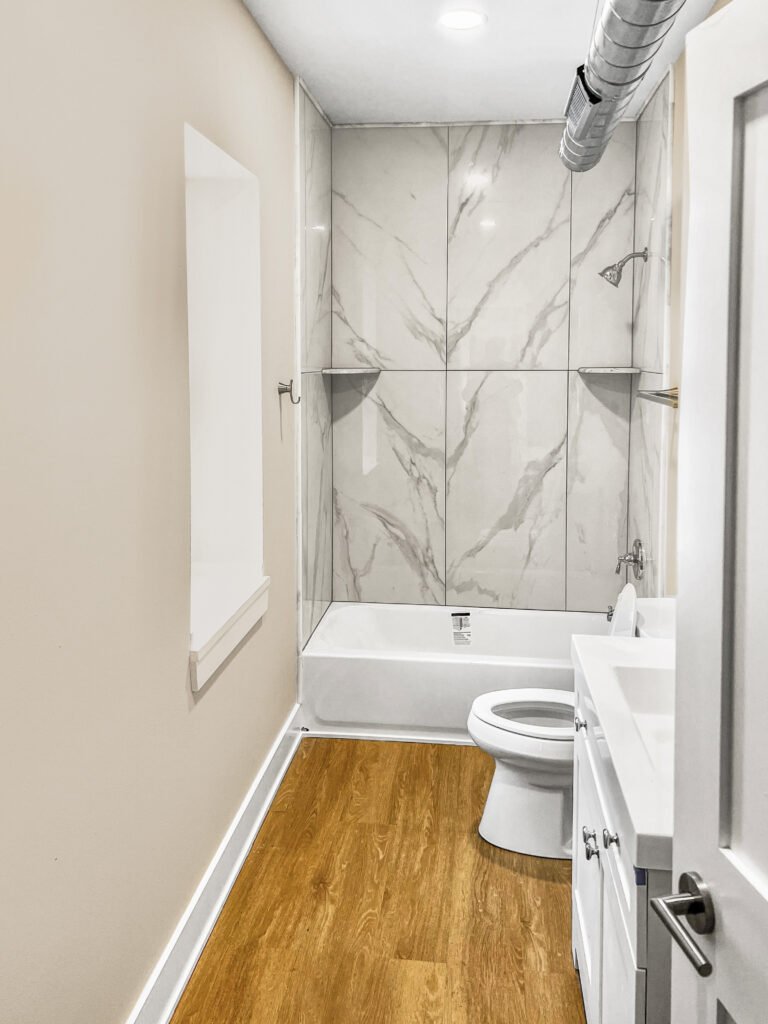
Most prewar Tosa bathrooms are 5 by 7 or smaller, with the tub on the short wall and the stack and window fixing where everything else goes. Larger Tudor and Washington Highlands baths can fit a separate shower. More small-bathroom layouts show what fits.
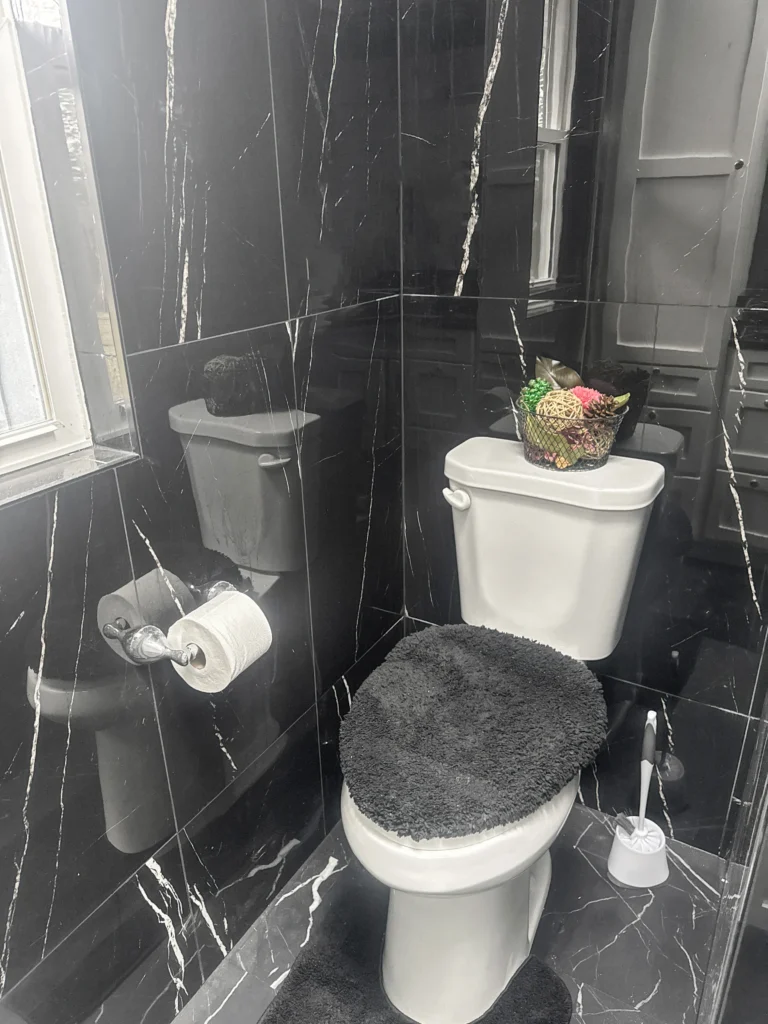
Smaller than 5 by 7
Common in a bungalow. A tub alcove or a walk-in, a compact vanity, nothing more.
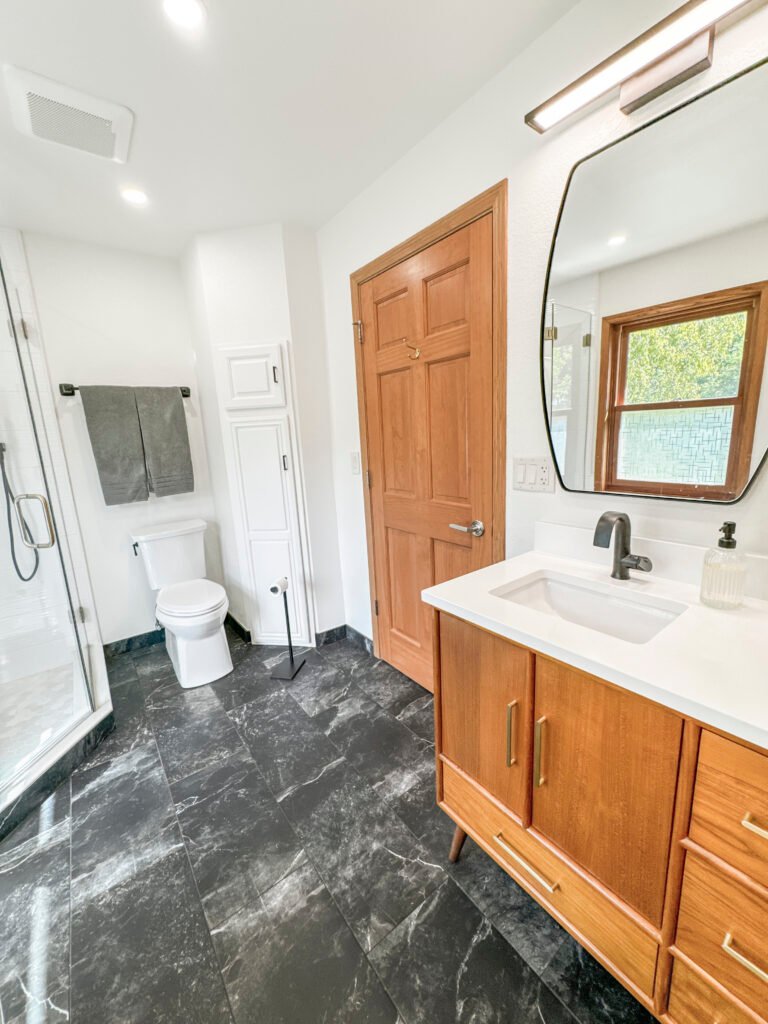
Classic 5 by 7 prewar bath
The Tosa standard. Tub on the short wall, basin and toilet opposite.
5 by 8 or larger
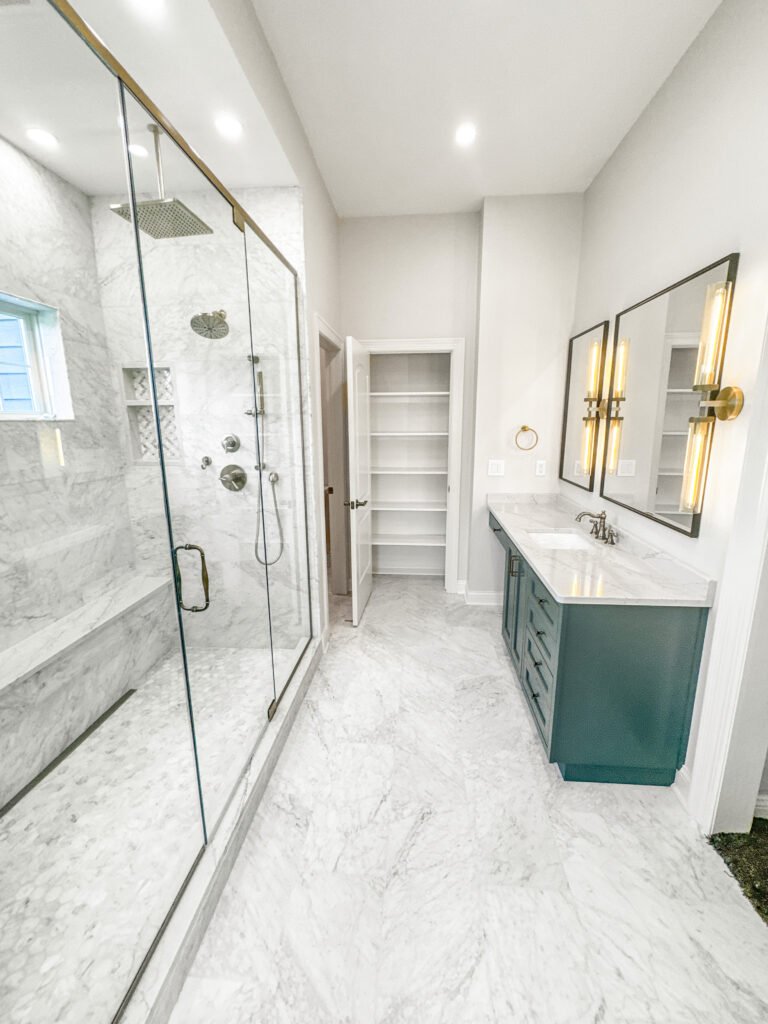
Room for a separate shower beside the tub.
Added second bath
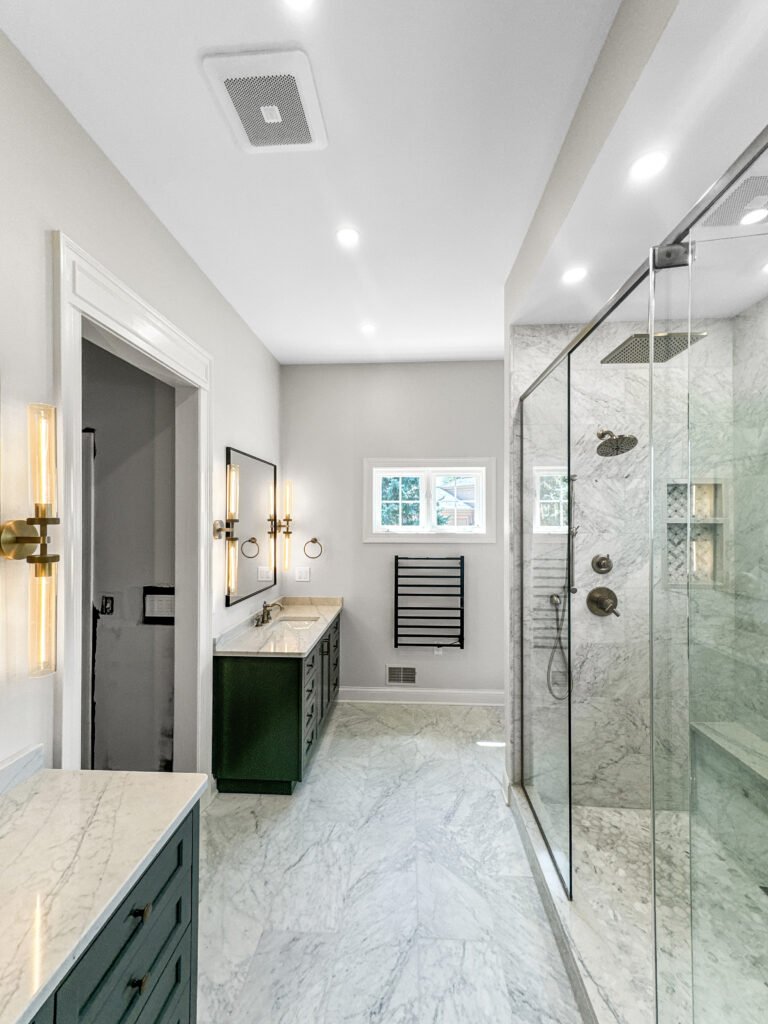
Usually a half bath or a compact full bath off a bedroom or landing.
Bath under the roofline
Sloped ceiling over the fixtures, and a long waste run back to the stack.
Wauwatosa permits
Does a Wauwatosa Bathroom Remodel Need a Permit?
Yes, for any moved fixture, any change to the stack and any new circuit. Regrouting sound tile or swapping a vanity in place does not need one.
Permits are filed online through the City of Wauwatosa Building and Safety Division, based at City Hall, 7725 W North Avenue, (414) 479-8907. A stack replacement counts as permitted plumbing work and is inspected before the wall closes. Statewide rules are in the Wisconsin bathroom permit guide.
Required
Replacing a cast-iron waste stack
Plumbing permit; inspected before drywall.
Required
Relocating a fixture
Plumbing permit; pipes inspected before walls close.
Required
Adding a second bathroom
Plumbing and framing both inspected.
Required
Adding a circuit or an exhaust fan
Wiring permit; ground-fault outlets.
Not required
Regrouting sound original tile
Nothing behind the wall moves.
Not required
Vanity replaced in the same spot
Existing pipes and wiring untouched.
The build
How Long Does a Wauwatosa Bathroom Remodel Take?
Plan on three to five weeks for a full Tosa bathroom rebuild once the permit is approved, or seven to ten days for a refresh that keeps sound tile. Scoping the stack in the first days fixes the schedule for everything after.
Free visit · Stack scoped · City permit handled
First visit
Measure, stack and tile assessment
The room is measured, the waste stack is scoped from the cleanout, and the original tile bed is sounded so the keep-or-renew decision is made on evidence rather than on appearance.
Free, at the house
Weeks 1 to 2
Pick finishes, sign one price
Format, trim height and fittings are chosen to sit correctly against the existing millwork, and the written quote follows with the stack decision already made.
Price fixed in writing
Review time
City permit filing
The plumbing application goes to the city while fixtures and tile are ordered, so the two run alongside each other.
Filed at City Hall
Weeks 1 to 3
Removal, stack work, inspection
The stair is protected, the cast tub is cut out in sections, galvanized branches and any failing iron are replaced, and rough-in is signed before drywall goes on.
Stair protected first
Last weeks
Waterproofing, flood test, tile, finish
The bed is sloped, the membrane bonded and held under water for a full day, then tile is set to the original wainscot height and the owners walk the finished room with you.
Handover with the owners
Reviews of T and J Bathroom Work
4.9
Homeowners across the Milwaukee and Waukesha County suburbs rate T and J 4.9 over 60+ Google reviews, and the BBB rating is A+.
Neighboring suburbs
Bathroom Remodeling in the Suburbs Around Wauwatosa
T and J’s shop on Georges Avenue in Brookfield sits just west of Wauwatosa, and the same crew covers the Milwaukee County suburbs and the Waukesha County line. See every T and J remodeling service offered in Wauwatosa.
Next door
Milwaukee, West Allis and Elm Grove.
West
Brookfield, New Berlin and the city of Waukesha.
South
Greenfield, Greendale and Franklin.
Tosa-Area Bathroom Remodeling Contractors
Prewar Bathroom Remodel Costs
Our Brookfield shop
Where to Find T and J Near Wauwatosa
T and J All In Remodeling sits at 985 Georges Avenue, Brookfield, WI 53045, a straight drive east on I-94 to Wauwatosa. Teli and John Karampetsos look at every Wauwatosa bathroom in person, stack and cleanout included, before quoting.
T And J All In Remodeling
Brookfield, WI 53045
Monday to Friday
8:00 AM to 5:00 PM
Saturday
8:00 AM to 5:00 PM
Sunday
Closed
Water emergencies
24/7
Common questions
Prewar Plumbing, Plaster and Tile Questions in Tosa
Price a Tosa bathroom by phone: (262) 352-9525.
Does a 1920s Tosa house have a lead water line?
Possibly. The City notes that homes built before 1986 may have lead in the service line or plumbing. The Wauwatosa Water Utility owns the line to the curb stop and replaces lead there during water main work, and the owner’s side runs from the curb stop into the house. Call the utility at (414) 471-8480 to learn your line’s material.
Can demolition damage an old cast-iron stack?
It can. Hammering out mud-set tile and plaster shakes brittle hubs and joints, which is why a leak sometimes starts right after a new bathroom is finished. Scoping the stack before demolition, and cutting tile near it rather than breaking it out, lowers that risk.
Is cast iron or PVC better for a drain stack?
PVC is lighter, cheaper and smooth inside, while cast iron is far quieter because its weight deadens rushing water. Where a replaced Tosa stack runs beside a bedroom, wrapping the new pipe in insulation brings back much of that quiet.
Is it worth replacing plaster walls with drywall?
Inside the shower, yes. Plaster on wire or wood lath is not a waterproof backer, so wet walls go to cement board under a membrane. Outside the shower, sound plaster is worth keeping: it is harder and quieter than drywall and spares the patching at original trim and door casings. Plaster that has let go of its lath and bulges when pressed is the case for replacing it.
Is knob and tube wiring still legal?
Existing knob-and-tube can stay in service in many houses, but it cannot be extended, it has no ground, and it should not be buried in insulation. A bathroom needs GFCI-protected circuits, so any knob-and-tube found in a Tosa bathroom’s walls is replaced while they are open. Some insurers also ask about it, which is one more reason to retire the runs you can reach.
Can old bathroom tile be updated without removing it?
Yes, if it is still bonded. Deep cleaning, regrouting and fresh caulk renew sound tile, and reglazing changes the color but wears faster than original glaze, especially on floors and inside the shower. Tile that sounds hollow when tapped, or cracks running across several pieces, means the mortar bed has failed, and covering it only hides the problem.
How do you get rid of an old cast-iron tub?
Cast iron is recyclable scrap, so a broken-up tub goes to a metal recycler rather than a landfill. Freestanding clawfoot tubs are the exception worth asking about: they are not built into the wall and have value to salvage buyers, so decide whether to keep one before demolition starts.
Before you call
Budget and Plan a Wauwatosa Bathroom Remodel
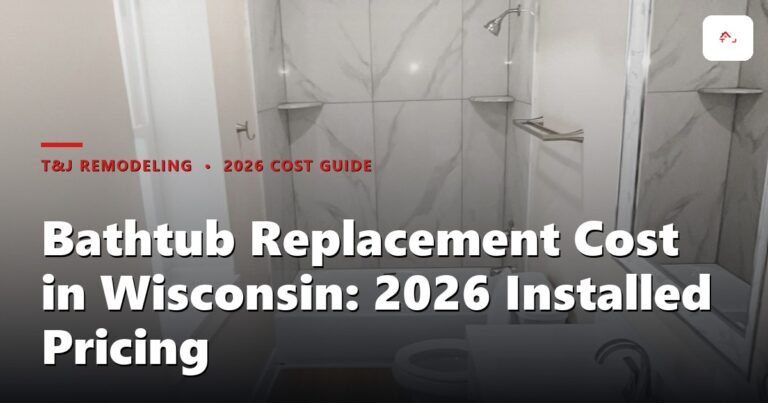
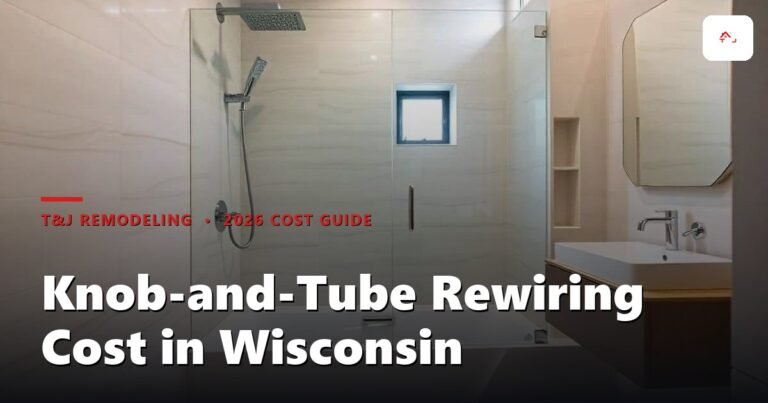
Prewar bath sizes, tub replacement, rewiring and walk-in shower costs, so your free T and J quote covers what a 1920s Tosa bathroom really needs.



More services
Other Remodeling Services T and J Offers in Wauwatosa
Get started
Schedule a Free Wauwatosa Bathroom Remodel Quote
The free visit scopes the stack, sounds the original tile and records the room, then T and J sends a written price for your Wauwatosa bathroom as drawn. No deposit.
Send Your Details
Reply the same working day.
No deposit · No obligation · Details stay with T and J