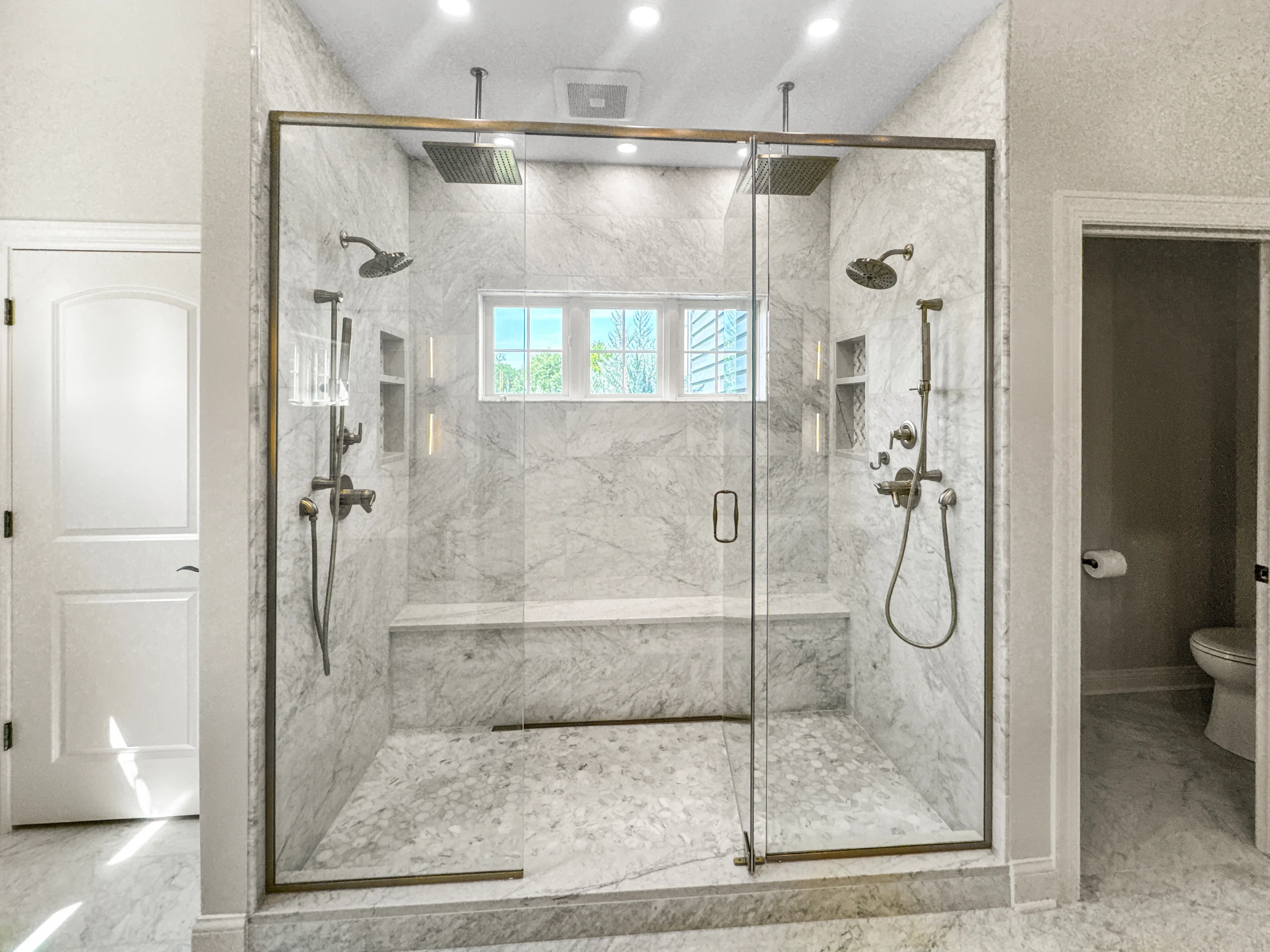
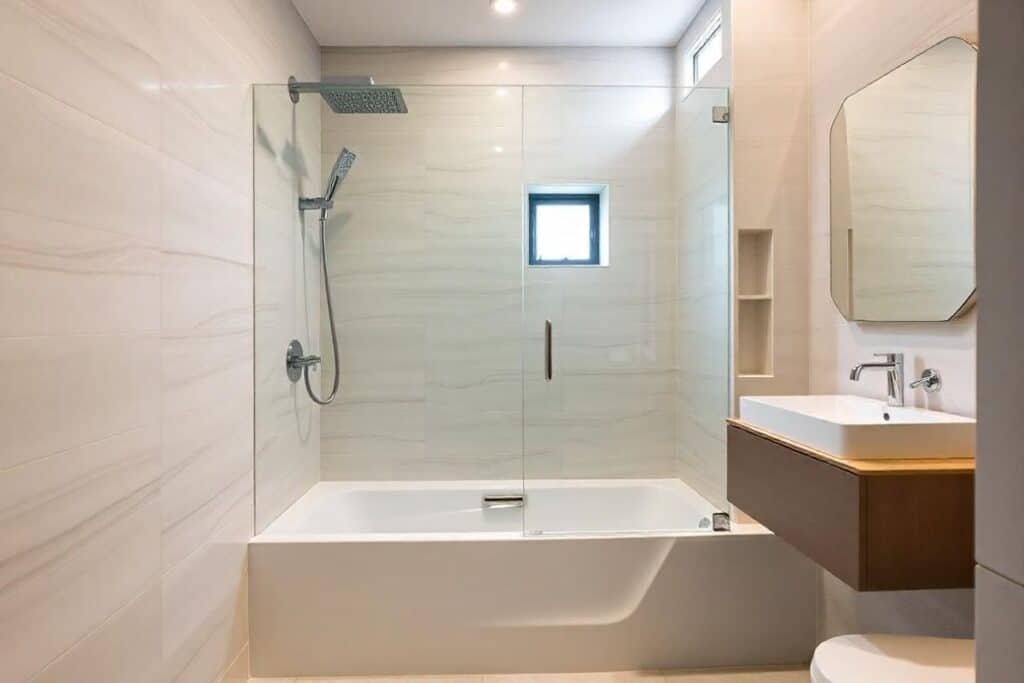
 Bathroom project - T&J
What Knob-and-Tube Rewiring Costs in Wisconsin
Whole-house rewiring falls between $2,000 and $20,000, and the national average sits near $10,000. Square footage is the cleanest predictor:
| Home size | Typical rewiring cost |
|---|---|
| Up to 1,500 sq ft | $3,000 to $6,000 |
| 1,500 to 3,000 sq ft | $6,000 to $12,000 |
| Over 3,000 sq ft | $12,000 to $20,000+ |
Those ranges come from regional contractor pricing data. Labour accounts for 50 to 70 percent of the total, with materials making up the rest. That split matters more than it looks, because labour is the part your house controls. Plaster walls, balloon framing and finished ceilings all slow the work down.
Limited access alone adds 20 to 30 percent to the labour figure.
Rewiring is priced at roughly $2 to $4 per square foot, and limited access adds 20 to 30 percent to labour on top of that.
Why Older Waukesha County Homes Still Have It
Knob-and-tube was standard residential wiring into the 1940s, and plenty of Wisconsin housing stock predates its replacement. It is not automatically dangerous on its own. The problems are what happened to it over the following eighty years.
The system has no ground wire, so modern three-prong outlets cannot be properly grounded. The original conductors were never designed for the load a current household puts on them. And the insulation, which is cloth and rubber rather than modern thermoplastic, becomes brittle with age and heat.
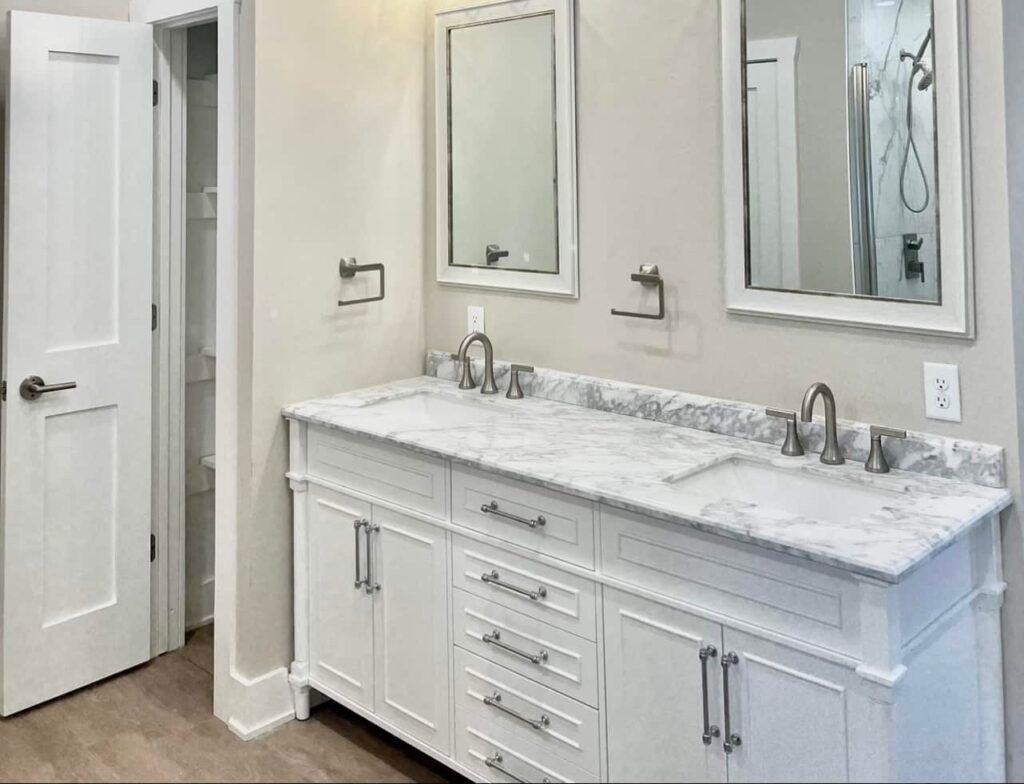 Bathroom - T&J
Want this priced for your bathroom?
John walks your space, measures it, and leaves a written itemized estimate. No cost, no obligation, no sales script.
The other issue is what previous owners did. Knob-and-tube was designed to run through open air, which is how it sheds heat. Blown-in attic insulation added decades later buries it, and buried knob-and-tube runs hotter than it was ever meant to.
The Remodel Trigger Most Homeowners Do Not See Coming
Here is the sequence that catches people out. You plan a kitchen or a basement finish. The contractor opens a wall. Behind it is knob-and-tube, and now the project has a second scope nobody priced.
This happens because the electrical code does not let you extend an existing knob-and-tube circuit for new work. Once you are adding outlets, lighting or a new circuit, the wiring feeding that area generally has to come up to current standard first.
The practical consequence is a decision point mid-project, which is the worst possible time to make one. A contractor who walks an older home and never asks what is behind the plaster is not scoping carefully.
What a Complete Rewiring Scope Includes
A complete quote covers:
- A full assessment of existing circuits before pricing, not a guess from the panel
- New wiring runs to every affected outlet, switch and fixture
- Grounded receptacles replacing ungrounded two-prong outlets
- Any panel work the new circuits require
- Permit and inspection
- Wall and ceiling access, then patching and making good afterwards
That last line is the one homeowners forget. Rewiring an occupied house means opening walls and ceilings to pull cable. The repair work is part of the job, and a quote that excludes it is not cheaper. It has just moved the cost onto you.
Panel work is frequently bundled in. Upgrading to a 200-amp service runs $1,500 to $3,000 on top of the rewiring itself. If your remodel is already pushing the panel to its limit, doing both at once avoids opening the same walls twice, which is covered in more detail in our guide to electrical panel upgrade costs in Wisconsin.
Why Two Quotes on the Same House Differ
Legitimate reasons include the size of the home, how much of the original wiring survives, whether the walls are plaster or drywall, and how much of the run is accessible from an attic or basement. A house with a full unfinished basement and a walkable attic is materially cheaper to rewire than a storey-and-a-half with finished space above and below.
The illegitimate reason is scope. A quote that leaves out patching, the permit or the panel is not a better price on the same work. Those costs arrive later as change orders.
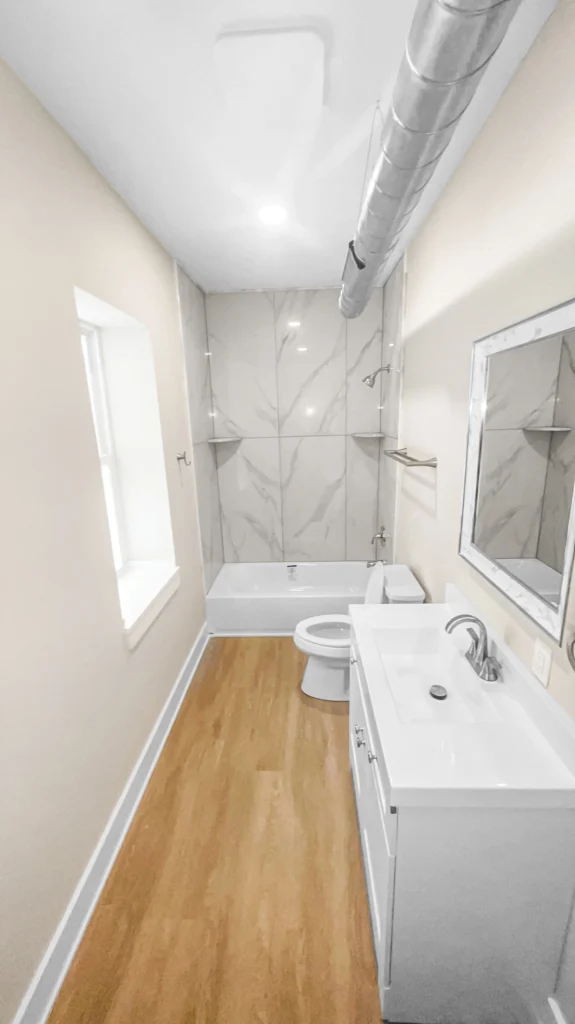 Bathroom - T&J
Ask directly: does this figure include making good the walls, and who pulls the permit?
Doing It During a Remodel Instead of On Its Own
Rewiring is disruptive precisely because of access. If walls are already open for a kitchen, bathroom or basement project, a large part of the access cost is already being paid for by the other work.
That is the argument for sequencing it into a remodel rather than treating it as a separate project later. You are not paying twice to open the same wall, and you are not living through the same disruption twice either.
The reverse is also true and worth saying plainly. Finishing a basement or a kitchen over knob-and-tube, without addressing it, means the next person to open that wall pays the access cost all over again.
Insurance and Selling: The Part That Surprises People
Knob-and-tube affects more than safety. Some insurers decline to write policies on homes that still have active knob-and-tube circuits, and others price the risk in. That becomes a live issue at two moments: when you renew, and when you sell.
During a sale, a buyer's inspection will find it. What follows is a negotiation, and the homeowner who has not priced the work is negotiating from a weaker position than the one who has.
If a remodel is on the horizon anyway, handling the wiring as part of that project rather than under time pressure during a sale is the cheaper version of the same outcome.
Getting a Quote That Covers the Whole Job
The $2,000 to $20,000 range is real, but the number that matters is the one for your house, with your wall construction and your access.
For Waukesha County homeowners planning a remodel in an older home, T&J All In Remodeling scopes the wiring question before the walls open rather than after. John handles the conversation directly, and if the work touches structure it falls under the Wisconsin Uniform Dwelling Code, so the permit path gets settled up front. Brookfield, Elm Grove and Hartland each run their own building department, and the answer in one does not settle it in the next.
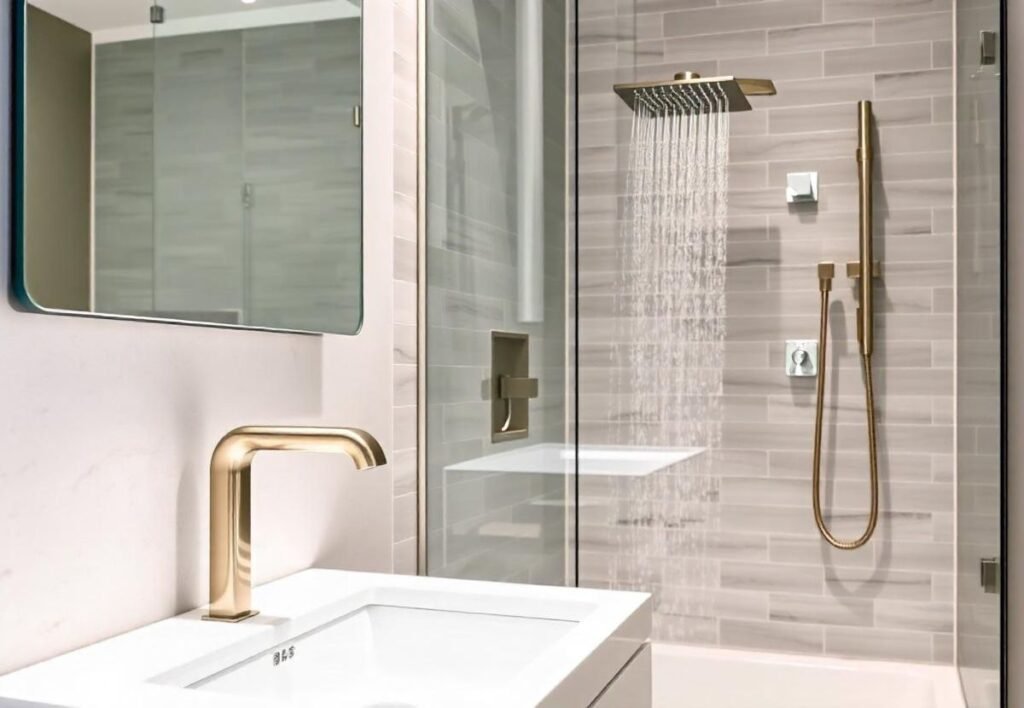 Bathroom - T&J
Ready to find out what your house needs? You can schedule a no-obligation remodeling consultation in Waukesha County and we will look at what is actually behind your walls.
Frequently asked questions
Is knob-and-tube wiring illegal in Wisconsin?
Existing knob-and-tube is not illegal simply for being there, and plenty of Wisconsin homes still have it energised. What changes the picture is new work. Once you add circuits, outlets or lighting during a remodel, the wiring serving that area generally has to meet current standard, which in practice means replacing the knob-and-tube feeding it rather than extending it. That is why the question usually surfaces during a project rather than during an ordinary year of ownership.
How much does it cost to rewire a house in Wisconsin?
Whole-house rewiring runs $2,000 to $20,000, with most homeowners near $10,000, which works out to roughly $2 to $4 per square foot for labour and materials together. By size, that is about $3,000 to $6,000 up to 1,500 square feet, $6,000 to $12,000 between 1,500 and 3,000, and $12,000 to $20,000 or more above that. Where you land inside those bands depends heavily on access, since limited access alone adds 20 to 30 percent to labour.
Can I rewire just part of the house?
Yes, and partial rewiring is common during a remodel. If you are finishing a basement or redoing a kitchen, the circuits serving that area get replaced while the walls are open, and the rest of the house waits. It is worth asking your contractor how the new work ties into the old, because a partial job still has to leave a coherent, code-compliant system rather than a patchwork of eras.
Does knob-and-tube wiring affect home insurance?
It can. Some insurers decline homes with active knob-and-tube circuits and others price the risk in, so it can surface at renewal as well as at sale. Policies vary between carriers, so the only reliable answer comes from asking yours directly. If you are planning a remodel anyway, dealing with the wiring as part of that project is generally cheaper and less pressured than dealing with it during a sale negotiation.
Why is my rewiring quote so much higher than my neighbour's?
Access, almost always. A home with a full unfinished basement and a walkable attic gives an electrician clean routes to pull cable. A storey-and-a-half with finished space above and below does not, and limited access adds 20 to 30 percent to the labour portion, which is already 50 to 70 percent of the total. Plaster walls cost more to open and repair than drywall. Two similar-looking houses on the same street can price very differently for exactly these reasons.
Should I rewire before or during a remodel?
During, if a remodel is coming. Rewiring cost is driven by access, and a remodel is already paying to open the walls. Doing both at once means you are not paying twice for the same access or living through the same disruption twice. The one thing to avoid is finishing over knob-and-tube without addressing it, because the next person to open that wall pays the full access cost again.