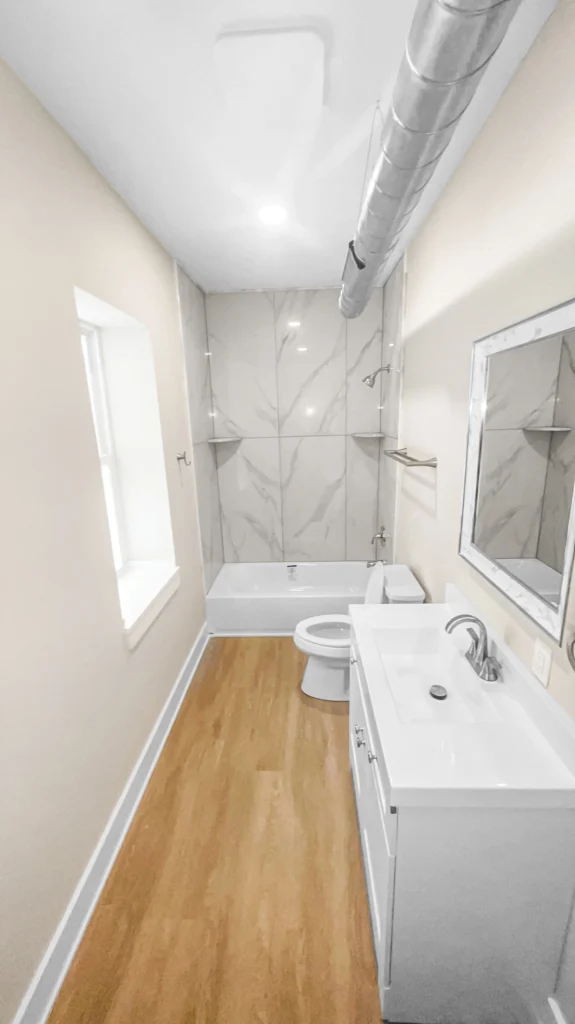
 Bathroom project - T&J
You can run your numbers through our bathroom remodeling cost calculator to get a project-specific estimate before your first contractor call.
What Wisconsin Homeowners Actually Pay
Sixty percent of bathroom remodel projects in Wisconsin fall into the standard full-remodel tier at $15,000-$25,000. That covers a typical 50-80 square foot bathroom, think a 1970s New Berlin split-level with a dated tub-shower combo, vinyl flooring, and a builder-grade vanity, where you're updating everything in place without repositioning the toilet or shower drain.
| Scope | Typical Range | What It Covers |
|---|---|---|
| Cosmetic update | $5,000-$12,000 | Paint, fixture swaps, tub replacement, no layout changes |
| Standard full remodel | $15,000-$25,000 | Flooring, wall treatments, fixtures, waterproofing, minor plumbing mods |
| Luxury / expanded | $30,000+ | High-end materials, plumbing relocation, custom tile, soaking tubs |
One local reality worth flagging early: labor in the Milwaukee/Waukesha market runs 5-10% above the national average. That's why national cost guides consistently read low compared to what you'll see on quotes here.
Cost by Project Scope
Cosmetic Updates ($5,000-$12,000)
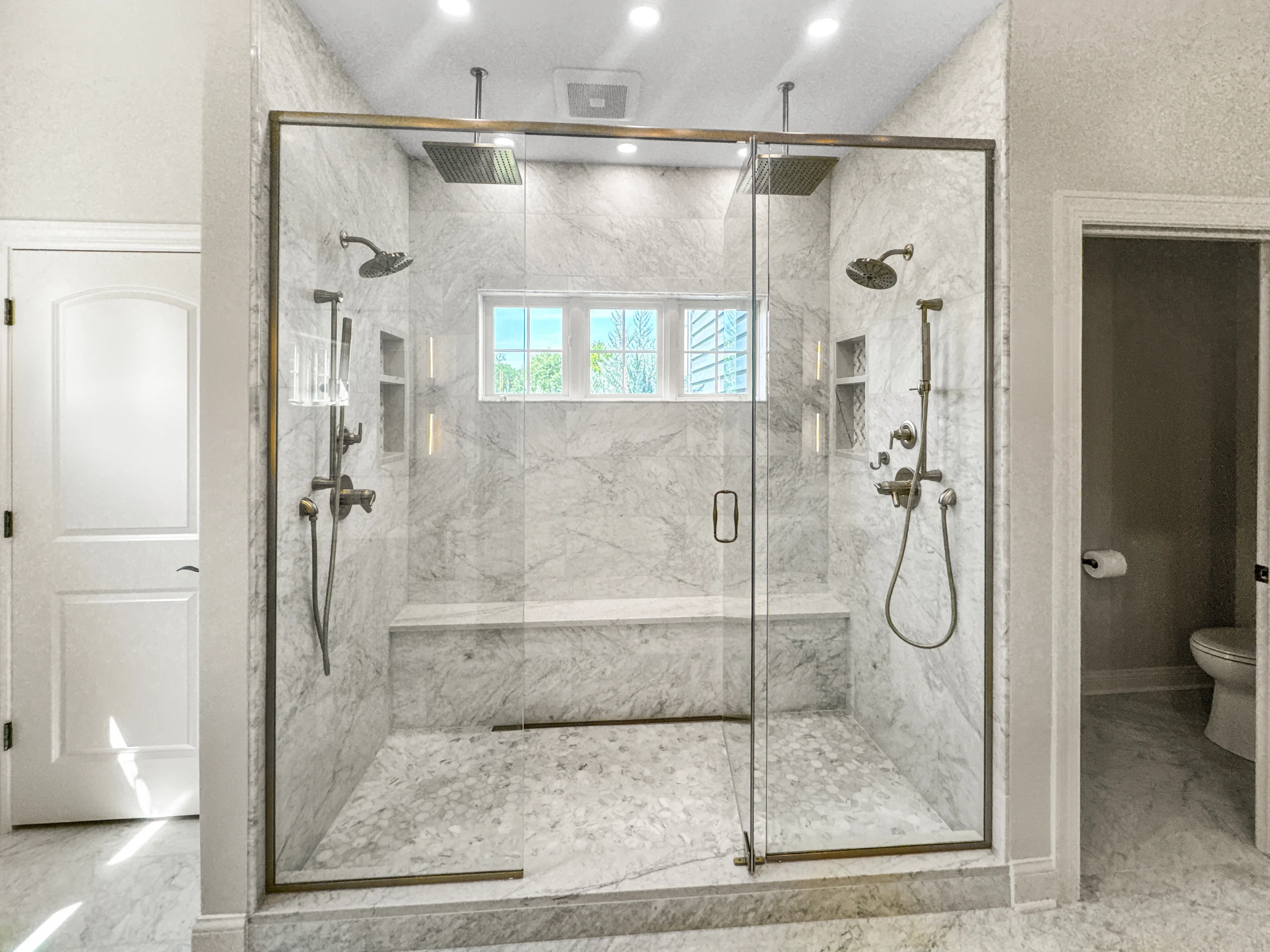
A cosmetic remodel touches surfaces only, no plumbing rough-in moves, no structural changes. Typical scope: repaint walls and ceiling, swap vanity light and faucet, replace toilet in the same location, install a new stock vanity ($300-$1,500 ), drop in a standard acrylic tub ($1,200-$3,000 installed ), and lay LVP flooring over the existing subfloor ($5-$12/sqft installed ).
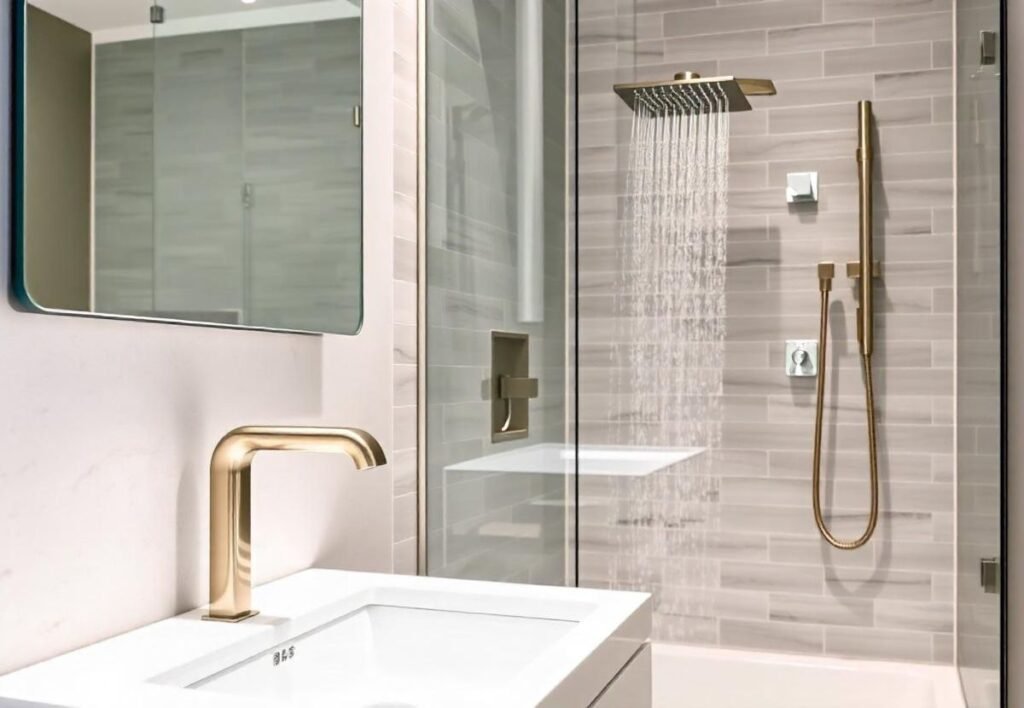 Bathroom - T&J
This tier makes sense when the layout works and the plumbing is sound. It doesn't make sense if the subfloor has moisture damage or the tile is cracking at the shower pan.
Want this priced for your bathroom?
John walks your space, measures it, and leaves a written itemized estimate. No cost, no obligation, no sales script.
Standard Full Remodel ($15,000-$25,000)
This is where most Wisconsin homeowners land, and for good reason, it addresses the underlying systems, not just surfaces. A complete scope includes full demo, subfloor inspection, a waterproofing membrane (required under Wisconsin SPS 106, the state plumbing code governing moisture barriers in wet areas, in all shower enclosures), new tile or LVP flooring, tub or shower replacement, new vanity and fixtures, minor plumbing modifications, GFCI electrical compliance, and permit, demo, and haul-away.
Tub or shower options within this tier: prefab shower unit ($1,500-$4,000 installed ) or custom tile shower ($4,500-$10,000 ).
The gap between a $15,000 and a $25,000 standard remodel is almost always tile selection and fixture grade, not labor hours. Choosing porcelain tile at $7-$20/sqft installed over LVP at $5-$12/sqft can shift the total by $2,000-$4,000 on a mid-size bathroom alone.
Luxury & Expanded Remodel ($30,000+)
Once you move plumbing, add square footage, or specify premium materials, you're in luxury territory. In the Milwaukee/Waukesha market specifically:
- Shower-only remodel (high-end): $20,000+ - Hallway bathroom (full gut, quality finishes): $35,000+ - Primary bath with custom shower and soaking tub: $75,000-$200,000 These figures reflect full contractor-managed projects with permits pulled. The wide range on primary baths reflects how dramatically material choices move the final number, a soaking tub starts at $4,000+; large-format stone tile versus ceramic can add thousands more.
What Moves the Price Up or Down
Five drivers move a bathroom quote. Two you control; three you inherit.
1. Layout changes, the biggest lever you control. Moving the plumbing rough-in, relocating a drain, repositioning a toilet flange, running supply lines to a different wall, is the single most expensive decision in a bathroom remodel. Keeping fixtures in place saves thousands.
2. Fixture and finish tier, also your choice. Stock vanity: $300-$1,500. Custom cabinetry: $2,500+. Prefab shower: $1,500-$4,000. Custom tile shower: $4,500-$10,000. Standard acrylic tub: $1,200-$3,000. Soaking or jetted tub: $4,000+.
3. Flooring material. Porcelain tile installed: $7-$20/sqft. LVP installed: $5-$12/sqft. On a 60 sqft bathroom floor, the difference between budget LVP and mid-grade porcelain is roughly $1,200-$2,000 combined.
4. Home age, the condition you inherit. Pre-1980 homes in Wisconsin frequently have galvanized steel pipes (which corrode internally and restrict flow) or wiring that doesn't meet current code. When a contractor opens walls and finds these conditions, bringing them up to code isn't optional. Budget an additional $2,000-$4,000 as a contingency if your home predates 1980.
A quote that doesn't mention a pre-1980 contingency isn't necessarily cheaper, it may be planning to deliver that cost as a change order once the walls are open and you have no leverage.
5. Labor market, a fixed condition. Wisconsin labor runs 5-10% above the national average. Any quote that matches a national cost guide exactly should prompt a question about what's been left out.
Permits and Code Requirements in Waukesha County
Permit fees in Waukesha County municipalities typically run $200-$500. That's not the expensive part, skipping them is.
What triggers a permit: plumbing modifications, electrical work beyond direct fixture replacement, and structural changes. Cosmetic-only work, paint, fixture swaps with no plumbing changes, generally doesn't require one.
Wisconsin SPS 106 (the state plumbing code for moisture control in wet areas) requires a waterproofing membrane, a continuous barrier applied behind tile in shower enclosures to prevent water intrusion into framing, in all shower installations. A permit inspection verifies this before walls close. Without that inspection, you have no documented record the membrane was installed correctly, which can surface as a liability when you sell.
A contractor who skips permits is passing the liability, the inspection risk, and the potential resale complication to you, not doing you a favor. For a full breakdown of what actually requires a permit in Wisconsin, that guide covers each trade trigger in detail.
How to Read a Contractor Quote, and Spot a Low-Ball Bid
This section will save you more money than finding the lowest bid.
What a Complete Scope Includes
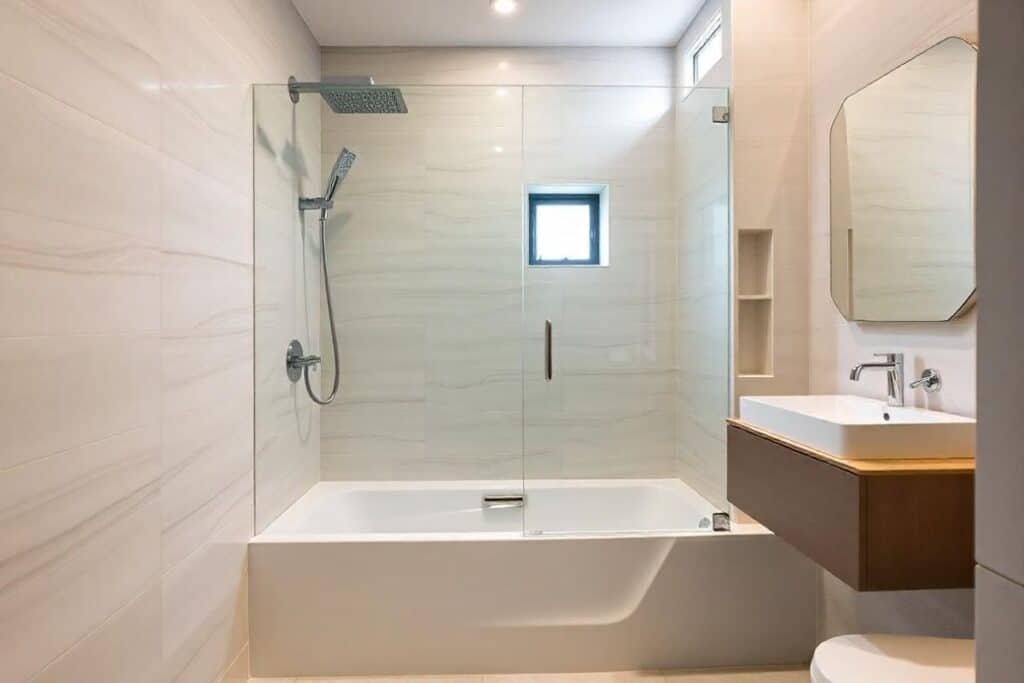 Bathroom - T&J
- Every trade listed separately (tile setter, plumber, electrician, carpenter)
- Materials specified by grade, not just "tile allowance" but "porcelain tile, $X/sqft, approximately Y sqft"
- Permit fees as a line item
- Waterproofing membrane called out explicitly
- Demo and haul-away included
- Subfloor inspection and repair allowance with a defined dollar amount
Common Missing Line Items in Low Bids
- Low material allowances. A $3/sqft tile allowance sounds fine until installed porcelain runs $7-$20/sqft. The gap becomes a change order.
- No waterproofing line. Either it's not being done (a Wisconsin SPS 106 violation) or it's absorbed into a margin that doesn't exist at that price.
- No permit fee. Either the contractor isn't pulling permits, or that cost lands on you later.
- No subfloor contingency. The most common mid-project surprise in Wisconsin homes, especially pre-1980 construction.
A $15K low bid with a $3/sqft tile allowance, no waterproofing line, and no subfloor contingency routinely finishes at $20,000-$22,000 once the real scope surfaces mid-project.
An allowance is a budgeted dollar amount for a material the homeowner will select, it's only useful if it reflects what that material actually costs. A change order is a written contract amendment when scope or cost changes mid-project. Low allowances are the mechanism by which a low bid becomes a high final invoice.
Four Questions to Ask Every Contractor
"Is the permit fee included?"
If no, add $200-$500 to the comparison.
"What does your tile allowance actually buy, can you name a specific product?"
A prepared contractor can answer this in 30 seconds.
"What happens if the subfloor needs repair once demo is done?"
A prepared contractor has a standard answer and a dollar range.
"Who is my single point of contact from quote through completion?"
When something changes mid-project, and something always changes, you need one person who owns the answer.
For context: John manages every T&J project's communication personally, from the first walkthrough through the final punch list. The person who explains the quote is the person managing the job, not a coordinator who wasn't in the room when the scope was written.
Before you sign anything, it's also worth reviewing the mistakes that turn a tight budget into an overrun, the patterns that show up most often when the low bid wins.
What a Typical Wisconsin Bathroom Remodel Timeline Looks Like
For a standard full remodel, here's a realistic sequence:
| Phase | Typical Duration |
|---|---|
| Planning & design | 2-4 weeks |
| Permit approval | 1-3 weeks |
| Demo | 1-2 days |
| Rough-in trades | 3-5 days |
| Tile & waterproofing | 3-5 days |
| Fixtures & finish work | 2-3 days |
| Total active construction | 2-4 weeks |
Contractor lead times in Waukesha County are typically 4-8 weeks before work starts, spring and fall book fastest. Plan for 2-4 months total from first consultation to a finished bathroom. For a deeper look at sequencing, see how long a bathroom remodel actually takes.
If the bathroom being remodeled is your only full bath, make sure your contractor has a clear plan for minimizing the window when you're without it entirely.
Getting an Accurate Quote for Your Wisconsin Bathroom
An accurate quote requires an in-home walkthrough, not a phone estimate. Subfloor condition, existing plumbing configuration, and wall construction all affect price in ways that can't be assessed remotely.
If you're gathering quotes right now, that's the right approach. Get two or three. But make sure each one covers the same line items before you compare bottom numbers, a $3,000 gap often disappears once you add the missing permit fee, waterproofing line, and realistic tile allowance to the low bid.
Our free in-home consultation has no cost and no obligation. The estimate is itemized so you can compare it line-by-line against other bids. You can see examples of our Wisconsin bathroom remodeling work to get a sense of scope and finish quality before you schedule.
With 35+ years of combined remodeling experience and every project managed directly by the owners, T&J has completed full bathroom remodels across Waukesha County, from Brookfield ranches to Elm Grove colonials, and the quote process is the same every time: walk the space, itemize the scope, no surprises mid-project.
Is a Bathroom Remodel Worth It in Wisconsin?
A remodeled bathroom typically recoups 60-70% of project cost at resale, according to the Remodeling Magazine Cost vs. Value Report, though returns vary by market and finish level. The ROI case is real but secondary for most homeowners.
The more immediate value is livability and deferred maintenance prevention. A failing waterproofing membrane doesn't announce itself until there's rot in the subfloor or mold in the wall cavity. A bathroom remodel done correctly addresses those systems before they become emergency repairs, which cost more and give you nothing in return.
 Bathroom - T&J
Research basis for cost figures in this article: Milwaukee/Waukesha-area bathroom remodel cost ranges published by Kowalske Kitchen & Bath, a Milwaukee-area remodeling firm, reflecting 2026 contractor-managed project pricing. Wisconsin bathroom remodeling cost data published by Tight Seal Exteriors, a Milwaukee-area contractor, covering scope tiers, material costs, permit fees, and labor market comparisons for Wisconsin homeowners.
Frequently asked questions
What is the average cost of a bathroom remodel in Wisconsin in 2026?
Most Wisconsin bathroom remodels fall between $15,000 and $25,000 for a standard full remodel, covering new flooring, fixtures, wall treatments, and waterproofing without moving plumbing. That tier accounts for roughly 60% of bathroom projects in the state. Cosmetic-only updates run $5,000-$12,000. Luxury projects with layout changes start at $30,000 and can reach $75,000-$200,000 for a primary bath in the Milwaukee/Waukesha market. Wisconsin labor runs about 5-10% above the national average, which is why local quotes consistently come in higher than national cost guides.
Why is one contractor's quote so much lower than another's?
The most common reason is an incomplete scope, not a lower price for the same work. Low bids frequently omit permit fees, use unrealistically low material allowances (a $3/sqft tile allowance when installed porcelain costs $7-$20/sqft ), skip a waterproofing membrane line item, or exclude a subfloor contingency. When those gaps surface mid-project, they become change orders. The final invoice on a $15K low bid often lands closer to $20K-$22K. Ask every contractor to itemize the same line items so you're comparing complete scopes, not just bottom-line numbers.
Do I need a permit for a bathroom remodel in Waukesha County?
Yes, if your remodel involves any plumbing modifications, electrical work, or structural changes, which most full remodels do. Permit fees in Waukesha County municipalities typically run $200-$500. Cosmetic-only work generally doesn't require a permit. A contractor who skips permits is passing the liability and inspection risk to you. The permit process also protects you: under Wisconsin SPS 106 (the state plumbing code governing moisture barriers in wet areas), an inspector verifies that waterproofing and rough-in work meet code before walls close, giving you a documented record that matters at resale.
Why does Wisconsin labor cost more than national averages?
The Milwaukee/Waukesha market runs 5-10% above the national labor average for remodeling trades. Three reasons drive this: the regional cost of living for skilled tradespeople, a tighter supply of licensed plumbers and electricians in southeastern Wisconsin relative to demand, and the overhead costs of operating a licensed, insured contracting business in the state. This is a market condition, not a contractor markup. Any quote that matches a national cost guide exactly is either using unlicensed labor, skipping permits, or leaving line items out.
Why do pre-1980 homes need a contingency budget?
Homes built before 1980 in Wisconsin frequently have galvanized steel pipes, which corrode from the inside and restrict water flow over decades, or wiring that doesn't meet current code. When a contractor opens walls during a remodel and finds these conditions, bringing them up to code is required, not optional. Budget an additional $2,000-$4,000 as a contingency if your home predates 1980. A contractor who doesn't mention this risk in their quote either hasn't thought it through or is planning to handle it as a change order once the walls are open and you've already committed.
Why is a permit worth the fee?
The $200-$500 permit fee buys three things you can't get any other way. First, a licensed inspector verifies that waterproofing and rough-in work meet Wisconsin SPS 106 before walls close, so you have documented proof the work was done correctly. Second, permitted work is covered by your homeowner's insurance in ways that unpermitted work often isn't. Third, when you sell, a buyer's inspector will flag unpermitted remodels, which can delay or kill a sale or force a price reduction. The permit fee is the cheapest line item in a bathroom remodel.
How much does a custom tile shower cost in Wisconsin?
Custom tile showers in Wisconsin typically cost $4,500-$10,000 depending on tile selection, shower size, and design complexity. Prefabricated shower replacement units are significantly less at $1,500-$4,000 installed. The price gap reflects labor: custom tile requires a skilled tile setter, a waterproofing membrane installation per Wisconsin SPS 106, and considerably more time on site than a prefab unit. The tile material itself, porcelain runs $7-$20/sqft installed, is often a smaller driver than the labor and waterproofing underneath it.
How long does a bathroom remodel take in Wisconsin?
Active construction on a standard full bathroom remodel typically runs 2-4 weeks once work starts. The full timeline from first consultation to finished bathroom is longer: planning and design takes 2-4 weeks, permit approval 1-3 weeks, and contractor lead times in Waukesha County are typically 4-8 weeks depending on the season. Plan for 2-4 months total from first call to finished bathroom. If the bathroom being remodeled is your only full bath, sequencing and a clear construction schedule from your contractor matter more than they might seem upfront.