 Bathroom project - T&J
Why Adding a Bathroom Always Triggers a Permit
Cosmetic remodels, swapping a vanity, repainting, replacing a toilet in an existing permitted bathroom, typically don't require a permit. The moment you run new pipe, the rules change.
Wisconsin's Uniform Dwelling Code (UDC), administered by the Wisconsin Department of Safety and Professional Services, requires permits for any work involving new or relocated plumbing, new electrical circuits, or structural modifications. Adding a bathroom where one didn't exist before hits all three triggers: new drain and vent lines, new supply plumbing, structural changes if joists are cut for drain runs, and a dedicated electrical circuit for GFCI outlets and the exhaust fan.
The UDC sets the statewide floor, but enforcement is local. Brookfield, Waukesha, Elm Grove, and Hartland each run their own building inspection departments with their own permit fee schedules. For what Waukesha County specifically requires for bathroom permits, call your municipal building department directly, that's always step one before any work begins.
Wisconsin's homeowner exemption (under SPS 320.09) allows primary-residence owners to pull their own permits in some cases without a licensed contractor. The exemption does not waive code compliance or inspections, the inspector holds DIY work to the same standard as licensed contractor work.
What the Inspector Would Have Caught
A rough-in inspection happens before drywall goes up, it's the one moment a trained inspector sees what's inside your walls. Skip the permit and you skip this checkpoint entirely. Here's what that inspection actually covers and why each item exists:
| Inspection Item | Why It Matters |
|---|---|
| Waterproofing membrane behind tile in tub/shower surrounds, a hot-mop type layer, not just cement board | A missed seam hides behind tile for 12-18 months, then surfaces as mold inside the wall cavity |
| Anti-scald / pressure-balancing valve on the shower supply line | Prevents scalding when a toilet flushes elsewhere and pressure drops suddenly |
| Grab bars and handle-like fixtures secured to studs, not drywall | Drywall anchors fail under body weight; stud attachment is the code standard |
| Drain slope of 1/4 inch per foot of horizontal run | Correct fall prevents chronic clogs; too little slope and solids settle in the pipe |
| Vent stack tie-in and trap at every fixture | A missing vent lets sewer gas travel back into living space through the drain |
| Minimum clear opening width for walk-in showers per local code | Ensures safe egress and usability; specific dimension set by your municipality |
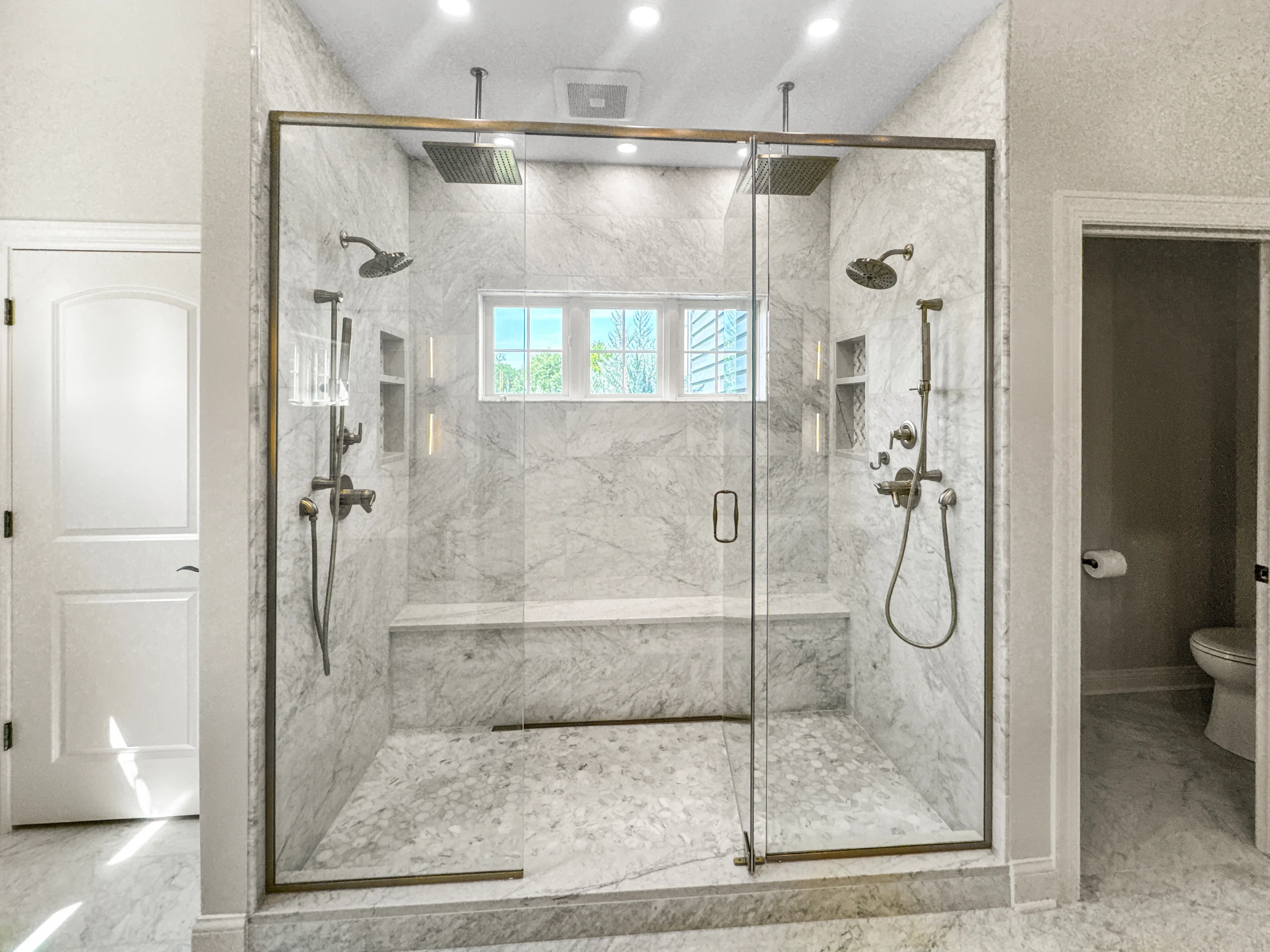
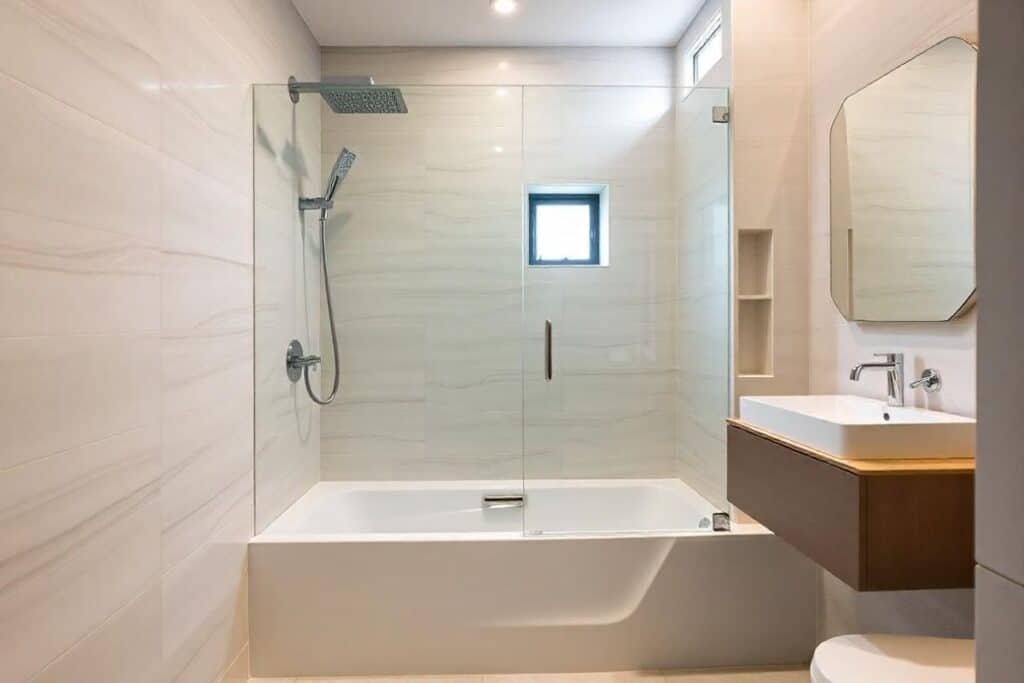 Bathroom - T&J
A skilled DIYer can get all of this right. The inspection is the proof that they did. These aren't bureaucratic checkboxes, they're what prevents a mold disaster or a scalding injury three years from now, after the walls are closed and the tile is set.
Want this priced for your bathroom?
John walks your space, measures it, and leaves a written itemized estimate. No cost, no obligation, no sales script.
Before closing any wall in a bathroom rough-in, photograph every drain connection, vent tie-in, and supply line with a date stamp. Even on a properly permitted job, those photos are your documentation if an inspector has a question, and invaluable for any future repair or insurance claim.
The Four Consequences of Skipping the Permit
Stop-Work Order and Fines
Municipalities discover unpermitted work through neighbor complaints, appraisals, home inspections, or a contractor pulling a permit for unrelated work that triggers a site review. When they find it, a stop-work order halts all work on the property immediately. Fine structures vary by municipality, some Wisconsin municipalities charge double the original permit fee as a penalty, plus a per-day violation fee until the issue is resolved. Contact your local building department for their current penalty schedule; Waukesha County municipalities each set their own.
Forced Demolition
If the work can't be inspected in its current state, walls already closed, tile already set, the municipality can require opening those walls so inspectors can verify the hidden plumbing, electrical, and structural work. This is the scenario that turns a skipped permit into a project that costs more to fix than it did to build. To get a rough sense of what a permitted bathroom addition costs compared to the retroactive path, use our bathroom remodeling calculator, the numbers often surprise homeowners.
The most common trigger for forced demolition isn't malicious intent, it's finishing walls before scheduling the rough-in inspection. The rough-in inspection must happen before drywall. Miss that window and you may be cutting it back open.
Insurance Claim Denial
Most standard homeowner's insurance policies allow the insurer to deny claims on unpermitted work if they determine you hid the alteration or increased the risk to the property. If a pipe bursts in your unpermitted bathroom and causes water damage, your insurer has grounds to deny the entire claim, not just the bathroom portion. Read your policy's exclusions section; the language is usually there in plain terms.
Sale Complications
Wisconsin requires sellers to disclose known defects, and an unpermitted addition qualifies. Beyond disclosure, FHA and VA loans frequently won't approve a property with unpermitted additions, eliminating a large share of potential buyers. Conventional buyers may demand a price reduction or require the work to be permitted and inspected before closing. This is the most common point where unpermitted bathrooms surface: not during construction, but on closing day, when the deal is already in motion.
Can You Get a Permit After the Fact?
Sometimes yes, but it's not guaranteed. A retroactive permit (also called an after-the-fact permit, a permit issued for work already completed rather than work about to begin) requires submitting as-built plans and allowing inspectors to verify hidden systems. That almost always means opening walls and ceilings. If the work doesn't meet current code, you correct it before the permit is approved.
One important nuance from how building departments actually operate: sellers pursuing retroactive permits typically have better odds than buyers who purchased knowing the work was unpermitted. Building departments tend to show less sympathy to buyers who accepted the risk at closing, the reasoning being that the buyer had the opportunity to negotiate or walk away.
There is no guarantee a municipality will grant a retroactive permit, approval depends entirely on whether the existing work can be brought into code compliance.
The practical first step is to call your local building department before hiring anyone or opening any walls. In Waukesha County, that means contacting the building inspection office for your specific municipality. Brookfield's Building Inspection Division, the City of Waukesha Building Inspection Department, and Elm Grove's building office each administer their own retroactive permit process, call them directly to ask what documentation they require and whether they've handled similar cases recently.
Avoiding the most expensive bathroom remodel mistakes homeowners make starts with understanding the permit process before the first pipe is cut.
The Parts of a Bathroom Addition Where Pros Earn Their Fee
Tile work, painting, vanity installation, skilled DIYers handle these fine, and we'd never tell you otherwise. But three phases of a bathroom addition are where mistakes become expensive and invisible:
Plumbing rough-in. Wrong drain slope, anything less than 1/4 inch of fall per foot of horizontal run, and solids settle in the pipe. You won't notice for months, then you'll have chronic clogs and eventually a blocked drain that requires snaking or pipe replacement. A missing vent stack tie-in means sewer gas has a path into living space.
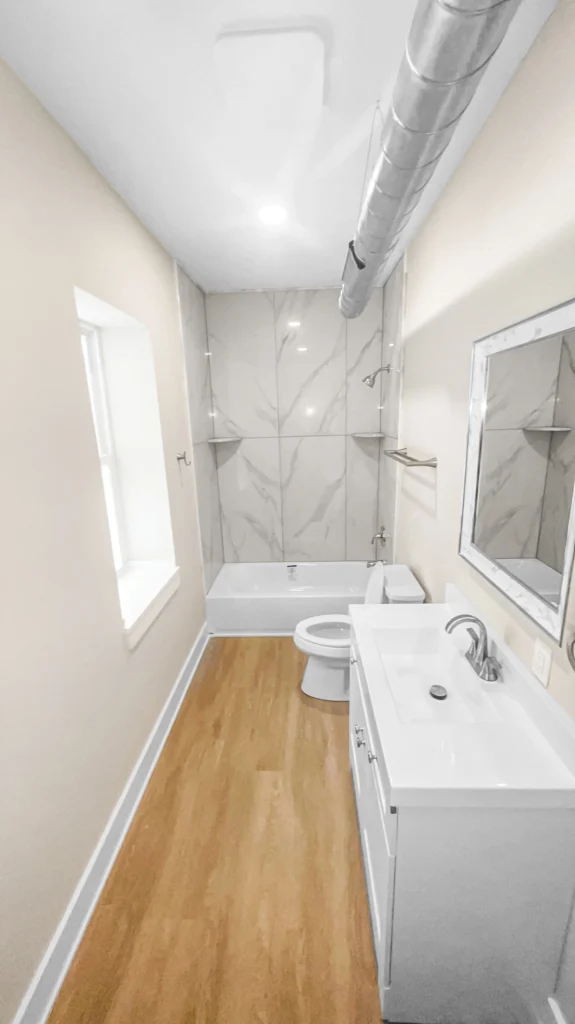
 Bathroom - T&J
Structural modifications. Cutting floor joists to run drain lines without installing proper headers and hangers causes floor bounce at best, structural failure at worst. This is the modification that's hardest to inspect after the fact because it's buried under subfloor.
Waterproofing. A missed seam in the hot-mop membrane behind a shower surround doesn't show up immediately. It shows up 18 months later as mold inside the wall cavity, after the tile is set and the bathroom is in daily use.
This is where a licensed contractor's permit-pulling and inspection process acts as a quality backstop, not a bureaucratic hurdle. John handles permit coordination on every T&J project, so homeowners aren't navigating the municipality alone or guessing whether the rough-in will pass inspection.
How to Handle an Unpermitted Bathroom You Already Have
If you're reading this because you already have an unpermitted bathroom, whether you built it, inherited it from a previous owner, or just found out at closing, here's the practical path forward.
Don't panic.
Unpermitted work is common. Building departments deal with it regularly and have established processes. Voluntary disclosure before they find it on their own typically results in a more cooperative process.
Call your local building department first
, before hiring anyone or opening any walls. Ask specifically about their retroactive permit process, what documentation they require, and whether they've handled similar cases. Their answer shapes everything that follows.
Get a licensed contractor to assess what's there.
You need an honest read on whether the existing work is close to code or significantly off. That assessment determines whether retroactive permitting is worth pursuing or whether a full redo is the smarter financial call.
Decide: retroactive permit with corrections, or full removal and proper rebuild.
The cost of the retroactive path depends entirely on what corrections are needed, adjusting a vent connection is a few hundred dollars; ripping out tile to expose a shower surround for waterproofing inspection is a different conversation. Get the assessment before committing to either path.
If a full redo makes more sense, a bathroom addition done with permits pulled and inspections passed gives you clean title, full insurance coverage, and no surprises at closing. That's the outcome worth building toward.
Unpermitted work doesn't fix itself, and it doesn't get easier to address the longer it sits. The homeowners who handle it cleanest are the ones who call the building department and a licensed contractor in the same week, before a sale, an insurance claim, or a neighbor complaint forces the issue.