 Bathroom project - T&J
If you're staring at two bids that look $3,000 apart, the gap is usually in the tile decision, whether the drain is being moved, or what the contractor budgeted for hidden water damage behind the old tub. This guide breaks down every line item and gives you the questions to surface what's missing before you sign.
What a Tub-to-Shower Conversion Costs in Wisconsin (2026 Numbers)
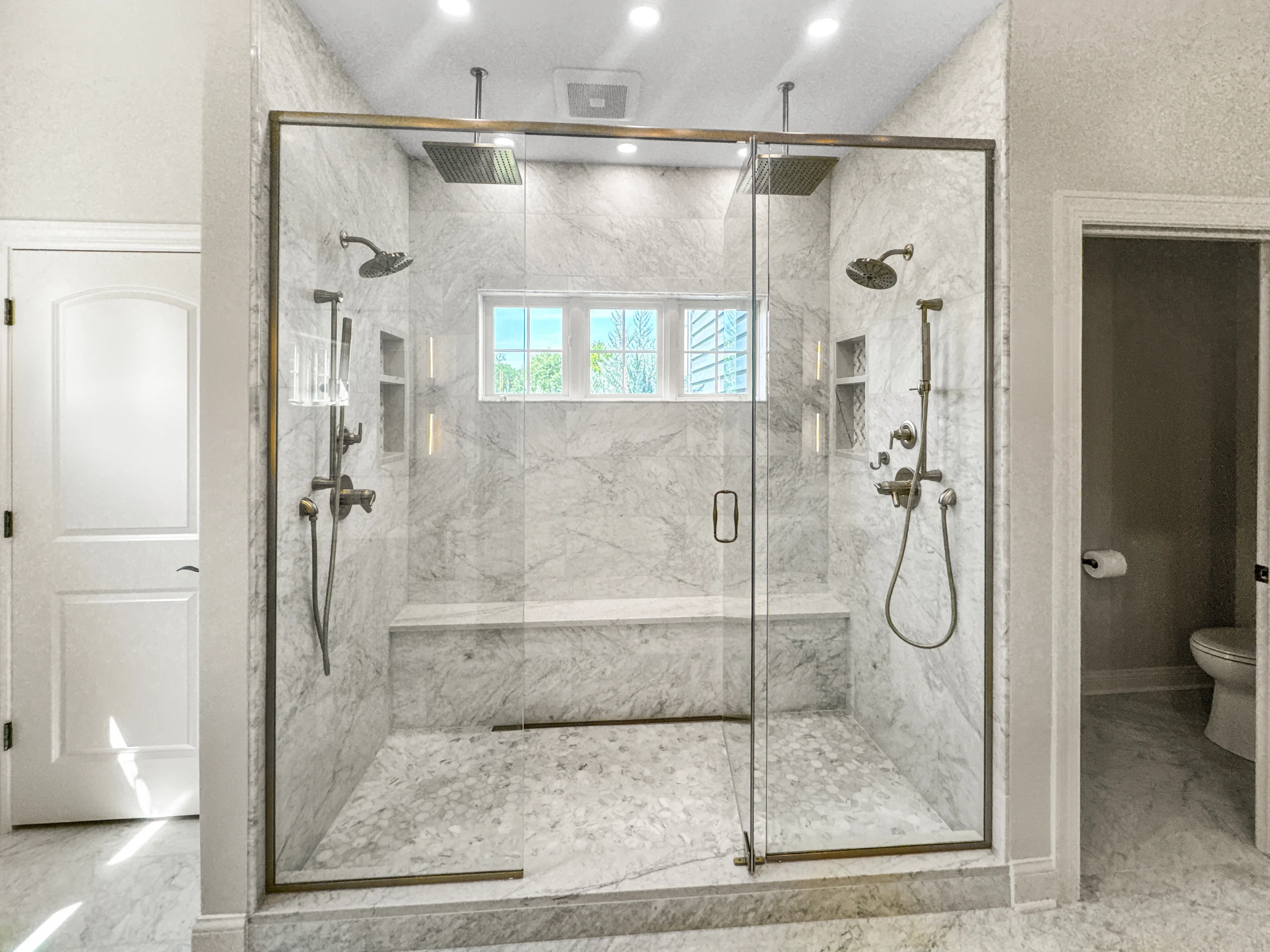
For a typical 30-by-60 alcove tub being converted to a walk-in shower in the same footprint, Wisconsin homeowners pay $3,800 to $8,500 installed in 2026. A prefab shower stall replacement at the low end runs $1,200 to $4,500. A custom tiled shower with a glass door, niche, and bench can clear $10,000 to $15,000+.
The cost difference between conversion and a full bathroom remodel is meaningful, a conversion stays within the existing plumbing footprint and doesn't touch the rest of the room, so you're paying for one fixture swap, not a full gut. That's why Wisconsin contractors typically price a conversion as a 3-to-7 day project rather than the 2-to-3 weeks a full bathroom remodel takes.
Greater Milwaukee labor sits 5-10% above national average, so a Brookfield or Pewaukee quote often looks higher than a national estimator suggests. That's not markup, it's the steady-demand premium for licensed Wisconsin trades.
The Two Paths: Prefab Stall vs. Custom Tiled Shower
This is the single biggest fork in the decision tree. Each path has a different cost profile, a different look, and a different ownership experience over the next 15 years.
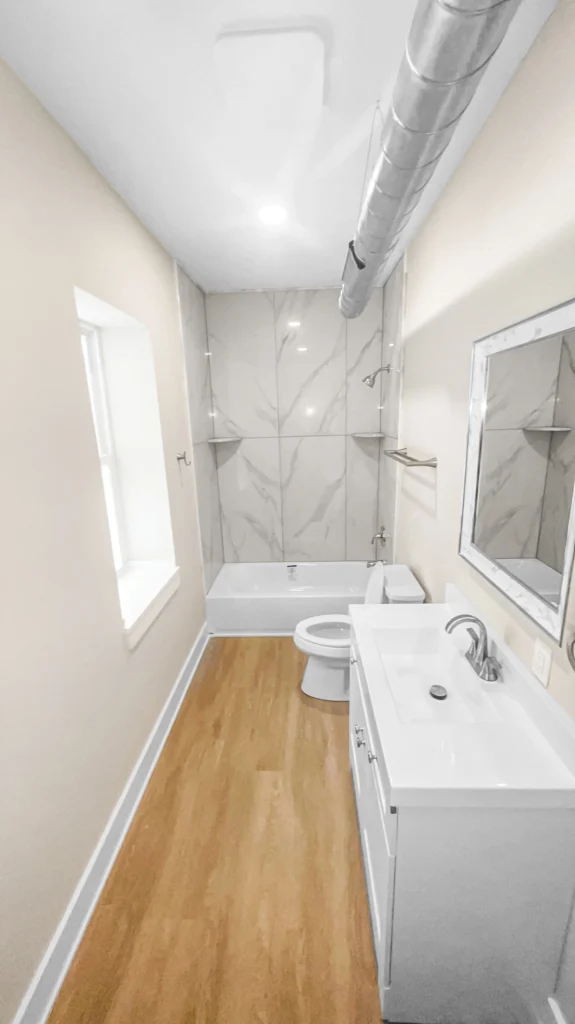
Prefab shower stall: $1,200 to $4,500 installed. A pre-formed acrylic or fiberglass pan-and-walls kit drops into the old tub footprint and bolts to the studs. Install runs 1-2 days. You get a clean, watertight surface with no grout to maintain, and a known cost up front. Trade-off: it's a kit; you're locked into standard sizes and stock finishes. Re-sale value lands at the low end of the bathroom-remodel scale.
 Bathroom - T&J
Want this priced for your bathroom?
John walks your space, measures it, and leaves a written itemized estimate. No cost, no obligation, no sales script.
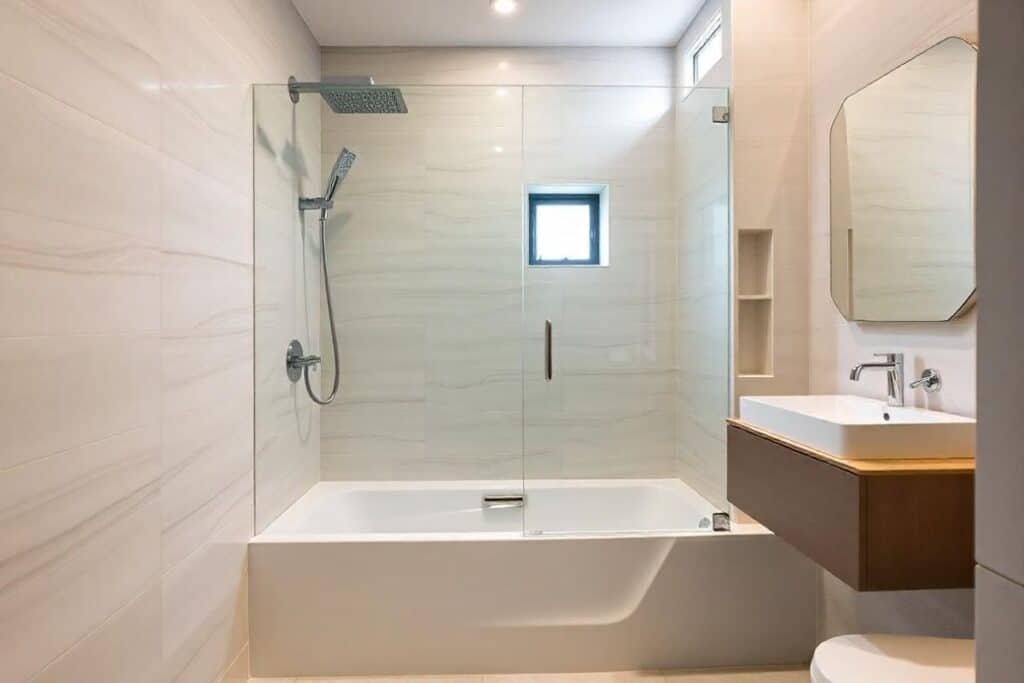
Custom tiled shower: $5,500 to $12,000 installed. Mortar-bed or pre-sloped pan, waterproofing membrane (Schluter Kerdi is the WI standard), tile walls, glass enclosure. Install runs 5-7 working days across about 2 calendar weeks because of dry times between membrane, mortar, tile, and grout. You get a custom look matched to your bathroom and full design control on tile, niche, and bench placement. Trade-off: grout maintenance every 2-3 years, and the labor cost is roughly 60% of the total.
| Path | Installed cost | Timeline | Look | Maintenance |
|---|---|---|---|---|
| Prefab stall | $1,200 -$4,500 | 1-2 days | Standard kit finishes | Minimal (no grout) |
| Custom tile | $5,500 -$12,000+ | 5-7 days work / 2 weeks calendar | Custom, design-flexible | Grout sealing every 2-3 years |
About 60% of conversion projects in greater Milwaukee go custom-tile, despite the higher cost, most homeowners cite "I'd rather pay once for what I actually want" as the reason.
What Actually Moves the Quote Up or Down
Five factors do most of the work. If two bids look 30% apart on the same bathroom, one of these is the reason.
Tile choice
, porcelain at $7-$20/sqft installed vs. natural stone at $15-$40/sqft installed is a $700-$2,000 swing on a typical 90-square-foot wall surface
Drain location
, keeping the existing drain location is free. Moving it 18+ inches (often required if the tub drain is at the head of the shower) runs $900 to $1,800 on a slab, $400 to $900 on a crawl-space home
Hidden water damage behind the tub
, demo often reveals rotted subfloor, soft drywall, or water-damaged framing. Budget $800 to $2,500 for remediation, and look for a contractor who names this number up front 4. Glass spec, a fixed 24-inch panel: $1,200 to $1,800 installed. A door + panel walk-in: $2,500 to $4,500. Low-iron "ultra clear" glass adds 20-30%
Fixture quality
, a builder-grade pressure-balance valve and showerhead runs $200-$400. A thermostatic valve with rain head and body sprays clears $1,200-$2,500
The most common quote-gap on a conversion is the demo line. One quote says "demo and dispose: $400," the other says "demo and dispose: $900." The difference is usually whether the contractor budgeted for cast-iron drain removal, common in pre-1975 Wisconsin homes and roughly 2× the labor of PVC.
How to Read a Contractor Quote, and Spot What's Missing
A complete tub-to-shower conversion quote names every line. A thin quote rolls everything into a single number and waits for you to discover the gaps after demo starts.
Ask each contractor these six questions:
What tile is priced, brand, line, and size?
A 12×24 porcelain at $9/sqft is a different product than a 24×48 large-format at $18/sqft, and both can show up as "porcelain tile installed"
Is the drain being kept in place or moved?
Tub drains are at the head; shower drains are typically centered or off-center. A line-item that says "drain relocation included" is the answer you want
What waterproofing system is included?
"Sheet membrane (Kerdi or RedGard) over cement board" is the WI standard for custom tile. Don't accept "we'll waterproof it" with no system named
What's the contingency on hidden water damage?
A good contractor names the number ($800-$2,500 typical) and the pricing terms; a thin quote stays silent and bills change orders at retail rates
What glass spec is included, panel only or panel + door?
The 30-by-60 alcove usually only needs a fixed panel; a curbless or larger opening needs a door system
Is the permit pull included, or is that on you?
Conversions almost always require a permit in Wisconsin when the drain is being moved
Two quotes that answer those six questions identically should land within 10-15% of each other. A 30-40% gap almost always means one scope is incomplete.
If you're still narrowing down the design direction, walk-in shower design ideas that work in Wisconsin bathrooms gives you the visual side of the decision.
Wisconsin Permit Requirements for Tub-to-Shower Conversions
In most Wisconsin municipalities, you need a permit when the conversion involves moving a drain or supply line, which most conversions do, because shower drains and tub drains sit in different spots. Permit fees run $100 to $500 depending on the municipality and scope. Brookfield and Pewaukee typically run $150-$350. Elm Grove and Wauwatosa are similar. Wales, Mukwonago, and the more rural Waukesha County townships tend to come in at the lower end.
A like-for-like prefab stall that reuses the exact same drain location sometimes qualifies as a fixture replacement and doesn't require a permit, but verify with your local building department before assuming. The contractor typically pulls the permit as part of the job; if the quote says "permit by owner," budget for the fee and the inspection scheduling on top of the build cost.
 Bathroom - T&J
For a deeper read on when bathroom remodels require Wisconsin permits, our companion guide covers what triggers a permit and what doesn't.
How Long Does a Tub-to-Shower Conversion Take?
A prefab conversion takes 2-3 working days from demo through fixture install. A custom tiled conversion runs 5-7 working days of hands-on work spread across about 2 calendar weeks because of dry times between waterproofing, mortar bed, tile, and grout.
Add 1-2 weeks of lead time before the project starts for material ordering, particularly for porcelain tile (often 7-10 day order-to-deliver) and glass enclosures (usually fabricated to spec in 5-10 days). A complete conversion from "signed contract" to "fully functional shower" typically lands at 3-4 weeks total.
Is Removing the Tub Worth It? Resale and Practical Considerations
The honest answer: it depends on whether you have another tub in the house. National real-estate guidance says you should keep at least one tub in a home for resale, buyers with young children specifically look for it. If the bathroom you're converting is the only tub in the house, removing it can narrow your future buyer pool.
If you have a second tub (a guest bath or hall bath), converting the primary bath to a walk-in shower is usually a positive ROI move. Most Wisconsin buyers under 50 prefer a walk-in shower in the primary bath, and the aging-in-place appeal (curbless entry, grab bars, bench) opens the home to a broader demographic.
Practical case from a recent Pewaukee project: a 1980s ranch had two bathrooms, both with alcove tubs. The homeowners converted the primary bath to a walk-in tiled shower with a curbless entry. The hall bath kept the tub. Two years later the home sold within 3 weeks of listing, buyers' agent specifically mentioned the walk-in shower in the primary bath as a feature that closed the deal.
Getting an Honest Quote from a Wisconsin Contractor
Three bids is smart, comparing them apples-to-apples is what makes the math actually work. The questions above are the foundation. Watch for contractors who name specific products and pricing, and be skeptical of any quote that arrives as a single round number with no breakdown.
When John walks through a Wisconsin bathroom for a conversion quote, every line gets named: tile brand and size, valve model, glass spec, drain plan, contingency line, who's pulling the permit. T&J is a father-son operation, 35+ years combined, credited Wisconsin contractor, owners on every job. The in-home consultation is free, the quote is itemized, and there's no obligation. If you want to put us in your comparison against the bids on your desk, our bathroom remodeling services in Waukesha County page has project examples.
 Bathroom - T&J
Frequently asked questions
How much does a tub-to-shower conversion cost in Wisconsin?
Most Wisconsin homeowners pay $3,800 to $8,500 in 2026 for a typical 30-by-60 conversion. A prefab shower stall replacement runs $1,200 to $4,500; a custom tiled shower with glass enclosure clears $5,500 to $12,000+. The single biggest variable is whether you go prefab (kit) or custom tile (built in place), and the second is whether the drain is being moved.
Do I need a permit to convert a tub to a shower in Wisconsin?
In most cases yes, because the conversion involves moving a drain or supply line. Permit fees run $100 to $500 depending on municipality. A like-for-like prefab stall that reuses the existing drain location sometimes qualifies as a fixture replacement and doesn't require one, but verify with your local building department, Brookfield, Pewaukee, Elm Grove, and Wauwatosa all require permits for any wet-wall work that touches the plumbing.
How long does a tub-to-shower conversion take?
A prefab conversion runs 2-3 working days. A custom tiled conversion takes 5-7 days of hands-on work across about 2 calendar weeks because of dry times between waterproofing, mortar bed, tile, and grout. Add 1-2 weeks of lead time for material ordering. Total from contract signing to fully usable shower: typically 3-4 weeks.
What's the difference between a prefab shower stall and a custom tiled shower?
A prefab stall is a pre-formed acrylic or fiberglass pan-and-walls kit that arrives as a unit and bolts to the studs in 1-2 days of install, known cost, no grout maintenance, locked into standard sizes and finishes. A custom tiled shower is built in place: mortar-bed pan, sheet-applied waterproofing, tile walls, glass enclosure. Higher cost, longer timeline, design flexibility on tile and configuration. Both produce watertight showers; the difference is custom-fit vs. kit-fit, and grout maintenance vs. none.
Why is one contractor's quote $3,000 and another's is $9,000?
Almost always because they're pricing different products. The $3,000 quote is likely a prefab kit; the $9,000 quote is custom tile with a glass enclosure and a thermostatic valve. Both are legitimate scopes for two different bathrooms. Ask each contractor what specific products are priced, tile brand and size, valve model, glass spec, and the gap usually closes fast once the scopes match.
Will I lose resale value if I remove my bathtub?
It depends. If the bathroom you're converting is the only tub in the house, you may narrow your future buyer pool (especially families with young children). If you have a second tub in another bathroom, converting the primary bath to a walk-in shower is usually neutral-to-positive for resale in Wisconsin, most buyers under 50 prefer a walk-in shower in the primary bath, and the aging-in-place appeal (curbless entry, grab bars) widens the buyer pool.
Can I do a tub-to-shower conversion myself?
The plumbing rough-in (moving the drain or supply lines) must be performed by a licensed plumber under Wisconsin law, and the work requires a permit and inspection if any plumbing is moved. The demo and surface install can technically be DIY, but a botched waterproofing job leads to wall-cavity rot that's invisible for years and expensive to fix. Most homeowners who try DIY end up calling a contractor halfway through, at which point the labor cost goes up because demo of partial work takes longer than starting clean.