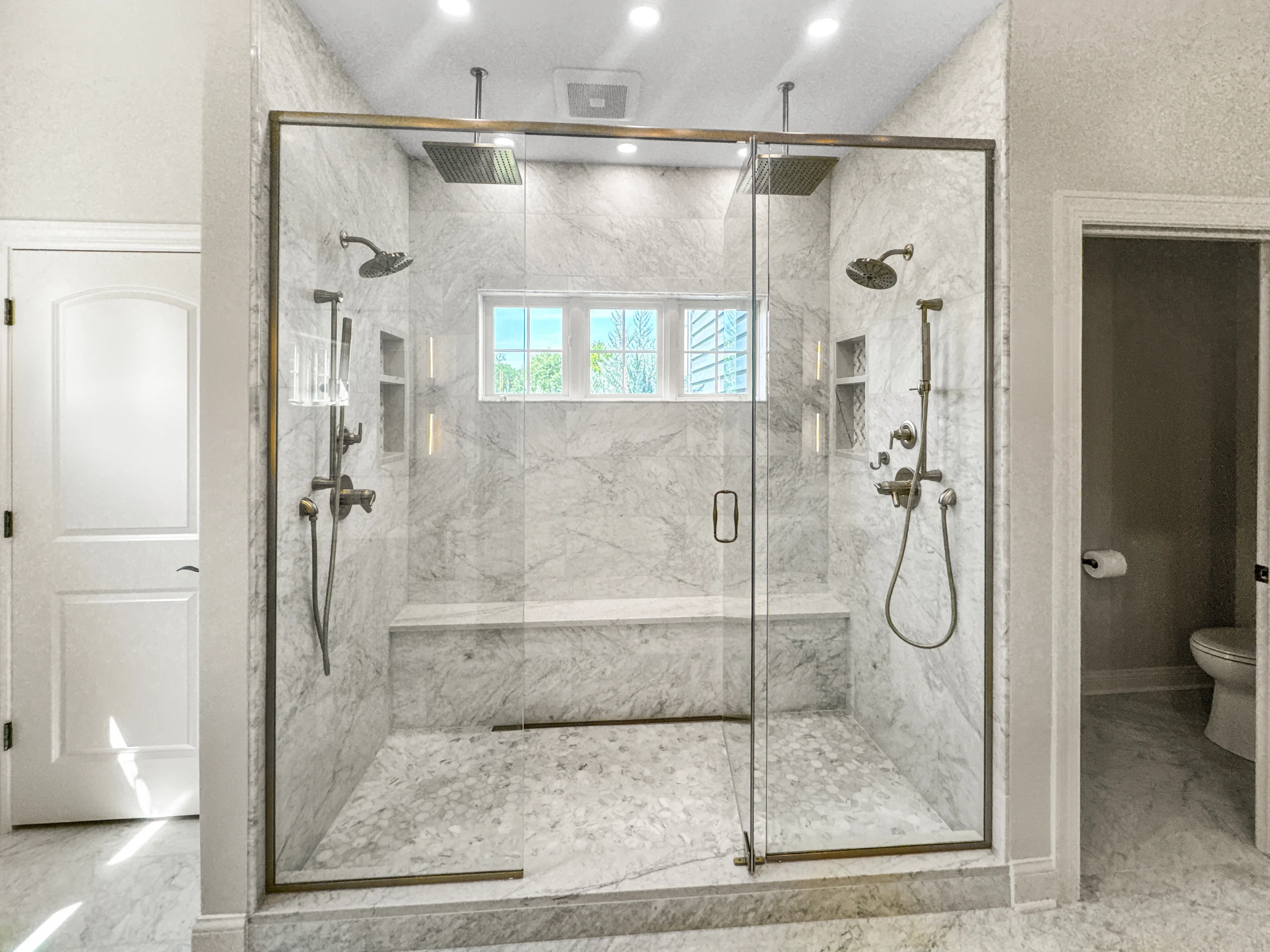
 Bathroom project - T&J
There are only two narrow exemptions: a like-for-like fixture swap where the shutoff valves already exist and aren't being changed (this excludes tubs and showers), and a plain faucet or spigot replacement (Plumbing). Everything else is permitted work. If you're still mapping scope, our guide to planning a bathroom remodel from scratch pairs well with this one.
What Triggers a Plumbing Permit in Wisconsin (and What Doesn't)
Picture a 1960s Brookfield ranch with a cramped hall bath. If you keep the toilet and vanity in the same spots and just drop in nicer fixtures, you're likely in the exempt lane. The moment you touch the shower, move a drain, or re-pipe supply lines, you need a permit. Here's the clean breakdown.
REQUIRES a plumbing permit (Plumbing):
- Installing or replacing a shower or tub (no exemption, period)
- Moving or adding any drain, waste, or vent (DWV) piping
- Replacing water or drain piping
- Installing a water heater or water softener
- Adding an outside faucet or yard hydrant
- Sewer or water lateral work
- Lawn irrigation and backflow/cross-connection work
Does NOT require a plumbing permit (Plumbing):
- Like-for-like fixture swap, toilet, sink, or vanity in the same spot, where shutoff valves already exist and aren't being changed (this excludes tubs and showers)
- Faucet or spigot replacement
This list is how you audit a bid. If a quote includes a new shower or a relocated drain but has no permit line and no mention of a licensed plumber, that's a scope gap, not a discount. The cheap bid catches up to you at inspection or resale.
Plumbing isn't the only permit, either. New outlets, recessed lights, and exhaust fans need a separate electrical permit, and moving walls or expanding the room needs a building permit. A full bath remodel often needs all three. That's not the focus here, but you should know they exist so you can ask.
Wisconsin Plumbing Permit Costs: What to Expect in 2026
Most Wisconsin bathroom plumbing permits land in the $50-$300 range for 2026, depending on whether you're updating fixtures and a shower or moving plumbing around. Industry permit data breaks the tiers out like this:
- Minor fixture work / simple replacement: $50-$150
- Moderate remodel (new shower, partial plumbing changes): $150-$300
- Major renovation (layout changes, new drain lines, supply rerouting): $300-$500+
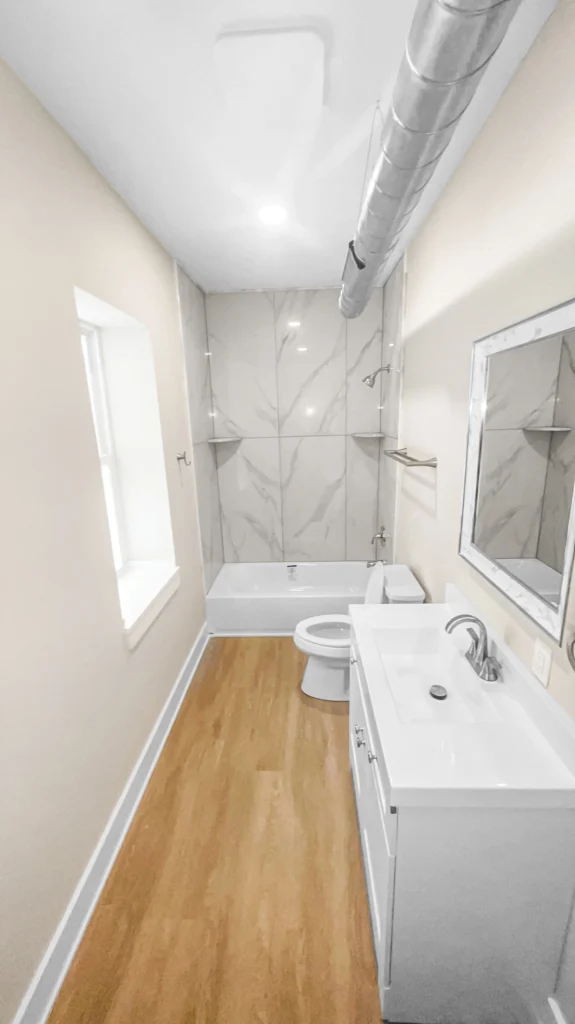
 Bathroom - T&J
The full Wisconsin range runs $50-$500 across all project types. Want to see how that fee fits your whole project? Our bathroom remodeling calculator estimates total remodel costs so the permit line stops feeling like a mystery add-on.
Want this priced for your bathroom?
John walks your space, measures it, and leaves a written itemized estimate. No cost, no obligation, no sales script.
Permit fees are set by the issuing municipality or county, not the contractor. A bidder who quotes a round-number "permit allowance" without naming your town is guessing. Always confirm the figure with your local building department before treating a bid's permit line as final.
Waukesha County Plumbing Permit Fees & Timelines
Because permits are issued locally, the exact fee and turnaround depend on your town. Fees and schedules change year to year, so the smart move is to verify the current number directly with the building or inspection department before you sign a contract. Here's where to check for the towns we work in most:
- City of Waukesha, verify current plumbing permit fees and scheduling through the City of Waukesha Building Inspection division.
- City of Brookfield, confirm fees and inspection requests with the Brookfield Building Inspection / Community Development department.
- City of New Berlin, check the New Berlin Building Inspection department for residential plumbing permit fees.
- Wisconsin Rapids (out-of-area benchmark), publishes a flat $40 residential plumbing permit fee on its municipal plumbing page (Plumbing), a useful reference point for how low a flat-fee town can be.
The statewide licensing roster and code repository are maintained by the Wisconsin Department of Safety and Professional Services (DSPS) (DSPS Plumbing). When you compare quotes, ask each contractor to itemize the permit fee separately and confirm it matches your municipality's published schedule, not a round number they pulled from memory.
How Long Does a Wisconsin Plumbing Permit Take?
For a straightforward residential bathroom, a licensed plumber can often pull the permit within a few business days, since most Waukesha-area municipalities handle residential plumbing permits without a long plan review. Substantial remodels or new construction may require scale drawings, which adds time.
A few things slow the process down:
- Incomplete applications, missing fixture counts or drawings bounce the application back.
- Plan review, larger remodels with layout changes trigger a review step.
- Inspector scheduling, the bigger calendar driver is usually the inspection, not the permit. The rough-in inspection has to pass before walls close, so build a few days of buffer around that hold point.
When you're lining up subcontractors and a tile crew, the rough-in inspection is your true critical-path date, not the permit issuance. A contractor who schedules the inspection ahead of time, rather than calling for it the morning the drywallers show up, keeps your project from stalling for days.
Who Can Pull a Wisconsin Bathroom Plumbing Permit
Here's a rule that surprises a lot of homeowners: only a Wisconsin-licensed plumber may apply for and pull a plumbing permit on work that requires licensure, a master plumber, or a journeyman working under supervision, under Wisconsin Statute §145. An unlicensed person applying for a permit on this kind of work is in violation of state law.
That has a direct consequence when you're comparing bids. If a quote never mentions a licensed plumber, or suggests you pull the permit yourself to save money, that's a compliance gap, not a savings strategy. Homeowner-pulled permits aren't legal for this kind of work in Wisconsin.
The two license types differ:
- Master plumber, can run a plumbing business and pull permits independently.
- Journeyman, qualified to do the work, but must operate under a master's supervision.
Permits are issued locally, by the city, village, town, or county where the work is located, not a statewide office. So the master plumber on your job needs to know your specific municipality's process, not just "the state code" in the abstract. You can verify any Wisconsin plumber's license status through the DSPS license lookup (DSPS Plumbing).
This is one place a single point of contact earns its keep. On every T&J project, John, a credited contractor in the state of Wisconsin, coordinates permits directly with the local building department and the licensed plumber. No handoff to a junior PM, no homeowner chasing paperwork between parties.
The Inspection Sequence: Rough-In, Final, and What Inspectors Check
Wisconsin permitted plumbing work goes through at least two mandatory inspections, and the order isn't negotiable.
1. Rough-in inspection. This happens after the pipes are installed but before the walls are closed. The inspector checks pipe sizing, trap configurations, and vent termination locations per SPS 383. Some jurisdictions also require a water or pressure test at this stage. The walls stay open until rough-in passes, that's the whole point of the gate.
 Bathroom - T&J
2. Final inspection. This happens after all fixtures are installed and before the system is placed in service. The permit must be posted on the job site the whole time, and work may not begin before the permit is issued, emergency authorization is the only exception.
Here's why this matters in real life. On a Brookfield master bath, we relocated the shower drain and called the rough-in inspection before any drywall went up. The inspector flagged a vent termination that needed a minor tweak, a 20-minute fix with the walls open. Had those walls been boarded, tiled, and grouted first, that same correction would have meant tearing out finished tile, re-mudding, and waiting on a second inspection. Realistically that's a few hundred dollars in materials, a day or two of lost schedule, and a homeowner watching brand-new work get demolished. The owners were relieved we caught it at the open-wall stage, which is exactly the reason the rough-in gate exists.
If a contractor tells you "we'll close the walls and then schedule the inspection," they're describing a code violation. Once drywall and tile are up, verifying pipe sizing and vent configuration means tearing them back open, at your expense.
So ask every bidder a simple question: "At what point do you schedule the rough-in inspection?" The right answer is "after the rough plumbing is in and before we insulate or board the walls." Anything vaguer tells you whether they actually follow the sequence.
How Permits Affect Your Contractor Quotes, and Why the Cheapest Bid Often Skips Them
Here's the comparison-shopper payoff. A real quote carries permit cost in three places, and a low bid usually drops all three:
The permit fee itself
, $50 to $500+ depending on scope.
The licensed plumber's time
to prepare and submit the application.
The scheduling buffer
for inspection hold points, rough-in must pass before walls close, which adds days.
When a bid omits these, it isn't cheaper. It's incomplete. And the risk doesn't vanish, it lands on you. Unpermitted plumbing work can void the related part of your homeowner's insurance, has to be disclosed at resale (where it can kill a deal or drop your price), and can force you to open finished walls for an after-the-fact inspection.
We say this without being defensive: the question isn't why is our quote higher, it's whether the other quotes include the same scope. Often they don't. An honest apples-to-apples comparison usually closes most of the gap.
Before you sign, ask all three contractors these:
- "Is the plumbing permit fee included, itemized separately?"
- "Will a licensed master plumber pull the permit?"
- "When do you schedule the rough-in inspection?"
The contractor whose answers are specific and confident is the one running a real process. For a reference point on a complete scope, here's what a full-scope bathroom remodel includes, use it as your checklist against every bid.
Wisconsin Code References Every Homeowner Should Know
You don't need to memorize the code, you need enough to tell whether your contractor knows it. If a bidder can't name what they're working under, that's a signal. These are public documents you can read yourself:
- SPS 382-387, the Wisconsin Administrative Code chapters that make up the state plumbing code.
- SPS 383, the drain, waste, and vent (DWV) requirements: stack sizing, trap configurations, vent termination locations. This is what the rough-in inspector checks.
- Wisconsin Statute §145, licensing and permit authority; unlicensed permit applications on licensed work violate it.
- Wisconsin Uniform Dwelling Code (UDC), the broader building code that bathroom remodels in one- and two-family dwellings must comply with statewide.
A competent plumber or remodeler cites these without flinching. Vagueness here usually travels with vagueness in the bid.
Getting Your Wisconsin Bathroom Remodel Permitted the Right Way
Boiled down, the homeowner's checklist is short: confirm the contractor uses a licensed plumber, ask for the permit fee itemized separately, verify the rough-in inspection is scheduled before walls close, and keep a copy of the permit on file once it's issued.
That's the standard we hold ourselves to. As a credited contractor in Wisconsin serving Waukesha County and the greater Milwaukee area, Brookfield, the City of Waukesha, New Berlin, Elm Grove, and Wauwatosa, T&J handles permit coordination directly. John manages the paperwork and inspector scheduling with your local building department so you're not chasing it, and Telli is on-site running the work. Our free in-home consultation and transparent quote process mean you see the permit line, the licensed-plumber line, and the inspection schedule before you commit. No surprises mid-project.
 Bathroom - T&J
If you're comparing bids right now and want one that's complete from the start, call (262) 352-9525 or use the contact form. We're glad to walk through your scope. You can also see our work on bathroom remodeling in the Brookfield and Waukesha area.
Frequently asked questions
Can a homeowner pull their own plumbing permit in Wisconsin?
No. Only a licensed plumber, a master plumber, or a journeyman under supervision, may apply for a plumbing permit on work requiring licensure under Wisconsin Statute §145. A homeowner who applies for a permit on this kind of work is in violation of state law. If a contractor suggests you pull the permit to save money, treat it as a red flag, not a deal. The reason runs three layers deep: licensure proves the responsible party knows the plumbing code (SPS 382-387); that knowledge prevents hidden defects inside walls; and those hidden defects are exactly what cause water damage and sewer-gas problems years later.
Do I need a permit to replace a toilet or sink in Wisconsin?
A like-for-like toilet or sink swap, same spot, with shutoff valves already in place and not being changed, is generally exempt (Plumbing). But that exemption explicitly excludes tubs and showers (Plumbing). Replacing a shower or tub needs a permit regardless of location. The why: tubs and showers involve larger drain assemblies, waterproofing, and vent configurations an inspector needs to verify, while a toilet swap is low-risk and easily reversible.
Why does Wisconsin require a plumbing permit for shower installation?
Because a shower ties into the drain-waste-vent system, and that's the part of the plumbing most likely to fail silently. The first layer of why: the permit forces a rough-in inspection so an inspector checks trap and vent sizing per SPS 383. The second layer: improper venting lets sewer gas back up into the living space and causes fixtures to drain slowly or siphon dry. The third layer: once tile and waterproofing are installed, that vent termination is buried, which is exactly why inspectors verify it at rough-in, before the walls close, rather than after.
How much does a bathroom plumbing permit cost in Waukesha County?
Fees vary by municipality because permits are issued locally, not by a statewide office. Minor fixture work runs roughly $50-$150; moderate remodels with a new shower or partial plumbing changes run $150-$300; major renovations with layout changes run $300-$500 or more. Some towns use a flat fee, Wisconsin Rapids charges $40 for a residential plumbing permit (Plumbing). Confirm the exact figure with your city or village building department, since Waukesha, Brookfield, and New Berlin each set their own schedules.
What happens if bathroom plumbing work is done without a permit in Wisconsin?
Several compounding risks. The municipality can require finished walls to be opened for an after-the-fact inspection, at your expense. Unpermitted work can void homeowner's insurance coverage for related water damage. It creates a disclosure obligation at resale that can reduce your price or kill a deal. And the contractor who did the work without a required permit may face license discipline under Wisconsin Statute §145. Permits exist so an independent inspector, not the contractor, verifies the work before it's hidden inside walls.
Does moving a shower drain require a permit in Wisconsin?
Yes. Moving a shower drain relocates drain piping, a change to the DWV system governed by SPS 383. Any work that moves or adds drain, waste, or vent piping requires a plumbing permit. This is one of the most common items left off low-ball quotes, the contractor prices the tile and fixtures but skips the permit and the licensed plumber. Drain relocation changes slope, trap configuration, and potentially the vent stack, all of which affect drainage and whether sewer gases vent safely out of the living space.