What Does It Actually Cost to Remodel a Fixer-Upper in Wisconsin?
The single variable that moves a fixer-upper number more than any other is scope completeness, how much of the work is cosmetic versus how much is buried behind walls. A 1965 Brookfield ranch that's cosmetically dated but mechanically sound sits at the low end. The same house with original 60-year-old wiring, galvanized supply lines, and a furnace on its last legs has a fundamentally higher cost floor before you touch a single finish.
Industry guidance puts recommended budget overage for a renovation at 10% to 25% of project cost to cover delays and surprises, and fixer-uppers live at the top of that range.
Waukesha County labor rates run slightly above the statewide average, above Madison, Green Bay, or Appleton metro pricing, because demand here is steady and the housing stock is older. That's not a markup; it's the reality of working in a market where skilled trades stay booked. To put a rough number against your own property before you call anyone, our home remodeling cost calculator gives you a starting frame. Treat it as a starting point, not a quote, the condition behind the walls always adjusts the figure.
Room-by-Room Cost Breakdown for a Wisconsin Fixer-Upper
Here's where the whole-home number comes from. These ranges reflect Milwaukee-metro pricing, which tracks closely with Waukesha County. Think in tiers: budget (same footprint, mid-grade finishes), mid (some layout change, better materials), and high (full gut, premium finishes).
Kitchen
 Remodel - T&J
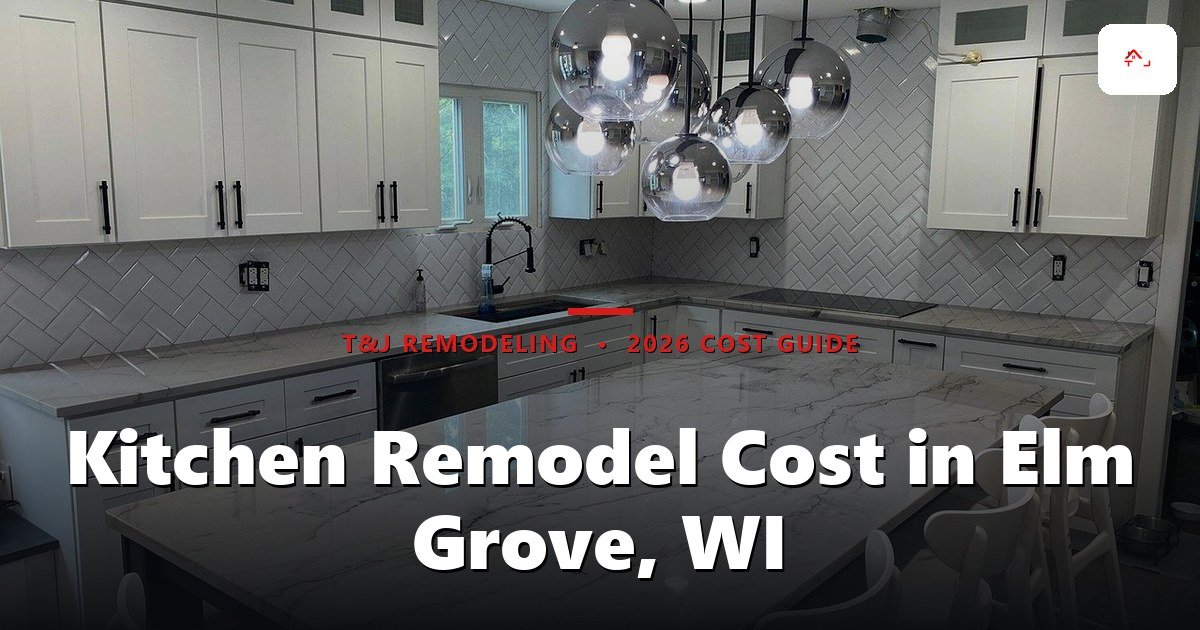
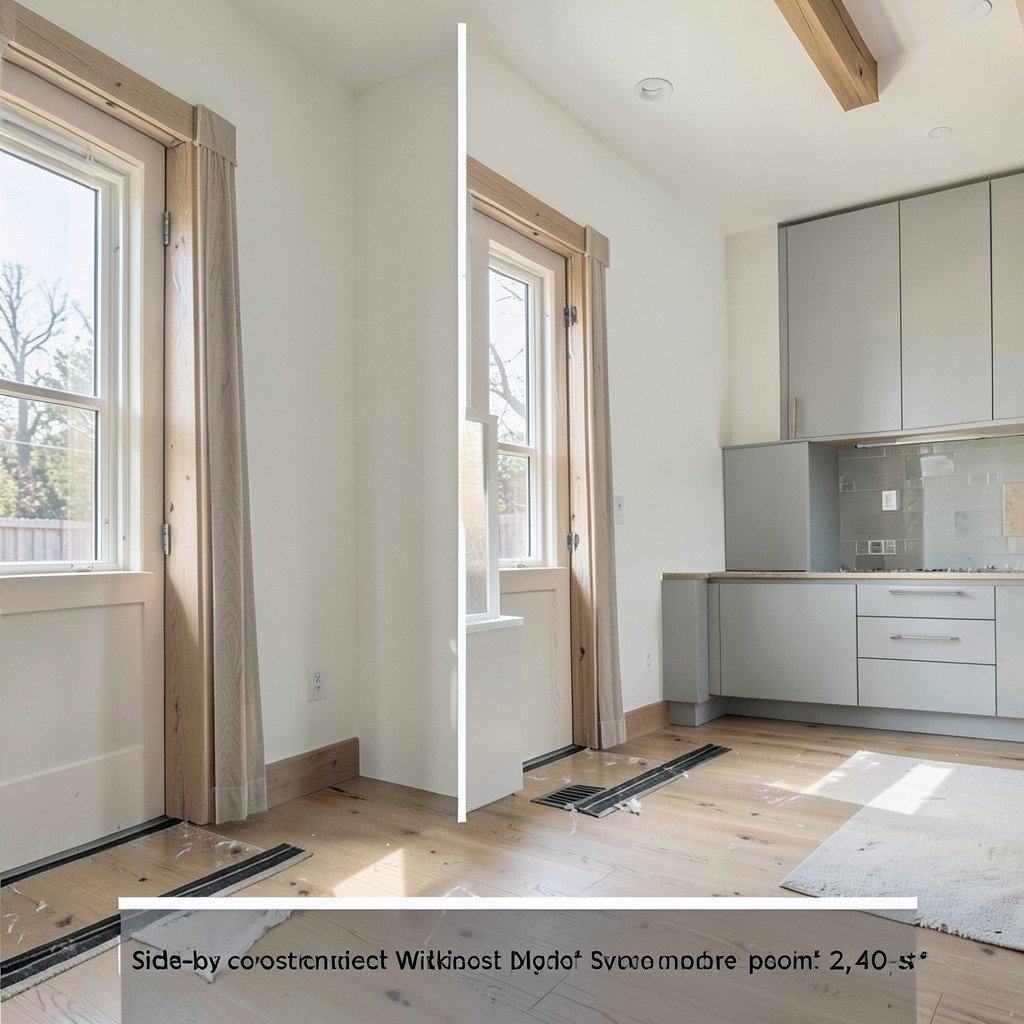
A full kitchen renovation in the Milwaukee area runs $20,000-$45,000, with the national average around $27,000. What moves you within that band is layout. Keep the same footprint and you stay low. Move the sink, relocate the range, or open a wall and you're paying to reroute plumbing, electrical, and sometimes gas, that's the difference between a budget and a mid-tier kitchen.
Want this priced for your remodel?
John walks your space, measures it, and leaves a written itemized estimate. No cost, no obligation, no sales script.
Bathrooms
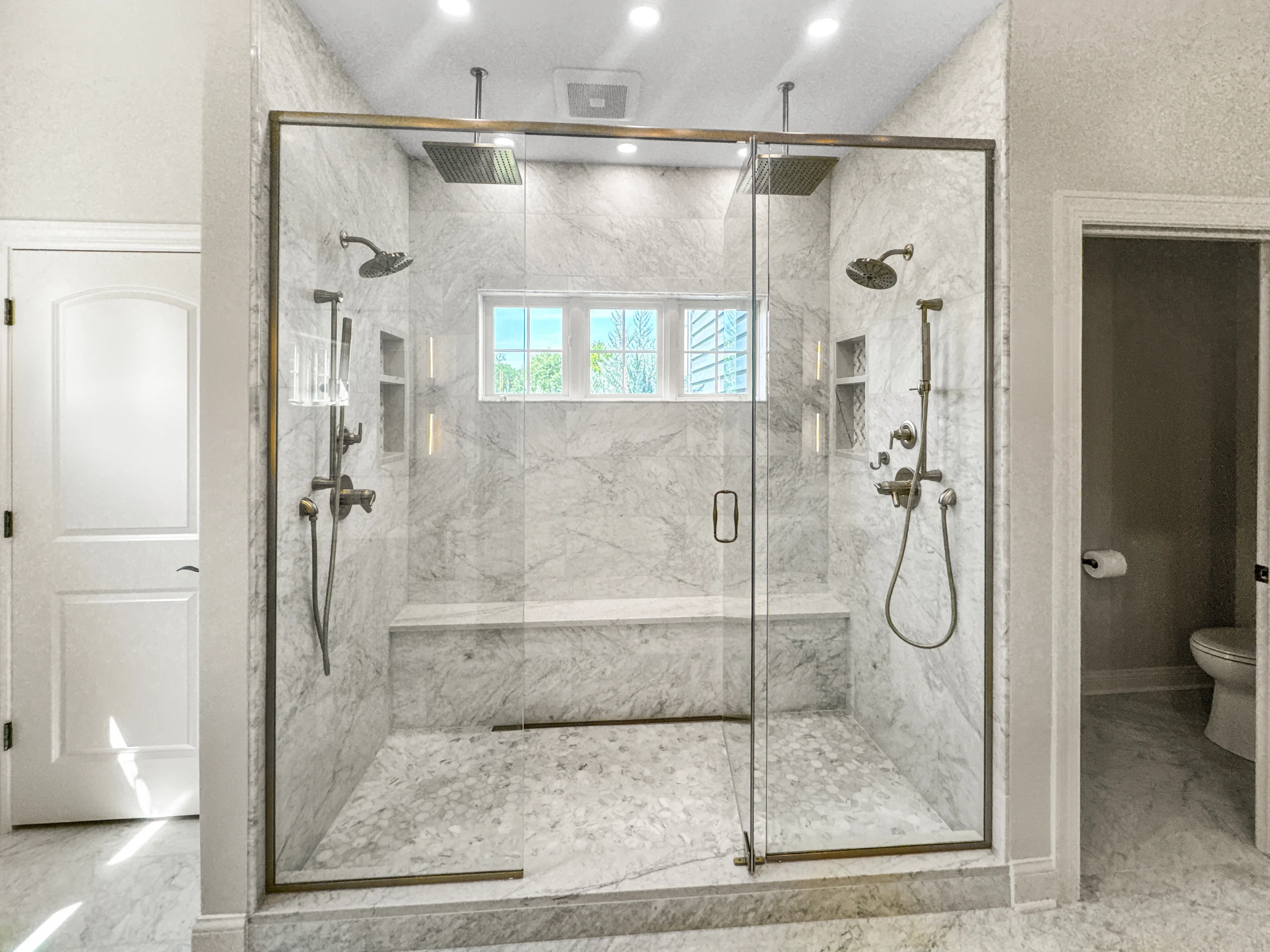
A full bathroom renovation in Milwaukee runs $8,000-$20,000; nationally a bath averages about $12,115 and can range from $6,000 to $30,000 for a complete gut. The biggest lever is plumbing. Keep the existing layout and you can save roughly 50% versus moving the toilet, tub, and vanity. A half bath costs far less than a full bath simply because there's no tub, shower, or the waterproofing that comes with them.
Basement
Basement scope swings hard based on moisture. A dry, framable basement is a finishing job. A wet one needs waterproofing first, and in Wisconsin, frost-depth and freeze-thaw mean below-grade work isn't optional cosmetics, it's protecting the structure. If your fixer-upper has a damp or seeping basement, factor basement finishing and waterproofing work as a real line item, not an afterthought.
Mechanical Systems (HVAC / Plumbing / Electrical)
This is the category buyers underestimate most. In Milwaukee, an electrical system update runs $4,000-$12,000, plumbing $3,000-$15,000, and new windows throughout $10,000-$25,000. A partial panel swap is at the low end; a full rewire of a knob-and-tube house is at the high end. If your inspection turns up knob-and-tube or aluminum wiring, our home remodeling services cover full rewires coordinated with licensed electricians as part of the scope. The older the stock, the deeper the surprises, and the inner-ring suburbs of Wauwatosa and Elm Grove, with plenty of pre-1960 homes, run as old or older than Brookfield's.
In pre-1980 Waukesha County homes, which is most of them, lead paint and asbestos abatement can become a required add-on the moment you open a wall. A surface walkthrough won't catch it. Abatement is specialized, regulated work that must be completed before demo can legally proceed.
The Hidden Costs That Blow Wisconsin Fixer-Upper Budgets
A complete scope accounts for these. An incomplete quote doesn't, which is exactly why it looks cheaper on paper.
- Asbestos and lead abatement. Homes built before 1978 commonly contain both, and the older neighborhoods in Brookfield, Wauwatosa, and West Milwaukee are full of them. Abatement is specialized, regulated work, not something a general crew absorbs for free.
- Foundation issues from freeze-thaw. Decades of Wisconsin winters cycle the soil around a foundation, opening cracks and shifting footings. You don't see it until you're down there.
- Ice dam damage. Years of ice dams rot roof decking and soak attic insulation. The roof can look fine from the curb and still need decking and insulation work, roof replacements average around $9,511 and climb fast with premium materials.
- Permit fees and inspection delays. These are real line items and real schedule risk (more below).
- Temporary housing or storage. A full gut means you can't live in the house. That's a cost most budgets forget.
- Scope creep from demo discoveries. Open one wall and find another problem. This is the rule in older homes, not the exception.
We saw this play out on a 1972 Brookfield ranch we took on in 2024. Demo revealed knob-and-tube wiring running through most of the house, invisible at the walkthrough because it was buried behind plaster. The electrical allowance we'd scoped at roughly $4,000 became closer to $11,000 once we had the full picture. The difference was we'd flagged it as a possibility in the original scope, so it wasn't a shock, it was a line item we'd already prepared the homeowner for.
How to Compare Contractor Quotes Without Defaulting to the Lowest Bid
The instinct to take the lowest bid is reasonable, until you understand why bids vary. Most of the time it isn't contractor quality. It's scope completeness. A low quote often leaves out permit fees, demo disposal, subcontractor coordination, and any allowance for what demo reveals. Those items don't disappear. They come back as change orders after you've signed, when you have no leverage left.
A complete scope shows its work. You should see line items for demolition, dumpster and disposal, permits and inspections, subcontractor coordination, material allowances, and clear warranty terms. A higher quote that itemizes all of that isn't more expensive, it's more honest about what the job actually requires.
Ask every contractor the same five questions so you're comparing apples to apples, (1) Does this quote include pulling permits and scheduling inspections? (2) What happens when demo reveals something unexpected, and how is that priced? (3) Who is my single point of contact for the whole project? (4) What warranty do you provide on labor? (5) Can you walk me through what's NOT included in this number?
If a bidder can't answer those cleanly, the quote isn't cheaper, it's incomplete. On that same 2026 Brookfield ranch, John, our co-founder and project manager, ran every homeowner conversation directly from scope through final walkthrough, with no handoff to a junior project manager when the knob-and-tube surprise hit. That continuity is part of what a transparent quote buys you. The cheap bid usually catches up to its own price once the change orders start, plus the surprises nobody planned for.
How to Vet a Fixer-Upper Contractor in Wisconsin
A complete quote is half the decision. The other half is confirming the person behind it is who they say they are. Before you sign, run these four checks, they take an afternoon and they're the difference between a remodel and a horror story.
Verify the license. Wisconsin requires a Dwelling Contractor Certification for most residential remodeling work. You can confirm a contractor's credential directly through the Wisconsin DSPS license lookup, it's public and free. A credited contractor in the state of Wisconsin shows up there; a handyman bidding a gut remodel often won't.
 Remodel - T&J
Confirm insurance, in writing. Ask for a certificate of insurance showing general liability and workers' compensation. Why this matters more than it sounds: if an uninsured worker is hurt on your property, the liability can land on your homeowner's policy. Don't take "we're covered" verbally, ask the contractor to have their carrier email the certificate to you directly.
Call two references from the last year. Not the contractor's favorite three jobs from 2026, recent ones. Ask each reference: Did the final price match the quote? How were change orders handled? Would you hire them again? The change-order answer tells you the most, because that's where fixer-uppers go sideways.
Red flags that should end the conversation, a quote with no permit line, a demand for more than a third of the total up front, no written warranty on labor, a license you can't find in the DSPS database, or pressure to sign before you've finished gathering other bids. Any one of these is a reason to keep shopping.
The honest version of the "why is your quote higher?" question lives here. A higher bid from a licensed, insured, warranty-backing contractor isn't padding, it's the cost of the protections a cash-only low bid leaves off. The cheap bid catches up the moment something goes wrong.
Wisconsin Permits: What Triggers One and What It Costs
Wisconsin residential work falls under the Uniform Dwelling Code, SPS 321, the statewide standard for one- and two-family dwellings, enforced through the Wisconsin Department of Safety and Professional Services. The UDC also sets the structural baseline that drives a lot of fixer-upper cost: footings and foundations must extend below the frost line, which in most of southeastern Wisconsin means a minimum 42-inch frost depth, the reason any addition, deck footing, or below-grade structural work isn't cheap here.
In practice, separate permits are commonly triggered by distinct trades:
- Electrical, panel upgrades, service changes, and rewires (any knob-and-tube replacement).
- Plumbing, rerouting supply or drain lines, moving fixtures, adding a bathroom.
- HVAC, furnace or central air replacement, new ductwork.
- Building/structural, removing a load-bearing wall, enlarging a window opening, additions.
Cosmetic work like paint and flooring usually doesn't require a permit. Fees vary by municipality and by the value of the work, expect anywhere from roughly $200 for a single minor trade permit up to $1,500 or more for a full gut pulling multiple trade permits. Ask your contractor for the local figure during the estimate, because a City of Brookfield permit won't match an Elm Grove or Wauwatosa fee.
Permit review timelines move the schedule. Many Waukesha County jurisdictions turn residential permits faster than the City of Milwaukee, but plan for review and inspection windows in your timeline, not as an afterthought. Unpermitted work by a previous owner can surface at resale and become the buyer's liability, sometimes requiring the work to be opened up and re-inspected. A contractor whose quote doesn't mention permits is a red flag.