 Remodel project - T&J
If you're weighing whether to start now or wait until May, the short answer is: don't wait.
The Short Answer: Yes, With the Right Projects
Winter interior remodeling works well in Wisconsin for three concrete reasons. First, contractor demand drops from roughly November through February, so schedules are more flexible and you're not competing with dozens of other homeowners for the same crew. Second, off-season pricing is real. Winter projects often come in lower than the same scope started in June, because contractors are motivated to keep their crews working without the markup that peak-season demand justifies. Third, permit applications tend to move through municipal review faster when fewer competing projects are in the queue.
None of this is a consolation prize. A 1960s Brookfield ranch with a dated kitchen or a cramped main bathroom is just as remodel-ready in January as it is in May. The work happens inside a heated envelope. The outdoor temperature is largely irrelevant to the crew inside.
At T&J Remodeling, we book winter projects across Waukesha County because this window consistently delivers better outcomes for homeowners. If you want to understand the full scope of what we handle, the home remodeling services in Waukesha County page is a good place to start.
What Winter Remodeling Actually Costs vs. Peak Season
Peak remodeling season in Wisconsin runs May through September. That's when labor and material costs run highest, contractor schedules fill weeks in advance, and you're paying a premium simply because everyone else wants the same window. Winter flips that dynamic.
Off-season contractor availability and seasonal material promotions mean winter projects often come in lower than equivalent work started in summer. The savings aren't guaranteed. A quality contractor won't slash rates just because it's January. But open schedules, competitive pricing, and occasional supplier discounts create real room.
 Remodel - T&J
Want this priced for your remodel?
John walks your space, measures it, and leaves a written itemized estimate. No cost, no obligation, no sales script.
Here are verified cost ranges for common interior projects in Wisconsin:
| Project | Typical 2026 Range |
|---|---|
| Bathroom remodel | $6,000 to $70,000 depending on scope |
| Kitchen remodel | $11,000 to $50,000+ depending on materials and layout |
| Basement finishing | $11,000 to $30,000 depending on structural work and finishes |
Those ranges reflect the full spectrum from cosmetic refreshes to gut-and-rebuild projects. Most Waukesha County homeowners doing a mid-range bathroom remodel land somewhere in the $15,000 to $35,000 range depending on whether plumbing moves and what tile and fixture tier they choose.
To illustrate what the off-season advantage looks like in practice: we finished a Brookfield kitchen remodel in February 2026 where the homeowner had received a summer quote for the same scope. The winter project came in roughly 11% lower, primarily because our material order landed during a supplier promotion and the schedule had no weather-related delays. That kind of savings on a $30,000 kitchen is a real number.
Summer rates run higher than fall rates, and fall rates run higher than winter rates. The calendar is a cost lever most homeowners don't use.
Peak remodeling season (May through September) is when Wisconsin contractor labor and material costs run highest. Winter projects on the same scope regularly come in lower.
To run your own numbers before you call anyone, estimate your remodel cost with our Wisconsin calculator.
Contractor Availability: Why Winter Gets You Better Access
Contractors carry fixed overhead year-round: crews on payroll, equipment, insurance, and licensing costs that don't pause because it's February. When residential demand drops in winter, a contractor who wants to keep their crew busy has real motivation to work with your schedule and deliver a project that earns a referral.
That doesn't mean cutting corners. It means more attention per project. When a crew isn't juggling four active jobs simultaneously, the homeowner in front of them gets more focus. We hear this consistently from homeowners in Brookfield, Pewaukee, and New Berlin who've done both a summer and a winter project.
February is the optimal month to book a remodeling team in Wisconsin, and booking before March is the cutoff to avoid the spring rush. If you're reading this in August or September and thinking about a January start, that's the ideal timing.
John co-founded T&J with Telli and has been a credited contractor in the state of Wisconsin since he went full-time in 2014. He handles every project's communication personally, not delegated to a junior PM. That matters more than most homeowners realize when you're coordinating a multi-week interior remodel.
The real winter advantage isn't a discount. It's getting the crew's full attention on your project instead of being one of six jobs they're managing at once. That attention shows up in the finished work.
Best Interior Projects to Tackle in Winter
Here's the practical question most homeowners are actually asking: what can I realistically start right now?
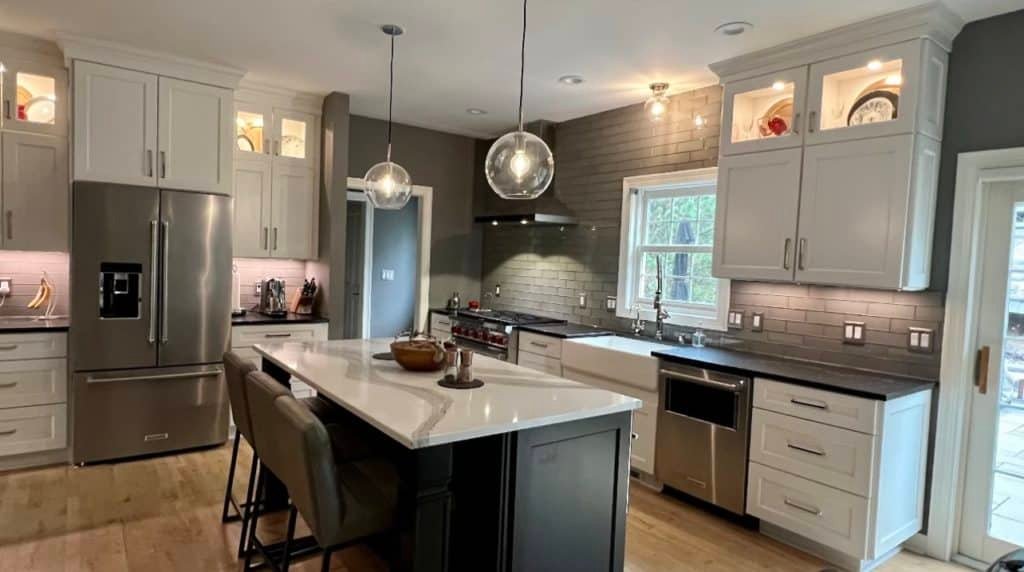
Kitchen remodels are well-suited to winter. Cabinetry installation, countertop templating, tile backsplash work, and appliance connections all happen inside a heated space. Custom cabinetry and specialty finishes can require weeks or even months to manufacture and deliver. Ordering in winter means spring delivery lands on schedule rather than delaying a summer project.
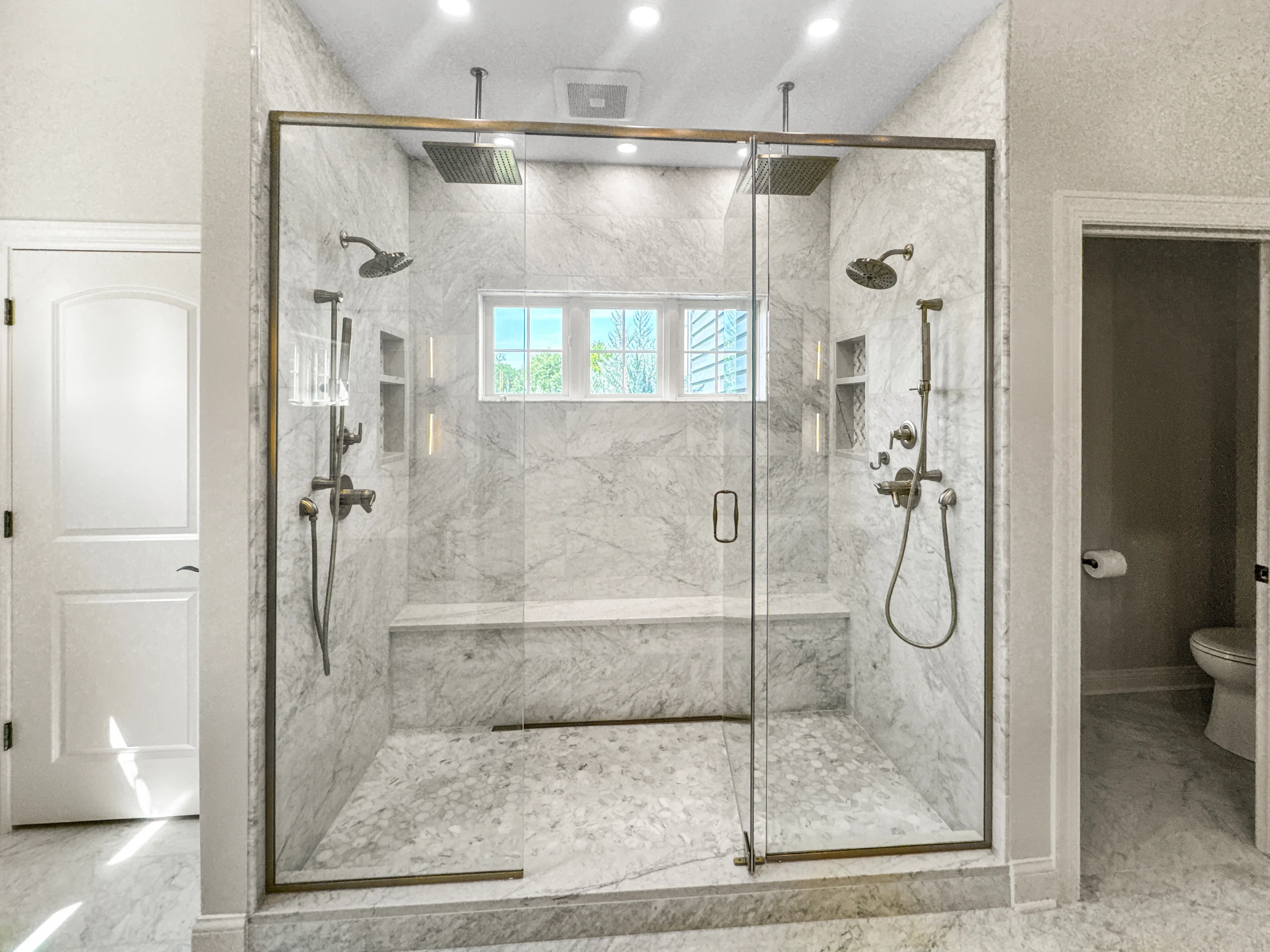
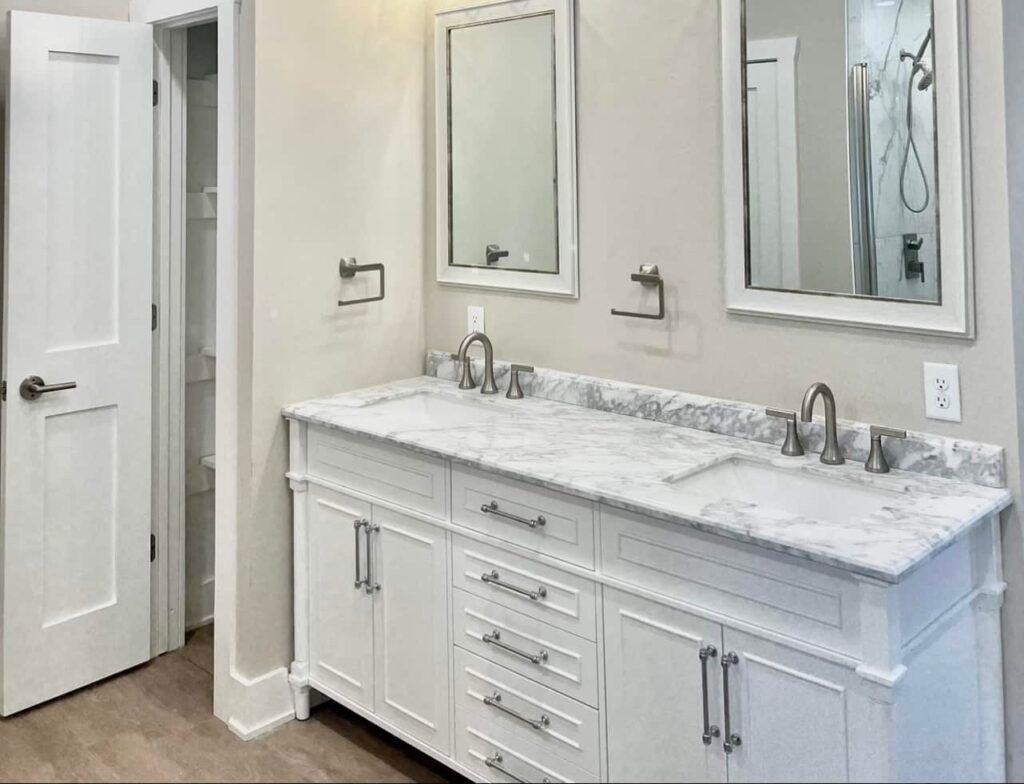
Bathroom remodels work particularly well in winter. The controlled indoor environment matters here: tile adhesives, grout, and waterproofing membranes all cure better at stable temperatures. For a detailed look at what a realistic bathroom remodel budget looks like in Wisconsin, that breakdown covers the full cost range from cosmetic refreshes to full gut-and-rebuild.
Basement finishing is one of the strongest winter projects. The basement is already a controlled environment, and finishing work (framing, insulation, drywall, flooring, electrical) doesn't interact with outdoor conditions at all. For a deeper look at where the money goes, the breakdown of the most expensive parts of finishing a basement is worth reading before you budget.
Flooring replacement benefits from material acclimation (wood and engineered flooring adjust to the home's ambient humidity and temperature before installation, which prevents buckling or gapping after the fact). In a heated Wisconsin home in January, that acclimation happens under controlled conditions rather than in a summer garage with swinging humidity.
Painting and cabinetry upgrades are straightforward winter work. Interior painting requires no weather coordination, and a cabinetry refresh or custom built-in project is purely a function of shop time and installation.
Ordering custom cabinetry or specialty tile in February for a February start puts you behind on materials before the project begins. Lead times can run 8 to 16 weeks or longer depending on manufacturer and finish. Book early, order early.
What You Can't (or Shouldn't) Do in a Wisconsin Winter
Not every project is a good fit for January, and being honest about that matters.
Exterior work has genuine constraints. Concrete and masonry require minimum temperatures to cure properly. Pouring flatwork below 40 degrees Fahrenheit without special cold-weather measures risks a failed slab. Foundation excavation and flatwork are impractical until the ground thaws in spring.
 Remodel - T&J
Frost depth in Wisconsin ranges from 40 to 60 inches depending on county, per the Wisconsin DSPS Uniform Dwelling Code. Waukesha County sits in the deeper end of that range. Deck construction and siding installation face real weather exposure risks in January and February.
None of this is a reason to avoid remodeling in winter. It's a reason to pick the right project type. If your priority is a new deck or a concrete driveway, plan for spring. If your priority is a kitchen, bathroom, or basement, winter is your window.
Wisconsin frost depth requirements under DSPS UDC Table R403.3(1) range from 40 to 60 inches depending on county. Waukesha County falls in the higher range. Exterior foundation and flatwork permits are technically available year-round, but practical execution waits for spring thaw, typically April or later.
Permits in Winter: Does the Off-Season Help?
Yes, and it's one of the most underrated advantages of winter remodeling.
Many Wisconsin municipalities process permit applications faster in the off-season because fewer competing applications are in the queue. The Wisconsin Uniform Dwelling Code (the statewide residential building code administered by the Wisconsin DSPS) doesn't change with the calendar. The same structural, electrical, plumbing, and HVAC permit requirements apply in January as in July. What changes is review speed.
In Waukesha city, permit applications for interior remodels that take four to six weeks to process in May can move through in two to three weeks in January, simply because the queue is shorter. That's a two-week start-date advantage before a single tool hits the wall.
Permits are required for substantive work regardless of season. If your project involves moving a drain line, adding a circuit, modifying structural framing, or changing HVAC routing, a permit is not optional. Unpermitted work discovered during a home inspection is a negotiation liability at resale, sometimes a deal-killer. For a detailed look at what the permit process involves on a bathroom project, the Wisconsin bathroom plumbing permit guide walks through the specifics.
A Waukesha homeowner who skips the plumbing permit on a bathroom remodel to save two weeks can face a forced wall opening at resale inspection. The permit fee is a fraction of that repair cost.
When to Book: The Window Most Homeowners Miss
If you want a January through March start, the conversation with a contractor needs to happen in August through October. If you want a spring start, book before March. That's the cutoff before the spring rush fills the best crews' schedules across southeastern Wisconsin.
The timeline matters for two reasons: schedule and materials. On schedule, spring is the busiest season for remodeling contractors in Wisconsin, and the best crews fill up fast. Booking in winter secures your slot before the rush. On materials, custom cabinetry, windows, and specialty finishes can take weeks to months to manufacture and deliver. A contractor who books your project in February for a February start has no runway to pull permits, finalize design, and order long-lead materials. You end up waiting anyway, just without a confirmed schedule.
T&J's typical lead time runs 4 to 8 weeks depending on season. Booking early locks your slot and gives the project proper runway. John handles every project communication personally, and Telli is on-site running the work. When you book with us, you know exactly who you're working with from the first call to the final walkthrough.
DIY vs. Hiring a Pro for Winter Remodeling
If you've spent time on YouTube before calling a contractor, that's not a problem. It means you understand your project better than most homeowners who call cold. Here's an honest breakdown of where the line falls.
You can reasonably DIY in winter: interior painting, floating floor installations (luxury vinyl plank, laminate), cosmetic hardware swaps, and basic trim work. These are low-stakes, permit-free, and forgiving of learning curves.
 Remodel - T&J
Where pros earn their fee is specific: rough plumbing, electrical panel work and circuit runs, structural framing modifications, and any work that requires a permit and inspection. The reason isn't just skill. It's liability and sequencing.
A plumbing rough-in mistake in a bathroom remodel (projects that run $6,000 to $70,000 depending on scope ) can mean tearing out finished walls to correct a drain slope or a vent stack that failed inspection. The permit and inspection process exists to catch these errors before they're buried behind drywall.
A code violation discovered at resale is a real number problem. Buyers' inspectors flag unpermitted work. Lenders sometimes won't finance a home with open permit issues. The cost of doing it wrong isn't just the repair cost. It's the repair cost plus the schedule delay plus the resale negotiation hit.
Acknowledge what you can do yourself. Then be specific about where the permit requirement and the cost-of-mistakes math tips the calculation toward hiring a licensed pro.
Ready to Plan Your Winter Remodel in Waukesha County?
Three reasons winter works: contractor availability, off-season pricing, and faster permit processing. The booking window is now. Waiting until spring means competing with every other homeowner who had the same idea, at peak-season pricing.
T&J Remodeling offers a free in-home consultation with no cost, no obligation, and a transparent quote before you commit to anything. You'll know what your remodel actually costs before you sign anything. To get started, book a free Waukesha County consultation or visit T&J Remodeling to learn more about our work.
Frequently asked questions
Is it cheaper to remodel in winter in Wisconsin?
Generally yes. Contractor demand drops from roughly November through February, which means schedules open up and some contractors offer off-season pricing to keep crews working. Peak season (May through September) is when labor and material costs run highest. The savings aren't guaranteed. A quality contractor won't slash rates just because it's January. But the combination of more availability, faster scheduling, and occasional material promotions means winter projects in Waukesha County often come in lower than the same scope started in June. Contractors carry fixed overhead year-round. Winter work helps them cover it without the markup that peak demand justifies.
What remodeling projects can be done in winter in Wisconsin?
Interior projects are fair game all winter: kitchen remodels, bathroom remodels, basement finishing, flooring replacement, painting, and cabinetry work. The heated, controlled environment actually helps. Wood and flooring materials acclimate better indoors than in a summer garage. Exterior work (decks, siding, concrete flatwork) has real weather constraints, primarily because of frost depth requirements under Wisconsin DSPS UDC Table R403.3(1) and minimum temperature requirements for concrete and mortar. The rule of thumb: if the work happens inside a heated envelope, winter is fine.
How far in advance should I book a contractor for a winter remodel?
For a January through March start, the conversation should happen in August through October. For a spring start, book before March. Custom cabinetry, windows, and specialty finishes can take weeks to months to manufacture and deliver. If you book in February for a February start, you're already behind on materials. Booking early locks your schedule slot and gives the contractor time to pull permits, finalize design, and order long-lead items before your start date.
Do permits take longer in winter in Wisconsin?
No. The opposite tends to be true. Many Wisconsin municipalities process permit applications faster in the off-season because fewer projects are in the queue. The Wisconsin UDC requirements are identical year-round. What changes is review speed. In Waukesha city, interior remodel permits that take four to six weeks in May can process in two to three weeks in January. If your project requires permits for plumbing, electrical, structural, or HVAC work, submitting in winter often means faster approval and an earlier start date.
Can a contractor remodel my home in Wisconsin when it's below zero outside?
For interior work, yes. The outdoor temperature is largely irrelevant once the crew is working inside a heated home. The contractor may need to manage temporary heat for areas that are opened up (for example, if an exterior wall is being modified), but this is standard practice. The real constraints are exterior: concrete can't be poured below 40 degrees Fahrenheit without special measures, and frost depth of 40 to 60 inches in Wisconsin per DSPS UDC Table R403.3(1) makes foundation work impractical in winter. If your project is a kitchen, bathroom, or basement remodel, a Wisconsin winter is not a barrier.
Why do contractors recommend booking a remodel in winter even for a spring start?
Two reasons: schedule and materials. Spring is the busiest season for remodeling contractors across southeastern Wisconsin, and the best crews fill up fast. Booking in winter secures your slot before the rush. Custom cabinetry, tile, windows, and specialty finishes often have lead times that run weeks to months depending on manufacturer and finish complexity. If you want a May start, your contractor needs to order materials in February or March. Waiting until April to call means your spring remodel becomes a summer remodel at best, and at peak-season pricing.