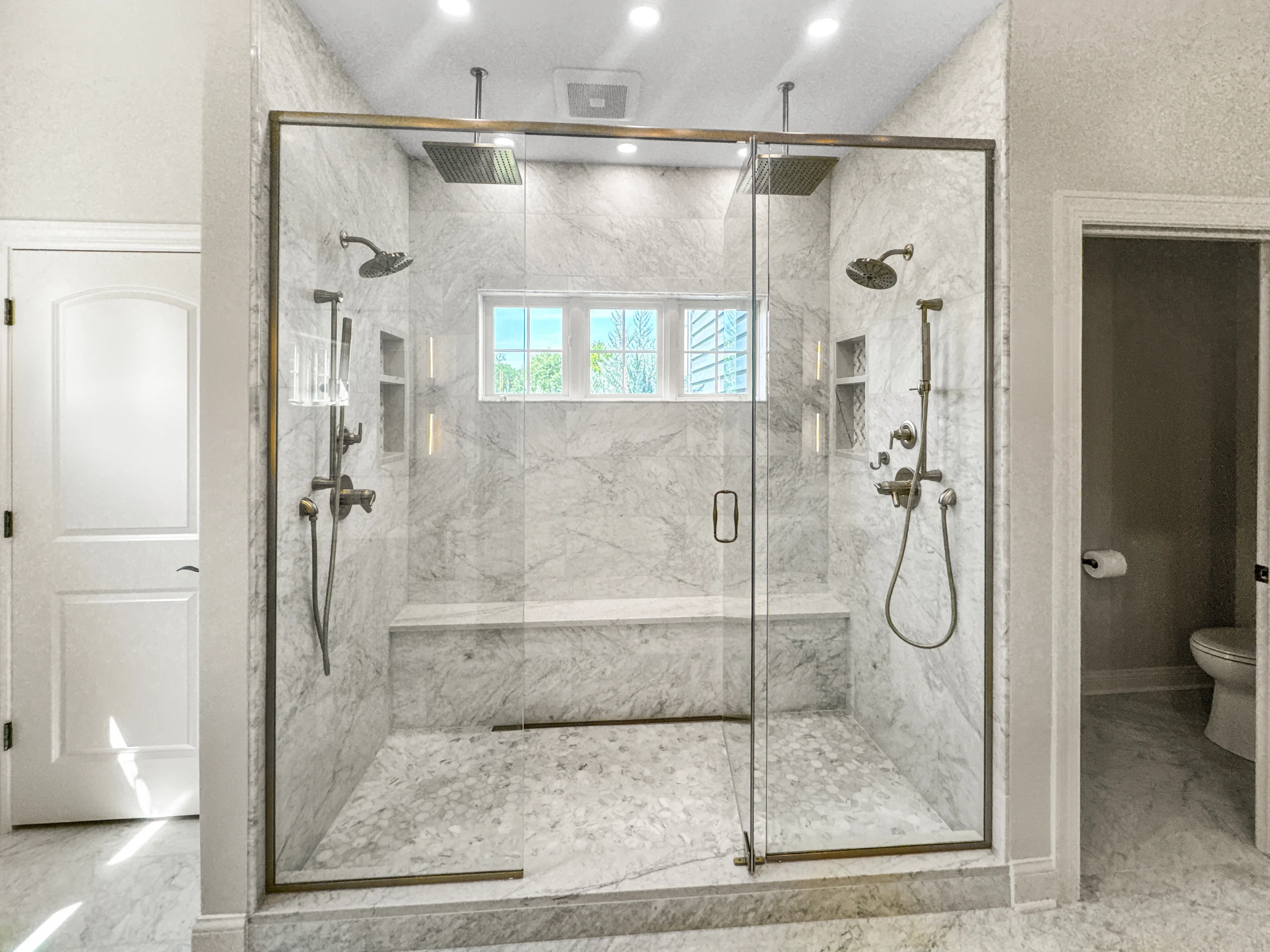
Kitchen project - T&J
Get a timeline estimate for your kitchen remodel, we'll walk you through each phase and show you where delays typically hide.
The Short Answer: 6-12 Weeks Once Construction Starts
Picture a 1960s Brookfield ranch with a galley kitchen. Keep the sink, range, and fridge in the same spots and just swap cabinets, countertops, and appliances, and you're looking at 6 to 8 weeks of on-site work, per We Do Kitchens' Southeast Wisconsin timeline data. Move that sink to the other wall, open up to the dining room, or add an island, and the rough-in plumbing and electrical push you to 10 to 12 weeks. Bring in fully custom cabinetry on top of structural changes and you can blow past three months.
In the kitchens we've managed across Waukesha County, the single most-missed detail is that these weeks are construction only. They don't count the two-plus months of planning, permit review, and cabinet manufacturing that come first. A contractor who quotes you a tidy six-week number without ever mentioning lead times is quoting the easy half of the job.
Custom cabinets alone take 2 to 3.5 months to manufacture after they're ordered, per Wisconsin remodeler Remodeling Journey, longer than the entire construction phase of a simple remodel.
Phase 1: Planning, Design, and Material Selection (2-8 Weeks Before Demo)
Before anyone touches a wall, you'll spend somewhere from a few weeks to a couple of months on design and selections, per Gryphon Consulting's timeline guide. The range is that wide because it depends on two things: how fast you make decisions, and how long your materials take to source. A homeowner who shows up with a clear style and a budget moves fast. One who wants to "decide the countertop later" stretches this phase out, and every day of delay here cascades into the construction schedule.
The big timeline drivers in this phase:
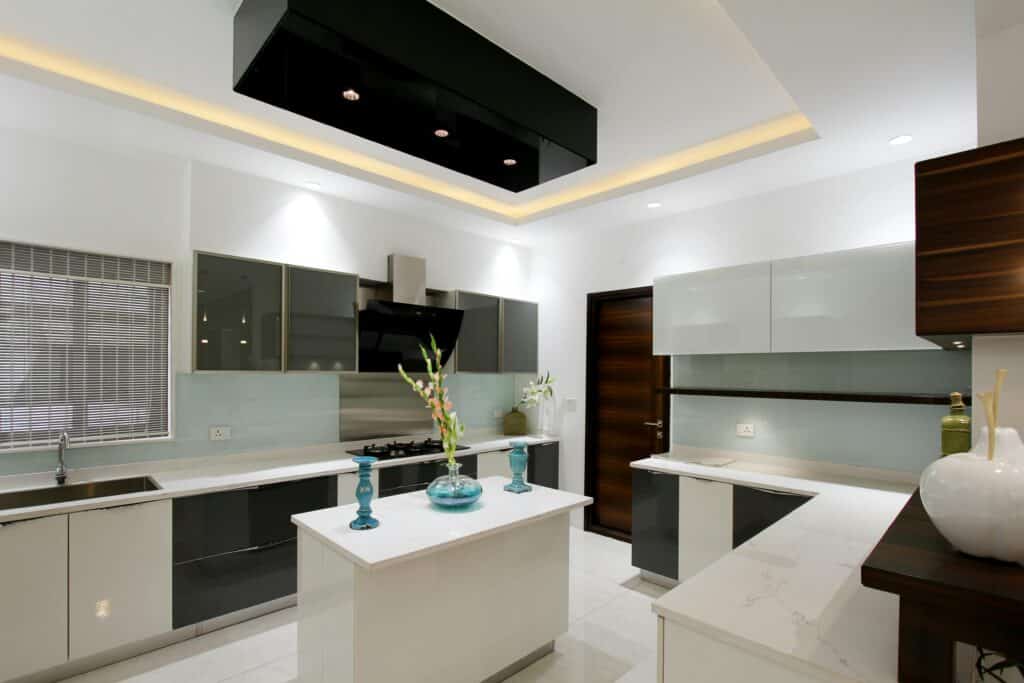 Kitchen - T&J
Want this priced for your kitchen?
John walks your space, measures it, and leaves a written itemized estimate. No cost, no obligation, no sales script.
- Cabinet type. Stock cabinets ship in days. Semi-custom runs a few weeks. Fully custom takes 2 to 3.5 months to build.
- Countertop material. Quartz, granite, and laminate all template and fabricate on different clocks.
- Appliance lead times. Specialty and pro-grade units can backorder for weeks.
Before you sign anything, ask each contractor: "When do you need every selection finalized?" A vague answer means mid-project pauses. A contractor with a complete scope hands you a selections deadline in writing, because they know an unmade decision is a stalled crew.
Once you've locked your cabinet type and material selections, use our kitchen remodel cost calculator to see how timeline and budget align for your specific scope.
This is also where comparison shoppers catch the difference between a thorough bid and a thin one. The thorough bid orders cabinets at contract signing so they're being built while permits process. The thin one waits until demo is done, and then your crew sits idle for two months.
Phase 2: Permits in Wisconsin, What Requires One and How Long It Takes
In Wisconsin, any kitchen remodel that moves plumbing, upgrades electrical, or makes structural changes requires a permit under the Uniform Dwelling Code (UDC), the state code governing one- and two-family dwellings, administered by the Wisconsin Department of Safety and Professional Services. Cosmetic-only work like paint and hardware usually doesn't. For a deeper dive into Wisconsin's permit requirements, see our complete guide to kitchen remodel permits in Wisconsin. Review times vary by municipality: New Berlin and Pewaukee can turn permits around in a few days, while a smaller town like Menomonee Falls or Elm Grove with a part-time inspector may take one to two weeks.
Here's where the "lowest bid wins" instinct gets dangerous. If one contractor's quote is cheaper partly because they "don't bother with permits," that's not a savings, it's a liability transfer. An unpermitted remodel risks a stop-work order mid-project and turns into a headache at resale, when a buyer's inspector finds work that was never signed off.
A contractor who calls permits "optional" for a plumbing or electrical move is handing you the legal exposure to keep their number low. When the open permit surfaces at closing, it's your problem, not theirs.
John, our co-founder and lead project manager, a credited contractor in the state of Wisconsin who has pulled permits across Waukesha County for years, handles every permit himself as part of running each job A to Z. On a Brookfield remodel, that habit caught an electrical scope item the homeowner's previous bid had left out of the permit entirely; flagging it before drywall went up saved a wall-opening do-over and a failed inspection. That's why we pull permits upfront instead of treating them as paperwork to chase later. Ask every contractor you're interviewing: "Who pulls the permits, and what's your typical wait time in this municipality?"
Phase 3: Demolition (1-2 Weeks, Sometimes Less)
Demo runs 1 to 2 weeks for a full remodel and as little as a few days for cosmetic-only work, per We Do Kitchens and Gryphon Consulting. The variable that blows demo schedules isn't the tear-out, it's what's hiding behind the walls.
Waukesha County's housing stock skews older. A 1955 Wauwatosa cape or a 1960s Brookfield ranch routinely turns up knob-and-tube wiring, galvanized supply pipes, mold behind old cabinets, or a wall that's load-bearing when the plans said it wasn't. On one Elm Grove ranch we remodeled, demo exposed a partition wall carrying ceiling load that the original drawings showed as non-structural. Because the contract carried a contingency line and we had already flagged the load-bearing risk during the permit review, we managed it as a planned schedule adjustment, no panic, no surprise cost overrun. None of that is a contractor failure; it's the reality of remodeling homes 40 to 60-plus years old.
A low bid with no contingency line means you absorb 100% of those discoveries as change orders. A complete bid builds in a contingency so a surprise pipe doesn't trigger a panic decision while your kitchen sits gutted.
The practical question for every contractor: "What happens to the schedule and the price if you find something behind the walls?" A real builder has a clear answer. A low-baller changes the subject.
Phase 4: Rough-In Work and Inspections (2-3 Weeks)
Rough-in, the plumbing, electrical, and HVAC that lives inside your walls, takes 1 to 2 weeks, per We Do Kitchens' phase data. Then comes the part low bids quietly skip: a rough-in inspection (the city's sign-off that wiring and pipes are correct before drywall hides them). Closing walls before that inspection passes is a code violation and a future nightmare.
That inspection has to be scheduled, and inspector availability adds several days depending on the municipality, some suburban Waukesha County towns run part-time inspectors. After it passes, drywall and flooring follow, another 2 to 3 weeks. Add it up and this cluster lands around 3 to 5 weeks.
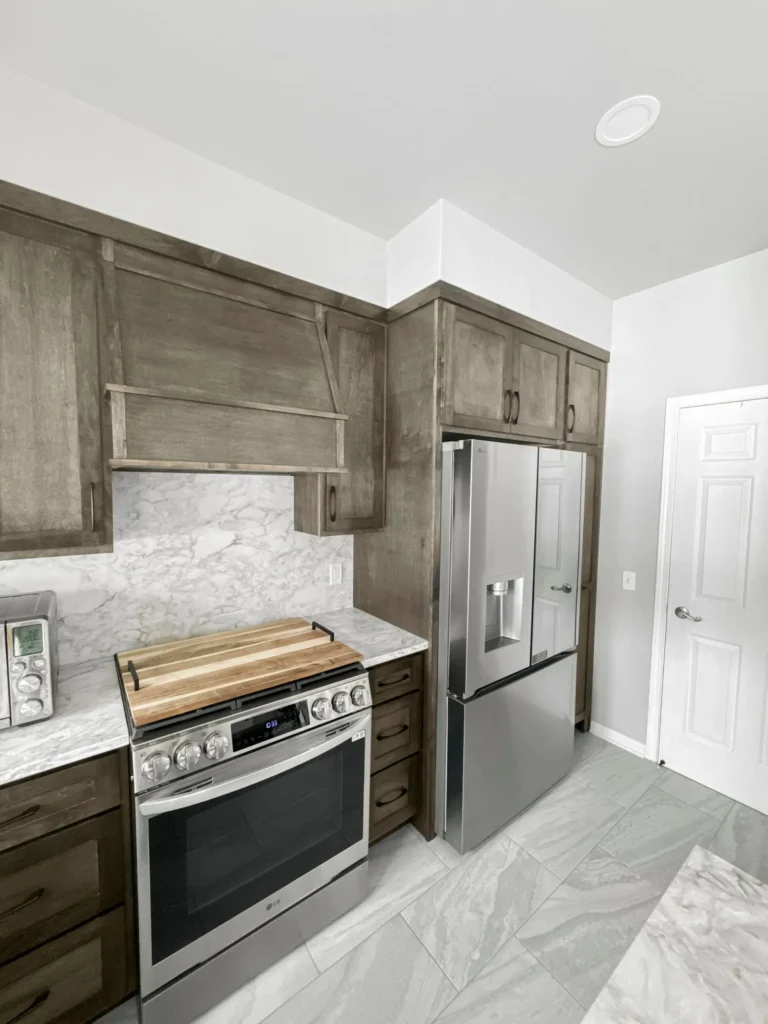 Kitchen - T&J
Under the Wisconsin UDC, electrical and plumbing rough-in must be inspected before the walls are closed. A contractor who frames "we just keep moving" as efficiency is skipping a legally required step.
This is the math that exposes an unrealistic quote. If a contractor promises four weeks total for a full remodel, they're either skipping inspections or pretending inspection scheduling takes zero days. Both are red flags. Ask point-blank: "Do you schedule the rough-in inspection before closing walls, or do you move ahead?"
Phase 5: Cabinets, Countertops, and Appliances (2-4 Weeks)
Cabinet installation itself is fast, about 1 week on-site once the boxes are delivered. The sequencing is what catches people off guard. Countertops are templated after cabinets are set, not before, the fabricator measures the actual installed base, cuts the slab, then returns to install. That cycle adds 1 to 2 weeks, and the material matters: quartz, granite, and laminate fabricate on different timelines.
Appliances typically go in alongside the countertops, another 1 to 2 weeks. All in, budget 2 to 4 weeks for this phase.
The single most schedule-compressing question you can ask: "When are cabinets ordered, at contract signing or after demo?" Ordering at signing means they're built and waiting when you need them. Ordering after demo can park your crew for two months while a custom order processes.
If you're weighing layout choices that affect this phase, our kitchen remodeling service page walks through what we handle for Waukesha County kitchens from design through final walkthrough.
Phase 6: Final Trim, Inspection, Punch-Out, and Cleanup (~1 Week)
The last week is the one homeowners forget to ask about. Under the Wisconsin UDC, final plumbing and electrical inspections have to pass before the kitchen is officially complete. Around that, the crew finishes trim carpentry, sets hardware, hangs and tunes cabinet doors, runs final paint and touch-up, caulks the backsplash and countertops, and does a deep cleanup before handoff, the punch list, about 1 week total.
A contractor who hands you the keys and asks for final payment before the final inspection has passed is leaving you holding an open permit. Closing that permit later is your problem, and an open permit can stall a future home sale.
One clean question settles it: "Do you close all permits before final payment?" A complete scope says yes without hesitating. This phase is short, but it's the difference between a finished kitchen and a kitchen that looks finished with paperwork still hanging open.
What Makes Wisconsin Kitchen Remodels Take Longer Than the National Average
Four Wisconsin-specific factors stretch local timelines:
Winter logistics.
January through March, material deliveries and dumpster pickups slow down, and frozen ground complicates anything touching the exterior.
Older housing stock.
Waukesha County's mid-century homes carry higher discovery risk during demo, see Phase 3.
Municipal inspection schedules.
Towns like Elm Grove and Menomonee Falls may run part-time inspectors, so rough-in and final inspections wait on availability.
Contractor booking lead times.
Reputable builders in the Milwaukee and Waukesha market book out, so a contractor who can "start next week" in peak season is worth a second look.
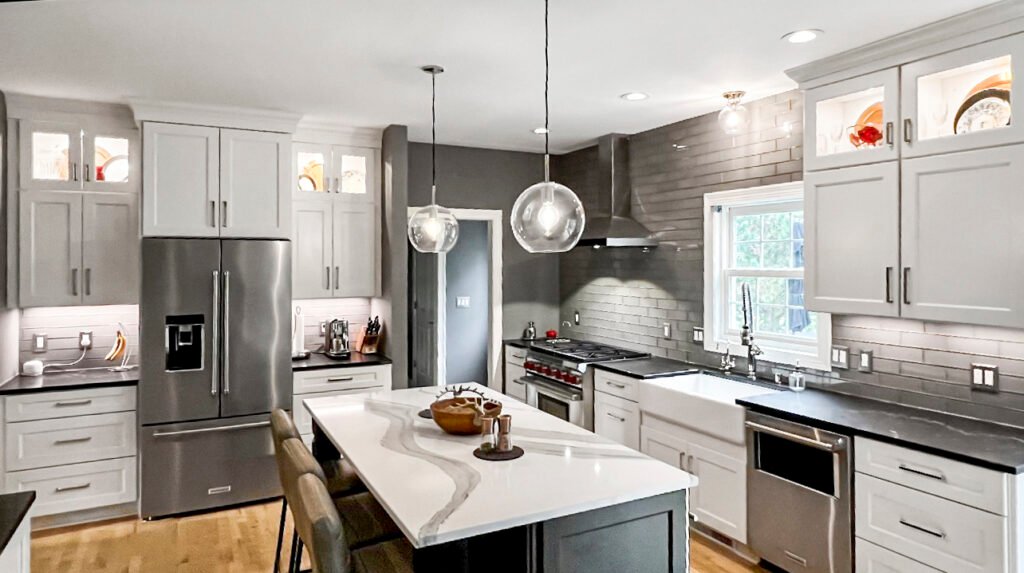 Kitchen - T&J
For reference, T&J's booking lead time typically runs 4 to 8 weeks depending on the season. With 35-plus years of combined remodeling experience and roughly a decade building kitchens across Waukesha County, we've learned that a full schedule isn't a delay, it's what demand looks like. It's also why we tell homeowners chasing a holiday deadline to start the search three to four months out. Living through the work is its own adjustment; here's how to handle living through an active kitchen remodel without losing your mind.
Questions to Ask Every Contractor About Their Timeline (Before You Sign)
This is the part that pays off if you're interviewing three contractors. Ask all three the same questions and watch how the answers diverge, that's how you separate a complete bid from a low-ball one.
When do you order cabinets, at contract signing or after demo?
Ordering at signing compresses the whole timeline.
Who pulls the permits, and what's your typical wait time in this city?
Tells you whether they've worked in your municipality.
What happens to the schedule and budget if you find something behind the walls?
A real answer means a contingency line.
Do you close all permits before final payment?
Anything but a clear yes is a red flag.
How many other projects will run at the same time as mine?
A crew split across six jobs moves slower than the schedule claims.
What's your current booking lead time?
Honest contractors give a real number, usually weeks out, not "tomorrow."
If a contractor can't walk you through a phase-by-phase schedule when you ask, the timeline they quoted isn't real, it's a sales number. The cheapest bid that skips permits, contingency, and inspection time isn't cheaper. It just moves those costs to a column you don't see until you're three weeks into a gutted kitchen. For more on dodging the predictable pain points, read our guide to avoiding the most common renovation stress points.
Ready to map your kitchen timeline? Schedule a free in-home scope review and we'll walk you through every phase, pull your permit picture for your specific municipality, and give you a realistic completion date, with the budget to match.
Frequently asked questions
How long does a kitchen remodel take from start to finish in Wisconsin?
From your first consultation to cooking dinner in the new kitchen, plan on 3 to 6 months total for most Wisconsin homeowners. That spans 2 to 8 weeks of planning, permit review, material lead times, and 6 to 12 weeks of construction. The total dwarfs the construction window because the build can't start until cabinets are built and permits are approved, which means the gap between "we signed" and "demo starts" is where most people get surprised, and why a complete contractor accounts for that gap upfront.
Do I need a permit for a cosmetic kitchen remodel?
Usually no, swapping cabinet doors, painting, replacing hardware, and some flooring don't require a permit under the Wisconsin UDC. The reason is that those changes don't touch the systems the code is built to protect: plumbing, electrical, and structure. Which means the moment your "cosmetic" project grows to include moving the sink or adding a circuit, it crosses into permit territory, so confirm the line with your contractor before you assume you're exempt.
Why do custom cabinets take 2 to 3.5 months?
Because they're built to order, not pulled off a shelf, per Wisconsin remodeler Remodeling Journey's lead-time data. Which means the manufacturer doesn't start milling, assembling, and finishing until your order is placed and your selections are locked. So a delay in your decisions directly delays the entire project, and ordering at contract signing instead of after demo is the single biggest lever you have to keep the timeline tight.
What happens if demo finds hidden problems?
On a contract with a contingency line, a discovery like knob-and-tube wiring or a galvanized pipe becomes a planned schedule adjustment instead of a crisis. The reason it matters so much in Waukesha County is that much of the housing stock is 40 to 60-plus years old, so these finds are common, not rare. Which means a bid with no contingency line isn't a lower price, it's a guarantee that every surprise lands on you as a change order while your kitchen sits gutted.
Can I speed up the timeline by ordering cabinets early?
Yes, it's the most effective way to compress the schedule. Because cabinet manufacturing is the longest single lead time in the project (up to 3.5 months ), ordering at contract signing means they're being built while permits process and demo happens. So instead of stacking the cabinet wait on top of construction, you run it in parallel, which can pull weeks off your completion date without rushing a single phase of the actual work.
Can a kitchen remodel really be done in 6 weeks?
Yes, but only with a same-footprint layout, stock or semi-custom cabinets ordered before demo, permits already approved, and no surprises behind the walls. Six weeks works in that scenario because you've removed every phase that adds time: no rough-in for relocated plumbing, no custom-cabinet wait, no structural engineering. The moment you move a sink or open a wall, you add rough-in, an extra inspection, and coordination, which is why the same kitchen can swing to 10 to 12 weeks.