Kitchen project - T&J
Get those three things right, and the hood actually clears smoke, steam and cooking smells instead of just making noise.
Ducted or Recirculating: What Wisconsin Allows
There are two kinds of range hood:
- Ducted hoods pull air out of the kitchen and send it outside through a duct. In Wisconsin, that exhaust has to terminate outside the structure, not in an attic or wall cavity, and it needs a damper that closes when the fan is off.
- Recirculating hoods pull air through charcoal filters and release it back into the kitchen. Wisconsin does not require a listed recirculating hood to be balanced with makeup air, because it does not remove air from the house.
This Old House calls venting outside the better choice, says a recirculating hood is better than no ventilation at all, and advises against recirculating hoods for pro-style ranges.
Wisconsin's dwelling code requires all exhaust vents to terminate outside the structure, with automatic or gravity dampers that close when the system is not running.
How Big a Range Hood Do You Need?
This Old House gives these rules of thumb:
| Situation | Suggested airflow or size |
|---|---|
| Standard cooktop against a wall | About 100 cfm per linear foot of cooking surface |
| Pro-style range | 100 cfm per 10,000 BTUs of output |
| Island hood, standard cooktop | 150 cfm per linear foot, to offset cross drafts |
| Island hood, pro-style range | 200 cfm per 10,000 BTUs |
| Hood mounted higher than suggested | Add 100 cfm for every 3 inches of extra height |
| Hood width | At least as wide as the cooking surface; 3 extra inches on each side helps |
| Mounting height | About 30 inches above the cooktop for wall and island hoods; 24 inches for under-cabinet hoods |
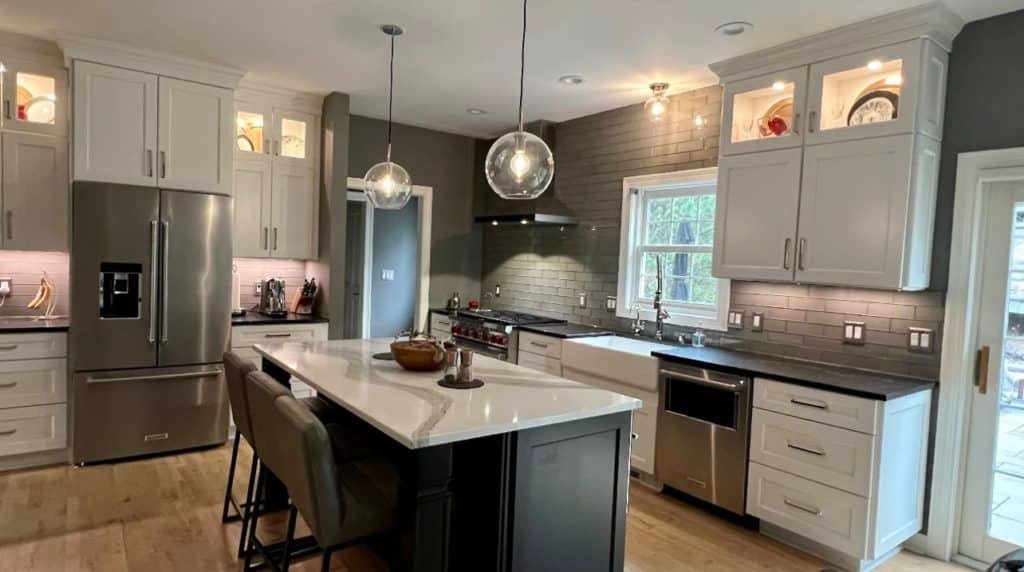 Kitchen - T&J
For example, a standard 30-inch cooktop is 2.5 feet wide, so the rule of thumb points to about 250 cfm for a wall hood. A larger hood is not automatically better, because bigger fans move more air out of the house, which is where makeup air comes in.
Want this priced for your kitchen?
John walks your space, measures it, and leaves a written itemized estimate. No cost, no obligation, no sales script.
Ducting: Getting the Air Outside
The duct matters as much as the fan. This Old House recommends:
- Duct size: the same size as the hood's vent opening or slightly larger; a typical 400 cfm hood needs a 6-inch duct.
- Material: smooth galvanized metal, not flexible or corrugated duct.
- Route: as straight and short as possible, using gradual 45-degree turns rather than sharp 90-degree ones.
In Wisconsin, the duct must end outside the house, and the damper keeps winter air from pouring back in when the hood is off. Plan the route early in a kitchen remodel. Running a duct through an outside wall is usually simpler than going up through a second floor or attic, and an island hood needs a path through the ceiling.
Makeup Air: The Wisconsin Rule
Every cubic foot of air a hood sends outside has to be replaced by air coming in from somewhere. Wisconsin's dwelling code handles this through its ventilation balancing rules:
Mechanical ventilation must be balanced.
With limited exceptions, the air a home's ventilation system exhausts has to be matched by air coming in.
A range hood that exhausts counts.
Kitchen range hoods that exhaust air from the kitchen are considered exhaust ventilation for balancing and makeup air.
Passive makeup air has a minimum.
A passive intake duct that supplies makeup air for intermittent exhaust fans must be sized for at least 40% of the total air all of the home's intermittent exhaust fans would remove running at the same time.
Air leaks only count in some homes.
Air leaking in through the house can count as makeup air only when there are no naturally vented space-heating or water-heating appliances. Those are appliances that take combustion air from inside the home, including unsealed fireplaces and draft hood appliances with power venting.
Many national guides say makeup air is needed for hoods over 400 cfm. Wisconsin's rule is written differently: an exhausting hood of any size counts toward the home's ventilation balance. If your home has a naturally vented water heater, furnace or fireplace, a powerful hood without planned makeup air can pull air back down those flues, so bring your heating contractor into the plan.
What a Range Hood Costs
This Old House says most mid-priced, stylish hoods can be bought and installed for about $400 to $1,500. The total climbs when the kitchen has never had a ducted hood, because the duct route, wall or roof cap and any makeup air system are added work. In a full kitchen remodel, appliances and ventilation together make up about 14% of a typical budget.
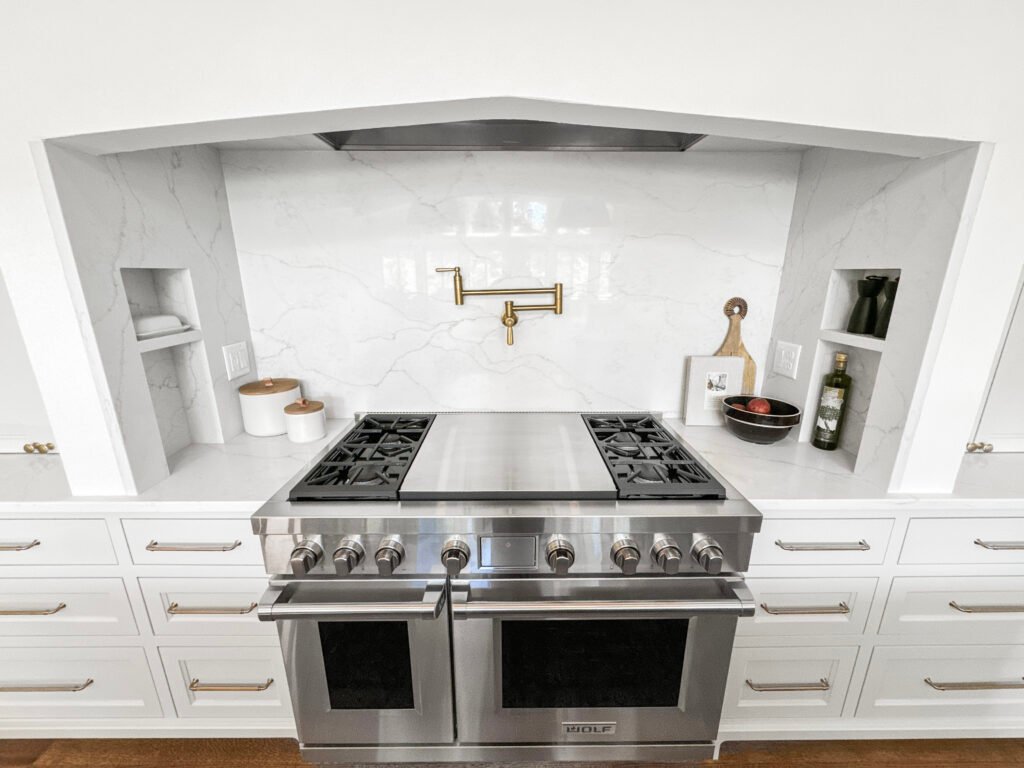 Kitchen - T&J
Planning the Hood in a Kitchen Remodel
Choose ducted or recirculating.
Ducted is the better performer; recirculating suits kitchens where no duct route exists.
Size it to the cooktop.
Use the per-foot or per-BTU rule, and add for an island or a high mounting height.
Map the duct route.
Short, straight and smooth, ending outside with a damper.
Check for naturally vented appliances.
They change whether air leaks can count as makeup air.
Plan makeup air with your HVAC contractor.
A passive intake duct must meet the 40% minimum.
Ask about permits.
New duct openings through an outside wall or roof are the kind of work your building inspector may need to see.
If the hood is going over an island, our kitchen island cost guide for Waukesha County covers the rest of the island, and our guide to moving a kitchen sink or adding an island sink covers the plumbing. Opening a wall to create an open kitchen changes the hood's position too; see our open concept kitchen remodel guide. A new induction range or other new appliances can add electrical load; our guide to electrical panel upgrade cost explains when that matters.