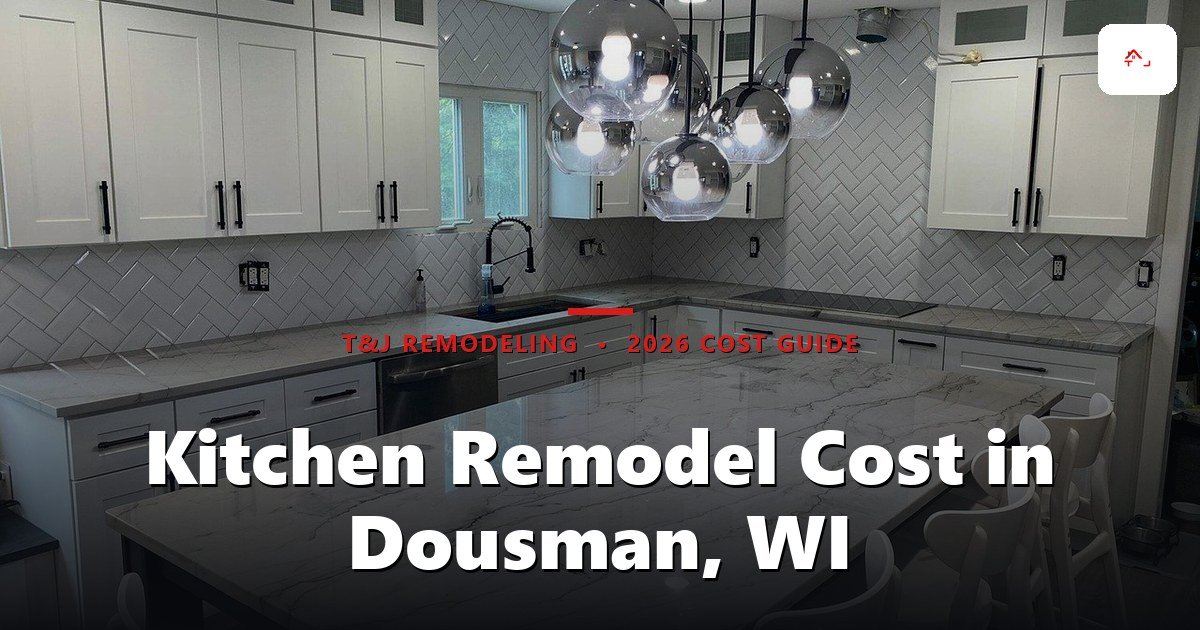
Kitchen project - T&J
When a Kitchen Remodel Needs a Permit in Waukesha
Wisconsin's Uniform Dwelling Code (UDC), the statewide minimum building standard for one- and two-family homes, administered by the DSPS (Department of Safety and Professional Services) under chapters SPS 320-325, is the governing authority here. Waukesha County and the City of Waukesha both use the UDC as their baseline (Residential Additions & Alterations). This isn't T&J's opinion; it's state law.
| Permit Required | No Permit Required |
|---|---|
| Removing or modifying a load-bearing wall | Replacing cabinets in the same footprint |
| Adding or extending an electrical circuit | Swapping countertops (same layout) |
| Relocating a sink, drain, or supply line | Installing new flooring |
| Rerouting or adding a gas line | Painting walls or ceilings |
| Extending HVAC ductwork to remodeled areas (Residential Additions & Alterations) | Replacing a faucet at the same location |
| Installing a structural beam | Swapping a light fixture on an existing circuit |
Structural vs. Cosmetic Work: Where the Line Is Drawn
Take a 1960s Waukesha ranch with a galley kitchen and a wall separating it from the dining room. The owner wants to open that wall, add an island with a sink and outlets, and upgrade to a gas range. That's four separate permit triggers. Here's what each one means in practice.
Structural work: Removing a wall between the kitchen and dining room requires a building permit. The inspector will want a site plan and the engineer's specification for the replacement LVL beam (Laminated Veneer Lumber, a structural header that carries the load the removed wall was supporting). A contractor who says "we'll figure out the beam size on-site" hasn't done the engineering.
 Kitchen - T&J
Want this priced for your kitchen?
John walks your space, measures it, and leaves a written itemized estimate. No cost, no obligation, no sales script.
Electrical work: Adding a dedicated 20-amp circuit for a new appliance, extending wiring to island outlets, or adding under-cabinet lighting on a new circuit triggers an electrical permit under SPS 316. In Waukesha, only licensed electrical contractors may obtain electrical permits and perform the work (Residential Additions & Alterations). A like-for-like fixture swap on an existing circuit is generally exempt, the moment you extend that circuit, the exemption ends.
Ask your electrician whether the island outlet circuit is new or extended from an existing one. That single question tells you whether an electrical permit belongs in the quote.
Plumbing work: Moving a sink to a new island location requires a plumbing permit. The inspector verifies drain routing, trap location, and supply connections at rough-in, before the subfloor closes over them. Same-location faucet swaps are exempt. Relocate the drain even a short distance, and the exemption ends. Only licensed plumbing contractors may obtain plumbing permits in Waukesha (Residential Additions & Alterations).
Gas work: Rerouting or extending a gas line for a range or cooktop requires a separate gas permit under SPS 320. Gas work must be performed by a licensed plumber or gas fitter and inspected before the line goes into service. If a contractor's quote covers a gas range installation but doesn't mention a gas permit, ask directly.
HVAC: Extending ductwork to serve a reconfigured kitchen layout requires a separate HVAC permit (Residential Additions & Alterations). This is frequently missing from low-bid quotes on projects that shift the kitchen footprint.
A contractor who skips permits on electrical or plumbing work isn't saving you money, they're moving legal and financial liability onto you. That liability surfaces at the worst possible time: a home sale, an insurance claim, or a stop-work order.
The same permit logic applies when you're planning a bathroom remodel, the structural, electrical, and plumbing thresholds are identical under Wisconsin's UDC.
Wisconsin's Governing Code: What SPS 320-325 Actually Says
Wisconsin is a state-administered code state, local municipalities must meet UDC minimums but may add local requirements on top. The DSPS publishes the full code text at dsps.wi.gov. All materials and work in a Waukesha kitchen remodel must comply with the UDC (Residential Additions & Alterations).
For local amendments, verify with the City of Waukesha Building Inspection Division at 201 Delafield St. For projects in unincorporated Waukesha County, contact the County's land use department to confirm jurisdiction before applying.
Contractors applying for a residential alteration permit in Waukesha must provide both a Dwelling Contractor Certification (DC) and a Dwelling Contractor Qualifier Certification (DCQ) (Residential Additions & Alterations). If a contractor can't produce both credential numbers on request, they cannot legally pull your permit.
How to Apply for a Kitchen Remodel Permit in Waukesha
The process differs depending on whether your project is in the City of Waukesha (Building Inspection Division, 201 Delafield St.), unincorporated Waukesha County, or the Village of Waukesha, which has its own building inspector and requires plans submitted directly to the Village (Village of Waukesha,WI). Confirm jurisdiction before you submit anything.
Step 1, Determine jurisdiction. City, county, or village? Each has a separate submission process. Getting this wrong delays your start date.
Step 2, Gather documents. You'll need: a site plan showing the kitchen layout, a written scope-of-work description, and your contractor's DSPS credential numbers (DC and DCQ) (Residential Additions & Alterations). In the Village of Waukesha, you'll also need the property tax key number (Village of Waukesha,WI). Missing any of these restarts the clock.
Step 3, Submit the application. Use the DSPS online permit portal or submit in person at the relevant building department. The Village of Waukesha requires direct submission to the Village (Village of Waukesha,WI).
Step 4, Pay the permit fee. Waukesha uses a valuation-based fee schedule, fees scale with declared project value. The permit is not considered issued until the application is reviewed, approved, and the fee is paid (Village of Waukesha,WI). See the fee section below for documented amounts.
Step 5, Await approval. Typical residential kitchen permit processing in Waukesha County runs 1-3 weeks from a complete application. Incomplete submissions restart the clock.
Step 6, Post the permit on-site before work begins.
Who pulls the permit? In Wisconsin, a licensed contractor pulls the permit under their own DSPS credential number. Only homeowners who reside at the job address may submit permit applications themselves (Residential Additions & Alterations), and that's only appropriate if you're genuinely doing the work yourself. If a contractor asks you to pull the permit for their work, they're either avoiding accountability or aren't properly credentialed. John, our Wisconsin-credited project manager, handles permit pulling as a standard part of every T&J project scope, not a separate line item, not delegated.
Waukesha Inspection Timeline: What to Expect
A permitted kitchen remodel requires at minimum two inspections: rough-in and final.
Rough-in inspection happens after framing, electrical wiring, plumbing, and gas lines are in place, but before drywall closes over them. In Waukesha, plan for a 3-7 business day scheduling window and build that into your timeline so your drywall crew isn't waiting on an inspector.
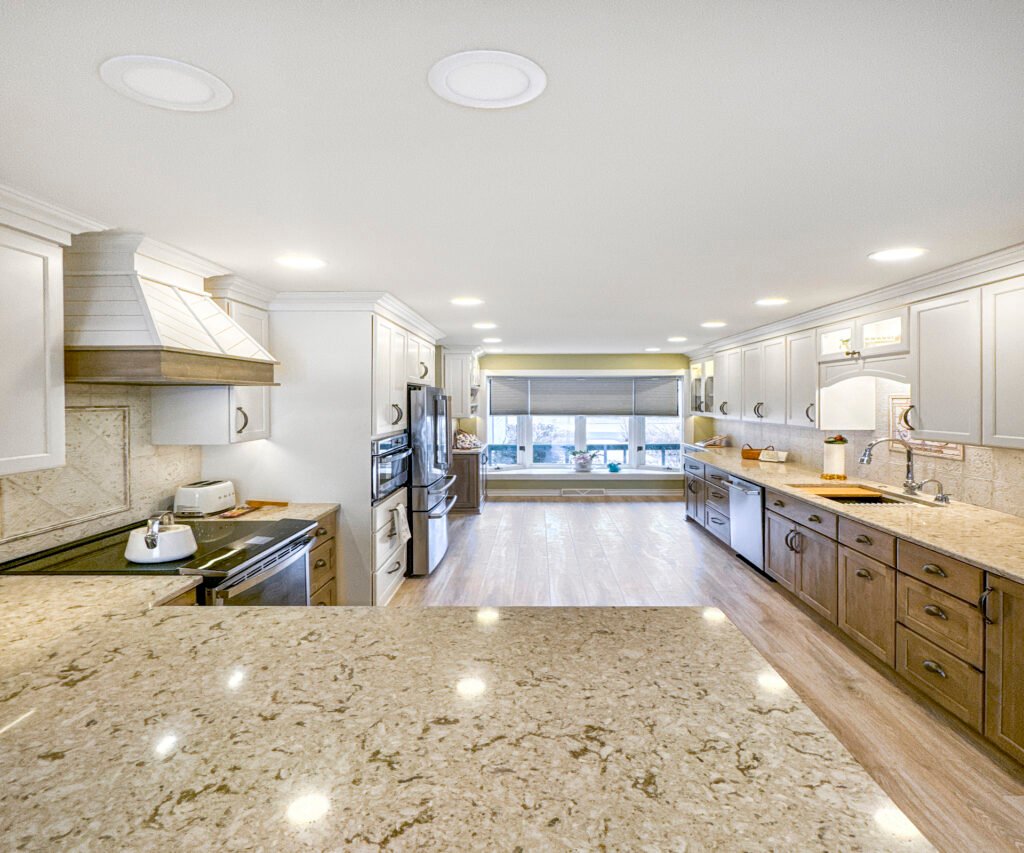 Kitchen - T&J
A missed rough-in means opening finished walls. A failed inspection means a re-inspection fee and a schedule delay that ripples through every trade that follows.
Common rough-in failures: missing engineer's stamp on a structural beam spec; wrong wire gauge for a dedicated appliance circuit; improper GFCI placement at countertop outlets; drain slope that doesn't meet SPS 382; gas line not pressure-tested before inspection.
If a contractor says "we'll handle inspections as we go" without naming specific milestones, ask when the rough-in is scheduled. That question alone separates organized contractors from chaotic ones.
Village of Waukesha building inspector office hours are Tuesdays and Thursdays, 8:30-10:00 a.m. only (Village of Waukesha,WI). If your project is in the Village, factor that limited window into your schedule, a contractor unfamiliar with this will lose days.
What Happens If You Skip the Permit
Three scenarios where skipping a permit costs far more than the permit ever would:
Home sale. A buyer's inspector flags unpermitted electrical or plumbing work. You now face three options: pull a retroactive permit (which may require opening finished walls), reduce the sale price, or watch the deal fall through. Wisconsin sellers must disclose known material defects, unpermitted structural or systems work qualifies.
Insurance claim. If a kitchen fire starts in an unpermitted electrical circuit, your homeowner's insurer can deny the claim. The unpermitted work becomes the proximate cause, and the policy exclusion applies.
Stop-work order. A neighbor complaint or routine inspection triggers a stop-work order. The project stops, the crew leaves, and fines begin accumulating under Wisconsin municipal enforcement authority.
To understand what a complete kitchen remodel scope looks like in Waukesha, permit line items should appear explicitly in every quote. The cheapest bid that skips permits isn't saving you money, it's deferring a larger cost to you at the worst possible time.
Questions to Ask Every Contractor Before You Sign
These five questions work on every bid you're comparing, including ours.
"Does your quote include pulling all required permits, or is that a separate line item?"
Permit pulling should be baked into scope. A contractor who says "permits are your responsibility" is transferring legal liability to you.
"What is your DSPS contractor credential number?"
In Wisconsin, a licensed contractor must provide both DC and DCQ certifications to obtain an alteration permit (Residential Additions & Alterations). If they can't answer on the spot, they can't legally pull your permit.
"Who schedules the rough-in inspection, and is that built into your timeline?"
The answer should name a specific person, a project phase, and a day count.
"Does your quote include re-inspection fees if something fails?"
A complete scope accounts for this possibility upfront.
"Have you pulled permits for kitchen remodels in Waukesha specifically?"
Waukesha has specific documentation requirements, DC/DCQ credentials, tax key numbers in the Village (Village of Waukesha,WI), and jurisdiction-specific submission processes. Local experience matters.
A contractor who answers all five confidently has a complete scope. One who deflects has an incomplete one.
Permit Costs for a Kitchen Remodel in Waukesha: 2026 Fee Ranges
Waukesha uses a valuation-based fee schedule. Here are the documented base fee components for Waukesha County:
| Fee Component | Amount |
|---|---|
| Application Fee | $75.00 |
| Plan Review Fee | $50.00 |
| Inspection Fee | $125.00 |
| Estimated Base Total | $250.00 |
 Kitchen - T&J
Waukesha County's base permit fee of $250 runs $37.50 below the Wisconsin state average of $287.50.
Additional trade permits, electrical, plumbing, gas, each carry separate fees on top of that base. Re-inspection fees if work fails an initial inspection add further cost per visit. Verify the current schedule with the City of Waukesha Building Inspection Division at 201 Delafield St. before finalizing your budget, as schedules update annually.
Permit fees on a mid-range kitchen remodel are a small fraction of total project cost. A contractor who suggests skipping permits to "save" you money is not managing your project in your interest.
To model your full project budget with permits included, use our kitchen remodel cost estimate calculator, built for Waukesha County project values.
For homeowners in the greater Milwaukee area, the same permit framework applies to kitchen remodeling projects in nearby Brookfield, same UDC baseline, same DSPS credential requirements.
If you're planning full-scope kitchen remodeling in Waukesha and want a quote that includes every permit line item from day one, T&J All In Remodeling offers a free in-home consultation, no cost, no obligation, no surprises mid-project.
Frequently asked questions
Do I need a permit just to replace kitchen cabinets in Waukesha?
No, replacing cabinets in the same footprint is cosmetic work and does not require a permit under Wisconsin's UDC. The permit threshold is triggered when work affects structure, electrical circuits, plumbing, or gas lines.
If your cabinet replacement also involves moving the sink or adding under-cabinet lighting on a new circuit, those specific trades require a permit even though the cabinet swap itself does not. Why does the electrical portion trigger a permit on an otherwise cosmetic job? Because any new or extended circuit must meet GFCI protection requirements and correct wire gauge under SPS 316. An inspector catching a wrong wire gauge at rough-in is far cheaper than an electrician opening a finished wall later, and it keeps your homeowner's insurance valid if a fire occurs.
Can I pull my own kitchen remodel permit in Wisconsin instead of my contractor?
Yes, but only if you are genuinely doing the work yourself. Wisconsin allows an owner-builder exemption, only homeowners who reside at the job address may submit permit applications (Residential Additions & Alterations). If a licensed contractor is performing the work, Wisconsin expects the contractor to pull the permit under their own DSPS credential number.
A contractor who asks you to pull the permit for their work is either avoiding accountability or isn't properly credentialed. The permit holder is legally responsible for code compliance. If you pull the permit and the contractor's work fails inspection or causes damage, you bear the liability, not them. That's the code reason, the financial reason, and the insurance reason all in one.
How long does a kitchen remodel permit take to get approved in Waukesha?
For a standard residential kitchen remodel in Waukesha County, expect 1-3 weeks from a complete application submission to permit issuance. "Complete" is the key word, missing documents restart the clock.
Why does an incomplete application cost so much time? The reviewing authority must formally reject the submission, notify the applicant, and restart the review queue once corrected documents arrive. A well-organized contractor submits a complete application the first time and builds the approval window into the project schedule so your start date doesn't slip.
What happens if I buy a house with an unpermitted kitchen remodel in Wisconsin?
Unpermitted work creates three problems: your lender may require the work to be permitted before closing; your homeowner's insurance may exclude claims related to the unpermitted work; and you inherit the liability, future inspections flag it, and you pay for the retroactive permit and any required remediation, which can mean opening walls to inspect wiring or plumbing that was never inspected at rough-in.
In Wisconsin, sellers must disclose known material defects, unpermitted structural or systems work qualifies. If you're buying a home with a recently remodeled kitchen, request permit records as part of due diligence.
Does moving a kitchen island require a permit in Wisconsin?
It depends on what's connected to the island. A freestanding island with no plumbing or electrical, no permit needed. An island with a sink requires a plumbing permit because you're adding new drain and supply lines. An island with outlets or a cooktop requires an electrical permit because you're adding or extending a circuit. If the installation involves cutting into the floor system or modifying structural framing, a building permit is also required.
This is a common scope item where low-bid contractors omit permits, the island looks cosmetic, but the trades work underneath it is not. Why does the electrical permit matter specifically? Because island outlets must meet GFCI protection requirements under SPS 316, and a circuit serving a cooktop must be sized correctly for the appliance load.
How much do kitchen remodel permits cost in Waukesha, WI?
Waukesha County's documented base permit fees total $250, a $75 application fee, $50 plan review fee, and $125 inspection fee. That base is $37.50 below the Wisconsin state average. Additional trade permits for electrical, plumbing, or gas work carry separate fees on top. Re-inspection fees if work fails an initial inspection add further cost per visit.
Verify the current fee schedule directly with the City of Waukesha Building Inspection Division before budgeting, as schedules update annually. Permit costs should be a named line item in every contractor's quote, not a surprise at project kickoff.
Is a gas line permit required for a kitchen remodel in Wisconsin?
Yes. Any modification to a gas line, rerouting, extending, or adding a new connection for a range or cooktop, requires a separate gas permit in Wisconsin under SPS 320. Gas work must be performed by a licensed plumber or gas fitter and inspected before the line goes into service.
Why three layers of requirement? The code reason: SPS 320 mandates inspection of all gas connections before use. The safety reason: an uninspected gas connection is a fire and carbon monoxide risk with no visible warning signs. The insurance reason: a gas-related claim on an unpermitted line gives your insurer grounds to deny coverage entirely. If a contractor's quote covers a gas range installation but doesn't mention a gas permit, ask specifically before signing.