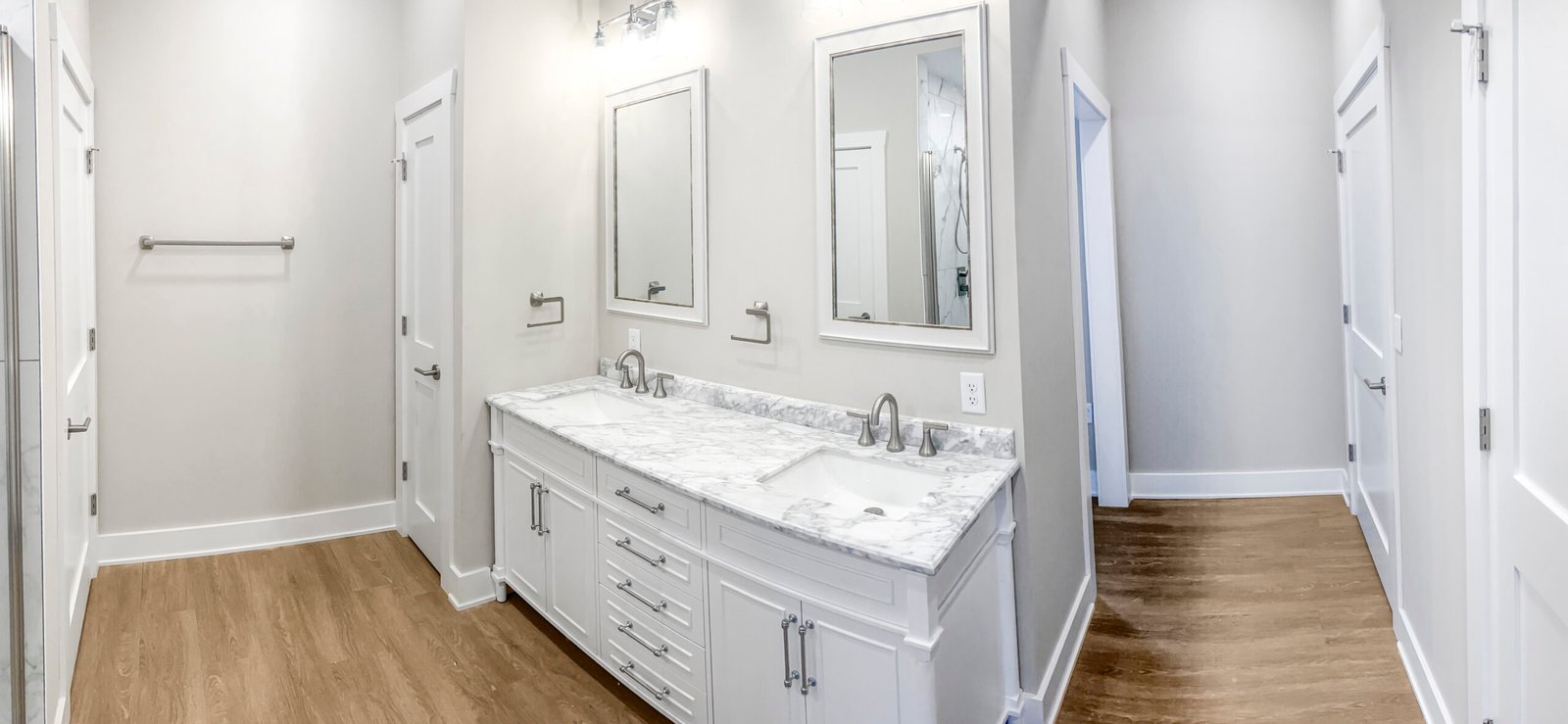
 Bathroom project - T&J
What a Bathroom Remodel in Waukesha County Actually Costs, and Why Quotes Vary So Much
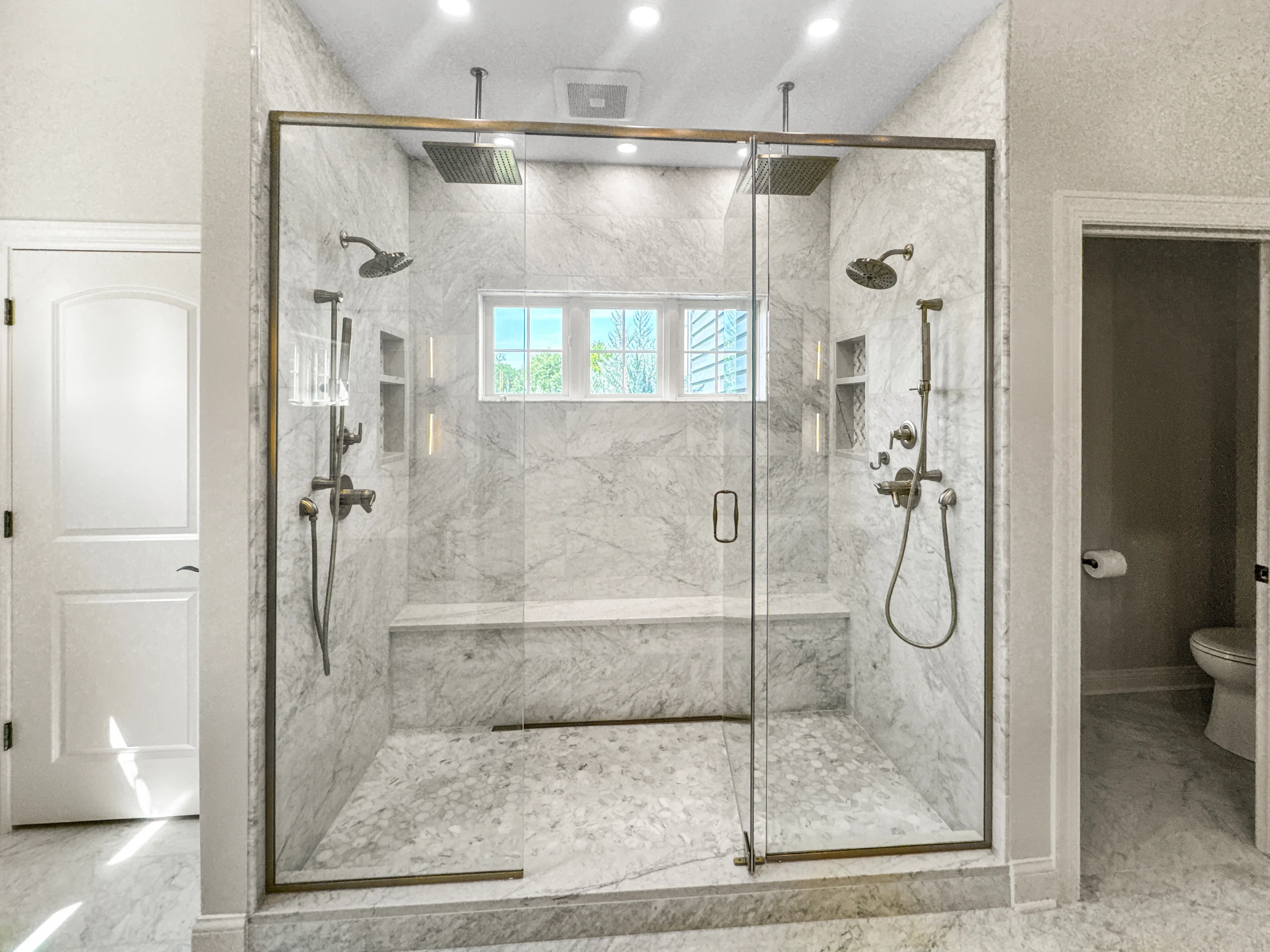
A standard bathroom remodel in Waukesha County runs $6,000 to $25,000, and where you land depends far more on scope and finishes than on which contractor you pick, according to 2026 regional remodeling market data. When we say "standard," we mean a typical 5x8 to 5x10 full bath, roughly 60 to 80 square feet, with a tub or shower, toilet, and single vanity. A basic refresh (new tile, vanity, and fixtures, same layout) sits toward the low end. A full gut-and-rebuild with a custom walk-in shower and reconfigured plumbing pushes toward the top. In practice, a 1970s Elm Grove ranch bath refreshed without moving plumbing tends to run the $12k-$18k middle, while a Pewaukee lakehouse gut with custom tile climbs higher.
Three things drive quote variation:
- Scope completeness. What one contractor includes (demo disposal, subfloor repair, permit fees) another quietly leaves off.
- Material tier. Stock, semi-custom, and custom tile and fixtures carry very different price tags.
- Labor model. An owner-operated crew and a general contractor who subs everything out don't carry the same overhead or markup.
A standard 60-80 sq ft bathroom remodel in Waukesha County ranges from $6,000 to $25,000, and the biggest variable isn't the contractor, it's the scope.
Step 1: Verify License, Insurance, and Permit History Before the First Meeting
Before you even schedule a walkthrough, confirm three non-negotiables: credited contractor status, general liability insurance, and workers' compensation coverage. Wisconsin doesn't use the word "license" the way some states do. It uses "credited contractor," which means the contractor has passed the relevant trade examination and is registered with the state Department of Safety and Professional Services (DSPS). You can verify a credential number at the Wisconsin DSPS license lookup. A contractor who can't hand you a number is a red flag, because pulling permits legally requires one.
Insurance matters just as much. Ask for a certificate of insurance that names you, the homeowner, so you're covered if something goes wrong on your property. Workers' comp is the one people forget: without it, a worker injured in your home can become your financial liability under Wisconsin's worker injury rules.
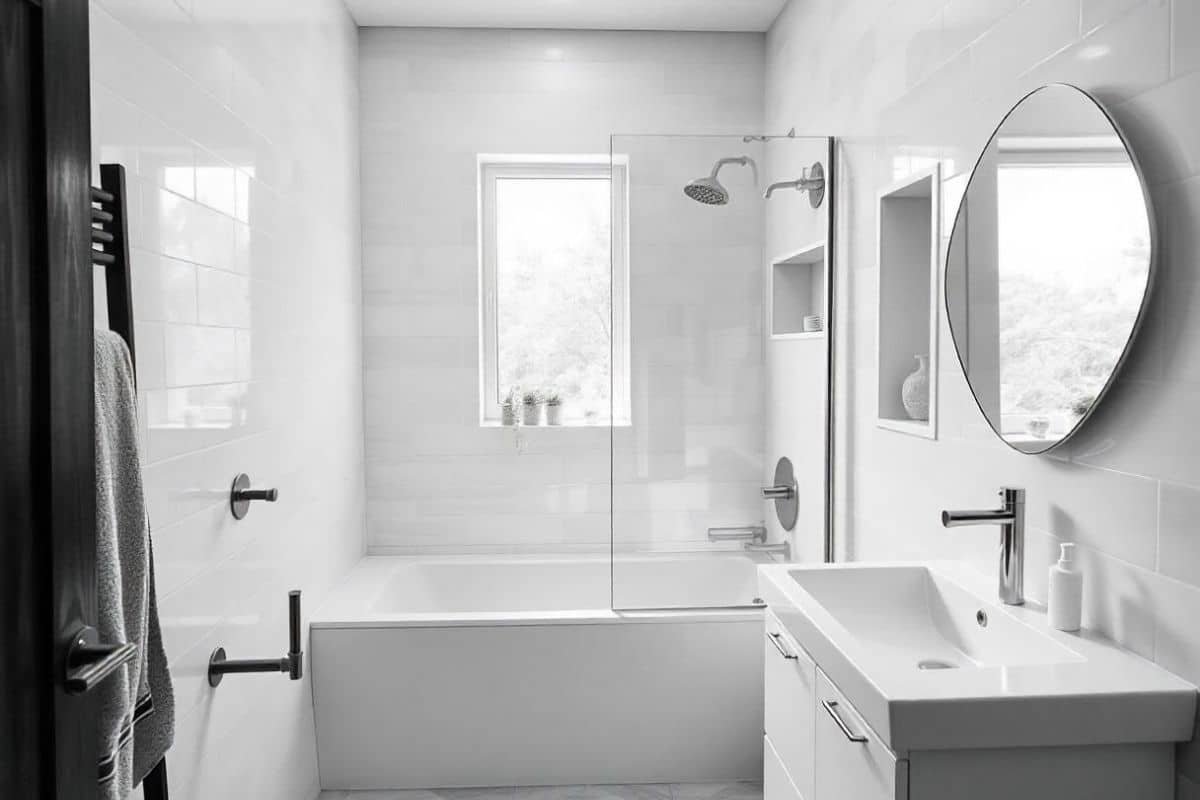 Bathroom - T&J
Want this priced for your bathroom?
John walks your space, measures it, and leaves a written itemized estimate. No cost, no obligation, no sales script.
Permit history is a tell. A contractor who pulls permits as a matter of routine is one who stands behind the work, and each municipality moves at its own pace. Brookfield and Elm Grove typically turn around a residential bathroom permit in about two weeks, while New Berlin, Muskego, and Wauwatosa can run three to four during busy spring and fall stretches. A contractor who works Waukesha County regularly knows these timelines and builds them into the schedule.
A contractor who routinely skips permits to "save you money" is the same one who'll disappear when a botched shower pan starts leaking into your subfloor two years later. Unpermitted work follows you to resale and can complicate a homeowner's insurance claim.
If you're unsure whether your specific project needs one, our guide on when a Waukesha bathroom remodel requires a permit walks through what triggers a permit and what Wisconsin homeowners can do without a permit.
Step 2: Read the Scope of Work, Not Just the Bottom Line
The single most useful skill for a comparison shopper is reading a scope of work instead of a bottom-line number. A complete bathroom scope spells out every task: demo and disposal, subfloor inspection and repair, rough plumbing and electrical, waterproofing and backer board (the cement panel that goes behind tile in wet areas), tile setting, fixture installation, trim, final cleanup, and permit fees. A low-ball scope hides the price by leaving things off. It skips demo disposal, assumes the subfloor is fine, glosses over waterproofing, and quietly leaves permit pulling to you.
Watch the allowances too. An allowance is a placeholder dollar amount the contractor budgets for materials you haven't picked yet. A $200 tile allowance on a 60-square-foot floor is a fiction. You'll blow past it the moment you walk into a tile showroom, and the difference lands on you as a change order. A realistic tile allowance for that floor is closer to $400-$600.
We recently reviewed a Brookfield condo bid where the homeowner's original quote missed roughly $4k in subfloor repair. The old tub had been leaking for years, and the low bid simply assumed the subfloor was sound. As the homeowner told us afterward, "The cheap quote would've cost me more than yours by the time they found the rot." That's the whole point of reading line items instead of totals.
Here's a short checklist to compare bids apples-to-apples:
Demo and debris disposal included?
Subfloor inspection and repair contingency addressed?
Waterproofing and backer board specified?
Permit pulling included, and by whom?
Realistic material allowances (tile, vanity, fixtures)?
Fixture and trim installation labor listed?
Final cleanup and haul-away?
Lay two quotes side by side and highlight every line one has that the other doesn't. The gaps are where the "cheaper" bid becomes the expensive one. On our own projects we walk through scope line by line before anyone signs, so there's no surprise mid-tile.
Catching an incomplete scope early is also how you avoid the common bathroom remodel mistakes Waukesha homeowners make, most of which start with a vague bid.
Step 3: Vet the Contractor's Track Record and Reviews
Credentials tell you a contractor is legal. Their track record tells you whether they're good. Start with the portfolio: ask to see recent Waukesha County bathrooms, ideally in homes similar to yours. A Hartland split-level and an Oconomowoc lakehouse present different challenges, and a contractor with local range has solved both. Look for finished tile detail, clean grout lines, and level fixtures in the photos, not just glamour shots of the vanity.
Then read the reviews with a filter. On Google, look past the star average to what the written reviews actually describe: did the crew show up on schedule, did changes get handled in writing, was the site left clean? One detailed three-star review tells you more than ten vague five-star ones. Check whether the business has consistent reviews over several years rather than a burst of them in one month. And cross-reference the name against the DSPS lookup so you know the reviewed company is the one pulling your permit.
Ask for two or three references you can actually call, not just links. On a recent Elm Grove project, the homeowner phoned three of our references before signing, and all three mentioned the same two things: the crew showed up when it said it would, and every change was put in writing. That's the pattern you're listening for.
Why the Lowest Bid Usually Isn't the Same Bid
The instinct to take the lowest bid is normal, and sometimes a lower bid is legitimate: a smaller crew with lower overhead can honestly do the same work for less. The problem is the low bid that's low because it's incomplete. Three mechanisms turn a cheap quote into an expensive project.
First, thin scope plus change orders. An $8k bid becomes $13k once subfloor rot and a permit fee get added mid-project, because they were never in the original number. Second, unrealistic allowances. A $150 vanity light allowance gets upgraded the moment you see it, and the delta is yours. Third, subcontractor chains. A general contractor who subs out demo, plumbing, tile, and electrical adds a markup at each layer and loses quality control along the way.
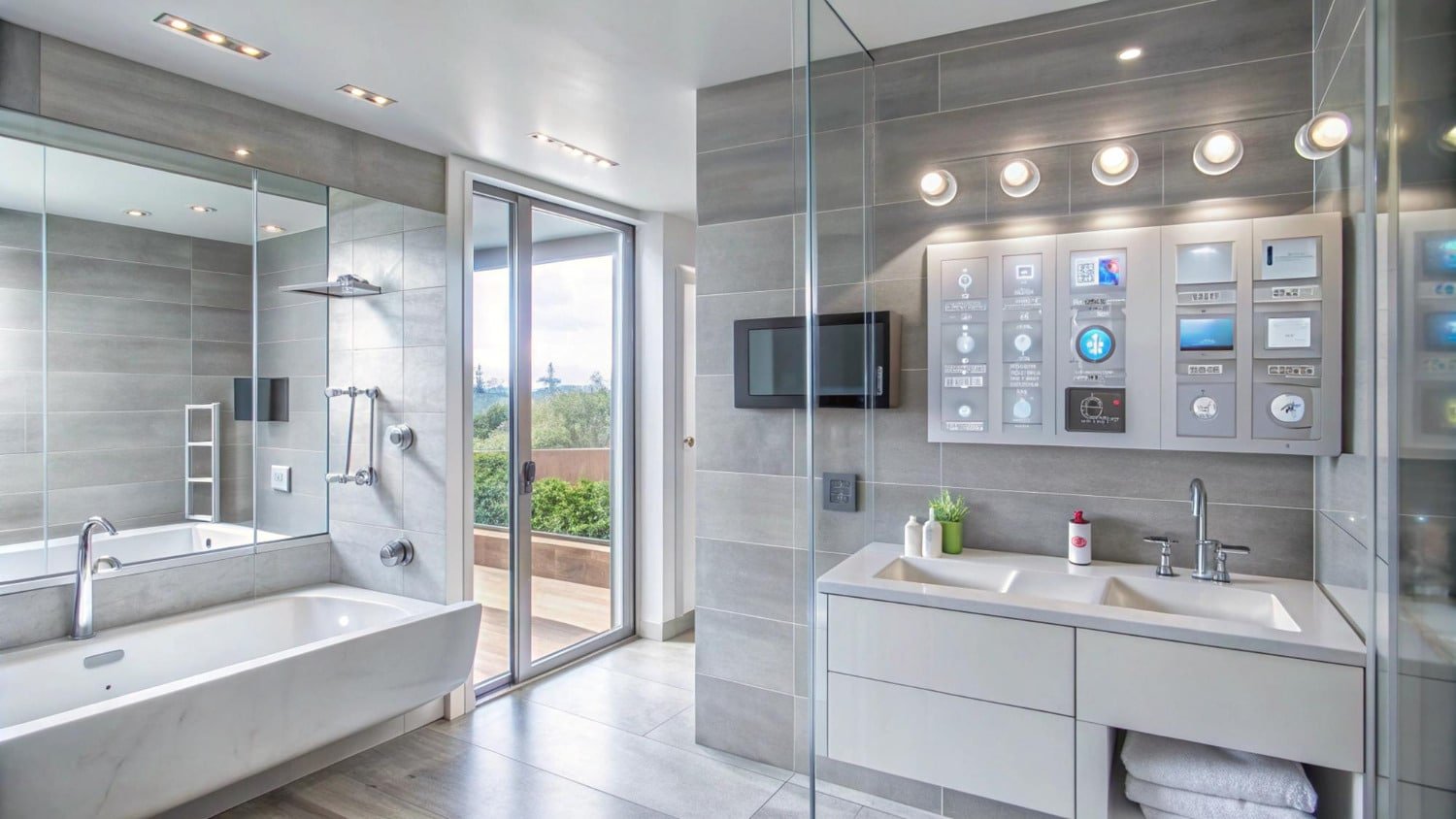 Bathroom - T&J
Given the $6,000 to $25,000 range for a standard remodel, a $6k bid and a $14k bid for the same bathroom are almost never covering the same work. That's not a knock on either contractor. It's a signal to compare scopes, not totals. When you line them up, the higher bid often turns out to be the honest one, and the low bid catches up to it by the final invoice, plus surprises.
Permits, Timelines, and What to Expect During the Remodel
Most Waukesha County bathroom remodels that involve moving or adding plumbing, electrical work, or structural changes require a permit, and the contractor should pull it, not you. Cosmetic swaps (a new vanity or a toilet in the same spot) usually don't. Permit requirements follow the Wisconsin Uniform Dwelling Code administered by DSPS, layered with each city's local building department rules. For the full breakdown of what triggers one, see our guide on Waukesha bathroom permit requirements.
On timeline, most bathroom remodels take 2 to 6 weeks from demo to final walkthrough, with a straightforward refresh landing near 2 to 4 weeks, based on 2026 regional remodeling market data. Here's roughly how those weeks play out. Days one and two are site prep and demo: we protect floors and pathways, shut off water to the bathroom, and haul out the old fixtures and tile. The following week covers rough plumbing, electrical, and inspection, then waterproofing and backer board. Tile setting, fixtures, vanity, and trim fill the back half, with a final cleanup and walkthrough at the end.
Permit inspections have to be scheduled with the local building department, and Brookfield, Elm Grove, Muskego, and Wauwatosa each keep their own inspector calendars. That's exactly why a contractor who pulls permits routinely holds the schedule tighter than one improvising it.
Set realistic expectations for the mess. Demo is loud, and there will be dust despite plastic barriers. The bathroom's water will be off for stretches, so plan around your other bathroom. Custom tile, special-order fixtures, and inspection scheduling are what push a project toward the six-week end. And before any of this starts, reputable Waukesha County contractors are typically booked 4 to 8 weeks out, especially in spring and fall, so factor lead time into your planning.
Ready to vet your contractor? Call us at (262) 352-9525 for a free consultation on your Waukesha bathroom scope, or use the cost calculator above to get a ballpark before your first contractor meeting.