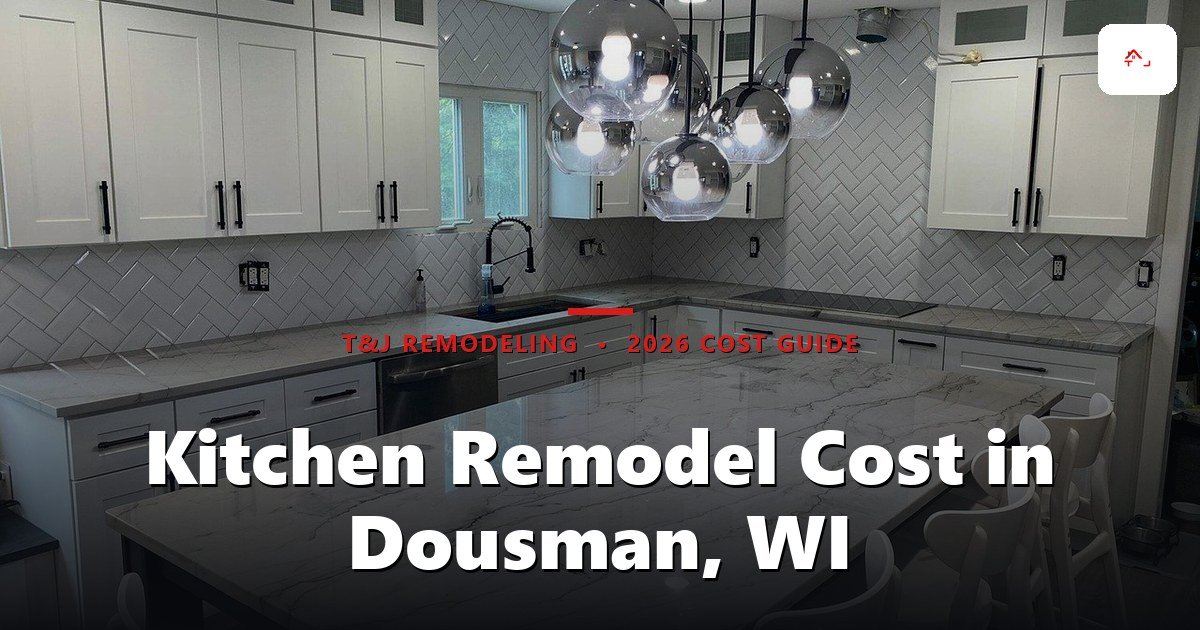
Kitchen project - T&J
What a 20×20 Kitchen Remodel Costs in Wisconsin (2026 Ranges)
A 20×20 kitchen is 400 square feet, roughly 2 to 2.5 times the size of a typical 12×12 kitchen. That scale means more linear feet of cabinets, more countertop run, more flooring, and longer trade labor hours. Generic national cost articles mislead you here: Wisconsin's labor market and permit scrutiny push local costs above national averages, and Waukesha County sits at the higher end of the Wisconsin range.
| Tier | Total Project Cost | Cost per Sq Ft |
|---|---|---|
| Budget | $35,000 -$55,000 | ~$87 -$137/sq ft |
| Mid-Range | $55,000 -$90,000 | ~$137 -$225/sq ft |
| Luxury | $90,000 -$140,000+ | ~$225 -$350+/sq ft |
For context, a major kitchen remodel on a 200 sq ft kitchen runs $69,000 nationally. Scale that footprint to 400 sq ft, add Wisconsin's regional cost environment, and the mid-range numbers above are realistic, not inflated. A full kitchen remodel in the Milwaukee and Waukesha County market can run $100,000-$500,000 at the upper end of scope, the table above reflects the realistic range for a standard gut-and-replace without major structural changes.
Mid-range 20×20 kitchen remodels in Waukesha County typically run $55,000-$90,000 in 2026, nearly double the national average for a 200 sq ft kitchen, scaled for footprint and local labor.
Before your first contractor call, run your own numbers with this kitchen remodeling cost calculator to build a realistic baseline.
What Drives the Cost of a 400 Sq Ft Kitchen Remodel
Cost doesn't scale linearly with square footage. A 400 sq ft kitchen doesn't simply cost twice as much as a 200 sq ft kitchen, it costs more per linear foot of cabinetry, more in countertop fabrication, and more in combined trade labor hours. Two bids for the "same job" can be $30,000 apart because the scopes are genuinely different, not because one contractor is gouging you.
The five biggest cost levers, in order of impact:
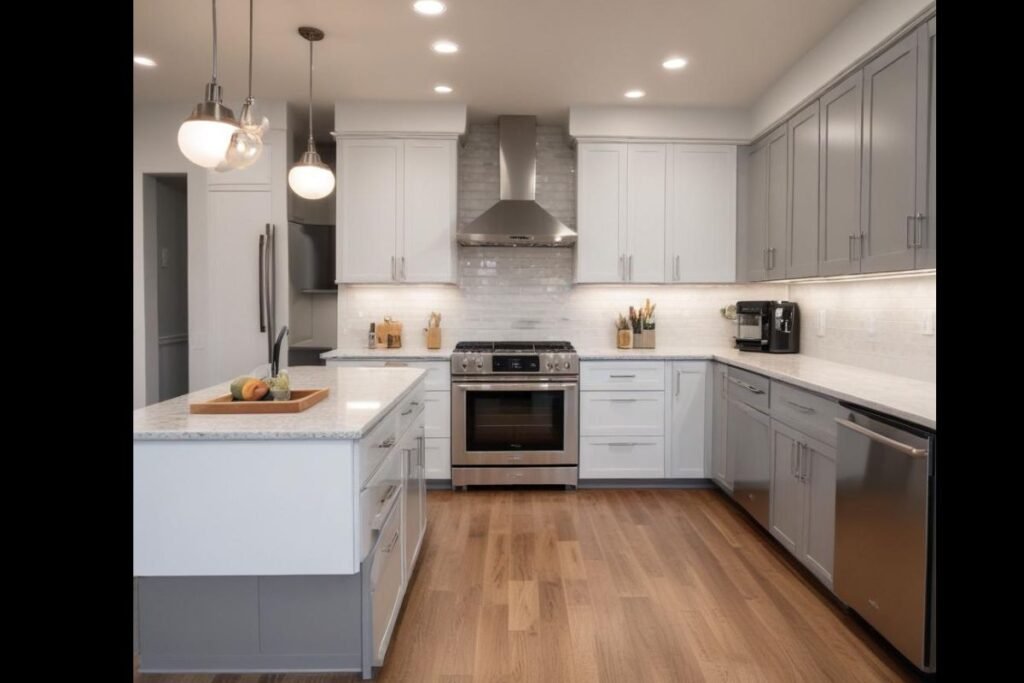 Kitchen - T&J
Want this priced for your kitchen?
John walks your space, measures it, and leaves a written itemized estimate. No cost, no obligation, no sales script.
Cabinet tier
, the single largest line item, 30-40% of total budget 2. Layout changes and structural work, moving plumbing or walls multiplies trade costs fast
Appliance grade
, builder-grade vs. pro-grade is a $10,000-$35,000 swing
Countertop material
, laminate to quartzite is a $4,500-$11,000 range on a 20×20 footprint
Labor and project management quality
, what separates a complete bid from a low-ball one
Understanding these levers is how you compare bids intelligently instead of just picking the lowest number.
Cabinets: The Single Biggest Line Item
Cabinets typically represent 30-40% of a kitchen remodel budget. A 20×20 kitchen usually has 35-50 linear feet of cabinetry (uppers and lowers combined). Installed pricing at each tier in Wisconsin for 2026:
- RTA/stock cabinets (ready-to-assemble, pre-built in fixed sizes, limited finish options): $4,000-$10,000 installed
- Semi-custom cabinets (factory-built but sized and finished to order, the most common choice for Waukesha County mid-range remodels): $12,000-$28,000 installed
- Full custom cabinets (built to exact spec by a cabinet shop, longest lead time): $30,000-$60,000+ installed
Semi-custom hits the sweet spot for most homeowners, more size and finish flexibility than stock, without the lead time and cost of full custom.
Low cabinet bids often omit hardware, soft-close hinges, interior organizers, and crown molding. These additions run $1,500-$4,000 and typically reappear as change orders (written amendments to the original contract scope, signed before work proceeds) once demo is done and you're already committed.
Telli, our co-founder and master carpenter, spent years on European luxury residential projects where cabinet joinery is treated as a structural system, not just a finish choice. A cabinet box that's out of square by 1/8" creates compounding problems at every door, drawer, and countertop seam downstream, which is why cabinet installation precision matters as much as the material tier you choose.
Countertops: Material Choice Changes the Math Fast
A 20×20 kitchen typically has 60-80 square feet of countertop surface when you account for the perimeter run and an island. Material choice at that scale has a significant dollar impact:
- Laminate: $480-$1,200 installed (functional, limited visual impact)
- Quartz (engineered stone, consistent color, non-porous, low maintenance): $3,300-$8,000 installed
- Quartzite or marble: $5,400-$12,000 installed
Quartz dominates mid-range Wisconsin remodels for good reason: it's durable, requires no sealing, and local fabricators in the Waukesha, Brookfield corridor stock it reliably. If you're weighing countertop materials in more detail, that article breaks down the full comparison including edge profiles and long-term maintenance costs.
Edge profiles, sink cutouts, cooktop cutouts, and backsplash tile add $500-$2,500 that rarely appears in a first-pass countertop quote. Ask every contractor to itemize these separately so you're comparing apples to apples.
Labor, Permits, and the Costs Most Quotes Leave Out
This is where a complete bid separates from a low-ball one. Three areas that routinely go missing:
1. Trade labor
A full kitchen remodel involves an electrician, a plumber, and often a tile setter, each licensed separately. A full 20×20 kitchen scope typically runs 150-250 combined trade labor hours. If a bid lists these as "allowances" rather than fixed costs, that's a scope gap, allowances almost always run over.
2. Waukesha County permits
A building permit is required any time a kitchen remodel touches electrical wiring, plumbing, or structural elements. The permit fee typically runs $300-$800 for a full kitchen scope, and inspections add 1-3 weeks to the project timeline. Brookfield's Building Inspection Division, for example, typically processes residential permit applications within 5-10 business days for standard kitchen scopes, but that clock doesn't start until the contractor submits a complete application with drawings.
In Wisconsin, unpermitted electrical or plumbing work can void your homeowner's insurance and create disclosure problems at resale. The Wisconsin DSPS sets the licensing and inspection standards your contractor must meet. A contractor who suggests skipping permits is transferring legal and financial risk directly to you.
3. Hidden line items low bids skip
Demo and haul-away ($800-$2,500), dumpster rental, temporary kitchen setup, project management overhead, and post-project warranty calls. These don't disappear from the project, they reappear as change orders once work has started and you have less leverage to negotiate.
Appliances and Flooring: Budget Anchors You Control
Appliances and flooring are the two line items where you have the most direct control over where your budget lands.
Appliances (refrigerator, range, dishwasher, microwave):
- Builder-grade package: $3,000-$6,000
- Mid-grade: $7,000-$14,000
- Pro/luxury: $15,000-$40,000+
A gas line rough-in or 240V circuit upgrade adds $400-$1,200 and must be explicitly in the contractor's scope, not assumed. This is a common gap in bids for older Pewaukee and Brookfield ranch homes where the original kitchen was wired for a basic electric range.
Flooring for 400 sq ft:
- LVP (luxury vinyl plank): $1,600-$3,200 installed
- Porcelain tile: $4,000-$7,200 installed
- Hardwood: $4,800-$8,800 installed
When comparing bids, ask each contractor whether appliance delivery, haul-away of old units, and floor prep (leveling, underlayment) are included. These are common scope gaps that add $500-$2,000 back to the "lower" bid once work is underway.
How to Compare Three Contractor Bids Without Getting Burned
You're getting three bids. Here are five questions to ask every contractor before you compare numbers:
Is demo and haul-away included?
If not, add $800-$2,500 to that bid.
Who pulls the permits, and is the fee in your quote?
If the contractor says "you handle permits," that's a liability shift onto you.
What's your change-order process?
Written, signed, before work starts, that's the standard. Verbal approvals guarantee scope creep.
Are trade subs licensed and insured separately, or is that your coverage?
You want licensed, insured subs confirmed in writing.
What's the payment schedule?
A large upfront deposit, more than 10-15% before work starts, is a red flag in Wisconsin. Progress payments tied to milestones are standard practice.
 Kitchen - T&J
The lowest bid is often missing two or three of these items, which adds back $5,000-$15,000 mid-project when you have no leverage.
On the "can you match Y's price" question: the honest answer is that we can show you line by line what's in our scope and what's in theirs, then you decide. John manages every T&J project directly as the single point of contact from first call to final walkthrough. Ask every contractor who your point of contact is after you sign, and what happens when a problem comes up on a Tuesday afternoon.
If a contractor's bid arrives as a single lump-sum number with no line-item breakdown, that's not a quote, it's a placeholder. You have no way to know what's included, and no leverage when something "wasn't in the scope" mid-project.
Timeline: How Long Does a 20×20 Kitchen Remodel Take?
A realistic week-by-week arc for a full 20×20 kitchen remodel in Waukesha County:
| Phase | Typical Duration |
|---|---|
| Design and material selection | 2-4 weeks |
| Permit submission and approval | 1-3 weeks |
| Cabinet lead time (the long pole) | 3-8 weeks |
| Demo and rough-in | 1-2 weeks |
| Cabinet installation | 3-5 days |
| Countertop template to install | 10-14 days |
| Finish trades and punch list | 1-2 weeks |
Total realistic range: 10-18 weeks from signed contract to final walkthrough.
Many of these phases overlap, permit approval often runs concurrently with cabinet lead time, for example. But the finish sequence (cabinets → countertop template → tile → appliances → trim) is largely linear and can't be compressed without cutting corners.
T&J's typical booking lead time is 4-8 weeks depending on season, that's on top of the project timeline above, and we'll tell you that upfront rather than after you've signed.
Schedule your countertop template appointment the same day cabinet installation finishes, not a week later. Fabrication takes 10-14 days from template, and every day you wait pushes your completion date back by exactly one day.