Kitchen project - T&J
If you're staring at two contractor bids that look $4,000 apart, the gap is almost always in the island type (prefab vs. semi-custom vs. custom), utility runs (whether plumbing or electrical is being added), or countertop choice. This guide breaks down every variable and gives you the questions that surface scope gaps before you sign.
What Does a Kitchen Island Cost in Wisconsin? (Quick Answer)
A basic custom island with a standard countertop and no plumbing or electrical runs $4,200 to $7,500 in most Waukesha County kitchens. Adding seating, plumbing, or electrical pushes the total to $7,500 to $12,000. Premium custom islands with waterfall countertops, integrated appliances, and statement lighting clear $12,000 to $20,000+.
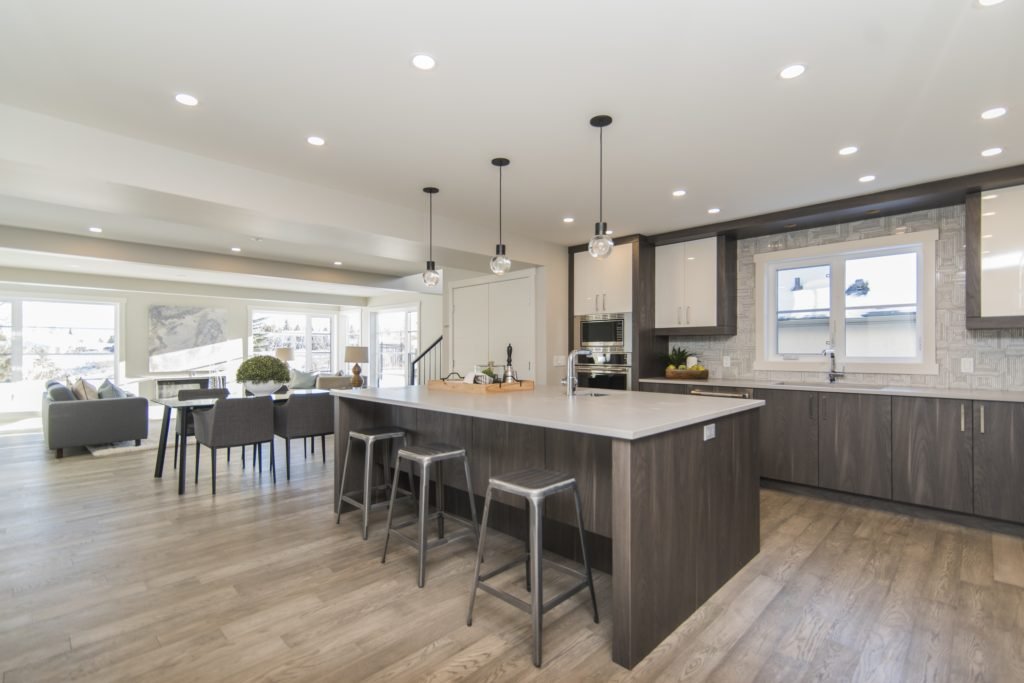
Most Waukesha County kitchens have room for a 4×6 to 5×8 foot island. That footprint generally determines the cabinet count and seating capacity, and drives most of the cost differential between two otherwise-similar projects.
Island Type Determines the Starting Price
Three honest tiers cover almost every kitchen island a Waukesha homeowner will price out. The gap between them is mostly the construction method and finish quality, not the footprint.
Prefab freestanding island: $500 to $2,500. A pre-built unit on legs or wheels you can wheel into position. Install is essentially "place it." No utilities, no fixed connection to the floor. Trade-off: standard sizes only, limited finishes, looks like furniture rather than built-in cabinetry. Works for renters or short-term-hold homes.
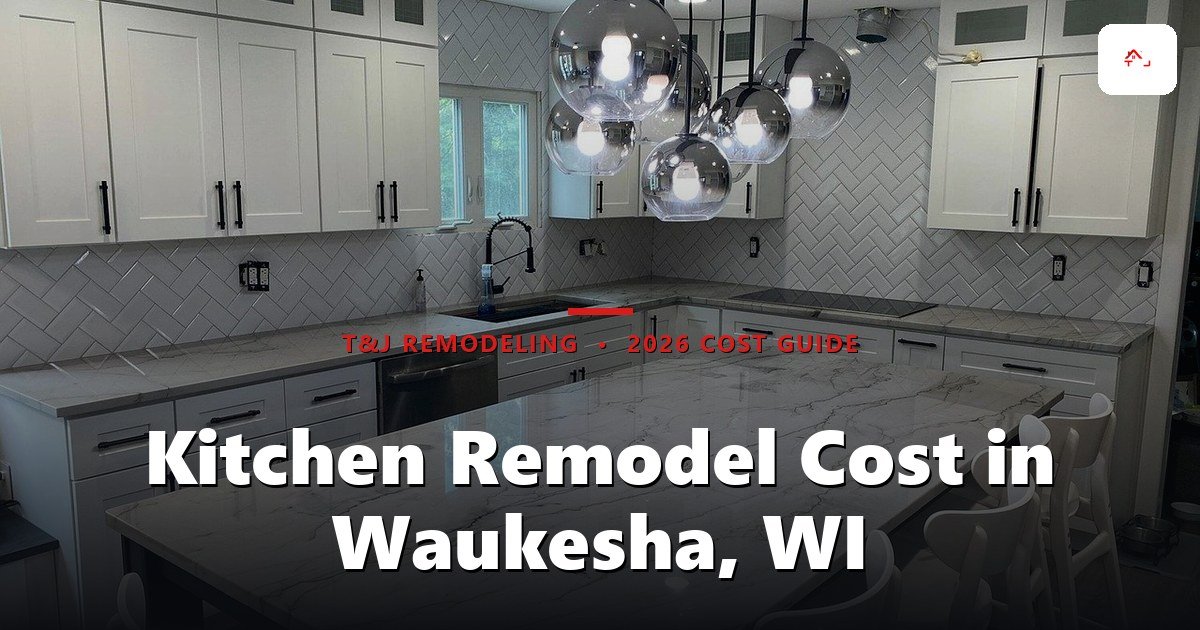
 Kitchen - T&J
Want this priced for your kitchen?
John walks your space, measures it, and leaves a written itemized estimate. No cost, no obligation, no sales script.
Semi-custom built-in island: $3,500 to $8,500. Built from semi-custom cabinet boxes anchored to the floor with finished panels on all four sides. Includes base cabinetry, countertop, and toe kick. Most Waukesha homeowners land here. Trade-off: lead time of 4-8 weeks for cabinet ordering, requires actual installation labor.
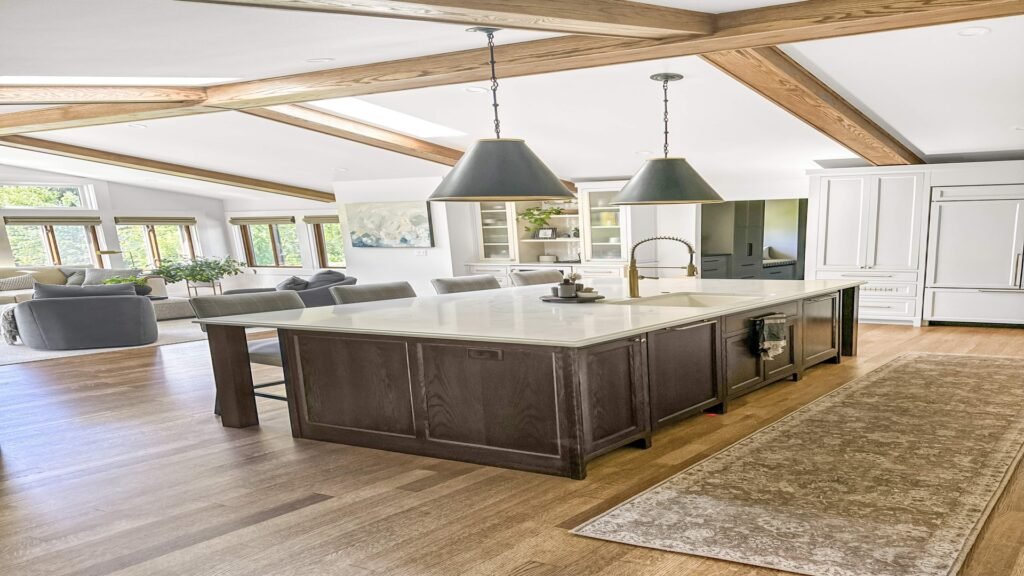
Fully custom built-in island: $8,500 to $20,000+. Built from custom cabinetry sized to the exact kitchen, often with premium countertop, seating overhang, integrated appliances, and statement lighting. Lead time runs 6-12 weeks because cabinets are fabricated to order. Trade-off: most expensive option, but the design flexibility produces the highest-impact result for resale-quality remodels.
| Island type | Total installed | Includes |
|---|---|---|
| Prefab freestanding | $500 -$2,500 | Pre-built unit, no utilities, standard countertop |
| Semi-custom built-in | $3,500 -$8,500 | Cabinets, countertop, finished panels, anchored install |
| Custom built-in | $8,500 -$20,000+ | Custom-sized cabinetry, premium counter, seating, often utilities |
The single biggest variable within the same tier is the countertop. Quartz at $50-$90/sqft installed vs. marble at $80-$150/sqft on a 25-square-foot island top is a $750-$1,500 swing on the same cabinet base.
Add-On Features: What Each One Actually Costs
This is the section that matters most if you're comparison-shopping. Low-bid quotes often leave off the add-ons that make an island actually useful in daily life, and bill them as change orders after demo starts.
- Plumbing run for a prep sink, $800 to $2,200 depending on slab vs. crawl-space and distance from existing supply/drain
- Electrical for outlets and undercabinet lighting, $400 to $1,200 (Wisconsin code requires GFCI on countertop outlets, typically 2 receptacles for a standard island)
- Dedicated circuit for a downdraft cooktop or microwave drawer, add $400 to $900 for the circuit plus appliance-specific install
- Seating overhang with corbel or steel bracket support, $300 to $1,200 depending on overhang depth and support visibility
- Waterfall countertop edges, add $800 to $2,500 over a standard square or eased edge, depending on material and seam count
- Beverage refrigerator or wine fridge, $400 to $1,200 in install labor plus the appliance itself
- Pendant lighting (3 fixtures), $400 to $1,500 in fixtures and electrical labor combined
The most commonly missing line item in island quotes is the flooring under the island footprint. If you're tiling the new kitchen floor, that tile typically runs under the island (unless the island is sitting on existing flooring). Some quotes price the floor "around the island", meaning when you eventually replace the floor you'll have to remove and re-install the island. That's $1,500-$3,000 in re-do labor down the road.
What Moves the Price Up or Down in Waukesha County
Five factors do most of the work. If you're trying to read why two bids look $4,000 apart, the answer is almost always one of these:
Linear footage of the island
, more cabinet count means more material and labor. A 4×6 island has about 18 LF of cabinet edge; a 5×8 has about 26 LF.
Countertop material and edge profile
, the biggest discretionary cost on the island itself. Quartz with a standard eased edge is one price; quartz with a mitered waterfall edge is another.
Whether utilities (plumbing or electrical) are being added
, adds $1,200 to $3,400+ depending on how far the runs travel.
Slab vs. crawl-space construction
, Brookfield ranches on slab require concrete cutting for plumbing runs; Wauwatosa colonials on crawl spaces let plumbing run through the joist bay (much cheaper).
Cabinet tier
, semi-custom vs. custom on the island base is a $3,000-$8,000 swing.
When comparing island quotes in Waukesha County, ask for the per-linear-foot cabinet cost separately from the countertop, separately from any utility runs. Three line items, three numbers. That's the only way two quotes mean the same thing.
How to Read a Kitchen Island Quote (and Spot What's Missing)
A complete kitchen island quote names every line. A thin quote rolls everything into a single number and hides the gaps until demo reveals them.
Ask each contractor these six questions before signing:
 Kitchen - T&J
What cabinet tier and how many linear feet?
Semi-custom or custom; total LF including finished end panels
What countertop material, thickness, and edge profile?
Quartz, granite, marble, butcher block, or other; standard eased or mitered/waterfall
Is plumbing being added? If so, what's the run distance and floor type?
Slab vs. crawl-space changes the labor cost dramatically
Is electrical being added? Including GFCI receptacles and any dedicated circuits?
Wisconsin code requires GFCI; verify it's included
Are pendant lights priced in the quote, or excluded?
Many quotes price the rough-in but exclude the fixtures
Is finish carpentry (toe kick, corbels, decorative panels) included?
Easy line to miss; impacts the final look meaningfully
Two quotes that answer those six questions identically should land within 10-15% of each other. A 30-40% gap almost always means one scope is incomplete, not that one contractor found magic pricing.
If you want the full picture on the kitchen budget, island plus countertops, cabinets, and the rest, estimate your full kitchen remodel budget to sanity-check your overall number.
Labor Rates and Timeline: What to Expect
Licensed Wisconsin contractor labor for custom island carpentry runs $40 to $50 per hour in greater Milwaukee. A typical semi-custom island install (no utility runs) takes 2-3 working days, assemble and anchor the base, install the countertop after a 24-hour cure on the base attachment, finish carpentry on day three. A custom island with plumbing, electrical, and a waterfall counter typically takes 5-7 working days because each utility trade has to schedule sequentially.
Add 4-8 weeks of lead time before the project starts for semi-custom cabinet ordering, or 6-12 weeks for fully custom. Countertop fabrication typically runs 2-3 weeks from template to install.
Does a Kitchen Island Add Value in Wisconsin?
Kitchen upgrades in general return roughly 60% of cost at resale in current Wisconsin markets, per industry survey data. A well-done kitchen island lands at the higher end of that range because it functions as both a workstation and a social anchor, buyers under 50 specifically look for islands in primary kitchens.
The ROI math is best on mid-tier islands ($5,000-$9,000 total) where the cost is modest relative to the visual and functional upgrade. Premium custom islands ($15,000+) can over-improve a home for its neighborhood, especially in the more affordable Waukesha County markets like Sussex or Mukwonago. In Brookfield, Elm Grove, or Pewaukee, where median sale prices support more premium finishes, the ROI on a premium island holds better.
Questions to Ask Before You Hire a Kitchen Island Contractor
Beyond the six scope questions above, vet the contractor with these:
Can you show me 2-3 island projects you've completed in Waukesha County in the last 2 years?
Recent local work is the strongest signal of fit
Are you a credited Wisconsin contractor, and can I see your license number?
Required for any work that involves plumbing or electrical permits
Do you pull permits, or do I?
Wisconsin permits run $100-$500 for kitchen work that touches utilities
What's your contingency line for hidden issues?
Older Waukesha homes hide things behind walls and floors; a complete quote names a contingency reserve
What's the payment schedule, and when do you take final payment?
Industry standard is a deposit, progress payments at milestones, and final on completion (not before)
What's your warranty on labor and on the cabinetry separately?
Cabinet warranty comes from the manufacturer; labor warranty is the contractor's
 Kitchen - T&J
When John walks through a Waukesha County kitchen for an island quote, every line gets named: cabinet tier and linear footage, countertop material and edge, plumbing scope if any, electrical scope if any, finish carpentry, contingency. T&J is a father-son operation, 35+ years combined, credited Wisconsin contractor, owners on every job. The in-home consultation is free, the quote is itemized, and there's no obligation. See our kitchen remodeling work in Brookfield and kitchen remodeling services across Waukesha County for project examples.
If you want to budget the countertop separately, since the island top often comes from the same fabricator as your perimeter counters, we can scope both at once.
Frequently asked questions
How much does it cost to add a kitchen island in Wisconsin?
Most Waukesha County homeowners pay $4,200 to $9,500 to add a kitchen island in 2026. The wider range is $1,500 to $20,000+, that's a basic prefab unit at the low end and a fully custom island with utilities, premium countertop, and seating at the high end. The single biggest variable is whether utilities (plumbing or electrical) are being added, that alone is a $1,200-$3,400 swing on the same base island.
Do I need a permit to add a kitchen island in Waukesha County?
For a freestanding or built-in island that doesn't add plumbing or electrical, most Waukesha County municipalities don't require a permit. The moment you add a prep sink (plumbing) or any new circuit (electrical), you need one. Permit fees run $100-$350 depending on municipality. The contractor typically pulls the permit; if the quote says "permit by owner," budget for the fee separately.
What's the difference between a prefab and a custom kitchen island?
A prefab island is a pre-built unit you place into position, typically $500-$2,500, with standard sizes, limited finishes, and no fixed utilities. A custom island is built into the kitchen with cabinetry sized to the exact space, anchored to the floor, and often includes utilities. Custom runs $3,500-$20,000+ depending on tier. The custom unit looks integrated into the kitchen; the prefab looks like a piece of furniture. Both function as workstations, but the custom unit adds meaningfully more resale value.
Why is one contractor's island quote $3,000 cheaper than another's?
The most common reason is scope. The cheaper quote often excludes plumbing or electrical work, prices a lower cabinet tier, or uses a less expensive countertop than the higher-priced quote includes. Other common gaps: pendant lights priced as rough-in only (no fixtures), seating overhang corbels excluded, and finished panel costs hidden in change orders. Ask both contractors what tier, what countertop, what utility scope, and what fixtures are included, the gap closes fast once the scopes match.
How long does it take to install a custom kitchen island?
A semi-custom island with no utility runs takes 2-3 working days to install once cabinets arrive. A custom island with plumbing, electrical, and premium countertop typically takes 5-7 working days because each trade schedules sequentially. Add 4-8 weeks of lead time for semi-custom cabinet ordering, or 6-12 weeks for fully custom. Countertop fabrication runs 2-3 weeks from template to install, usually happens after the cabinet base is set.
What countertop material should I use for a kitchen island in Wisconsin?
Quartz is the most popular choice in Waukesha County, durable, non-porous, low maintenance, and runs $50-$90 per square foot installed. Granite is a close second at $40-$100/sqft, offering more visual variation but requiring periodic sealing. Butcher block at $35-$70/sqft suits farmhouse-style kitchens but needs regular oiling. Marble looks stunning but stains easily and isn't well-suited to a high-use island. For most Brookfield, Pewaukee, and Elm Grove kitchens, quartz is the right balance of look, durability, and resale-friendliness.