 Addition project - T&J
If you're staring at two contractor bids that look $15,000 apart, the gap is almost always in three-season vs. four-season construction, whether HVAC is included, or the foundation choice. This guide breaks down every variable and gives you the questions that surface scope gaps before you sign anything.
What Does a Sunroom Cost in Wisconsin? (Quick Answer)
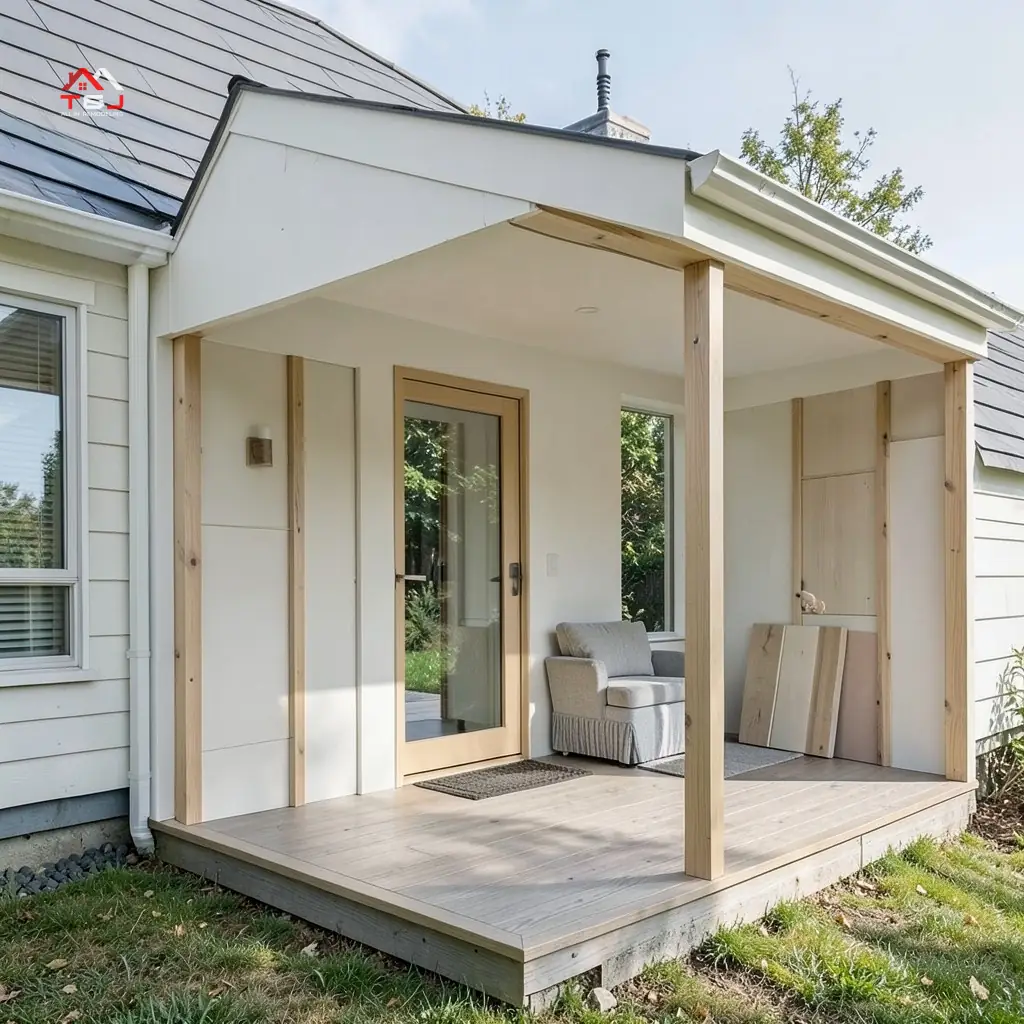
A typical 12×16 three-season sunroom in Waukesha County runs $15,000 to $32,000 installed in 2026. A four-season sunroom in the same footprint runs $35,000 to $65,000+. The price gap reflects real construction differences, three-season rooms use lighter framing and single-pane glass; four-season rooms use insulated wall and roof systems, double-pane low-e glass, and tie into the home's HVAC or get a dedicated mini-split.
Wisconsin's heating-degree-day climate is the biggest reason the four-season premium is so meaningful here. In milder climates a three-season room is usable 8 months a year; in Waukesha County it's realistically usable May through October, about 6 months, unless you upgrade to four-season construction.
Three-Season vs. Four-Season: The Decision That Drives Cost
This is the single biggest fork in the decision tree. The label sounds like a comfort choice but it's actually a construction-class choice that affects framing, glass, foundation, and HVAC, and pushes the total cost by 50-80%.
Three-season sunroom: $15,000 to $32,000 installed. Light-framed walls with single-pane or budget dual-pane glass, often built on a deck-style joist foundation rather than a full foundation. No insulation in walls or roof. No HVAC tie-in. Usable Wisconsin months: roughly May through October. Trade-off: lowest entry cost, fastest build (3-6 weeks), but unusable November through April unless you bundle up.
 Addition - T&J
Want this priced for your addition?
John walks your space, measures it, and leaves a written itemized estimate. No cost, no obligation, no sales script.
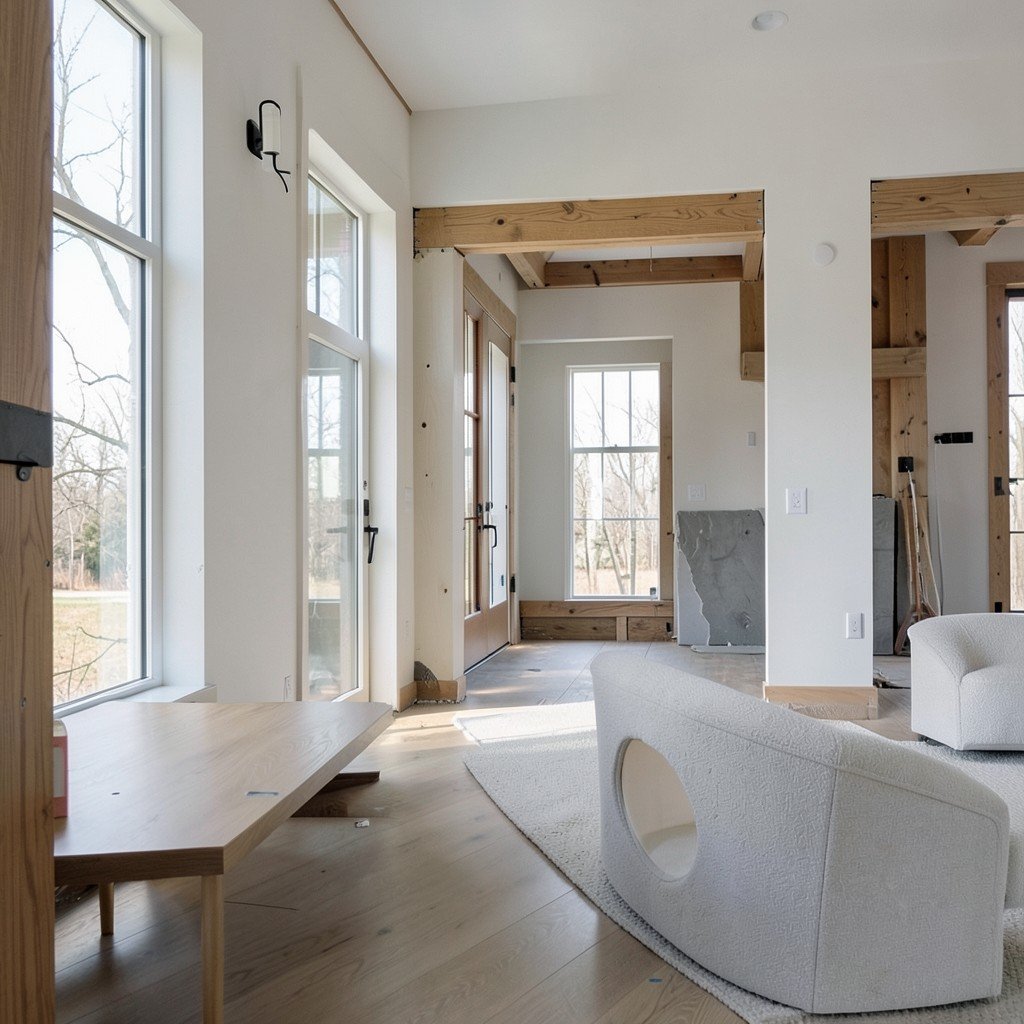
Four-season sunroom: $35,000 to $65,000+ installed. Insulated stud walls (R-15 to R-19), insulated roof (R-30 minimum to meet WI code), double-pane low-e glass, full foundation or insulated slab, and HVAC, either tied into the home system or a dedicated 9,000-18,000 BTU mini-split. Usable year-round. Trade-off: 60-80% higher cost, 8-14 week build timeline, but functions as a true permanent addition that adds resale value.
Premium four-season with vaulted ceiling, premium glazing, and custom finishes: $65,000 to $90,000+. Cathedral or vaulted ceilings, premium glass packages (triple-pane or specialty coatings), upgraded flooring (porcelain tile or engineered hardwood), recessed lighting, sometimes a fireplace.
| Sunroom type | Total installed | Usable months in WI | Build timeline |
|---|---|---|---|
| Three-season | $15,000 -$32,000 | ~6 months | 3-6 weeks |
| Four-season standard | $35,000 -$65,000 | 12 months | 8-14 weeks |
| Four-season premium | $65,000 -$90,000+ | 12 months | 12-18 weeks |
A four-season sunroom adds roughly 50-65% of its cost to home resale value in Wisconsin markets, similar to other quality additions. A three-season sunroom returns less, closer to 30-40%, because appraisers typically count only the year-round-usable square footage.
What's Inside the Quote: Line-Item Breakdown
A complete sunroom quote names every line. A thin quote rolls everything into a single number and lets the gaps reveal themselves after demo starts.
Foundation: Three-season rooms often sit on a deck-style joist foundation ($3,000-$6,000) or insulated slab ($5,000-$10,000). Four-season rooms typically require a full perimeter foundation with frost footings (Wisconsin frost line is 42-48 inches), that runs $8,000 to $18,000 depending on size and site access.
Walls and roof framing: Three-season uses 2×4 light framing with simple flat or shed roof, $4,000-$8,000 in framing labor. Four-season uses 2×6 walls with cavity insulation and full roof framing with insulation, $8,000 to $15,000 in framing labor.
Glazing: Window and door package is the most visible cost line. A standard three-season package (single-pane or budget dual-pane vinyl) runs $4,000-$8,000. A four-season package (double-pane low-e vinyl or aluminum-clad) runs $10,000 to $22,000.
HVAC: Three-season rooms don't get HVAC. Four-season rooms typically get a 9,000-18,000 BTU mini-split heat pump, $3,500 to $6,500 installed including the outdoor unit, line set, and electrical hookup. Tying into the existing home HVAC sounds simpler but typically requires duct extension and a load calculation; often runs $4,000-$8,000.
Electrical: Outlets, lighting, and any dedicated circuits for the mini-split or floor heat. Three-season: $1,200-$2,500. Four-season: $2,000-$4,500.
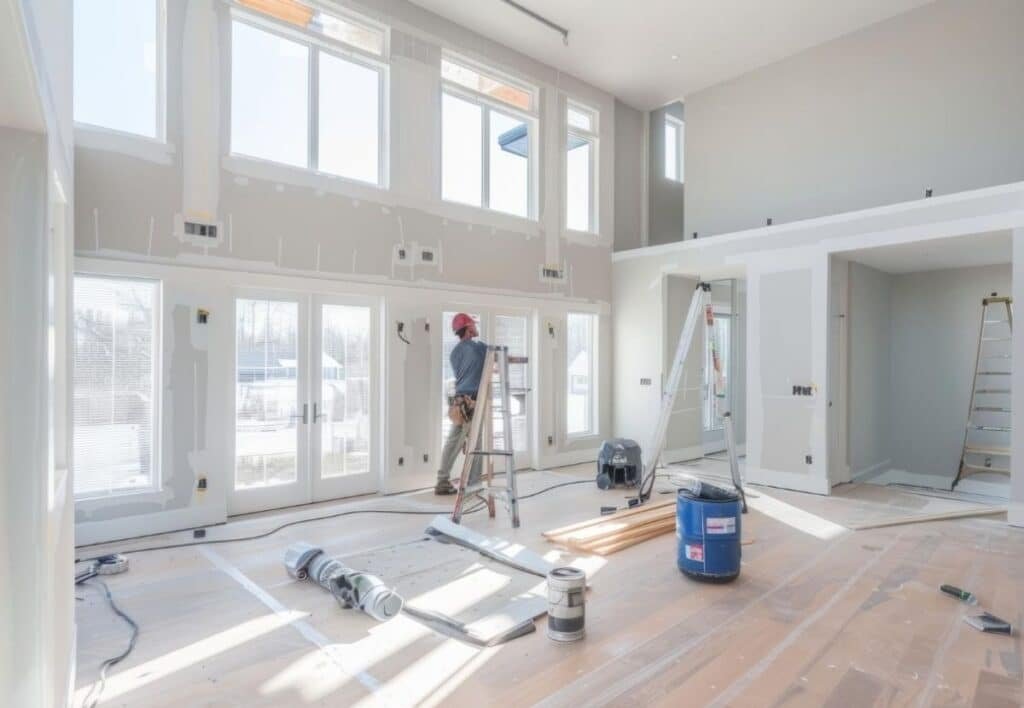
Interior finish: Flooring, drywall (four-season only), trim, paint. Three-season often skips drywall in favor of bead-board or T&G on the framing. Four-season includes full drywall, paint, and finished flooring, $4,000-$10,000.
Permits: Wisconsin requires permits for any addition; fees run $300-$1,200 depending on municipality and project size.
The most commonly missing line item is the HVAC load calculation and the dedicated electrical circuit for a mini-split. Some quotes price the mini-split unit but skip the electrician work and the small slab pad for the outdoor unit, that's a $1,500-$3,000 hidden cost.
How Foundation Choice Affects the Total
For a three-season sunroom, you have real choices. For a four-season, code drives the decision.
- Deck-style joist foundation ($3,000-$6,000): wood-framed platform on concrete piers. Acceptable for three-season rooms in most Wisconsin municipalities. Fastest to build (1-2 days). Not allowed for four-season construction because it can't carry the wall and roof loads or maintain thermal separation from the ground.
- Insulated slab ($5,000-$10,000): poured concrete with foam insulation underneath. Common for three-season rooms in Waukesha County. Adds about 4-5 inches of slab thickness vs. a non-insulated slab.
- Full perimeter foundation with frost footings ($8,000-$18,000): the WI code-required choice for four-season construction. Frost footings extend to 42-48 inches below grade (Waukesha County frost depth varies slightly by municipality). Adds 3-5 days of foundation work but produces a true permanent addition.
Wisconsin-Specific Considerations
The Wisconsin climate makes the three-season vs. four-season decision more meaningful than in milder markets. A three-season room that's "usable May through October" in the Milwaukee metro really means usable when ambient temperatures are above 50°F, which can be as early as mid-April or as late as mid-November in any given year. Calendar months don't map cleanly to comfort temperatures here.
Wisconsin's energy code also requires R-30 ceiling insulation and R-15 to R-19 wall insulation in any year-round heated space. That's why four-season construction can't shortcut to thinner walls, code drives the framing depth.
 Addition - T&J
Local permit context: Brookfield, Pewaukee, Wauwatosa, and Elm Grove all require permits for any sunroom, three-season or four-season. Permit fees in 2026 run $300-$1,200 depending on project size. Inspection schedule typically includes a foundation pre-pour inspection, a framing inspection, and a final inspection, three trips for the building inspector across the typical 8-14 week build.
How to Compare Sunroom Bids Without Getting Burned
Two quotes that look 30% apart are almost never pricing the same product. The gap is usually in what's not on the page.
Ask every contractor these seven questions before you compare totals:
Three-season or four-season construction?
Don't accept "we can do either", pin down which is in the quote.
What foundation is priced, deck/joist, insulated slab, or full perimeter foundation?
Match this to the construction class.
What's the glass package, single-pane, dual-pane, or low-e dual-pane?
And what's the U-factor?
Is HVAC included? If so, what type (mini-split or tie-in) and what BTU capacity?
What insulation is included in the walls and roof?
Check it meets WI energy code if four-season.
What's the interior finish scope, flooring, drywall or T&G, trim, paint?
Are permits included or your responsibility? And what about engineering stamps if required?
Two quotes that answer those seven questions identically should land within 10-15% of each other. A 30-40% gap almost always means one scope is incomplete, not that one contractor found magic pricing.
How Long Does a Sunroom Build Take in Wisconsin?
A three-season sunroom typically takes 3-6 weeks from groundbreak to finish in Waukesha County, weather permitting. The build sequence: foundation (3-5 days), framing (5-7 days), window and door install (2-3 days), electrical and interior finish (5-7 days), permit inspections throughout.
A four-season sunroom runs 8-14 weeks from groundbreak. The added time is mostly the deeper foundation work (frost footings + perimeter wall), the insulation and air-sealing detail, HVAC install and commissioning, and the finished interior (drywall mud and finish takes a week alone). Add 2-4 weeks of permit and design lead time before groundbreak.
Wisconsin frost laws limit foundation work to roughly April through November for non-heated projects. If you're starting in December, March, expect the foundation to be tented and heated, which adds $1,500-$4,000 to the project cost.
Getting an Accurate Sunroom Quote in Waukesha County
When John walks through a Waukesha County home for a sunroom quote, every line gets named: three-season vs. four-season, foundation type and depth, glass package and U-factor, HVAC scope, insulation specs, interior finish, permit pull, and contingency. That's the only way the quote stays accurate through the 8-14 week build.
T&J is a father-son operation, 35+ years combined, credited Wisconsin contractor, owners on every job. The in-home consultation is free, the quote is itemized, and there's no obligation. If you want to compare what we'd scope against a full home addition at a comparable cost, or against a basement finish for the same year-round-usable square footage, our quotes name both options so you can compare ROI side-by-side.
 Addition - T&J
Frequently asked questions
How much does a sunroom cost in Wisconsin?
Most Wisconsin homeowners pay $22,000 to $55,000 for a sunroom in 2026. The wider range is $8,000 to $90,000+, that's a basic three-season screen-enclosure at the low end and a fully insulated four-season sunroom with HVAC and premium finishes at the high end. The single biggest variable is three-season vs. four-season construction, which drives a 50-80% cost difference on the same footprint.
What's the difference between a three-season and a four-season sunroom?
A three-season sunroom uses light framing, single-pane or budget dual-pane glass, and no insulation or HVAC. It's usable in Wisconsin roughly May through October when ambient temperatures support comfort without active heating or cooling. A four-season sunroom uses insulated stud walls and roof (R-15 to R-30+), double-pane low-e glass, full foundation with frost footings, and either tied-in HVAC or a dedicated mini-split. It's usable year-round and counts as conditioned square footage on the home's appraisal.
Do I need a permit to build a sunroom in Wisconsin?
Yes, all Wisconsin municipalities require permits for any sunroom addition, three-season or four-season. Permit fees in Waukesha County run $300-$1,200 depending on project size and municipality. Brookfield, Pewaukee, Elm Grove, and Wauwatosa all also require inspections at foundation pre-pour, framing, and final. The contractor typically pulls the permit; if your quote says "permit by owner," budget for the fee and the inspection scheduling separately.
How long does a sunroom take to build?
A three-season sunroom typically takes 3-6 weeks from groundbreak to finish. A four-season sunroom runs 8-14 weeks because of the deeper foundation work, insulation and air-sealing detail, HVAC install, and finished interior. Add 2-4 weeks of permit and design lead time before groundbreak. Wisconsin frost laws restrict foundation work to roughly April through November unless the foundation is tented and heated (which adds $1,500-$4,000).
Does a sunroom add value to a Wisconsin home?
A four-season sunroom typically returns 50-65% of its cost at resale in Wisconsin markets, similar to other quality additions, because appraisers count it as conditioned square footage. A three-season sunroom returns less, closer to 30-40%, because it's not counted as year-round-usable space on the appraisal. The ROI math is best on mid-tier four-season builds ($40,000-$55,000) in homes priced $400,000+; very premium sunrooms can over-improve smaller homes.
Can I tie a sunroom into my existing home HVAC instead of installing a mini-split?
You can, but it's often more expensive than a dedicated mini-split. Tying in requires a Manual J load calculation, possibly duct extension and rebalancing, and verification that the existing furnace and AC have spare capacity. Total cost typically runs $4,000-$8,000, higher than the $3,500-$6,500 for a dedicated 9,000-18,000 BTU mini-split. The mini-split is also more efficient at conditioning a glass-heavy room because it can ramp down to low capacity during shoulder seasons. Most Waukesha County sunroom installs use mini-splits for those reasons.