 Bathroom project - T&J
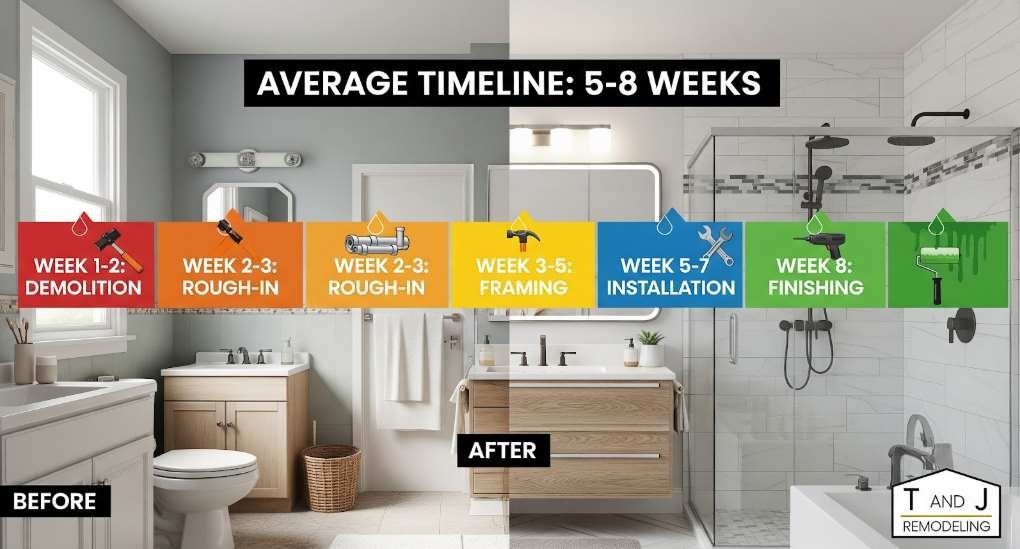
Wisconsin Bathroom Remodel Timeline at a Glance
The number that matters is total project time, not just construction days. Total project time includes planning, permit wait, material lead time, and active construction. That's the calendar you'll actually live with. Construction-only timelines are what some contractors quote; total project timelines are what homeowners experience.
Here's how the three main scopes break down for a typical Waukesha County home in 2026, based on regional contractor data and phase durations documented across Wisconsin bathroom projects:
| Scope | Construction Time | Total Project Time |
|---|---|---|
| Cosmetic refresh (paint, fixtures, tile over existing) | 1-2 weeks | 2-4 weeks |
| Partial remodel (fixture replacement, minor plumbing) | 3-5 weeks | 5-8 weeks |
| Full gut renovation (strip to studs, new plumbing/electrical) | 5-8 weeks | 8-14 weeks |
The gap between construction time and total time is where most homeowners get surprised. A contractor quoting five weeks for a gut renovation is giving you the hammer-swinging days. They may not be counting the two weeks to pull a permit, the week the tile setter is booked out, or the inspection window after rough-in. Those are real calendar days on your project.
A complete gut renovation in Wisconsin runs 8-14 weeks total from first consultation to final punch list, including permitting and material lead times.
Ready to run the cost side alongside the timeline? Estimate your bathroom remodel cost with our Wisconsin calculator before your first contractor meeting.
Phase-by-Phase: What Actually Happens Each Week
Every bathroom remodel moves through the same sequence. The phases don't change; the time each one takes does. Here's what each phase looks like in a standard Waukesha County bathroom, with durations drawn from published Wisconsin remodeling project data.
Phase 1: Planning and Design
 Bathroom - T&J
This phase runs from a few days to several weeks depending on how quickly scope gets locked. For a simple cosmetic refresh, planning might be a single site visit and a materials list. For a full gut renovation with a layout change, it includes measuring, drawing a plan, selecting every fixture and tile, and confirming subcontractor availability before demo starts.
Want this priced for your bathroom?
John walks your space, measures it, and leaves a written itemized estimate. No cost, no obligation, no sales script.
Scope changes mid-project are the single biggest timeline killer in bathroom remodeling. Every change after demo starts resets the subcontractor schedule. Lock your tile selection, fixture choices, and layout before anyone swings a hammer.
Phase 2: Permitting
Permitting in Wisconsin takes several days to three weeks depending on the municipality and scope of work. Waukesha County has multiple building departments. Brookfield, Elm Grove, Pewaukee, and Menomonee Falls each run their own permit offices with separate review queues. Two weeks is a realistic middle estimate for most municipalities during normal workload periods.
Permit offices move faster in winter and slower in spring when outdoor project applications stack up alongside bathroom and kitchen remodel submissions. That seasonal backlog is a fixed reality, not a contractor excuse.
For a full breakdown of what triggers a permit, see our article on when a Wisconsin bathroom plumbing permit is required.
Wisconsin's SPS 321 Uniform Dwelling Code requires a permit for any plumbing work beyond simple fixture swaps in the same location. A contractor who says a full gut renovation doesn't need a permit is either skipping it or misrepresenting the scope.
Phase 3: Demolition
Demolition on a standard bathroom takes a few days. It moves fast when conditions are clean. It slows down when water damage or outdated plumbing is found behind the walls, which happens more often than most homeowners expect in pre-1980s Waukesha County homes. When remediation is needed, the demolition phase extends and a separate crew has to be scheduled before rough-in can begin.
If your contractor quotes a tight demolition window with zero contingency for hidden conditions, ask them directly: "What happens to the timeline if you find water damage or galvanized pipe behind the walls?" A contractor without a clear answer hasn't planned for it.
Phase 4: Rough-In Plumbing and Electrical
Rough-in (the installation of new plumbing supply and drain lines, and new electrical wiring, before walls are closed) takes several days depending on complexity. This phase must pass a municipal inspection before walls close. That inspection window adds 2-5 business days depending on inspector availability in your municipality. Outdated plumbing discovered at this stage, such as missing shutoff valves or drain lines that don't meet current slope requirements, adds a plumber trip and triggers a re-inspection.
Phase 5: Structural Work and Framing
If the layout is changing, framing takes several days. If you're keeping the existing layout, this phase is minimal or skipped entirely. Layout changes are one of the most common sources of timeline extension on partial remodels.
Phase 6: Drywall and Surface Prep
Drywall installation and surface preparation takes a few days, plus mandatory drying time. In wet zones like shower surrounds and tub areas, moisture-resistant cement board (sometimes called backer board) is required rather than standard drywall. Drying time before tile is applied is non-negotiable. Rushing this step causes tile failures months later.
Phase 7: Tile and Flooring
Physical tile installation in a full bathroom with a tiled shower and floor takes several days. Complex patterns like herringbone or large-format slabs add time. The real timeline factor is lead time. In-stock tile from a Wisconsin supplier ships the same week. Special-order or imported tile can run 2-6 weeks to arrive. If your tile isn't on-site when the setter is scheduled, the setter moves to the next job.
Phase 8: Fixtures, Hardware, and Paint
Vanity installation, toilet setting, shower fixtures, mirrors, and paint take a few days once tile is cured. This phase moves quickly when everything is staged and ready. It stalls when a fixture is backordered or arrives damaged.
Phase 9: Punch List and Final Inspection
The punch list (a written list of small items to correct or complete before the project is officially closed out) typically takes a few days. For permitted work, a final municipal inspection is also required. Build one to two weeks into your total timeline for this phase.
Waukesha County Permits: What Triggers One and How Long It Takes
If your bathroom remodel involves any plumbing relocation, new electrical circuits, or structural changes, you need a permit in Wisconsin. That covers most partial and full remodels. Wisconsin's SPS 321 code requires a permit for plumbing work that goes beyond simple fixture swaps like replacing a toilet or faucet in the same location.
In Waukesha County, each municipality runs its own building department. Realistic permit wait times run from a few days to two or three weeks for standard residential work. Spring and summer are slower because permit offices are also processing outdoor and addition project applications at the same time.
After rough-in passes inspection, the inspector must visit the site before walls close. That scheduling window adds 2-5 business days depending on workload. This is the most common source of mid-project delay on permitted bathroom remodels in Wisconsin, and it's a fixed cost that can't be compressed.
Skipping a permit doesn't just risk a fine. It means no licensed inspector verified that your new shower drain is properly vented, your GFCI protection meets code, or your structural changes are sound. That becomes your problem at resale when a buyer's inspector finds unpermitted work. The Wisconsin Department of Safety and Professional Services oversees the licensed contractor and inspection framework that governs this work statewide.
The Spring Rush: Why March, May Adds Weeks to Your Timeline
Wisconsin homeowners who wait out winter all call their contractors in the same two-month window. March through May is peak booking season in Waukesha County, and the backlog effect is real. Contractor schedules stretch to 8-12 weeks out. Subcontractors, specifically tile setters, plumbers, and electricians, book out faster than general contractors because they work across multiple projects simultaneously.
Tile lead times compound the problem. If you're ordering special-order tile in March for an April or May start, you may be waiting 2-6 weeks for material to arrive. The tile setter can't be scheduled until the tile is on-site. One late tile order can push your finish date by a full month.
Book your consultation in January or February, lock scope and materials by early March, and target a construction start in April before the worst of the backlog hits. Fall projects (September through November) consistently get faster subcontractor scheduling and occasionally better pricing because demand drops sharply after summer.
The practical takeaway for a comparison shopper: if a contractor is quoting you a May start date in late March, ask them when their tile setter and plumber are actually available. The GC's calendar and the subcontractor's calendar are two different things.
What Scope Creep and Hidden Conditions Do to Your Timeline
This is where timelines fall apart, and it's worth understanding before you sign anything.
Water damage or mold found behind walls at demo is the most common hidden condition in Waukesha County bathrooms built before 1990. When it shows up, the demolition phase extends, a remediation crew has to be scheduled, and the inspector may require additional documentation before rough-in can proceed. A gut renovation with remediation runs 5-8 weeks of construction; without it, the same scope runs 5-6 weeks. That's a real calendar difference.
 Bathroom - T&J
Scope changes initiated by the homeowner after demo starts are the other major category. Adding a niche to the shower wall, upgrading to a larger tile format, or shifting the vanity location each requires the subcontractor to reschedule. That's not a criticism of homeowners; it's a structural reality of how subcontractors schedule their work.
The fix is upstream. A contractor who walks the project in person before quoting, checks for existing moisture, identifies the shutoff valve situation, and locks the tile selection before demo starts will hit the timeline they quoted. John walks every T&J project personally before a quote goes out. The scope conversation happens before you sign, not after demo reveals what's actually behind the walls.
For a mid-scope example of how this plays out in practice, see our breakdown of tub-to-shower conversion timeline and cost in Wisconsin, one of the most common scopes where hidden plumbing conditions surface.
How to Read a Contractor's Schedule (and Spot a Low-Ball Timeline)
A shorter quoted timeline usually means one of three things: permits are being skipped, subcontractor availability isn't confirmed, or the scope is incomplete. Here are five specific questions to ask any contractor during the quote process.
"What's your permit pull timeline for this scope?" A contractor who says a full gut renovation doesn't need a permit should raise an immediate flag. Permitted work takes longer. That's a feature, not a flaw.
"When are your tile subs available?" Subcontractor availability is the real scheduling bottleneck, not the general contractor's calendar. If the tile setter is booked four weeks out, that's four weeks on your timeline regardless of when demo starts.
"Is your quoted timeline contingent on materials being in stock?" Special-order tile can add 2-6 weeks. If the contractor hasn't confirmed material availability, the quoted timeline is optimistic by definition.
"Who is my point of contact if there's an inspection delay?" This tests whether project management is delegated to a junior coordinator or handled at the owner level. Inspection delays require immediate schedule adjustments. You want the decision-maker on the phone, not a message relay.
"What happens to my timeline if you find water damage at demo?" A contractor who has a clear answer has done this before. A contractor who deflects or says it won't happen hasn't planned for it.
These aren't gotcha questions. They're the questions that separate a complete scope from an incomplete one.
Full Gut vs. Cosmetic Refresh: Side-by-Side Timeline Comparison
For homeowners who skimmed to this point, here's the direct comparison between the two extremes.
| Factor | Cosmetic Refresh | Full Gut Renovation |
|---|---|---|
| Total weeks | 2-4 weeks | 8-14 weeks |
| Permit required | No | Yes (SPS 321) |
| Subcontractors involved | Painter, tile installer | Plumber, electrician, tile setter, drywaller |
| Biggest timeline risk | Material availability | Hidden conditions and inspection windows |
A cosmetic refresh moves fast because it avoids the permit-and-inspection cycle entirely and doesn't require subcontractor coordination for rough-in work. The moment you move a drain or add a circuit, you're in permit territory and the timeline extends accordingly.
If you're considering something in between, like converting a tub to a walk-in shower without a full gut, our tub-to-shower conversion timeline and cost in Wisconsin article covers that scope in detail. For a full picture of our bathroom remodeling in Waukesha County, that page walks through our process from consultation to punch list.
Planning Your Wisconsin Bathroom Remodel: Next Steps
The timeline for a Wisconsin bathroom remodel is predictable when three things are true before demo starts: scope is locked, materials are confirmed in stock, and permits are pulled. The variables that blow timelines are almost always upstream of demolition day.
Telli and John walk every project personally before a quote goes out. That site visit is where we check for existing moisture, confirm the shutoff valve situation, identify any plumbing or electrical conditions that would affect the permit scope, and lock the material selections. The timeline we give you is built on what we actually saw, not what we assumed from photos. We're a father-son team, credited contractors in Wisconsin, and the owners are on every project from first visit to punch list.
 Bathroom - T&J
When you're ready to talk scope and schedule, book a free Waukesha County consultation with no cost and no obligation. Visit T&J Remodeling to learn more about how we work.
Frequently asked questions
How long does a full bathroom gut remodel take in Wisconsin?
A full gut renovation, stripping to studs with new plumbing, electrical, tile, and fixtures, typically runs 5-8 weeks of active construction in Wisconsin. Add 2-4 weeks for planning and permitting, and you're looking at 8-14 weeks total from first consultation to punch list. The wide range exists because water damage or outdated plumbing discovered at demo can add remediation time, and permit inspection scheduling in Waukesha County municipalities varies by workload. Gut renovations trigger the full permit and inspection cycle under Wisconsin's SPS 321 code, which requires rough-in inspection before walls close. That inspection window is the most common source of mid-project delay, because each municipality schedules its own inspectors and spring backlogs can push that window from 2 business days to nearly two weeks.
Do I need a permit for a bathroom remodel in Waukesha County?
Yes, if your remodel involves any plumbing relocation, new electrical circuits, or structural changes, which describes most partial and full remodels. Wisconsin's SPS 321 code requires a permit for plumbing work beyond simple fixture swaps. In Waukesha County, each municipality (Brookfield, Elm Grove, Pewaukee, and others) has its own building department, so wait times vary from a few days to 2-3 weeks. Permits exist so a licensed inspector verifies rough-in work before walls close. Skipping one doesn't just risk a fine; it means no one checked whether your new shower drain is properly vented or your GFCI protection meets code. That gap shows up at resale when a buyer's inspector flags unpermitted work and your closing gets complicated.
What's the fastest a bathroom remodel can realistically be done?
A cosmetic refresh, new paint, updated fixtures, and tile installed over existing surfaces, can be completed in 1-2 weeks with no permit required. A small powder room renovation with fixture replacement runs 2-3 weeks. These timelines assume materials are in stock and no hidden conditions are found. The fastest projects are fast because they avoid the permit-and-inspection cycle and don't require subcontractor coordination for rough-in work. The moment you move a drain or add a circuit, you're in permit territory and the timeline extends accordingly, because now a licensed inspector has to verify the rough-in before walls close.
Why is one contractor's timeline so much shorter than another's?
A shorter quoted timeline usually means one of three things: the contractor is skipping permits, they're not accounting for subcontractor availability, or the scope is incomplete. A realistic full bathroom remodel in Wisconsin runs 5-8 weeks of construction. A quote promising two weeks for the same scope should prompt direct questions. Permit pulls, inspection windows, and subcontractor scheduling are fixed time costs that can't be compressed without cutting corners. Ask any contractor: "Is your timeline contingent on permits being pulled before demo starts?" The answer tells you whether the scope is real.
When is the best time to schedule a bathroom remodel in Wisconsin to avoid delays?
Book your consultation in January or February, lock scope and materials by March, and target a construction start in April or September through November. March through May is peak booking season in Waukesha County, and contractor backlogs stretch to 8-12 weeks. Fall projects consistently get faster subcontractor scheduling and occasionally better pricing. Wisconsin's short outdoor construction season means spring demand spikes sharply because homeowners who waited out winter all call at once. Tile setters and plumbers, the subcontractors who set your actual schedule, book out faster than general contractors, so locking them in early is the real leverage point.
What causes the most bathroom remodel delays in Wisconsin?
Hidden conditions discovered at demolition are the most common cause. Water damage, mold, galvanized supply lines, and missing shutoff valves are found more frequently in pre-1980s Waukesha County homes than homeowners expect. Each discovery adds a subcontractor trip, a remediation window, and often a re-inspection before work can continue. The second most common cause is material delays, specifically special-order tile that wasn't confirmed in stock before demo started. Both problems are preventable when a contractor walks the space before quoting and locks materials before scheduling demo. A contractor who quotes from photos and leaves scope open is the one who calls you two weeks in with a change order.
How long does tile installation take in a bathroom remodel?
Physical tile installation in a standard bathroom with a tiled shower and floor takes several days. The real timeline factor is lead time: in-stock tile from a local Wisconsin supplier ships the same week, while special-order or imported tile can take 2-6 weeks to arrive. If your tile is on back-order and you're starting a spring project, that lead time becomes the critical path item that delays everything downstream. Tile setters in Waukesha County book 2-4 weeks out during peak season, so a late tile order can push your finish date by a full month, because the setter can't hold a slot without confirmed material on-site.