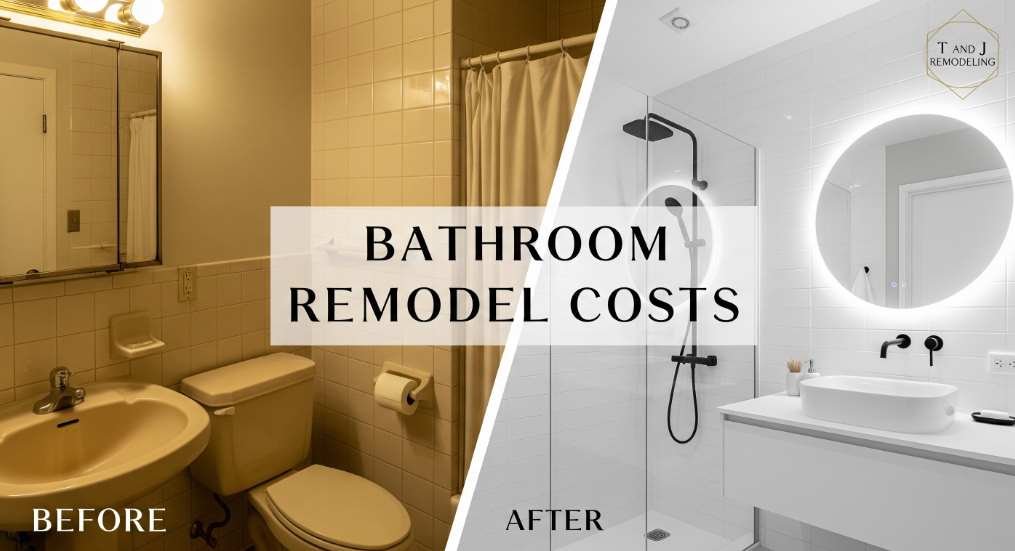
 Bathroom project - T&J
The range is wide for one reason: scope. A bathroom over an existing rough-in stub is a different project than one that needs the concrete slab saw-cut open. The rest of this guide shows you exactly where the money goes, so a low bid can't sneak an incomplete scope past you.
What Does a Basement Bathroom Addition Cost in Wisconsin?
A typical 3/4 basement bathroom conversion (existing basement space, no foundation work) runs $10,000-$22,000 for a 25-40 sq ft bath in 2026, per national cost survey data. That's the number most Waukesha County homeowners should anchor to. A half bath (toilet and sink only) starts around $5,000-$11,000, and a full bath with a tub or a primary bath runs higher.
Wisconsin contractor pricing sits above national averages. Local remodelers price a 45 sq ft 3/4 bath added to a basement remodel at $18,000-$30,000-plus depending on finish grade, based on published Milwaukee-area contractor pricing. That's the below-grade complexity and the tight Wisconsin labor market showing up in the bid, not padding.
The spread is this wide because scope varies enormously. Existing rough-in or fresh slab-cut? Ejector pump or gravity drain? Stock vanity or custom cabinetry? Each answer swings the price by thousands. The sections below break down every one so you can read any quote and know what's actually in it.
Cost by Bathroom Type: Half Bath, 3/4 Bath, and Full Bath
The first thing that moves your price is the type of bathroom and whether you're converting existing space or extending the foundation. A conversion carves the bathroom out of square footage you already have. An addition extends the foundation footprint, and that's a far more expensive job at $400-$550 per square foot, versus roughly $200-$250 for a conversion. Here's how the cost-survey ranges break down.
| Bathroom type | Size | Conversion cost | Addition cost |
|---|---|---|---|
| Half bath (toilet + sink) | 15-20 sq ft | $3,000-$5,000 | $6,000-$11,000 |
| 3/4 bath (adds shower) | 25-40 sq ft | $5,000-$10,000 | $10,000-$22,000 |
| Full bath (adds tub) | 40-50 sq ft | $8,000-$12,500 | $16,000-$27,500 |
| Large full bath | 50-100 sq ft | $10,000-$25,000 | $20,000-$55,000 |
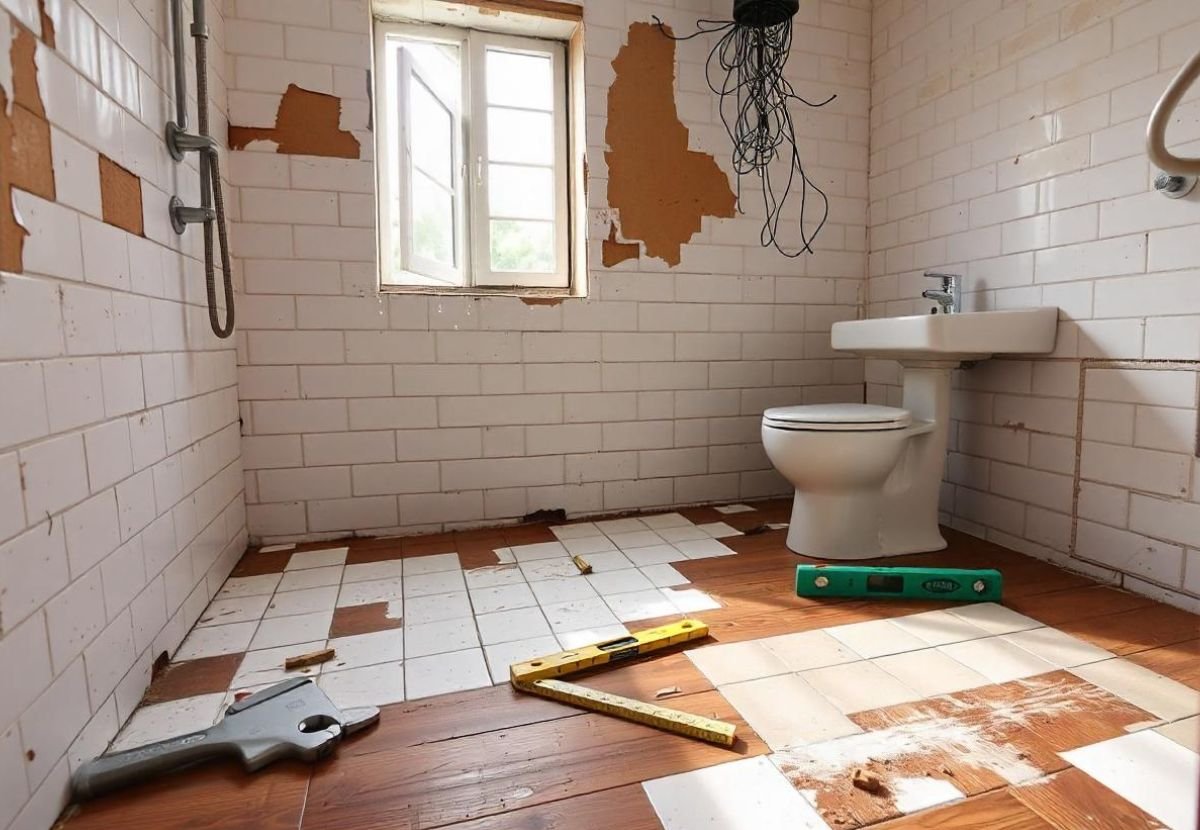 Bathroom - T&J
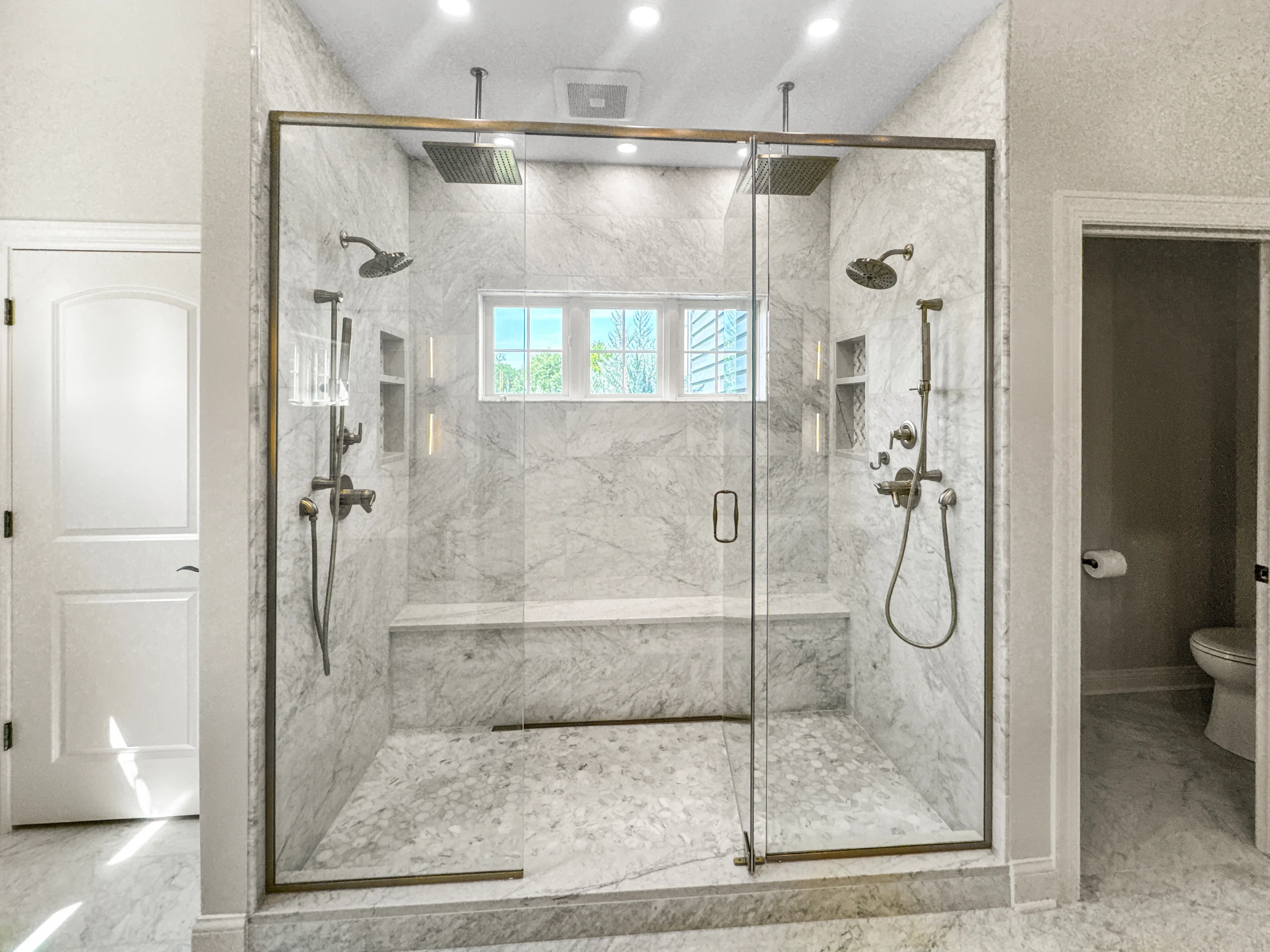
National baselines run a bit lighter than what you'll see quoted here. Wisconsin labor pushes most jobs toward the upper end of the conversion ranges, and local pricing for a standard 45 sq ft 3/4 bath added to a basement remodel runs $18,000 (base), $23,000 (standard), and $30,000-plus (premium). A standard build at that size includes a vanity, toilet, a shower stall with a full-frame glass door, and flooring.
Want this priced for your bathroom?
John walks your space, measures it, and leaves a written itemized estimate. No cost, no obligation, no sales script.
If a bid says "addition" but doesn't specify foundation work, ask directly. A true addition means extending your foundation footprint, which is why it costs $400-$550 per square foot versus roughly $200-$250 for a conversion. Contractors sometimes use the words loosely, and the difference is thousands of dollars.
Finish grade is the second-biggest cost driver
After the plumbing, your finish choices move the bill more than anything. Stock ceramic tile versus natural stone can swing the final number by $1,500-$3,000 on the same footprint. Tile flooring alone ranges $220-$2,500, a vanity and countertop run $400-$4,000, and a shower can be anywhere from $1,000 for a prefab insert to $15,000 for a custom tiled build. That's exactly why local standard-to-premium pricing spreads from $23,000 to $30,000-plus on an identical 45 sq ft footprint. Two honest contractors can be $6,000 apart purely on finish grade.
For most Waukesha County basements, from Brookfield to New Berlin to Menomonee Falls, a 3/4 bath in the 25-45 sq ft range is the practical sweet spot. It gives guests and family using the basement a shower without eating the square footage a tub demands. If you're weighing how the bathroom fits your larger plans, it helps to know what counts as a finished basement in Wisconsin before you settle on a layout.
The Biggest Cost Variable: Plumbing Rough-In and the Ejector Pump
The single biggest swing in any basement bathroom quote is the plumbing rough-in. If the builder pre-plumbed for a future bath, your cost drops significantly. Rough-in labor alone runs $450-$1,800. If there's no existing rough-in, the crew has to saw-cut the concrete slab and trench new drain lines, which adds real labor, time, and concrete repair to the bill.
We recently finished a 1970s ranch in Elm Grove where the original builder had left a capped 3-inch drain stub tucked near the floor drain. Because we could connect straight to it, the homeowner avoided saw-cutting the slab entirely and saved roughly $3,200 in cutting and concrete-repair labor. That one detail is the difference between the low end and high end of the ranges above.
Then there's the ejector pump. A sewage ejector pump is a sealed basin and pump that lifts waste up to the main sewer line when the basement floor sits below it, which most Wisconsin basements do. Gravity can't move waste uphill, so the pump does it. Installed, that system runs $2,000-$5,500.
Before you get a single quote, check your basement floor for a capped drain stub-out, usually near the floor drain or tucked in a corner. If it's there, tell every contractor upfront. It's the difference between connecting to an existing line and cutting your slab open, and it can move a bid by several thousand dollars.
One more line item comparison shoppers should look for: radon testing, which runs $10-$400. Waukesha County basements are radon-prone, and a new below-grade room is a smart time to test.
Here's the question to ask every contractor: "Does your quote include saw-cutting the slab if needed, and does it include an ejector pump?" A low bid that omits either one isn't cheaper. It's a different, incomplete project that will catch up to you after the walls close.
Permits, Inspections, and Wisconsin Code Requirements
Yes, you need a permit. Any new plumbing installation in Wisconsin requires one under the Uniform Dwelling Code (UDC), and a basement bathroom addition always involves new drain lines, supply lines, venting, and electrical. All of that triggers a permit and inspections. There's no version of this job that legally skips the permit.
The permit covers the plumbing, the electrical, and the framing or egress work if you're adding walls. A licensed contractor pulls it, not the homeowner, because Wisconsin doesn't let homeowners self-permit plumbing work. In Waukesha County communities like Brookfield and New Berlin, the rough-in must be inspected before the walls close. That's not a formality. It's the one chance an inspector has to catch a drain slope or vent issue before it's sealed behind drywall for the next 30 years.
Under the Wisconsin UDC (administered by the Wisconsin Department of Safety and Professional Services), a basement bathroom's plumbing rough-in requires inspection before insulation and drywall go up. If a contractor offers to "finish it fast" and close the walls before that inspection, walk away.
Skipping the permit creates a bigger problem than a code violation. Unpermitted work becomes a disclosure issue when you sell, buyers' inspectors flag it, and lenders can refuse to close until it's remediated. For the deeper mechanics of that, we've covered what happens if you add a bathroom without a permit and the full Wisconsin bathroom plumbing permit requirements in separate guides. For the comparison shopper, the rule is simple: a contractor whose quote doesn't mention permits is a red flag. You can confirm state licensing requirements through the Wisconsin DSPS and the UDC basics through the Wisconsin DSPS Uniform Dwelling Code program.
What a Complete Scope Looks Like (and What Low Bids Leave Out)
A complete basement bathroom scope has a lot of line items, and this is exactly where low bids go thin. Here's what a full scope should include, with cost-survey ranges so you can spot what's missing:
- Demo and slab saw-cutting if there's no existing rough-in
- Rough-in plumbing (drain, supply, vent): $450-$1,800 - Sewage ejector pump if required: $2,000-$5,500 - Electrical: GFCI outlets and wiring $200-$850-plus, exhaust fan $250-$950, light fixtures $100-$300 each - Framing and moisture-resistant drywall
- Waterproofing assessment: if the basement has a moisture history, waterproofing at $6,000-$18,000 should be scoped separately or flagged - Tile flooring: $220-$2,500 - Shower installation: $1,000-$15,000 depending on grade - Toilet: $350-$800 installed - Sink and faucet: $580-$2,000, plus $400-$4,000 for vanity and countertop - Mirror and medicine cabinet: $140-$430 - Permit fees and inspections
- Project management and cleanup
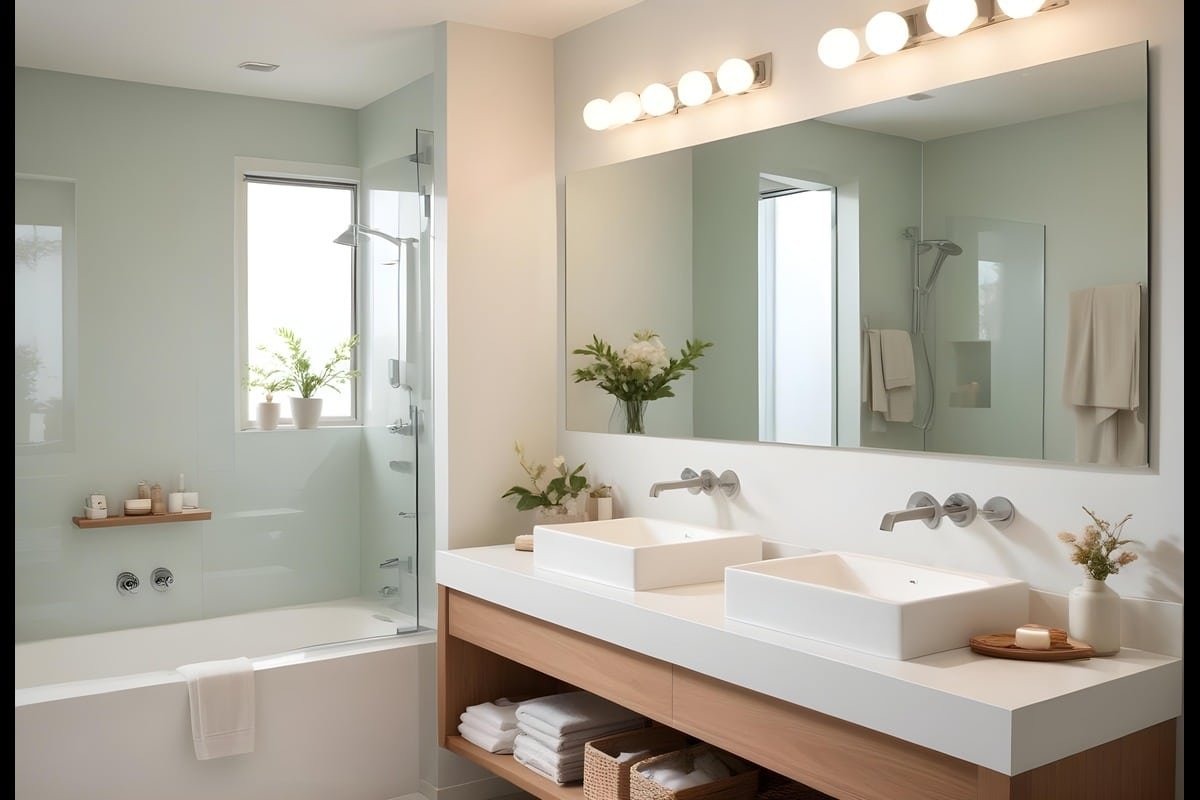 Bathroom - T&J
A responsible contractor scopes basement waterproofing at $6,000-$18,000 if there's any moisture history. A low bidder ignores it until it's your problem.
Here's the rule that protects you: if a quote is missing three or more of these line items, it's not a lower price. It's a different project. The cheap bid usually drops the ejector pump, the slab-cutting contingency, and the waterproofing assessment, then bills them back as change orders once the work is exposed. This is why we walk through the full scope with you before anything gets signed. John reviews every line so there are no surprises mid-project, and you can compare our itemized quote against the others line by line.
Why Quotes Vary So Much: 5 Factors That Move the Price
When two contractors bid the same bathroom and land $8,000 apart, it's almost never one of them gouging you. It's usually scope. Here are the five factors that move the price.
Existing rough-in versus slab saw-cut.
This is the single biggest swing. Connecting to a capped stub is a fraction of the cost of cutting open the slab and trenching new lines.
Ejector pump requirement.
If your basement sits below the sewer line, you need one, and it adds $2,000-$5,500. Some bids quietly leave it out.
Finish grade.
A stock vanity and builder-grade tile versus custom cabinetry and a full-frame glass shower stall is a huge spread, which is why local standard-to-premium pricing runs from $23,000 to $30,000-plus on the same 45 sq ft footprint.
Waterproofing.
If the basement has moisture issues, a responsible contractor scopes the fix. A low bidder pretends the problem doesn't exist.
Who manages the project.
A general contractor coordinates the plumber, electrician, tile sub, and inspector on one schedule. A handyman hands you a list of subs to call yourself, then the coordination becomes your unpaid second job.
The cheap bid catches up to you, usually right after the walls close. That's not a sales line. It's what happens when the ejector pump nobody quoted suddenly needs a home, or the moisture nobody addressed wicks through the new drywall.
Timeline: How Long Does a Basement Bathroom Addition Take?
Active construction on a basement bathroom typically runs 2-4 weeks. In Waukesha County, permit approval takes 1-3 weeks. The rough-in work runs 2-5 days, then the county inspects before walls close. Framing and drywall add 2-3 days, and finish work (tile, fixtures, trim) takes 3-7 days depending on grade.
Two things stretch the timeline: slab saw-cutting and ejector pump installation both add days and require concrete cure time. Beyond the build itself, plan for the lead time to get onto a good contractor's schedule, which typically runs 4-8 weeks in Wisconsin depending on the season. Spring and summer book fast. If you want the bathroom done by a specific date, start the conversation earlier than you think you need to.
Getting an Accurate Quote in Waukesha County
Before you sign any contract, do three things. First, confirm the quote is itemized, not a single lump sum, so you can see every line. Second, ask specifically: "Does this include permit fees, slab cutting if needed, and an ejector pump if required?" Those are the three most commonly omitted items, and the answer tells you whether you're comparing apples to apples. Third, verify the contractor is credited and licensed in Wisconsin for plumbing work.
T&J All In Remodeling serves Waukesha County and the Greater Milwaukee area, from Brookfield and Elm Grove to New Berlin and Wauwatosa. John handles every project's communication directly, not a junior PM, and he walks through the full scope with you before any contract is signed, so the number you approve is the number the project runs on. We're a father-son team, we're on every job, and we pull the permits as part of the scope. If you're weighing a bigger project, our basement remodeling services in Waukesha County cover the whole space.
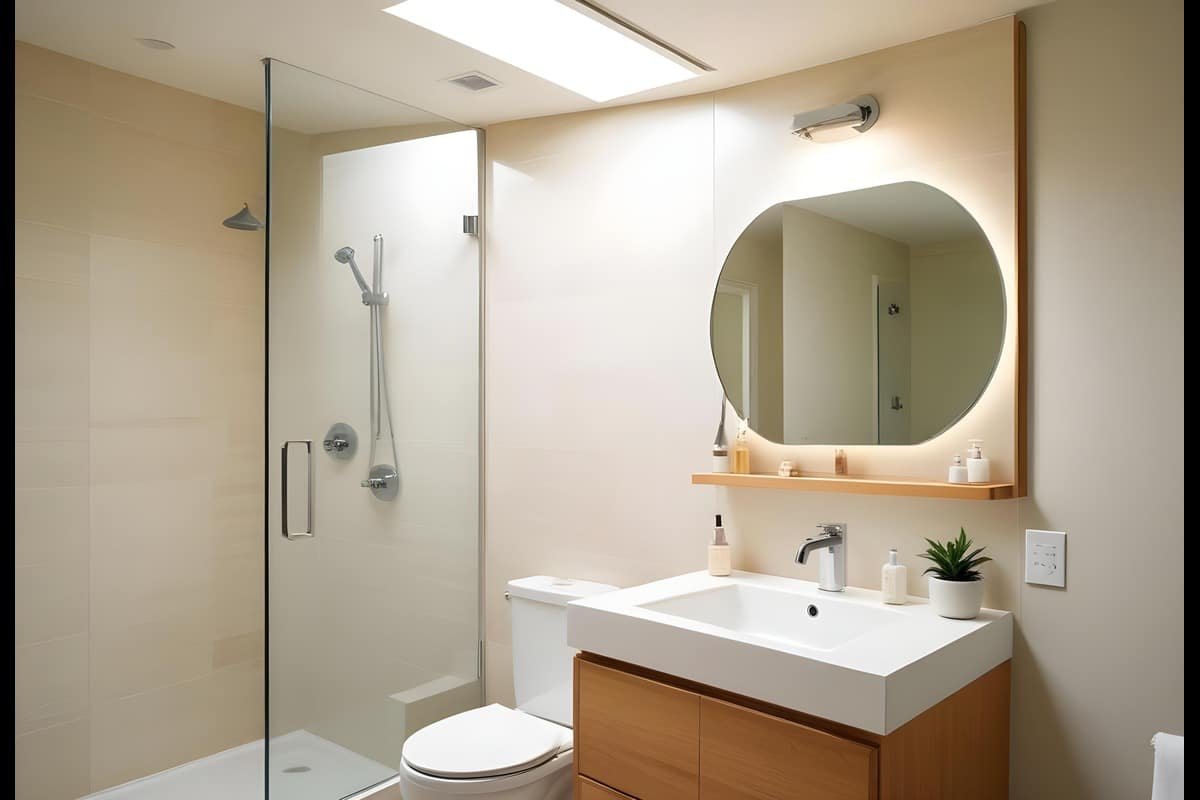 Bathroom - T&J
Want a real number for your basement bathroom? Book a free Waukesha County consultation with T&J Remodeling. No cost, no obligation, no sales call.
Frequently asked questions
Do I need a permit to add a bathroom to my basement in Wisconsin?
Yes. Any new plumbing installation in Wisconsin requires a permit under the Uniform Dwelling Code (UDC), and a basement bathroom involves new drain lines, supply lines, venting, and electrical. In Waukesha County, the rough-in must be inspected before walls close, because that's the only chance an inspector has to catch a slope or vent problem before it's sealed for decades. Beyond code, the permit protects your resale: Wisconsin requires disclosure of unpermitted work at sale, and lenders can refuse to close until it's remediated. A licensed contractor pulls the permit as part of the scope, so if a quote doesn't mention permits, ask why.
Do I need a sewage ejector pump for a basement bathroom in Wisconsin?
Most of the time, yes. Most Wisconsin basements sit below the main sewer line, and gravity can't move waste uphill, so a sewage ejector pump (a sealed basin and pump that lifts waste up to the sewer) does the work. Whether you need one depends on your specific home's drain configuration, but below-grade bathrooms require one more often than not. Installed cost runs $2,000-$5,500. It's one of the most commonly omitted line items in low bids, and it's expensive to add after the fact, so always ask the contractor to confirm whether their quote includes it.
How much cheaper is it if my basement already has rough-in plumbing?
Significantly cheaper. Many Wisconsin builders stub out drain lines for a future basement bathroom during original construction, and if those rough-ins are in place you avoid the most expensive part of the job: saw-cutting the concrete slab and trenching new lines. Rough-in labor itself is only $450-$1,800, but the slab work and concrete repair it avoids can save several thousand dollars, as it did on an Elm Grove ranch we finished where a capped stub saved the homeowner about $3,200. Check your basement floor for a capped drain stub-out near the floor drain, and tell every contractor upfront if it's there.
What's the difference between a half bath, 3/4 bath, and full bath in a basement?
A half bath has a toilet and sink only, no shower or tub. It's the least expensive option, roughly $3,000-$11,000 depending on conversion versus addition, and works well for a utility basement. A 3/4 bath adds a shower stall and is the most popular basement configuration because it serves guests and family without the square footage a tub demands. A full bath includes a tub, which costs more and needs more space. In most Wisconsin basements, a 3/4 bath in the 25-45 sq ft range is the practical sweet spot.
What's the difference between a conversion and an addition?
A conversion carves the bathroom out of existing basement square footage and runs roughly $200-$250 per square foot. An addition extends the foundation footprint with new framing and foundation work, which is why it costs $400-$550 per square foot. When a bid uses the word "addition," ask whether foundation work is actually included, because the two words get used loosely and the difference is thousands of dollars on the same size bathroom.
What happens if a contractor adds a basement bathroom without a permit?
Unpermitted plumbing creates three problems. First, it never gets inspected, so if the rough-in has a leak or a code violation, it's sealed inside your walls with no one to catch it. Second, Wisconsin requires disclosure of unpermitted work at sale, buyers' inspectors flag it, and lenders can refuse to close until it's remediated. Third, that remediation, opening walls, re-inspecting, and potentially redoing work, often costs more than the permit ever would have. The real reason contractors skip permits is usually to dodge inspection scrutiny, not to save you money.
Can I add a basement bathroom to an unfinished basement?
Yes, and it's a common approach. The bathroom gets framed, drywalled, and finished as a standalone room while the rest of the basement stays unfinished. Many homeowners add the bathroom first, because plumbing is the hardest part to add later, then finish the rest of the basement in a later phase. If you plan to finish the whole basement eventually, tell your contractor upfront: coordinating the rough-in for both phases at once saves money on slab work and avoids cutting the floor twice.
How long does a basement bathroom addition take?
Active construction typically runs 2-4 weeks: permit approval takes 1-3 weeks in Waukesha County, rough-in work 2-5 days, framing and drywall 2-3 days, and finish work 3-7 days. Slab saw-cutting and ejector pump installation add time because of concrete cure requirements. Beyond the build, plan for a 4-8 week lead time to get onto a good contractor's schedule, since spring and summer book fast in Wisconsin.