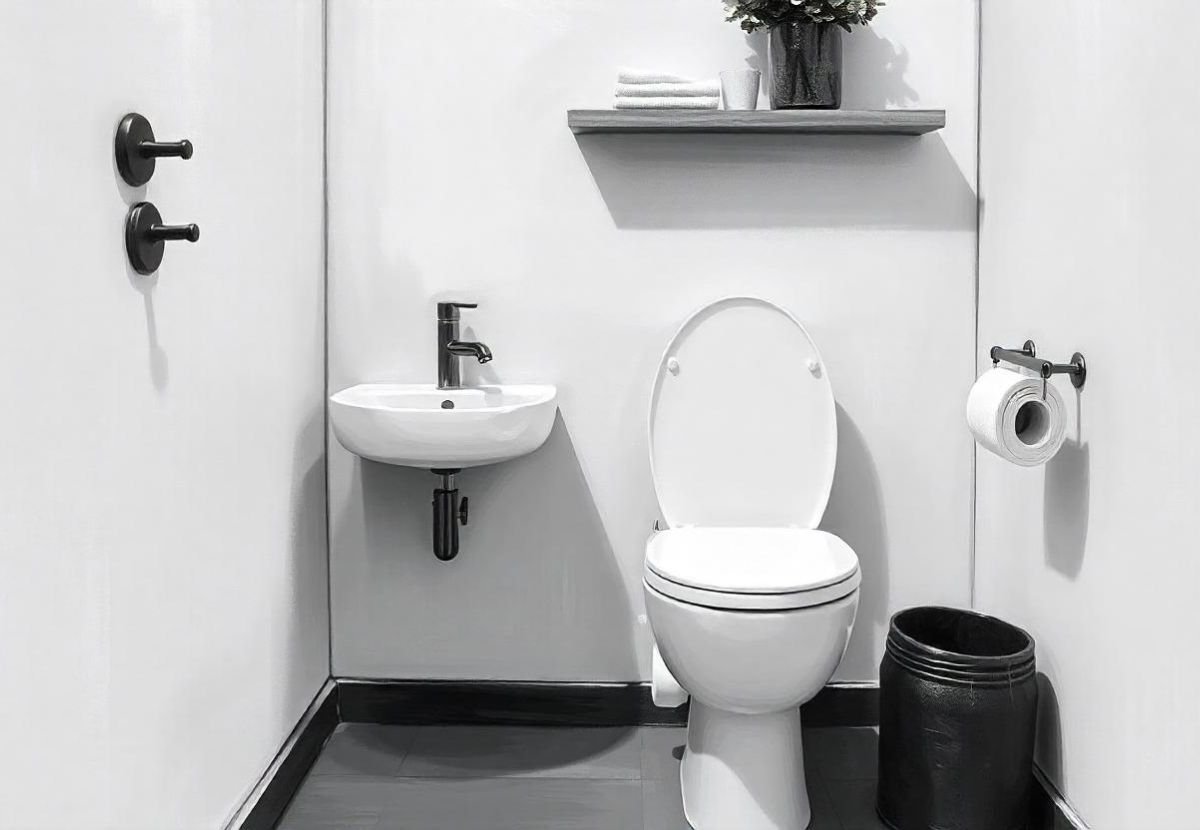
 Bathroom project - T&J
What Does an Aging-in-Place Bathroom Remodel Cost in Wisconsin?
Most Wisconsin homeowners spend $8,000-$20,000 for a focused aging-in-place bathroom remodel. That means one room, not a whole-home overhaul. A full accessible conversion (curbless shower, grab bars, comfort-height toilet, non-slip flooring, and sometimes a wider doorway) lands at $20,000-$25,000. On the lighter end, a targeted safety package of grab bars, an anti-scald valve, and a flooring refresh can be done for $3,000-$8,000. The national average to remodel a home for aging in place is $3,000-$15,000 across the board. Wisconsin sits slightly below that mark. Full bathroom remodels here average around $9,712 versus $11,328 nationally.
The distinction that drives your number is simple. A modification means targeted fixes to the bathroom you already have. A full conversion means rebuilding the room around universal design from the studs out. Where you land depends on your bathroom's size, whether plumbing has to move, and the finishes you pick.
Cost Breakdown by Modification Type
Here's what individual accessibility upgrades cost, using verified 2026-adjusted figures. A modification package (bars, valve, flooring) stays in the low thousands. A full conversion with a curbless shower is where the real cost lives. Every figure below comes from published cost data, not a guess.
| Upgrade | Typical Cost | Notes |
|---|---|---|
| Grab bar (installed) | $100-$200 each | Most baths need 3-4 bars |
| Grab bars total | $300-$800 | Toilet side wall, back wall, shower |
| Curbless walk-in shower | $4,000-$15,000 | Most WI projects: $7,000-$11,000 |
| Anti-scald thermostatic valve | $80-$300 | ASSE 1016 rated |
| Bidet toilet seat | $500-$2,000 | Varies by model |
| Lever faucets/hardware (whole home) | $350+ | Bathroom-only is a fraction |
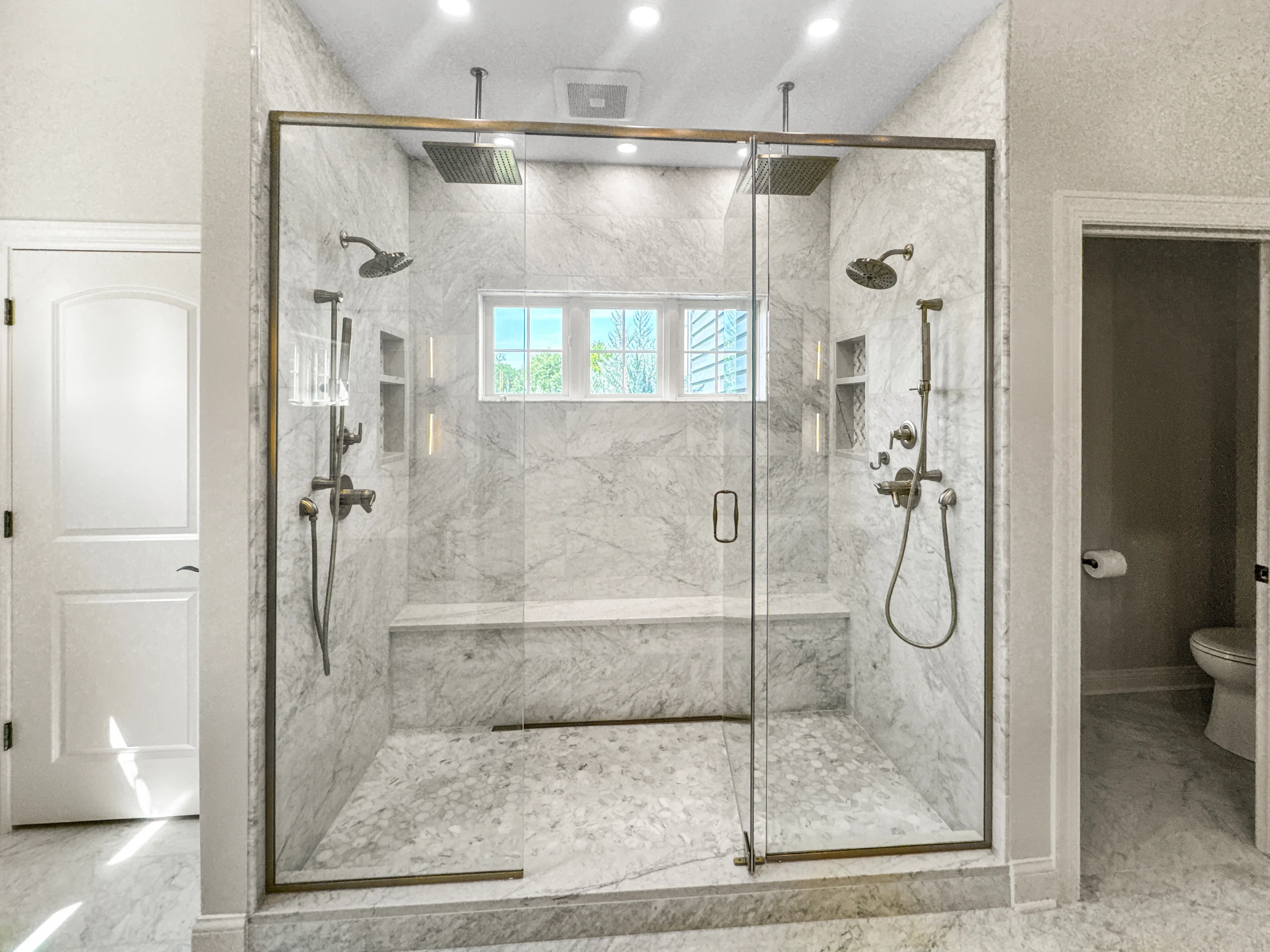
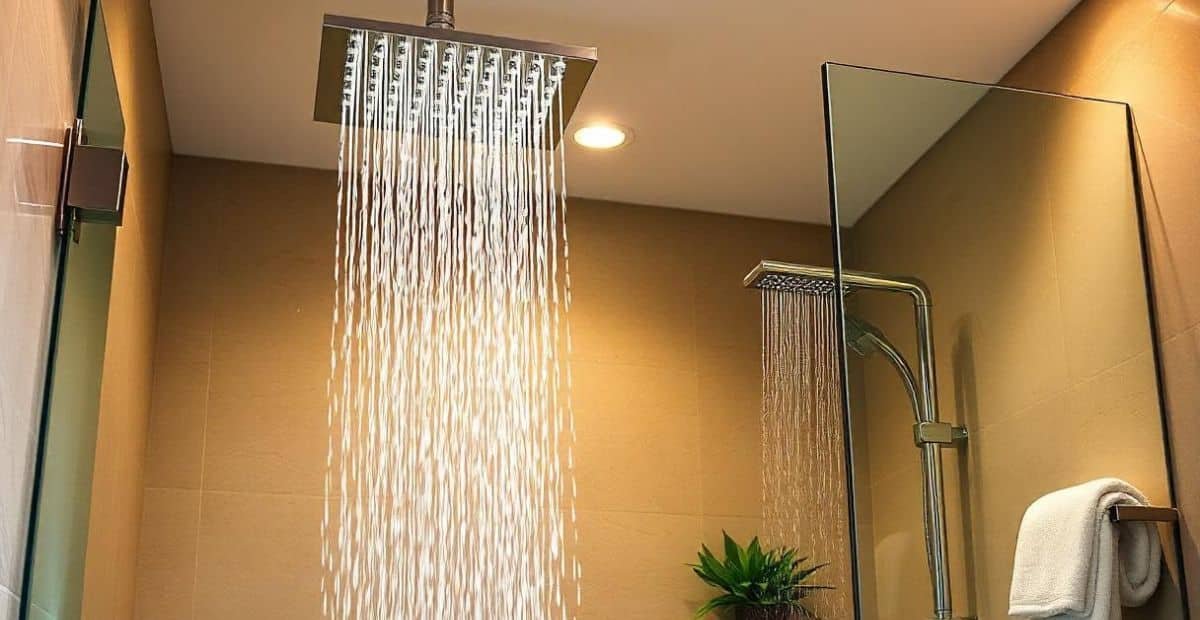 Bathroom - T&J
A grab bar is only as strong as what's behind the drywall. If your walls lack solid blocking, add $150-$300 per location for framing before the bar goes in. A contractor who quotes bars without asking about blocking is quoting a bar that will pull out of the wall the first time someone leans on it hard.
On the curbless shower, the published range is wide at $4,000-$15,000. But most Waukesha County conversions on a standard 36x60 footprint with tile, a linear drain, and a fold-down bench land at $7,000-$11,000. That's the number to plan around. Waukesha and Milwaukee counties run similar labor rates, while rural Wisconsin areas can run 5-10% lower and a market like Madison tends to run 10-15% higher. Comfort-height toilets and non-slip flooring add a few hundred to a couple thousand depending on fixtures and tile. If you're weighing a straight tub swap, our breakdown of tub-to-shower conversion costs in Wisconsin walks through that path.
Want this priced for your bathroom?
John walks your space, measures it, and leaves a written itemized estimate. No cost, no obligation, no sales script.
Full Accessible Bathroom Conversion
A complete accessible conversion bundles the curbless shower, comfort-height toilet, non-slip flooring, grab bars, an accessible vanity, and often a widened doorway into one project. Industry cost data puts the full aging-in-place bathroom remodel at $20,000-$25,000. Don't confuse that with the $50,000 figure you'll see quoted. That number is the maximum for remodeling an entire home with universal-height counters, lever hardware throughout, wider hallways, and exterior ramps. Your bathroom is one room, not the whole house.
What the Specs Actually Mean: ADA & Universal Design Minimums
The specs behind aging-in-place work aren't arbitrary. ADA (the Americans with Disabilities Act) technically governs public buildings. But ANSI A117.1 (the standard for accessible and usable residential buildings) is the benchmark contractors use in homes. Getting these numbers right is the difference between a bathroom that's genuinely safe and one that just looks accessible.
Doorway & Reach
These specs decide whether a walker or wheelchair can actually get in and reach the controls.
- Door clear width: 32 inches minimum with the door open, 36 inches preferred for a wheelchair. A standard 30-inch door leaves only about 27 inches of clear passage once you count the door and hinges. That's not enough for a walker.
- Reach ranges: controls between 15 and 48 inches above the floor per ANSI A117.1, so a seated user can reach them.
- Grab bar height: 33-36 inches above the finished floor per ANSI A117.1, which matches seated transfer height so someone can push up safely.
Shower & Safety
These specs address the falls and scalds that send older adults to the ER.
- Shower threshold: zero-barrier. A standard tub curb is 4-6 inches tall and is the number-one trip hazard in the room for anyone with reduced hip flexion.
- Slip resistance: a wet coefficient of friction of 0.6 or higher. Most glazed ceramic tile tests at 0.4-0.5 wet, technically below the safe threshold.
- Anti-scald: an ASSE 1016 thermostatic valve. Older adults have reduced temperature sensation and slower reaction time, and scalds are a common ER visit.
These are residential best-practice standards. ADA governs public accommodations, while ANSI A117.1 is the residential equivalent Wisconsin remodelers design to. When a contractor cites A117.1 by name, that's a good sign they know the technical side.
Does It Have to Look Like a Hospital? (Spoiler: No)
No. This is the fear behind almost every aging-in-place call we take. The honest answer is that a well-designed accessible bathroom reads as a luxury remodel, not a medical suite. Curbless showers have been standard in high-end European bathrooms for decades. Telli (our co-founder and master carpenter) spent years doing high-end residential work in Athens, where curbless was simply how a beautiful shower got built, long before anyone called it accessible.
Here's why it works today:
- Grab bars come in brushed nickel, matte black, and oil-rubbed bronze that match your towel bars and robe hooks. Decorative grab bars are indistinguishable from standard hardware at a glance.
- Comfort-height toilets are standard in most new construction now, accessibility need or not.
- Non-slip large-format porcelain tile looks identical to standard tile. The slip resistance is in the surface finish, not the color or size.
Universal design means the room works beautifully for everyone in the household and happens to be safe for someone using a walker. Our approach is to spec the accessibility features first, then design the finishes around them. You end up with a bathroom that looks intentional, not clinical.
Wisconsin Permits for Accessibility Bathroom Remodels
Whether you need a permit comes down to what you're touching. Installing grab bars into existing blocking is cosmetic, minor work and generally needs no permit in Wisconsin. The moment you move plumbing, reframe a doorway, or reconfigure the shower pan, you're into permit territory.
Doorway widening involves structural framing and triggers the Wisconsin Uniform Dwelling Code (SPS 320-325). Relocating a fixture or shower drain requires a plumbing permit under Wisconsin SPS 321. A curbless shower conversion that moves the drain almost always needs one. If you're unsure where your project falls, our guide on when a Wisconsin bathroom plumbing permit is required lays it out clearly.
 Bathroom - T&J
Who issues the permit depends on where you live. Waukesha County homeowners in unincorporated areas go through the county building department, while cities like Brookfield, New Berlin, and Elm Grove run their own inspection departments with their own fee schedules. Milwaukee metro municipalities work the same way. On timing, a plumbing or building permit for a single bathroom is usually issued within a few business days to about two weeks depending on the municipality, and inspections are scheduled around the work (a rough-in inspection before walls close up, then a final). Budget for the permit fee as a real line item, not a rounding error. It's small relative to the project, but skipping it is the expensive mistake.
Pulling permits protects you: the work gets inspected, it's code-compliant, and it won't create surprises at resale or with your insurer if there's ever a water-damage claim. Skipping a permit to save a few weeks often backfires. Unpermitted plumbing work can force you to open finished walls later to prove it was done right. We handle permit pulling and inspection scheduling as part of every project, so you're not navigating a county office on your own and the permit timeline is built into the schedule from day one.
Financial Help: Programs That Can Offset the Cost
Yes, partial funding exists, though eligibility varies and none of these are guaranteed. Start with your county Aging & Disability Resource Center (ADRC), which can connect Wisconsin homeowners with local modification assistance and point you toward the right program.
- VA HISA grant: the Home Improvements and Structural Alterations grant helps eligible veterans pay for accessibility modifications. Amounts and eligibility are set by the VA, so confirm your benefit through va.gov.
- USDA Section 504 Home Repair Program: offers grants for very low-income rural homeowners for accessibility and safety repairs. Confirm the current cap and eligibility directly with USDA Rural Development.
- Medicaid HCBS waivers: Wisconsin's IRIS and Family Care programs may cover some modifications for eligible individuals. Scope varies, so your ADRC is the right first call.
For most homeowners who don't qualify for a grant, a HELOC or home equity loan is the most practical path. Our overview of bathroom remodel financing options in Wisconsin covers the tradeoffs. We can also provide a detailed written estimate suitable for grant applications or insurance documentation.
How to Hire an Aging-in-Place Bathroom Contractor in Wisconsin
Accessibility remodeling is a specialty, and the contractor you pick should treat it that way. The single most useful credential is CAPS, the Certified Aging-in-Place Specialist designation from the National Association of Home Builders. A CAPS-trained contractor has studied ANSI A117.1, understands grab bar blocking, and knows how to spec a proper curbless drain slope, not just install fixtures. You don't legally need one, but it's a strong signal they understand the technical side.
Ask any contractor you interview these questions:
- Do you pull permits, or is that on me?
- Have you done curbless shower conversions before, and can you show photos?
- Do you check for wall blocking before quoting grab bars?
- Who is my single point of contact throughout the project?
Red flags are worth watching for. A contractor who quotes grab bars without asking about wall blocking is guessing. One who doesn't mention permits for drain relocation either doesn't know the code or plans to skip it. And a shop that subcontracts everything and disappears is the one whose quote balloons mid-project.
What good looks like: John is a credited contractor in the state of Wisconsin and handles every communication on our projects personally, so you're never handed off to a junior coordinator. We've been remodeling bathrooms across Waukesha and Milwaukee counties for about a decade, backed by 35+ years of combined carpentry experience, and we serve Brookfield, New Berlin, Waukesha, and the greater Milwaukee area. You can see the kind of work we do on our bathroom remodeling in Waukesha County page.
What to Expect: Timeline and Process
Most aging-in-place projects are faster than people fear. Grab bars and an anti-scald valve take one to two days, and the bathroom is usable the same evening or next morning. A curbless shower conversion without moving plumbing typically runs five to ten business days. A full accessible remodel covering the shower, toilet, vanity, flooring, and a widened doorway takes two to four weeks depending on scope and material lead times.
In Wisconsin, custom or special-order tile and fixtures can add one to three weeks of lead time. Order those early, especially for a winter project, so your bathroom isn't sitting torn open waiting on a box to arrive.
 Bathroom - T&J
We book roughly four to eight weeks out depending on the season. The first step is a free in-home consultation to lock in a start date. A well-managed project keeps the disruption short. A clear schedule, pre-ordered materials, and daily communication are what keep two weeks from stretching to six. If you have only one bathroom, we'll talk through a phased approach before we start. You can also estimate your aging-in-place bathroom remodel cost to get a ballpark before we meet.
Frequently asked questions
Why is a curbless shower so expensive compared to just removing the tub?
Because a curbless shower is structural work, not a swap. Removing a tub is the easy part. To get a zero-barrier entry, the crew has to lower or recess the subfloor so the shower pan slopes to drain without a curb, build a fully waterproofed pan (often with a linear drain instead of a center drain), and tie into the existing plumbing at the new slope. That curbless entry matters because a standard tub curb is the number-one trip hazard in the bathroom, and eliminating it removes the most common fall risk for anyone with reduced mobility. That's carpentry, waterproofing, plumbing, and tile all in one. Most Wisconsin projects run $7,000-$11,000 for a standard 36x60 footprint, with the published range spanning $4,000-$15,000 depending on size, materials, and whether the drain moves.
Do I need a permit for an aging-in-place bathroom remodel in Wisconsin?
It depends on scope. Grab bar installation into existing wall blocking is generally a no-permit task. But doorway widening involves structural framing and triggers the Wisconsin Uniform Dwelling Code (SPS 320-325), and any curbless shower conversion that relocates the drain requires a plumbing permit under SPS 321. Permits aren't just a formality. They mean a state or municipal inspector verifies the drain slope, the waterproofing, and the framing, which protects you at resale and with your insurer if a water-damage claim ever comes up. In Brookfield, New Berlin, and Waukesha the local building department issues the permit, usually within a few business days to two weeks; unincorporated areas go through Waukesha County. A reputable contractor pulls all required permits as part of the scope.
Can I install grab bars myself to save money?
You can, but only into solid blocking, and that's the catch. A grab bar has to hold an adult's full body weight during a transfer, which means it needs to anchor into wood blocking or a stud, not just drywall or a plastic anchor. That matters because falls are the leading cause of injury for adults over 65, and the bathroom is where a large share of them happen. A bar that pulls out mid-fall is worse than no bar at all. If your wall was framed without blocking behind the tile, a DIY bar screwed into drywall will rip out the moment someone leans on it hard. Opening the wall to add blocking runs $150-$300 per location and gets you back into tile and waterproofing work. For a single bar over an existing stud it's a reasonable DIY. For a full safety layout, it's worth having a pro confirm the anchoring.
Will the VA or Medicaid actually pay for this in Wisconsin?
Sometimes, partially, and it depends on eligibility. Veterans may qualify for the VA's Home Improvements and Structural Alterations (HISA) grant for accessibility modifications, confirmed through va.gov. Wisconsin's Medicaid Home and Community-Based Services waivers (IRIS and Family Care) can cover some modifications for eligible individuals, but scope and approval vary, so your county Aging & Disability Resource Center (ADRC) is the right first call. The reason to start with the ADRC is that they know which local programs are currently funded and can screen your eligibility before you spend time applying. The USDA Section 504 program offers grants for very low-income rural homeowners. Most homeowners who don't qualify for a grant use a HELOC or home equity loan. We can provide a detailed written estimate formatted for grant applications.
How long will my bathroom be unusable during the remodel?
Less time than most people expect. A grab bar install and anti-scald valve swap is one to two days, and the bathroom is usable the same evening. A curbless shower conversion without moving plumbing is typically five to ten business days. A full accessible remodel with shower, toilet, vanity, flooring, and doorway widening runs two to four weeks. What stretches a two-week job to six weeks is poor management: materials ordered late, no clear schedule, crews that vanish. That's why pre-ordered tile and daily communication matter so much, because the delays are almost always logistical, not construction time. If you have only one bathroom, ask about a phased approach so you're never without a working toilet and shower.
Do I really need a CAPS-certified contractor?
Not legally, but it's a meaningful filter. CAPS (Certified Aging-in-Place Specialist) is a credential from the National Association of Home Builders. A CAPS-trained contractor has studied ANSI A117.1 accessibility standards, understands grab bar blocking heights, knows how to spec a proper curbless drain slope, and can design a bathroom that meets accessibility best practices rather than just installing fixtures that look accessible. It matters because a bathroom that looks accessible but has bars anchored in drywall or a threshold that's too high fails exactly when someone needs it. If a contractor doesn't hold CAPS, ask about their equivalent accessibility project experience and ask to see photos of past curbless conversions. Experience plus the right technical questions matters as much as the certificate itself.