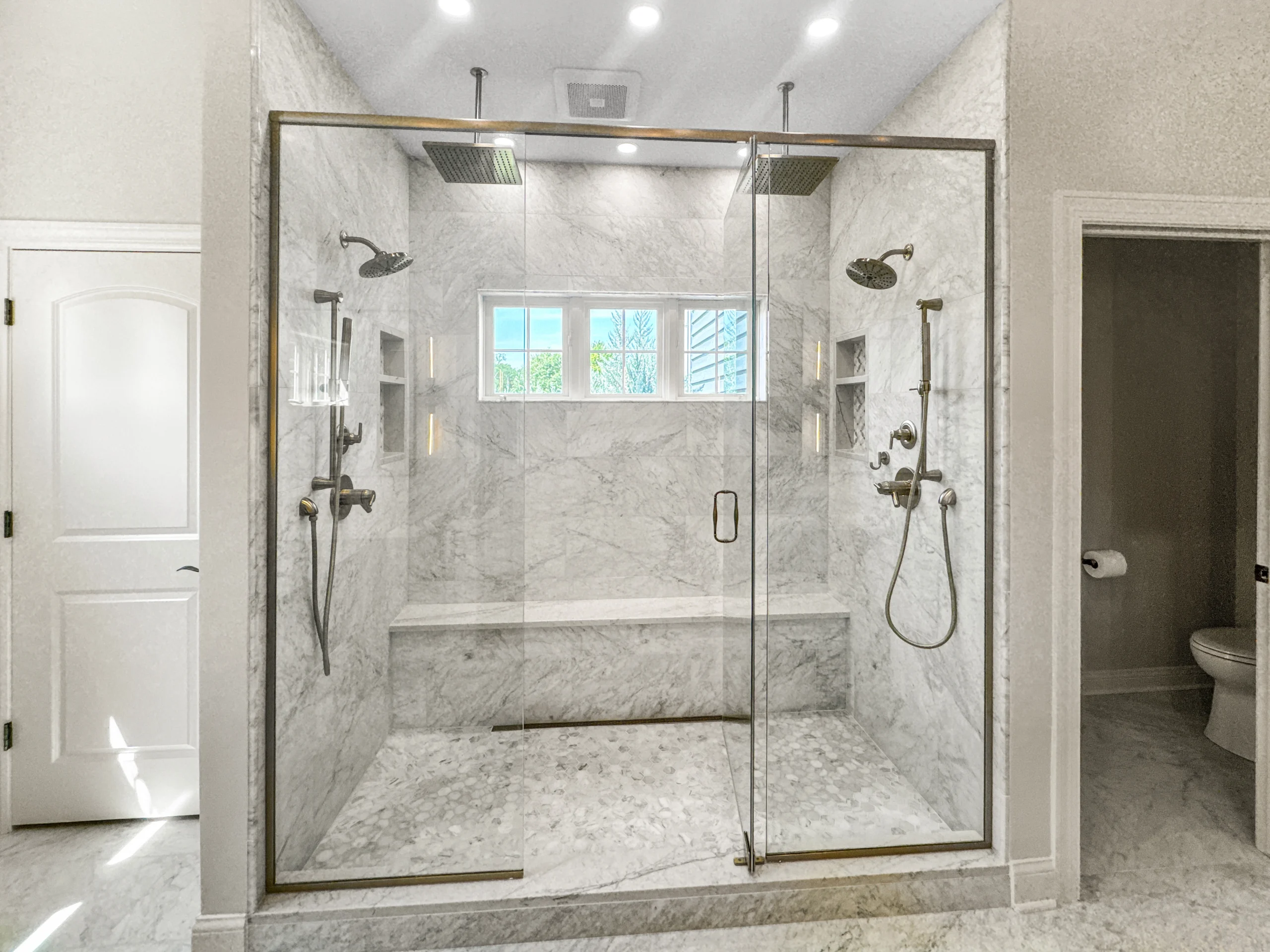
Kitchen project - T&J
The good news is that an island sink is a solved problem in Wisconsin. The code spells out how to vent it, so the questions are about your floor, your layout and your budget, not whether it can be done.
Why the Sink Is the Hardest Thing in the Kitchen to Move
Water supply lines are easy to reroute because they are under pressure. The drain is different. It relies on gravity, so it needs a steady downhill run to the main drain, and it needs a vent so the trap under the sink keeps its water seal and sewer gas stays out of the house.
That is why This Old House notes that keeping your sink and appliances where they are can lead to significant savings, and that moving plumbing or gas lines brings in licensed trades who may cost more. The dishwasher and garbage disposal usually move with the sink, so they belong in the same plan.
The Wisconsin Drain Rules That Matter
| Wisconsin plumbing rule | What it means for your sink |
|---|---|
| Horizontal branch drains 2 inches or less need a slope of at least 1/4 inch per foot | The farther the sink moves from the main drain, the more height the pipe loses on the way |
| Larger horizontal branch drains need at least 1/8 inch per foot | Bigger pipes can run flatter |
| The trap must be within a set distance of its vent, measured along the pipe | The vent cannot be far from the sink |
| A vent cannot connect closer to the trap than 2 pipe diameters | There is a minimum distance too |
At 1/4 inch per foot, a drain that runs 12 feet to reach the main line drops 3 inches along the way, and that drop has to fit in the floor or ceiling space below the kitchen.
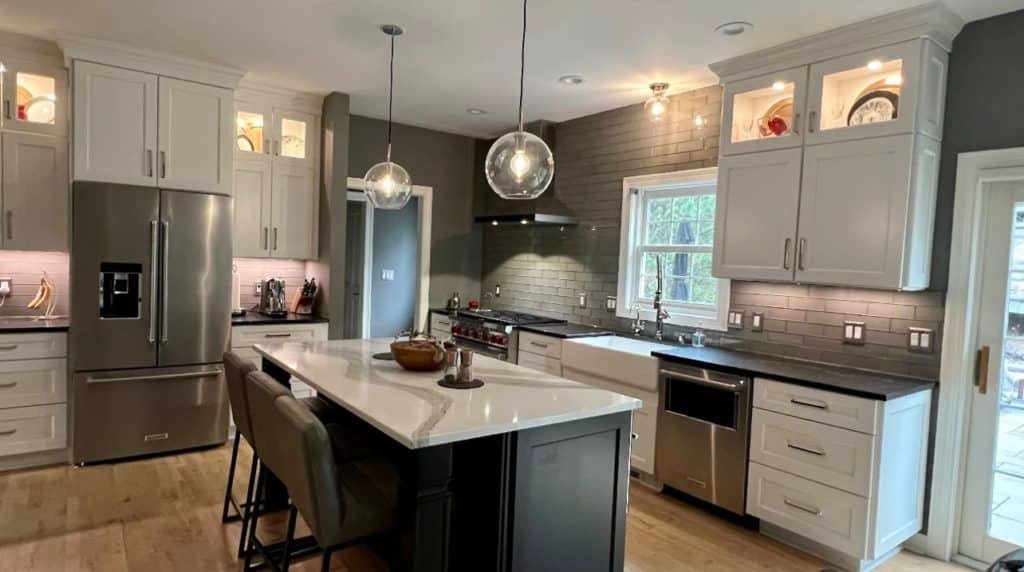 Kitchen - T&J
Venting an Island Sink: Two Options Wisconsin Allows
A sink against a wall is usually vented through a pipe inside that wall. An island has no wall, so the vent has to be handled another way.
Option 1: A return vent
Wisconsin's code describes a return vent, often called a loop vent, for fixtures like an island sink:
Want this priced for your kitchen?
John walks your space, measures it, and leaves a written itemized estimate. No cost, no obligation, no sales script.
- The vent rises as high as possible inside the cabinet, then turns and runs vertically back down.
- It connects to the sink's drain with a wye fitting.
- Below the floor, the vent piping uses drainage fittings and slopes at least 1/4 inch per foot toward the drain.
- Its horizontal piping runs to a point where it can rise to a vent outside or connect to another vent.
- Cleanouts are required on the vent piping.
A return vent takes up room inside the island cabinet and needs a path under the floor to another vent, so it is easiest when there is open space below the kitchen.
Option 2: An air admittance valve
Wisconsin also allows an air admittance valve, a one-way valve that lets air into the drain line, as the end point of a sink's vent, with conditions. The valve must:
- stand upright, within 15 degrees of vertical;
- sit at least 4 inches above the horizontal pipe it serves, and no more than 20 inches below the rim of the sink;
- be at least 6 inches above any insulation;
- be in an accessible spot, in a space that lets air reach it;
- be on a building drain that also has at least one 3-inch or larger vent running outside;
- be tested, with the owner given the manufacturer's written description.
The code also bars these valves in areas that could expose them to grease or other material that fouls the seal, so ask your plumber or inspector whether one suits your island. For situations the rule does not list, the code points questions to the Wisconsin Department of Safety and Professional Services (DSPS).
What Is Under the Kitchen Floor Matters
If there is an open basement below the kitchen, the new drain and vent can usually run through the floor framing and tie in below, which is the simplest case. A finished basement ceiling has to be opened and patched. Over a concrete slab, the floor itself has to be cut to run the drain. Ask for this to be checked before you commit to a layout, because it can decide whether an island sink is a small job or a large one.
Who Can Do the Plumbing, and Permits
Wisconsin requires plumbing to be done by a licensed plumber, with an exemption for a property owner doing plumbing work in a one-family home they own and live in, unless a local ordinance requires a license. The code still applies either way. Ask your city, village or town whether the work needs a permit before you start, especially when new drain and vent piping goes in.
Most kitchen remodels move more than the sink, so our guide to kitchen remodel permits in Wisconsin covers the rest of the job.
 Kitchen - T&J
What It Adds to the Cost
- The sink and faucet: about $680 to $1,800 installed for a typical small kitchen.
- Plumber time: This Old House lists plumbers at about $50 to $150 an hour.
- The plumbing share of a remodel: faucets and plumbing are about 4% of a typical kitchen budget. Moving the sink adds drain, vent and floor work on top of that.
- The island itself: cabinets, top and any electrical work. Our kitchen island cost guide for Waukesha County covers it.
An island sink usually brings the dishwasher with it, and an island often carries electrical outlets and sometimes a cooktop and range hood. Plan the plumbing, wiring and ventilation together so the cabinet is not built twice.
Planning Checklist
Decide what moves.
Sink only, or the dishwasher and disposal too?
Check what is below.
Open basement, finished ceiling or slab.
Pick the vent method.
A return vent or an air admittance valve, confirmed with your plumber.
Confirm the permit.
Ask your municipality before work starts.
Lay out the island around the plumbing.
Our kitchen layout ideas show common arrangements.
Planning a Kitchen With a New Sink Location
A free in-home consultation is the place to look at your kitchen, what is under the floor and where the drain can run, so the layout you want is one that works.
T&J is a father-and-son team that has worked in Wisconsin since 1989. John is your single point of contact from the first call through the final walkthrough, Telli is on site running the work, and T&J gives a written 2-year warranty. Homeowners across Waukesha County can see our kitchen remodeling services or request a free in-home estimate.
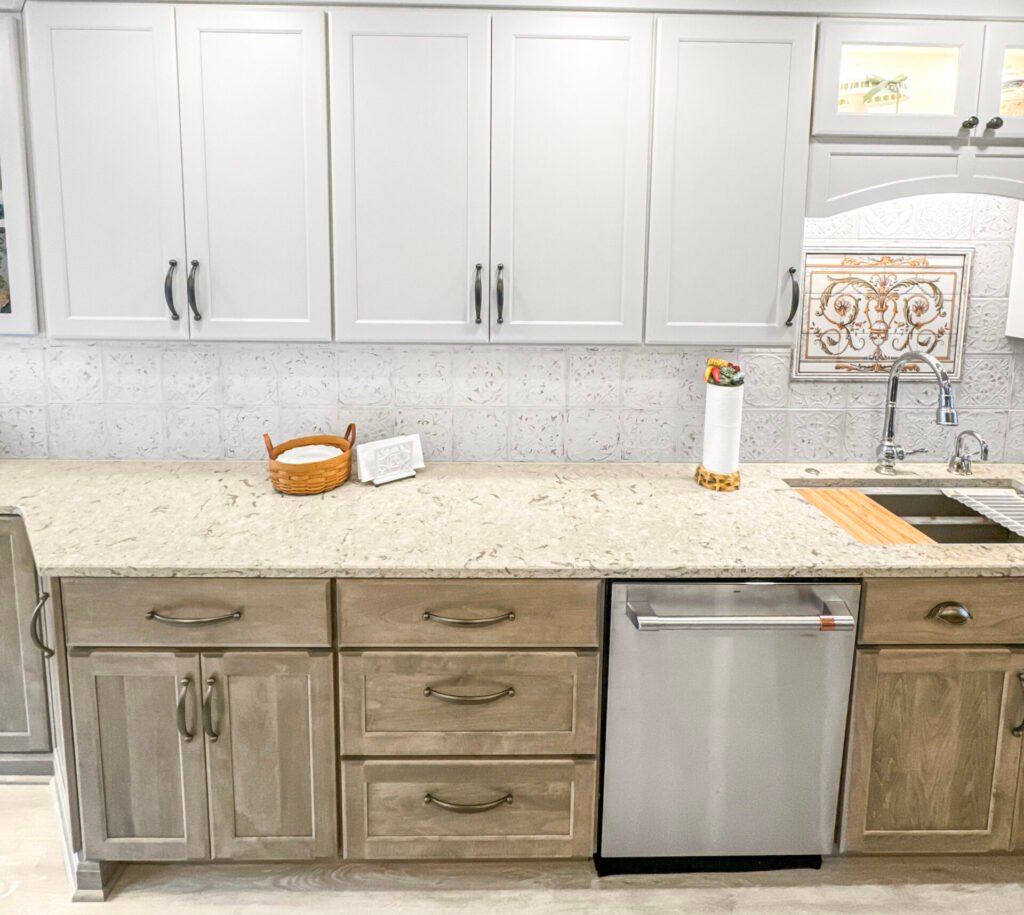 Kitchen - T&J
Frequently asked questions
Can you put a sink in a kitchen island in Wisconsin?
Yes. Wisconsin's plumbing code allows a return vent for fixtures like an island sink, and it also allows an air admittance valve as the end of the sink's vent if the installation meets the code's conditions.
How much slope does a kitchen sink drain need?
Wisconsin requires horizontal branch drains of 2 inches or less to slope at least 1/4 inch per foot; larger branch drains need at least 1/8 inch per foot.
Are air admittance valves allowed in Wisconsin?
Yes, with conditions. The valve must be upright, accessible, at least 4 inches above the pipe it serves and no more than 20 inches below the sink rim, and the building drain must also have a 3-inch or larger vent to the outside.
What is a return vent?
It is a vent that rises as high as possible inside the cabinet, turns back down and connects to the drain with a wye fitting, then runs below the floor to another vent. Wisconsin's code sets out how to build one.
Can I move my kitchen sink myself in Wisconsin?
A property owner can do plumbing work in a one-family home they own and live in without a plumbing license, unless a local ordinance requires one. The work still has to meet the code, and you should check permit rules with your municipality first.
How much does it cost to move a kitchen sink?
The sink and faucet alone run about $680 to $1,800 installed, and plumbers charge about $50 to $150 an hour. The rest depends on how far the drain runs and what is under the floor.
Is it cheaper to keep the sink where it is?
Yes. This Old House notes that keeping your sink and appliances in their current locations can lead to significant savings.