 Deck project - T&J
How Much Does a Deck Cost in Pewaukee, WI?
A standard 300-400 sq ft deck in Pewaukee runs between $12,000 and $24,000 total once you multiply that per-square-foot rate out. That figure includes materials, labor, footings, and code-height railing. It does not include site prep extras like grading a slope, tree removal in the footprint, or a long walkway from the driveway to the deck's edge. Those get added on top, and they're often where a low bid quietly leaves things out.
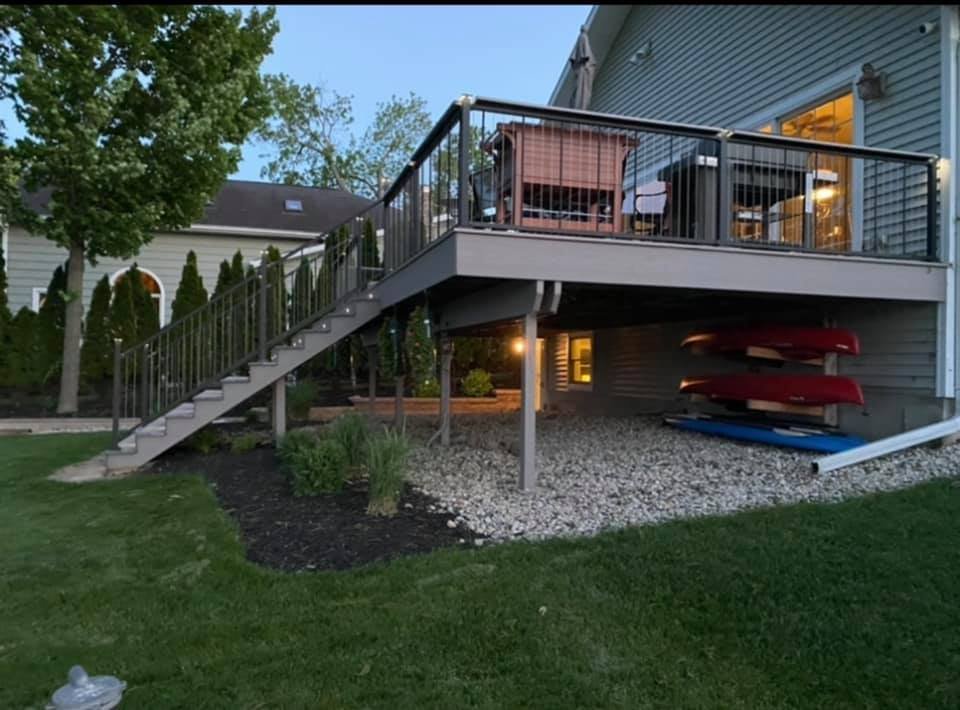
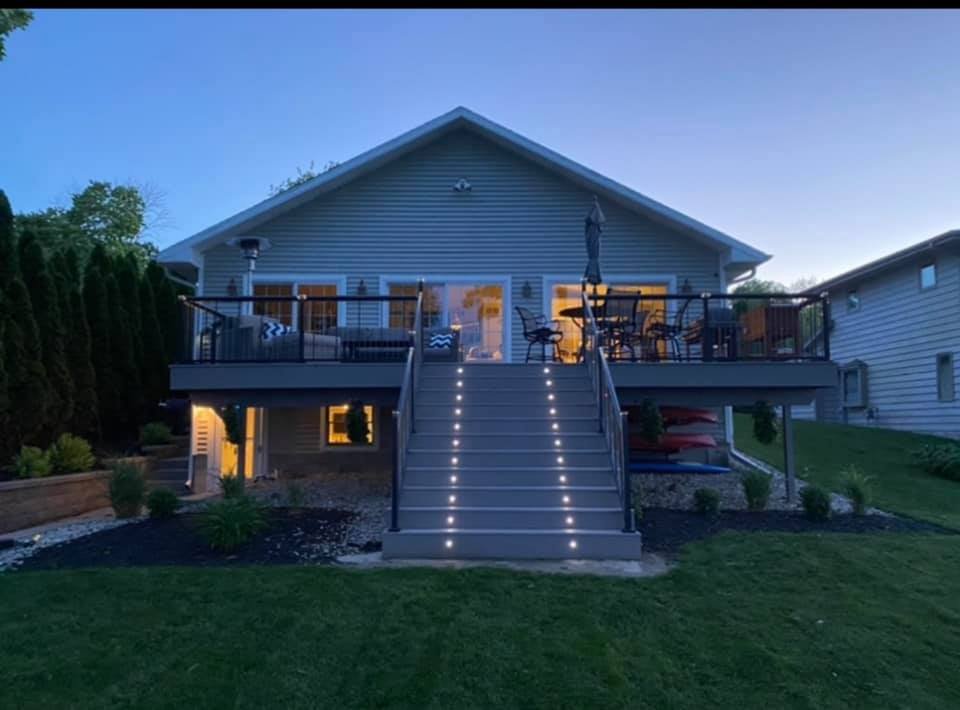
We've priced decks along streets close to the Pewaukee Lake shoreline, Hillcrest Drive and Lake Drive among them, where a walk-out lower level put the deck five to six feet above grade. Compare that to a flat lot near Highway 190 or over toward the Ridgeview Estates subdivision on the west side of the village, and the framing cost alone can run several thousand dollars less for an identical footprint. Same square footage, very different substructure. Height above grade, material choice, and design complexity move the number more than the footprint does, and we'll break each of those down next.
What Drives Deck Cost Up or Down
Five factors move a deck quote more than anything else: decking material, height above grade, single-level versus multi-level design, roof or pergola add-ons, and site access. Get any one of these wrong when comparing bids and you're not comparing apples to apples anymore. A deck four feet off the ground with a full staircase costs meaningfully more per square foot than the same footprint built flat against a walk-out basement door.
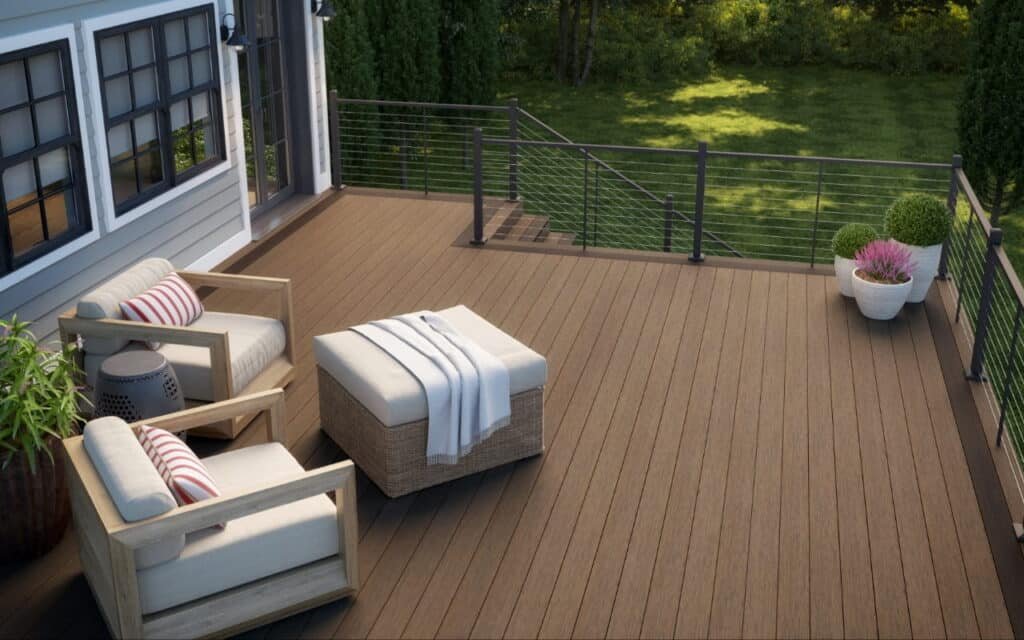
Decking material sets the baseline, and pressure-treated lumber costs the least upfront. Composite runs higher per board but skips the annual staining. Cedar sits in between on price with upkeep closer to pressure-treated. We break down the specific tradeoffs in the next section.
 Deck - T&J
Want this priced for your deck?
John walks your space, measures it, and leaves a written itemized estimate. No cost, no obligation, no sales script.
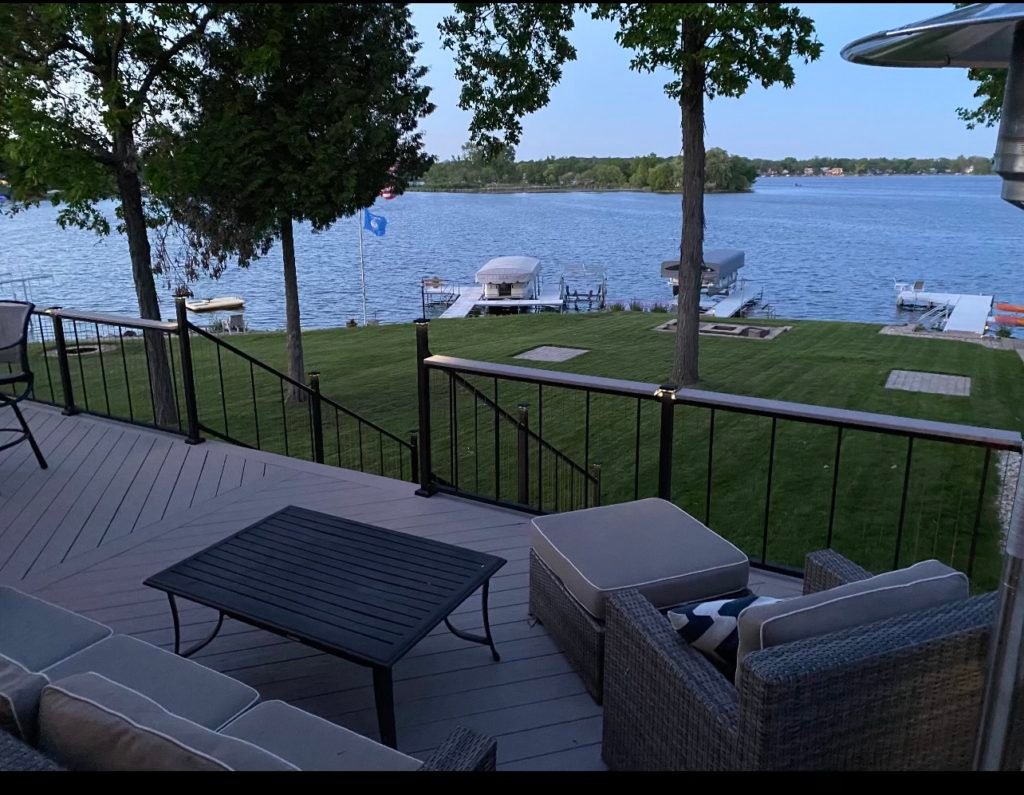
Height above grade drives up footing count. Every additional foot usually means more footings, taller posts, and a longer staircase with more stringers and treads. A deck built eight inches off a walk-out slider needs a fraction of the substructure a deck built six feet off a daylight basement needs, even at identical square footage. This is the exact situation on a lot of the lake-adjacent homes near Pewaukee Lake, where the natural grade drops fast toward the water.
Design complexity adds labor hours a flat rectangular deck doesn't need: multi-level layouts, angled corners, built-in bench seating. Roof or pergola covers add material and structural framing to carry the extra load. Site access, think a steep backyard slope, a fence blocking equipment, a mature oak sitting in the footprint, adds labor time before a single deck board goes down. It's also the line item most likely to get skipped in a lowball bid.
Cost Breakdown by Decking Material
The material you choose affects both what you pay now and what you pay over the next 15-20 years. Pressure-treated costs the least to install but needs yearly upkeep. Composite costs more upfront but needs almost none. Cedar splits the difference on price with a maintenance routine closer to pressure-treated than composite. Picking the wrong one for how long you plan to stay in the house is the most common regret we hear from homeowners who've already built a deck once.
Pressure-treated lumber
This is standard construction-grade lumber chemically treated to resist rot and insects, and it's still the most common decking material in Waukesha County. It's the cheapest option installed, but it needs staining or sealing roughly every year or two to keep water out of the wood grain. Boards typically need replacing well before a comparable composite board would. Skip the annual sealing and boards cup, crack, and gray out fast, which is exactly the kind of neglected deck that turns into an expensive repair call for replaced boards or a loosened railing down the road.
Composite decking
Composite boards, a blend of wood fiber and recycled plastic sold under several national brand lines, cost more per square foot installed than pressure-treated. But the maintenance drops to an occasional power wash. No annual staining, no sealing schedule, and a longer expected lifespan before boards need replacing. For homeowners planning to stay put 10+ years, the higher upfront cost often pencils out against what you'd spend on lumber upkeep and eventual board swaps. Our deck construction services in Waukesha County page has more detail on the specific composite lines we install if you want to compare board tiers before your next quote call.
Cedar
Cedar is a natural softwood with better rot resistance than standard framing lumber, and its warmer look appeals to homeowners who want something other than composite's uniform grain. It costs more than pressure-treated but less than composite installed. Its maintenance schedule, annual or biennial staining to hold color and keep moisture out, runs closer to pressure-treated than composite. Skip that maintenance and you're looking at the same repair costs pressure-treated owners face.
A quote that lists "composite decking" without naming a specific product line is worth a follow-up question. Composite pricing varies a lot by manufacturer and board tier, and "composite" alone doesn't tell you whether you're getting a budget capped board or a premium hollow-core line with a longer warranty.
What a Complete Deck Quote Should Include
A complete deck quote covers seven things: permit pulling and inspection scheduling, footings sized to Wisconsin's frost depth, ledger board flashing, proper joist hardware, code-height railing at 36 inches minimum, stair stringers built to span, and a written labor warranty. If a bid is missing two or three of these, it isn't a cheaper version of the same job. It's a different, incomplete job that costs more once the missing pieces surface mid-build.
Here's what separates a complete scope from a thin one on paper:
| Line item | Complete quote | Lowball red flag |
|---|---|---|
| Permit | Included, pulled by contractor | "We'll handle it" with no fee line, or homeowner billed later |
| Footings | Sized to full frost depth | Undersized or fewer footings than the span requires |
| Ledger flashing | Flashed and sealed against the house | No mention of flashing at all |
| Fasteners/hardware | Structural joist hangers, coated screws | Framing nails, no hardware brand named |
| Railing | Built to 36in code height | Height not specified, or under code |
| Warranty | Written labor warranty, defined term | No labor warranty mentioned |
The objection we hear most from comparison shoppers is some version of "why is your quote higher than the other guy's for what looks like the same deck?" A complete quote includes project management, change-order discipline, and warranty work that a thin bid leaves off the page entirely. The cheap bid doesn't disappear. It resurfaces as a change order once the ledger isn't flashed and starts leaking into the foundation wall, or once the inspector rejects footings poured too shallow.
Ask every bidder to write the footing depth and fastener type directly on the quote, not just verbally on the walkthrough. If a contractor won't put it in writing, that's usually because the number changes depending on who's asking.
Pewaukee & Waukesha County Deck Permit Requirements
Most decks in Pewaukee need a building permit. The general trigger is any deck built more than 30 inches above grade, or one attached structurally to the house, and in practice that covers the large majority of residential builds since most sit above that height or tie into the house with a ledger board. The Village of Pewaukee building department handles permit review for in-village properties, and homeowners in unincorporated parts of the township go through the town's building inspector instead.
Here's the process broken down into the pieces that actually matter for your timeline and your resale value:
 Deck - T&J
- Permit trigger: decks over 30in above grade, or any deck attached to the house via a ledger board, need a permit in nearly every case
- Footing depth: footings must reach below southeastern Wisconsin's frost line, which typically runs 42-48 inches, to keep the post from heaving as the ground freezes and thaws
- Footing inspection: required before backfill, so the inspector can verify depth and diameter while the hole is still open
- Final inspection: required before the deck goes into use, confirming railing height, stair construction, and overall code compliance
A contractor who skips the permit to save a week of lead time isn't doing you a favor. According to the U.S. Department of Housing and Urban Development's guidance on home improvements, unpermitted work can complicate financing and resale, since lenders and buyers' agents both flag it during due diligence [source: HUD]. Insurance carriers can also deny claims tied to unpermitted structures, and municipalities can require retroactive permits with the structure exposed for re-inspection, which sometimes means partial tear-out. For more on how inspection sequencing works on exterior projects generally, see our breakdown of how Wisconsin permit inspections work for exterior projects. For deck specifics tied to this market, our deck construction in Pewaukee page covers what's typical for this area.
Wisconsin's residential building code generally requires 36-inch minimum railing height on decks, with baluster spacing tight enough to prevent a 4-inch sphere from passing through. The International Residential Code, which Wisconsin's Uniform Dwelling Code is based on, sets the baseline for these requirements; confirm specifics with your municipal inspector since local amendments can vary [source: ICC IRC].
Questions to Ask Every Deck Contractor You're Quoting
Ask every bidder these seven questions, side by side, before picking one. Is the permit fee included in this price? What footing depth and spacing are you planning? What fasteners and hardware brand are you using? Is the ledger board being flashed? What's your labor warranty versus the material warranty? Are you insured, and who's liable if a sub gets hurt on my property? And can I get all of this in writing on the quote itself?
A vague answer on footing depth ('we'll figure it out on site') usually means the bid never actually engineered the substructure for your deck's height and span. A contractor who can't name a fastener brand is probably using whatever's cheapest that week. No mention of ledger flashing is a real gap, since that's the single most common source of rot damage where a deck meets the house, as the National Association of Home Builders notes in its guidance on deck construction and maintenance [source: NAHB, nahb.org]. Labor and material warranties are two different things, and a bid that only mentions one is telling you something by omission. If a sub gets hurt on your property and the contractor isn't properly insured, that liability can land on you.
If you're weighing whether some of the smaller finish work is something you could tackle yourself between contractor visits, our guide to what Wisconsin homeowners can safely DIY without a contractor covers where that line realistically sits on a deck project. Staining, yes. Footings and structural framing, no.
Timeline: How Long a Pewaukee Deck Build Takes
A Pewaukee deck build typically takes 2-4 weeks from permit approval to final inspection for a standard single-level deck. The permit approval step itself can add another 1-3 weeks depending on the municipality's current review backlog. Add a 4-8 week booking lead time common across Wisconsin remodeling contractors, especially in spring, and a homeowner calling in March for a summer deck isn't unrealistic. Calling in June for a July deck usually is.
The framing-to-finish window, once footings are inspected and approved, moves fast: often just days for a straightforward deck. Multi-level designs, staircases, and roof covers add days on top of that. The bottleneck almost always sits on the front end, permit review and contractor scheduling, not the actual build. That's the practical reason to start getting quotes now if you're targeting a specific season, rather than waiting until the month you want the deck finished.
Getting an Honest Deck Quote in Pewaukee
The lowest bid on your kitchen table rarely stays the lowest once the project's underway. Missing scope items, permit fees, undersized footings, unflashed ledgers, no labor warranty, don't disappear when you sign the low bid. They show up later as change orders, and by then you've lost the leverage to walk away. A full-scope quote that looks $2,000-$4,000 higher upfront is often the cheaper deck by the time framing wraps.
Telli and John run T&J Remodeling as a father-son team out of Brookfield. They build deck quotes with full scope, permit fees, footing engineering, flashing, and warranty terms, spelled out before anyone signs anything. John handles every project's communication directly, so you're not chasing a junior PM for answers, and Telli's still on-site running the framing crew.
 Deck - T&J
If you're comparing 2-3 bids right now, the fastest way to get an apples-to-apples read is a free Waukesha County consultation, where we walk your property and price the deck you actually described, not a generic template. See our deck construction services or call (262) 352-9525 to get on the schedule.
For a firm number on your own project, free in-home estimate.
Frequently asked questions
How much does a deck cost per square foot in Pewaukee, WI?
Most Pewaukee decks run $40-$60 per square foot installed, but the number moves with decking material and substructure complexity. A simple ground-level pressure-treated deck lands at the lower end. A multi-level composite deck with stairs and tall railing pushes toward the higher end, because framing labor and footing count scale with height and design, not just square footage.
Why did one contractor quote me half the price of another for the same deck?
A bid roughly half the price of the others usually isn't doing the same job for less. It's more likely missing line items: the permit fee, properly sized footings, ledger flashing, or a real labor warranty. Those missing pieces don't go away. They tend to reappear mid-build as change orders once they become unavoidable, and by then you've lost the ability to shop around.
Do I need a permit to build a deck in Pewaukee?
Yes, in most cases. Decks built more than 30 inches above grade, or attached structurally to the house, require a permit through the Village of Pewaukee building department or your town's building inspector. Permit fees for a typical residential deck project are usually a few hundred dollars, and review turnaround runs anywhere from a few days to a couple weeks depending on the season and the department's current backlog. The permit triggers a footing inspection before backfill, which catches undersized or improperly spaced footings before they're buried and impossible to verify. Skipping the permit also creates resale risk. An unpermitted deck discovered during a home inspection can stall a sale or trigger a retroactive permit requirement.
Is composite decking worth the extra cost over pressure-treated lumber?
It depends on how long you're staying in the house. Pressure-treated costs less installed but needs annual staining or sealing and generally has a shorter usable lifespan before boards need replacing. Composite costs more upfront but needs little beyond an occasional wash and holds up longer. If you're planning to stay 10+ years, composite's upfront premium often pencils out against the ongoing maintenance and earlier board replacement pressure-treated requires.
How long does it take to build a deck in Wisconsin?
Count on two separate timelines: permit approval, which can sometimes take longer than the actual build depending on your municipality's review backlog, and construction itself, typically 2-4 weeks for a standard single-level deck once permitted. Book your contractor 4-8 weeks ahead of when you want the work done, especially in spring, when every deck contractor in Waukesha County is fielding a backlog of quote requests at once.
What's included in a deck warranty, and does it matter?
A deck warranty usually comes in two pieces: a materials warranty from the decking manufacturer, covering product defects like premature fading or structural failure of the boards, and a labor warranty from the contractor, covering workmanship like railing that loosens or boards that warp from poor fastening. If a bid only mentions the materials warranty and says nothing about labor, ask directly. It often means workmanship isn't backed at all.