 Bathroom project - T&J
What Does Bathroom Remodel Financing Actually Cost Per Month in Wisconsin?
Monthly payment is the number that matters when you're deciding whether to do this now or wait. It comes down to three things: how much you borrow, your interest rate, and your term. Here's what a 60-month loan looks like at two rates that bracket most Wisconsin borrowers, a strong home-equity rate near the low end and an unsecured personal-loan rate near the high end. Rates move, so treat these as illustration, not a quote; confirm current numbers with your lender.
| Amount borrowed | ~7% APR / 60 mo | ~14% APR / 60 mo |
|---|---|---|
| $10,000 | ~$198/mo | ~$233/mo |
| $20,000 | ~$396/mo | ~$465/mo |
| $35,000 | ~$693/mo | ~$814/mo |
On a $20,000 five-year loan, the gap between a 7% home-equity rate and a 14% unsecured rate is about $70 a month, roughly $4,100 in extra interest over the full term.
Funding speed varies by loan type. HFS Financial, a specialty home-improvement lender, says smaller loans can fund the same day or next business day once approved, while larger loans usually take three to seven business days. Before you borrow a dime, nail down the project cost, see what a bathroom remodel typically costs in Wisconsin so your loan matches the actual job.
The 5 Financing Paths Wisconsin Homeowners Use Most
There's no single right answer, it depends on your equity, your credit, and how fast you need to start. Here are the five paths we see most often, from Brookfield and Pewaukee out to Oconomowoc.
USDA Rural Development Grant
 Bathroom - T&J
For income-qualified homeowners in rural Wisconsin doing repair-type work. Grants run up to $10,000 for eligible rural homeowners and don't get repaid. The con: eligibility is narrow. Most suburban Waukesha County addresses won't qualify, though some properties in outlying parts of Jefferson and Washington counties do, check your address on the USDA Rural Development program eligibility map.
Want this priced for your bathroom?
John walks your space, measures it, and leaves a written itemized estimate. No cost, no obligation, no sales script.
Contractor Point-of-Sale Financing
For homeowners who want one-stop convenience. Terms run from 24 to 132 months, and you'll see promos like a 6-month or even 12-month interest-waived window, Wisconsin bath-remodel franchises advertise these. The trap: most are deferred-interest products, meaning interest accrues from day one and, if you don't pay the full balance before the promo ends, all of it lands on your bill at once. Always ask: "deferred interest" or "no interest if paid in full"?
Unsecured Home Improvement Loan
For people without equity, or who don't want a lien on the house. Specialty lenders offer amounts up to $450,000 with terms from 1 to 30 years. Pro: no appraisal, fast funding. Con: a higher rate than a secured loan.
HELOC (Home Equity Line of Credit)
For homeowners with real equity and a larger project. Pro: lowest rates, because the loan is backed by your home. Con: appraisal and title work add weeks to funding.
FHA Title 1 Loan
For homeowners with little equity who still want a government-backed product. Per HUD's Title I program, these run up to $25,000 for a single-family home with no equity required. Con: it moves on slower bank timelines.
HELOC vs. Personal Loan: Which Makes More Sense for a Bathroom Remodel?
The decision for most homeowners comes down to two products. A HELOC is cheaper because your house backs it, the lender has a fallback, so they charge less. A personal loan costs more in interest but carries no lien and no foreclosure risk.
| HELOC | Personal Loan | |
|---|---|---|
| Requires equity? | Yes | No |
| Funding speed | 2-6 weeks (appraisal) | 1-7 business days |
| Rate | Lower | Higher |
| House at risk? | Yes (lien) | No |
Run the break-even before you choose. On a $20,000 five-year loan, a HELOC near 7% versus a personal loan near 14% saves roughly $4,100 in total interest. But under about $15,000, the rate savings don't cover the HELOC's closing costs and the weeks lost to an appraisal, a personal loan wins on net cost and speed.
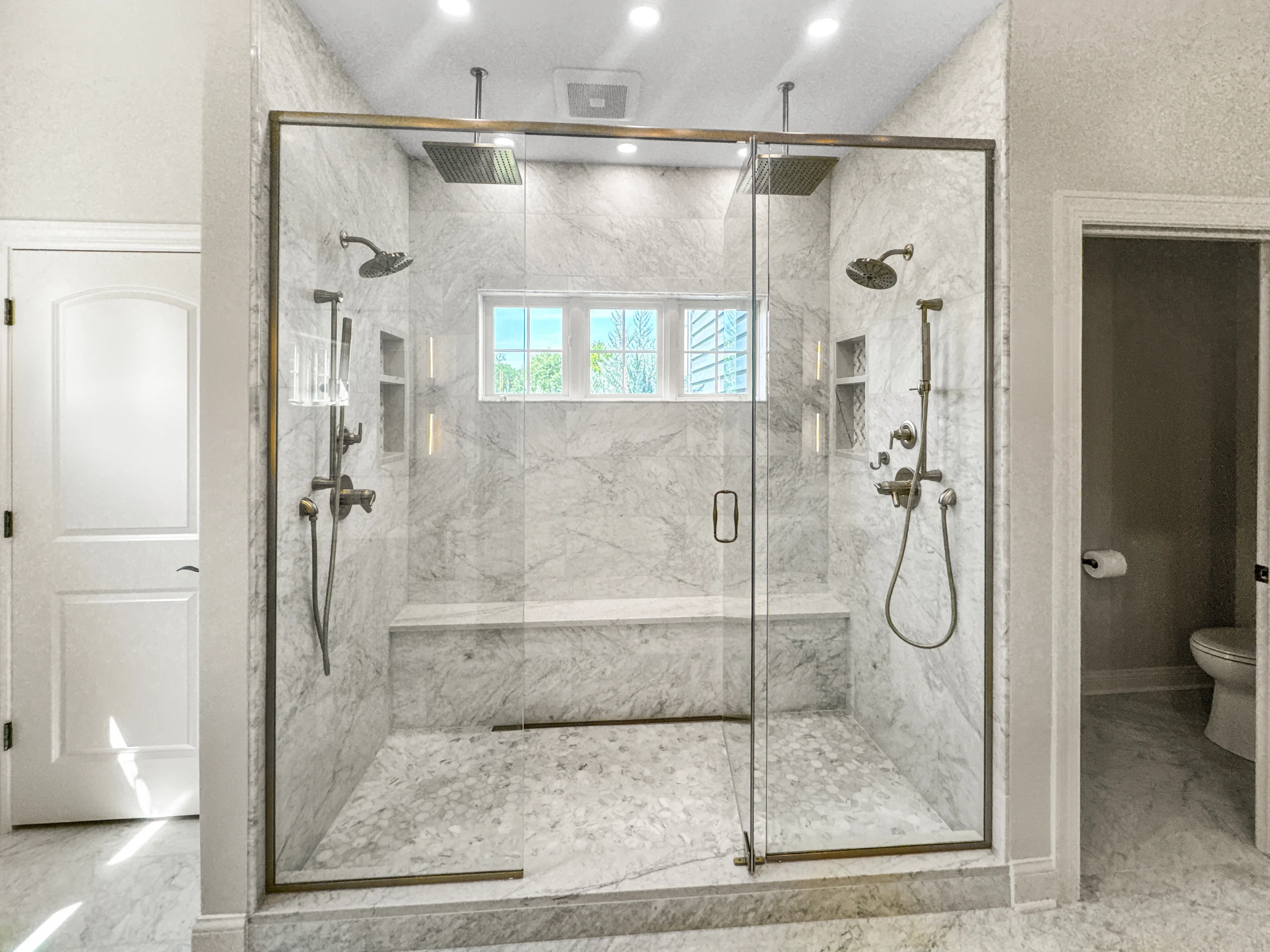
We saw this play out on two projects. A Brookfield homeowner did a master bath, walk-in tiled shower, double vanity, heated floor, and had plenty of equity, so a HELOC saved her several thousand dollars in interest over a 5-year term versus an unsecured loan. A Waukesha couple doing a hall-bath refresh had no real equity and wanted to start in three weeks, so an unsecured personal loan made sense even at the higher rate, the HELOC appraisal alone would have pushed their start date into the next month.
The direct answer to "I don't want to put my house on the line for a bathroom": you don't have to. An unsecured loan costs more, but it never puts a lien on your home. For a smaller cosmetic refresh, that peace of mind is worth the rate difference. For a larger gut remodel where you have equity sitting idle, the HELOC math wins over a 5-year term.
Can You Phase a Bathroom Remodel to Reduce What You Borrow?
Yes, and phasing is one of the smartest ways to keep your loan amount down, as long as you phase the right things. Cosmetic work splits cleanly: vanity, fixtures, tile, lighting, paint. What you should never split is the plumbing and structural rough-in. Moving supply lines, drains, or framing belongs in a single pass, because reopening a finished wall later doubles the labor and risks the work you already paid for.
A real example from a 1960s Pewaukee ranch bath: Phase 1 was a tiled shower surround and a new vanity (around $9,000, financed); Phase 2 the following year was floor tile, a fresh exhaust fan, and updated lighting (around $5,500). Because the plumbing rough-in was set correctly in Phase 1, the second phase was clean finish work with no demo surprises. Map the full sequence with our step-by-step bathroom remodel planning guide, and pull cost ranges for each phase with the estimate your bathroom remodel cost before you apply tool.
Phasing only works when one person owns the whole plan. A crew that leaves rough plumbing exposed, or skips a step assuming "the next phase" will catch it, creates a mess that costs more to fix than doing it once. On every T&J project, John, co-founder and project manager, a credited Wisconsin contractor who runs A-to-Z communication himself, owns the schedule, so a phased plan stays scoped end to end.
What Wisconsin Lenders and Programs Actually Look At
Lenders weigh more than your credit score. Here's what moves the needle, in plain English:
- Credit score: Home-equity lenders typically want around 680 or higher. Unsecured specialty lenders are more flexible, some approve scores in the 600s, because they build the added risk into a higher rate instead of turning you down.
- Debt-to-income (DTI): The share of your monthly income already committed to debt. For larger loans this matters more than your score, lenders want room in your budget for the new payment after existing car loans, cards, and mortgage.
- Loan-to-value (LTV): How much of your home's value you'd be borrowing against, which applies to a HELOC. The more equity you've built, the better the rate. Milwaukee-metro homeowners with strong property values often have more room here than rural borrowers.
- Income documentation for the USDA grant: That program requires you to prove you're income-qualified and in an eligible rural area.
 Bathroom - T&J
If you're worried you won't qualify, many specialty lenders run a soft credit check, the kind that doesn't ding your score, and return a decision in about 60 seconds. That's the right first move before any full application.
How to Vet a Contractor Before You Finance
A loan only makes sense if the contractor behind the quote is solid. A clean financing plan can still go sideways with the wrong crew, here's how to check before you commit.
Verify the contractor is registered in Wisconsin. The state requires a Dwelling Contractor certification for most residential remodeling. Confirm a contractor's credential through the Wisconsin DSPS license lookup, don't take a business card's word for it.
Confirm liability and worker's compensation insurance. Ask for a certificate of insurance. If a crew member gets hurt on your property and the contractor isn't covered, that exposure can land on you.
Call two recent references, and ask the right questions. Not "were you happy?" Ask: did the final price match the quote? Did they show up when they said? How were change orders handled? We're a father-son shop with 35-plus years of combined experience and about a decade in Wisconsin, and we expect homeowners to check us out the same way.
Watch for these red flags: a quote that isn't itemized, a demand for a large cash deposit up front, no written change-order process, and reluctance to put permit responsibility in writing. Any one of those is a financing risk, not just a trust risk, because each is a way the final cost creeps past the loan amount you locked in.
How to Get a Realistic Project Cost Before You Apply
Don't apply for a loan before you know what the job actually costs. Borrow too much and you pay interest on money you don't need; borrow too little and you can't finish, and most lenders ask for documentation of the project cost anyway.
The sequence is straightforward: free in-home estimate first, then an itemized quote, then a loan application with the exact number. A contractor who walks the space before quoting gives you a figure you can take straight to a lender, not a phone guess that balloons once demo starts. Our quote process is built around this: we walk the full scope with you before anything gets signed, so there are no mid-project surprises that blow up your loan amount.
Next Step: Know Your Number Before You Borrow
The path is simple: estimate the project cost first, match the loan type to your equity and timeline, then hire a contractor who scopes cleanly, itemizes the quote, and pulls the permits. For the bigger picture beyond the bathroom, see our broader guide to financing a home remodel.
When you're ready for a real number, we offer a free in-home consultation across Waukesha County and the Greater Milwaukee area, no cost, no obligation. Call (262) 352-9525 and we'll walk your space, scope it honestly, and hand you a quote you can take straight to your lender.
 Bathroom - T&J
Frequently asked questions
What credit score do I need to finance a bathroom remodel in Wisconsin?
It depends on the loan type. HELOC lenders typically want 680 or higher plus meaningful home equity, because a home-secured loan is priced on both your credit and your collateral. Unsecured home improvement loans through specialty lenders are more flexible, some approve scores in the 600s. The deeper reason: unsecured lenders price risk into the interest rate rather than rejecting applicants outright, so a lower score means a higher rate, not an automatic no. A soft credit check that doesn't hurt your score lets you see your options first, some lenders return a decision in about 60 seconds.
Is a HELOC or a personal loan better for a bathroom remodel?
A HELOC wins on rate if you have equity and time, it's secured by your home, so lenders charge less. A personal loan wins on speed and risk: no appraisal, no lien, and funding in 1 to 7 business days. The break-even depends on the rate gap and your term. For projects under about $15,000, the HELOC's rate savings often don't outweigh its closing costs and appraisal delay. For larger projects where you have equity, the HELOC math usually wins over a 5-year term. The deeper reason: secured debt is cheaper because the lender has a fallback, your home. That's the real trade-off, not just a rate preference.
Can I get a 0% interest loan for a bathroom remodel?
Some contractor financing programs offer 0% promotional periods, often 6 months, sometimes up to a year. The catch: most are deferred-interest products, not true 0% loans. Interest accrues from day one, and if you don't pay the full balance before the promo ends, all of it gets added at once. This is one of the most common traps in home-improvement financing. Always ask whether the offer is "deferred interest" or "no interest if paid in full", they sound identical and work completely differently.
What if I don't have any equity in my home?
You can still finance the project with an unsecured home improvement loan, which doesn't require equity, specialty lenders offer amounts up to $450,000 with terms from 1 to 30 years. An FHA Title 1 loan is another no-equity option, up to $25,000 for a single-family home. Both cost more in interest than a HELOC because the lender has no collateral to fall back on, so they price that risk into the rate. The upside: no lien on your house and no foreclosure exposure, which is exactly what many homeowners want for a bathroom-sized project.
How long does it take to get approved for a bathroom remodel loan?
It depends on the loan type. Unsecured loans through specialty lenders can return a soft-check decision in about 60 seconds, with funding the same day or next business day for smaller amounts and 3 to 7 business days for larger ones. A HELOC takes 2 to 6 weeks because it needs an appraisal and title work. FHA Title 1 loans run on bank timelines. Secured loans take longer because the lender has to verify the collateral, your home, which adds steps. If you need to start fast, an unsecured loan beats a HELOC even though it costs more in interest.
Are there grants for bathroom remodeling in Wisconsin?
Yes, but eligibility is narrow. The USDA Rural Development program offers grants up to $10,000 for qualifying repairs for income-qualified homeowners in eligible rural areas, check your address on the USDA eligibility map. Some county programs and Medicaid waivers cover safety-related accessibility modifications. Most suburban Waukesha County and Milwaukee-metro homeowners won't qualify for the rural grant and will need a loan product instead.
Can I refinance a bathroom remodel loan later?
Usually yes. A personal loan can often be refinanced or paid off early if rates drop or your credit improves, check for prepayment penalties first. A HELOC works as a revolving line, so you can pay it down and redraw during the draw period. Many homeowners start with a higher-rate unsecured loan to begin work fast, then roll it into a lower-rate home-equity product once an appraisal clears. The deeper logic: getting the project done can raise your home's value, which can improve your equity position for a future refinance.