How Much to Redo a 100 Sq Ft Bathroom? Cost & Hiring Guide
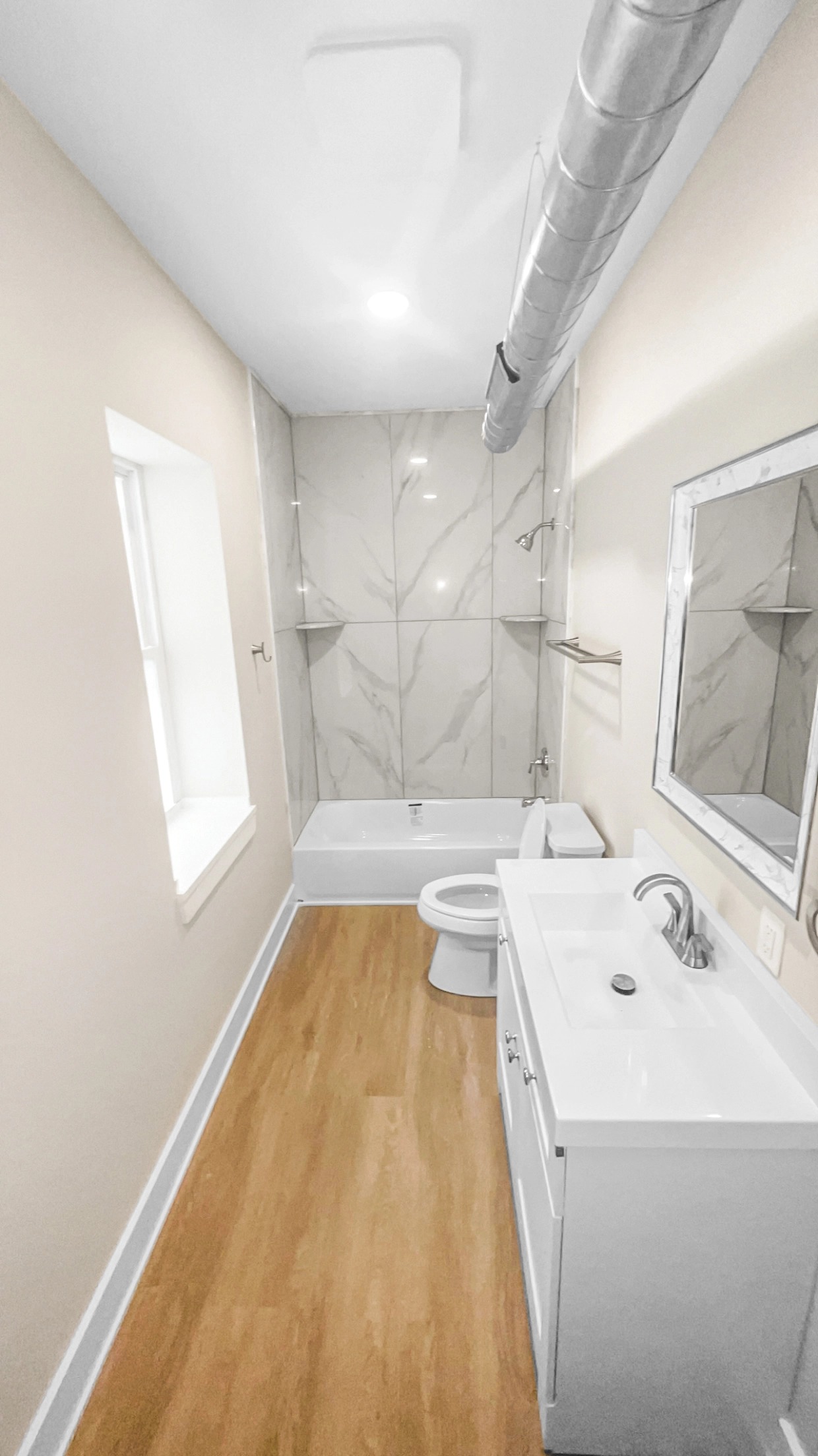
Most 100 sq ft bathroom remodels in Waukesha County land at $12,000-$15,000 for 2026, depending on whether you're keeping the existing layout or moving plumbing. The full verified range is $7,000-$25,000 (Home Depot Bathroom Remodel Cost Guide; CabinetCity 2026 Bathroom Remodeling Cost Report), but that spread exists because a cosmetic refresh and a full gut-and-redo are two completely different projects. If you're comparing contractors right now, this guide covers what your project should cost, which permits you'll need, and how to vet a contractor before you sign anything. Or call John at (262) 352-9525.
What a 100 Sq Ft Bathroom Remodel Actually Costs
The national average for a bathroom remodel sits around $12,121 (CabinetCity 2026 Bathroom Remodeling Cost Report), which tracks closely with what we see on mid-range Waukesha County projects. Picture a 1980s Brookfield ranch bathroom, roughly 8×12 ft: full gut-and-redo with new tile, vanity, toilet, and shower, keeping the existing plumbing footprint. That’s your $12,000-$15,000 project.
The $7,000-$25,000 range is wide for three concrete reasons:
- Finish tier, builder-grade ceramic vs. large-format porcelain vs. custom stone carry dramatically different material and labor costs
- Layout changes, moving a drain, relocating a toilet, or shifting a wall adds roughly $5,000 per instance (NerdWallet 2026 Bathroom Remodel Cost)
- Hidden conditions, mold behind the shower surround, rotted subfloor, or outdated wiring found during demo can add cost no quote can predict until the walls are open
The $7,000 floor is real, but it requires a clean existing structure, no plumbing moves, and disciplined material choices. The $25,000 ceiling is for layout changes plus luxury finishes. Most homeowners land in between.

What's Included in a Complete 100 Sq Ft Bathroom Remodel
A scope of work, the written list of every task and material a contractor is agreeing to deliver, is the single most important document in your quote comparison. Two bids can quote the same Elm Grove bathroom and differ by $6,000 simply because one scope is complete and one isn’t.
Here’s every line item a complete bid for a 100 sq ft bathroom should include:
- Demo and disposal, tear-out of existing tile, fixtures, vanity, and drywall; dumpster or haul-away
- Waterproofing membrane, applied to shower walls and floor deck before any tile goes up
- Tile backer board, cement board or equivalent substrate behind all wet-area tile
- Rough-in plumbing, supply and drain rough-in, any valve replacements
- Rough-in electrical, GFCI outlet installation, exhaust fan rough-in
- Floor tile, material and labor
- Wall tile, shower or tub surround, material and labor
- Vanity and countertop, supply and installation
- Toilet, supply and installation
- Tub or shower unit, supply and installation
- Fixtures, faucets, shower valve, towel bars, toilet paper holder
- Exhaust fan, upgrade or replacement
- Paint and trim, walls, baseboard, door casing
- Permit pull, contractor files with the municipality; fee included or itemized
- Final cleanup, debris removal, surface protection during work
Wisconsin Residential Code § SPS 321.10 requires mechanical ventilation (an exhaust fan) in bathrooms without operable windows. If your existing fan is undersized or missing, replacement isn't optional, it's a code requirement that belongs in every complete bid.
A typical 100 sq ft bathroom remodel runs 4-8 weeks from demo to final walkthrough (CabinetCity 2026). Layout changes, moving plumbing or walls, can push that to 6-8 weeks because each rough-in move requires a separate permit inspection before walls can close.
What low bids commonly omit: permit fees, demo disposal, waterproofing membrane, tile backer board, exhaust fan upgrade, and final cleanup. These aren’t optional, they’re code requirements or structural necessities. When they’re missing from a quote, they show up later as change orders (written amendments to the original contract that add cost and time mid-project).
Knowing what a complete scope looks like is the fastest way to catch an incomplete bid. For a deeper look at where comparison shoppers get burned, see the most common mistakes homeowners make when comparing bathroom remodel bids.
Ask every contractor to send their quote as a line-item list, not a single lump sum. If a contractor won't break out demo, waterproofing, permits, and labor by trade separately, you have no way to compare their bid to anyone else's, and no way to know what's missing.
We'd rather lose a job by being honest about the real number than win it on a lowball and bleed change orders later.
John, T&J co-founder · 14 yrs PM in Waukesha County
Cost Breakdown: Where Your Money Goes
| Category | Low | Mid | High |
|---|---|---|---|
| Demo & prep | $1,000 | $1,600 | $2,300 |
| Permits | $100 | $500 | $1,000 |
| Labor (% of total) | 40% | 52% | 65% |
| Layout change (plumbing/electric move) | , | , | +$5,000 |
Demo, permit, and layout change figures: NerdWallet 2026 Bathroom Remodel Cost. Labor percentage: NerdWallet 2026; CabinetCity 2026 Bathroom Remodeling Cost Report.
Labor is your biggest single cost. According to both NerdWallet’s 2026 bathroom remodel cost data and CabinetCity’s 2026 report, labor accounts for 40-65% of total project cost. On a $15,000 project, that’s $6,000-$9,750 in labor before a single tile is purchased. Licensed trade rates:
- Plumber: $45-$200/hr (CabinetCity 2026)
- Electrician: $50-$200/hr (CabinetCity 2026)
- Tile installer: $40-$120/hr (CabinetCity 2026)
The wide hourly ranges reflect experience level, demand, and whether the contractor carries workers’ compensation insurance. A subcontractor without workers’ comp costs less per hour, but if they’re injured on your property, you may be liable.
Labor alone on a mid-range $15,000 bathroom remodel typically runs $6,000-$9,750, before a single fixture is purchased. (NerdWallet 2026; CabinetCity 2026)
What Moves the Price Up, and What Keeps It Down
What drives cost up:
- Moving plumbing or walls, adds approximately $5,000 per instance (NerdWallet 2026). We recently quoted a Muskego bathroom where the homeowner wanted to relocate the toilet just 3 feet to open up the floor plan. That single change added over $5,000 because it required new rough-in work, wall opening, and a code inspection before the walls could close, before a single tile was touched.
- Large-format tile, 24×24 or 12×24 tiles require more cuts, more precision, and more labor hours than standard 12×12 ceramic
- Luxury fixtures, freestanding tubs, thermostatic shower systems, and custom vanities carry both higher material cost and longer lead times
- Hidden damage found during demo, the most common reason a low bid balloons mid-project. We opened walls in a 1980s New Berlin bathroom and found a failed shower pan membrane and rotted subfloor that added real cost to the demo line before a single new tile went up
What keeps cost down:
- Keeping the existing footprint, no plumbing moves, no wall changes; the single biggest cost saver
- Standard tile sizes, 12×12 or 4×4 ceramic installs faster and wastes less material
- Mid-range fixtures, quality without custom lead times or premium markups
- Scheduling in off-peak season, Wisconsin winters typically mean shorter contractor lead times
The cheapest quote often assumes a clean demo, no mold, no rot, no surprises. When demo reveals otherwise, a low-bid contractor issues a change order and the price catches up to (or exceeds) the higher quote. The $1,000-$2,300 demo and prep line item (NerdWallet 2026) in a complete bid reflects real contingency work, not padding.
How to Compare Bathroom Remodel Quotes the Right Way
You’re getting 2-3 quotes. That’s exactly right. Here are six questions to ask every contractor, and why each one matters mechanically.
1. Is the permit fee included, or billed separately? Permit costs run $100-$1,000 depending on scope and municipality (NerdWallet 2026). Some contractors include this in their base quote; others add it as a pass-through. Either approach is fine, you just need to know which one you’re looking at so you’re comparing the same total cost across bids.
2. Who pulls the permits, you or me? The contractor should pull the permits. If a contractor asks you to pull your own, you assume legal liability for the work. If an inspection fails or the work is later found non-compliant, that’s on you as the permit holder. For a full explanation of what Wisconsin bathroom permits cover, see what Wisconsin homeowners need to know about bathroom remodel permits.
3. Are your plumber and electrician licensed and insured? Wisconsin requires licensed plumbers for any work beyond simple fixture swaps, enforced by the Wisconsin Department of Safety and Professional Services. An unlicensed sub costs less per hour, and that savings shows up in the quote, but it creates liability, can void your homeowner’s insurance, and may fail a future home inspection.
4. What’s your process when demo reveals hidden damage, fixed-price or T&M change order? T&M (time and materials) means you pay actual cost plus markup with no ceiling. Ask specifically: "If demo reveals mold or a rotted subfloor, do I get a written estimate before you proceed, or do you bill me after?" The answer tells you how the whole project will be managed.
5. What’s the payment schedule? A reasonable schedule: deposit at signing (10-30%), a draw at rough-in completion, a draw at tile completion, final payment at punch list sign-off. A contractor asking for 50%+ upfront before work begins is a red flag.
6. Do you carry general liability and workers’ compensation? GL covers property damage during the project. Workers’ comp covers injuries to workers on your property, without it, an injured worker can file a claim against your homeowner’s policy. Ask for certificates of insurance and verify the policy is current.
A quote that's $4,000-$6,000 lower than the others isn't automatically a deal. Check: Are permits included? Is waterproofing itemized? Is demo disposal in scope? Are the subs licensed and insured? If any answer is no, the price gap is explained, and the risk is transferred to you.
Timeline: How Long Does a 100 Sq Ft Bathroom Remodel Take?
A full remodel with permits and multiple licensed trades takes 4-8 weeks from demo to punch list (CabinetCity 2026). The sequencing logic:
- Demo (1-2 days)
- Rough-in plumbing (1-3 days)
- Rough-in electrical (1-2 days)
- Permit inspection, scheduling gap of several days depending on municipality backlog
- Waterproofing, membrane application plus mandatory cure time
- Tile, floor and walls, mortar set, grout cure
- Fixture installation, vanity, toilet, shower unit, trim
- Punch list, final walkthrough, touch-ups
Each phase has mandatory dry and cure times that can’t be compressed without creating failures later. A contractor who promises a full gut-and-redo in two weeks is either skipping permits or rushing trades in ways that cause rework, both of which cost you more in the end.
Budget vs. Mid-Range vs. Luxury: What Each Tier Looks Like
| Tier | Range | What You Get |
|---|---|---|
| Budget | $7,000-$10,000 | Existing footprint, builder-grade fixtures, ceramic tile, stock vanity |
| Mid-Range | $12,000-$18,000 | Fixture upgrades, porcelain tile, semi-custom vanity, walk-in shower conversion |
| Luxury | $20,000-$25,000+ | Layout changes, large-format tile, custom vanity, freestanding tub, heated floor |
Tier anchors subdivided from the $7,000-$25,000 verified range (Home Depot; CabinetCity 2026).
ROI holds up best in the mid-range tier. According to NerdWallet’s 2026 data, mid-range bathroom remodels recoup roughly 60-80% of cost in increased home value, meaning a $15,000 remodel may add $9,000-$12,000 to your home’s market value. Luxury remodels above $25,000 typically recoup a smaller percentage; the incremental value plateaus. The strongest financial case is a mid-range scope that brings the bathroom to current market standard.
In Waukesha County's 1970s, 1990s housing stock, buyers pay for "updated and clean", they don't pay dollar-for-dollar for heated floors or custom tilework. A mid-range remodel almost always beats a luxury one on ROI in this market.
Getting an Honest Quote in Waukesha County
If you’re getting 2-3 quotes, that’s exactly the right approach. A transparent quote process looks like this: an in-home walkthrough of the actual space, a written scope that itemizes every line, and a fixed estimate you can review before signing, no surprises mid-project.
John handles every project’s communication personally at T&J, from the first walkthrough through the final punch list, not delegated to a junior project manager. Telli is on-site running the work. When you call, you’re talking to the people actually doing your project.
Free in-home consultation, no cost, no obligation, no sales pressure. We walk through the scope with you so you know exactly what your remodel costs before you commit. Call (262) 352-9525 or see how T&J handles bathroom remodels in Waukesha County.
Frequently asked questions
Is $7,000 realistic for a 100 sq ft bathroom remodel?
Yes, but only under specific conditions: you're keeping the existing layout (no plumbing moves), choosing builder-grade fixtures, using standard ceramic tile, and demo reveals no hidden damage. The $7,000 figure is the verified low end of the $7,000-$25,000 range for 100 sq ft bathrooms (Home Depot; CabinetCity 2026). Why does it rise so quickly? First, any plumbing move adds roughly $5,000 (NerdWallet 2026) because it requires new rough-in work, wall opening, and a code inspection before walls can close. Second, hidden damage, mold, rot, failed waterproofing, found during demo adds cost that no quote can anticipate without opening the walls. Third, even a modest fixture upgrade from builder-grade to mid-range shifts both material cost and lead time. A contractor quoting $7,000 for a full gut-and-redo without seeing the space is either guessing or planning to issue change orders later.
Why is one contractor's quote $9,000 and another's $18,000 for the same bathroom?
The most common reason is that the scopes aren't actually the same. The lower quote may exclude permit fees, demo disposal, waterproofing membrane, or tile backer board, or it may use unlicensed subcontractors who cost less upfront but create liability for you. It may also assume a clean demo with no hidden damage; when demo reveals rot or outdated plumbing, a change order closes the gap fast. Ask both contractors to itemize every line: permits, demo, waterproofing, tile backer, labor by trade, fixtures, cleanup. A $9,000 quote that becomes $14,000 mid-project because the scope was incomplete is not a bargain, it's a more expensive and more stressful version of the $18,000 quote.
Do I need a permit to remodel a 100 sq ft bathroom in Wisconsin?
In most Wisconsin municipalities, yes, if you're touching plumbing, electrical, or structural elements. Permit costs typically run $100-$1,000 depending on scope and municipality (NerdWallet 2026). The permit matters for three reasons beyond compliance. First, it triggers inspections that catch substandard work before walls close, rough-in plumbing and electrical must pass inspection before tile goes up. Second, it creates a paper trail that protects you at resale; a future buyer's inspector who finds unpermitted plumbing or electrical work can kill a sale or require expensive remediation. Third, unpermitted work can give your homeowner's insurer grounds to deny a claim if something fails later. The contractor should pull the permits, if they ask you to pull your own, that shifts legal liability to you as the permit holder. The Wisconsin DSPS sets baseline requirements; your municipality may add to them.
How long does a 100 sq ft bathroom remodel take from start to finish?
A full remodel with permits and multiple licensed trades typically takes 4-8 weeks from demo to punch list (CabinetCity 2026). The sequencing is the reason: rough-in plumbing must be inspected before walls close, which means scheduling around the municipality's inspection calendar. Tile mortar and grout need cure time that can't be rushed without causing failures, grout cracking or tile debonding months later. And permit inspections add scheduling gaps outside anyone's control. A contractor promising 2 weeks for a full gut-and-redo is either skipping permits, which creates resale and insurance problems, or rushing trades in ways that cause rework you'll pay to fix. Budget 4-6 weeks for a realistic mid-range project.
What percentage of a bathroom remodel cost is labor?
Labor typically accounts for 40-65% of total bathroom remodel cost (NerdWallet 2026; CabinetCity 2026). For a $15,000 project, that's $6,000-$9,750 in labor alone. The wide range reflects trade mix: a project heavy on tile work and plumbing relocation skews toward the high end because both trades are slow and skilled; a cosmetic refresh with minimal plumbing skews lower. Licensed plumbers run $45-$200/hr, electricians $50-$200/hr, and tile installers $40-$120/hr (CabinetCity 2026). These rates reflect licensed, insured tradespeople who carry workers' comp, so you're not liable if someone is injured on your property. A quote with suspiciously low labor often means unlicensed subs, and that liability lands on the homeowner.
What's the ROI on a 100 sq ft bathroom remodel?
Mid-range bathroom remodels recoup roughly 60-80% of cost in increased home value (NerdWallet 2026). That means a $15,000 remodel may add $9,000-$12,000 to your home's market value. ROI is strongest where the bathroom is visibly dated relative to comparable listings, which describes a large share of Waukesha County's 1970s, 1990s housing stock. A luxury remodel above $25,000 typically recoups less on a percentage basis because the incremental value plateaus; buyers in most price brackets don't pay dollar-for-dollar for premium finishes. The best financial case is a mid-range scope that brings the bathroom to current market standard, not a showroom renovation.
Get a real number for YOUR project
Cost ranges only get you so far. Tell us the room, scope, and zip — we’ll send back an honest estimate within one business day.
Estimates: open this week. New project starts are typically 4-6 weeks out, so the earlier we walk your space, the more flexibility you have on a start date.