 Interior_General project - T&J
Before your first contractor call, use this whole-home remodeling cost calculator to build a ballpark.
What a Whole House Remodel Actually Costs in Wisconsin (2026 Numbers)
Let's set the frame with a real scenario: a 1960s Elm Grove ranch, full basement, standard 2x4 framing. A cosmetic-to-mid refresh, new flooring, paint, updated fixtures across several rooms, lands in the $40,000-$75,000 mid-range band, according to HomeGuide's 2026 house-remodeling cost data. Push to premium cabinetry, relocated walls, and high-spec finishes and you're in the $75,000-$200,000 high-end band. Take it to the studs and you start at $100,000, a figure both HomeGuide and Wisconsin price guides agree on.
On a per-square-foot basis, cosmetic-to-mid work runs $15-$60/sqft, while a complete gut renovation runs $60-$150/sqft. Kitchen and bathroom square footage is the expensive part of any house, that work alone runs $100-$250/sqft.
A full gut-to-the-studs remodel runs $100,000-$200,000 nationally per HomeGuide's 2026 data, and Waukesha County labor pushes most projects toward the upper half of that range.
For high-spec luxury whole-home scopes in the Milwaukee/Waukesha market, design, permits, project management, and labor bundled, local design-build firm Kowalske quotes $500,000 to $4,000,000. Treat that as the ceiling for fully custom work, not your starting point.
Where these numbers come from: ** ** is the 2026 Wisconsin Home Remodeling Price Guide (remodelingjourney.com), ** ** is Kowalske Kitchen & Bath's 2026 Pricing Guide for the Milwaukee/Waukesha market, ** ** is GMH Construction's pricing page for Milwaukee and Waukesha County, and ** ** is HomeGuide's 2026 House Remodeling Cost report. All four are linked in the Sources section so you can verify any figure.
Room-by-Room Budget Breakdown
The honest way to budget a whole-home remodel isn't per square foot, it's room by room, then sanity-check the total. Here's where the money goes.
Kitchen
 Interior_General - T&J
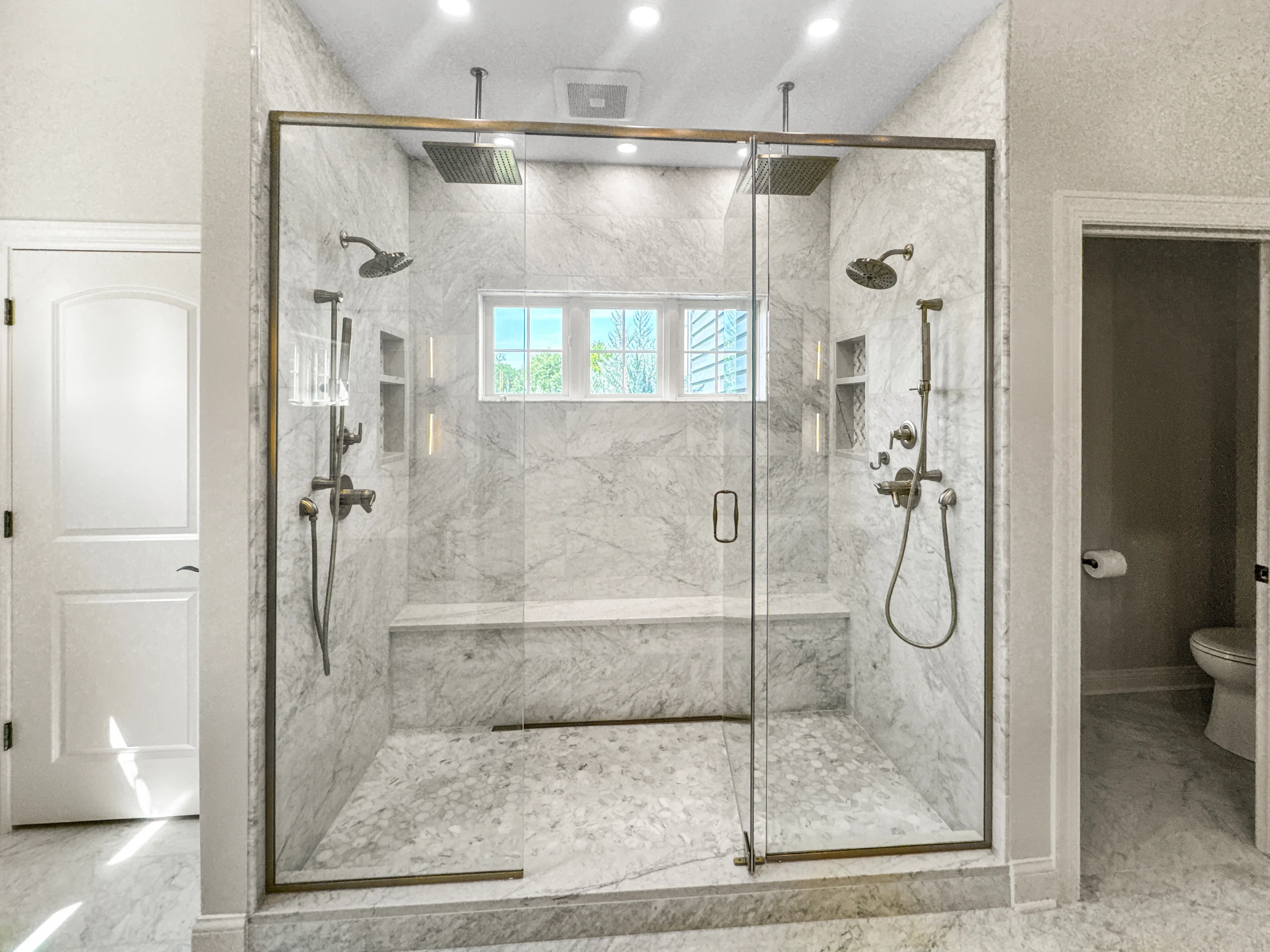
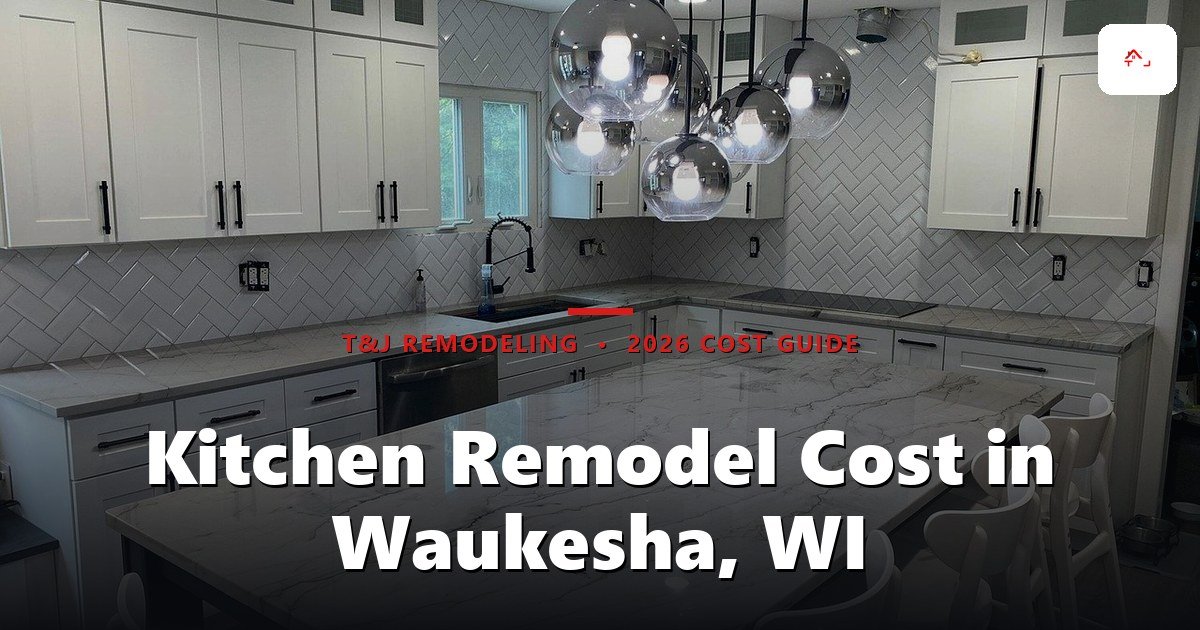
Kitchens are the single biggest line item in most whole-home budgets. In the Milwaukee/Waukesha market, GMH Construction pegs a kitchen remodel at $32,000 to $90,000 or more depending on size and tier. A basic Wisconsin kitchen renovation, appliance swap, cabinet updates, new countertops, runs $20,000-$40,000 per the 2026 Wisconsin price guide; detailed work with custom cabinetry and structural changes starts at $60,000. A large premium kitchen in this market hits $90,000+. See our approach to kitchen remodeling in Waukesha County.
Want this priced for your interior_general?
John walks your space, measures it, and leaves a written itemized estimate. No cost, no obligation, no sales script.
Bathrooms
Bathroom budgets span widely. In Wisconsin, GMH puts the range at $21,000 to $50,000 or more. A base 45-square-foot main bath starts around $21,000; a large master bath at the base tier runs $32,000+. A simple renovation, fixtures, tile, lighting, can come in at $8,000-$15,000 per the Wisconsin price guide, while a full premium bath with relocated plumbing and high-end finishes runs $25,000+, reaching $50,000+ for a premium master.
Basement
Finishing a basement runs $40,000 to $60,000 or more depending on size and finish tier, per GMH. A base remodel covers roughly 750 sq. ft. starting at $40,000. Want a 3/4 bath down there, vanity, toilet, glass-door shower stall in about 45 sq. ft.? Add $18,000-$30,000 depending on tier. A 1950s Brookfield ranch with a dry, full basement is an ideal candidate, and the full scope of whole-home remodeling services T&J handles includes basement build-outs like these.
Bedrooms & Living Areas
These are the budget-friendly rooms. A bedroom remodel, fresh paint, new flooring, improved lighting, runs $5,000-$12,000 per the Wisconsin price guide. More broadly, HomeGuide puts a bedroom or living room refresh between $1,500 and $10,000. Exterior work (siding, trim, entry) runs $6,000-$20,000. These rooms are where a phased budget can defer spending without compromising the core scope.
How Home Size Moves the Total Number
Size is the second lever. These are HomeGuide's national baselines, Waukesha County labor and material costs typically push you toward the mid-to-upper portion of each range:
| Home Size | Whole-House Remodel Range |
|---|---|
| 1,200 sq ft | $18,000 -$72,000 |
| 1,800 sq ft | $25,000 -$100,000 |
| 2,500 sq ft | $35,000 -$135,000 |
| 3,000 sq ft | $40,000 -$160,000 |
| 4,000 sq ft | $50,000 -$210,000 |
The spread inside each row is enormous because finish tier and depth of work matter as much as square footage. A 2,500 sq ft home getting cosmetic updates lives near the bottom; the same home taken to the studs lives near the top.
Phase Sequencing: How a Full-Home Remodel Actually Runs
A full-home remodel in Waukesha County typically runs 4-9 months from permit issuance to punch list; gut renovations can exceed 12 months. The sequence isn't arbitrary, running it out of order is where rework and change-order costs come from. Here's the logical path:
Design + permits
, 4-8 weeks before a wall comes down.
Demolition
, selective or full gut.
Structural & mechanical rough-in
, HVAC, plumbing, electrical.
Insulation + drywall
, R-19 batt in exterior walls, then drywall taping & mud.
Finish carpentry + cabinetry
Flooring
Fixture installation
Punch list
, the final detail walkthrough.
Wisconsin's Uniform Dwelling Code (the statewide residential building standard administered by the Wisconsin DSPS) requires rough plumbing, electrical, and HVAC to be inspected before drywall closes the walls. Whether you're in Waukesha, Wauwatosa, Whitefish Bay, or Fox Point, that inspection runs through your municipal building department, each sets its own fee schedule and inspection windows.
Closing up walls before the mechanical inspection passes is the most expensive mistake on a full-home job. If a trade has to come back to add a circuit or a vent after drywall, you're paying for demo, re-rough, re-inspection, and re-finish on the same wall twice.
When eight trades are on one job, the question that decides your budget is: who owns the schedule? In our 35+ years of combined remodeling experience across Waukesha County and the Greater Milwaukee area, the projects that stay on budget are the ones with a single point of contact coordinating every trade, not a junior PM relaying messages. If your full scope exceeds budget, this is also where a contractor should walk you through phasing options before a single permit is pulled.
Allowances and Change Orders: Where Budgets Go Wrong
Two terms decide whether your budget holds. An allowance is a placeholder dollar figure your contractor builds into the quote for a product you haven't selected yet, tile, fixtures, cabinetry. A change order is a documented, priced amendment to the contract when scope or selections change after signing.
Here's the mechanism of scope creep: a low bid uses artificially low allowances. A $500 tile allowance per bathroom sounds fine, until you pick $12/sqft tile for a 60-sqft shower. That's $720 in material against a $500 allowance, a $220 overage before labor, on one wall. On a 2026 Brookfield ranch remodel, the homeowner came in with a tight budget and a competing bid that had built in a $400-per-bathroom tile allowance. When we walked the selections, we steered them to a porcelain tile that read high-end but fit the real scope, and the project held its number instead of bleeding change orders across two bathrooms.
 Interior_General - T&J
Ask every contractor the same question, "What are your allowance amounts, and what product does that allowance actually buy?" If they can't show you an itemized allowance schedule, the quote isn't real, it's a teaser. The objection we hear most is "Is your quote going to balloon?" Our answer is the pre-signing scope walk-through: we walk every room, every finish category, and every allowance with you before you sign, so the surprises happen on paper, not mid-demo.
Schedule a free 30-minute budget walkthrough with one of our estimators, no cost, no obligation, and we'll itemize every allowance before you commit a dollar.
What to Look for in a Whole-Home Remodeling Contractor in Wisconsin
If you're comparing two or three contractors right now, here's what separates them. Run each candidate against these criteria:
- Wisconsin licensing. The state requires a credited (registered) contractor for residential remodeling. Ask for the credential number and verify it on the Wisconsin DSPS license lookup, T&J holds credited contractor status in Wisconsin.
- Permit-pulling capability. A licensed contractor pulls your building, electrical, plumbing, and mechanical permits as part of the job. If a contractor tells you structural or mechanical work doesn't need a permit, treat that as a red flag and walk away.
- Insurance. Confirm general liability and workers' comp coverage in writing before any crew sets foot on your property, if an uninsured worker is hurt on your job, the liability can land on you.
- References on similar-vintage homes. Ask to see three completed projects of comparable scope and age, a 1950s Brookfield ranch remodels differently than a 2026 colonial. A contractor who can't produce them hasn't done the work.
The model matters too. Design-build means design and construction live under one roof, the people drawing your plans and the people swinging the hammer are the same team, so there's no finger-pointing when a drawing doesn't match the field. If you're weighing "do you do the design or just the build?", ask each contractor exactly that. Telli's background in European luxury residential work is why we're comfortable on high-spec finishes most GCs subcontract out.
Building Your Wisconsin Whole-Home Remodel Budget: A Practical Framework
Here's a usable framework, not generic advice:
Set a hard ceiling.
The maximum you'll spend regardless of how scope expands. Write it down before you talk to anyone.
Allocate by room
using the ranges above. Kitchen and bathrooms typically consume 40-60% of a full-home budget, plan them first.
Set a 10-15% contingency line
for the unknowns behind the walls: hidden rot, knob-and-tube wiring, asbestos in pre-1980 homes, structural surprises.
Vet allowances before signing.
Get the itemized allowance schedule and confirm what each figure actually buys.
Get a phased quote if the full scope exceeds budget.
Some rooms defer cleanly, but rough in all mechanicals across the whole home in Phase 1 so you're not reopening finished walls later.
If the total stretches your cash, review financing options for large remodeling projects before you commit to a phased plan.
Next Step: Get a Transparent Quote for Your Wisconsin Remodel
Ready to start your Waukesha County whole-home remodel? Schedule a free in-home budget consultation, no cost, no obligation. T&J serves Waukesha County and the Greater Milwaukee area with 35+ years of combined remodeling experience and credited contractor status in Wisconsin. We walk your home, talk through scope and allowances, and put a transparent number in front of you before you commit. Run a ballpark on the home remodeling cost calculator first, then call (262) 352-9525 to book.
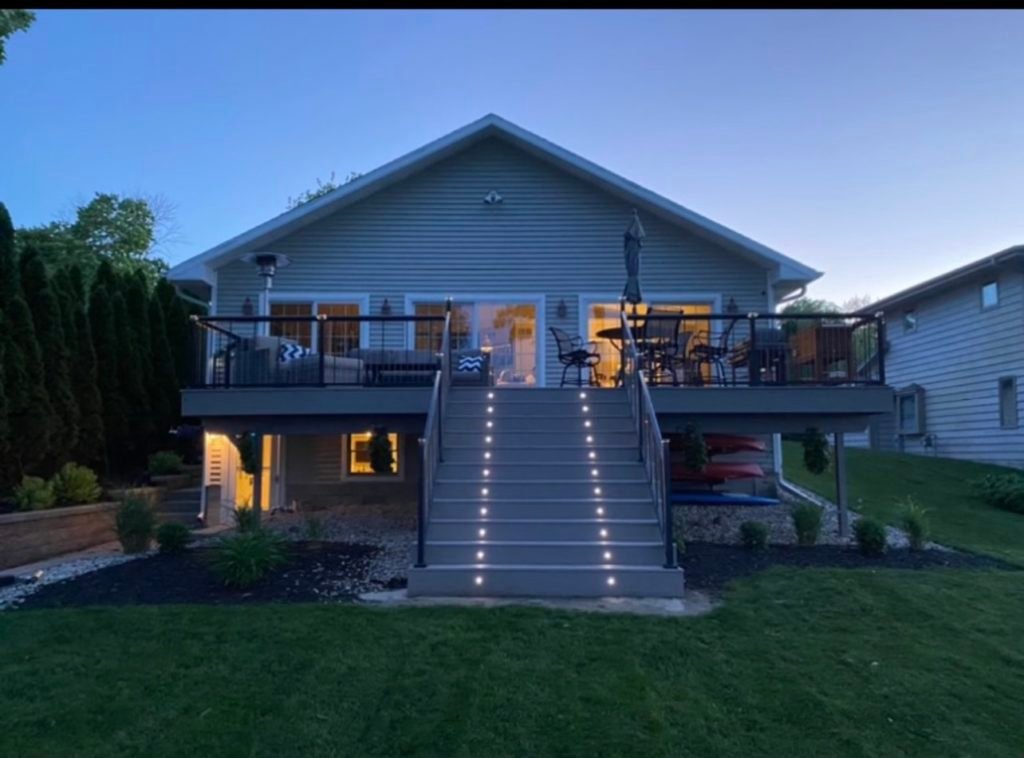 Interior_General - T&J
Frequently asked questions
How much does a whole house remodel cost in Wisconsin in 2026?
For most Wisconsin homeowners, a mid-range whole-home remodel runs $40,000-$75,000, high-end projects run $75,000-$200,000, and full gut renovations start at $100,000. The spread is this wide because "whole house remodel" covers everything from new flooring to moving walls and replacing all mechanicals, finish tier and depth of work, not just size, drive the number. The figure that matters most is your scope: which rooms, how deep, and what finish tier.
What is the cost per square foot for a whole house remodel in Wisconsin?
Nationally, HomeGuide reports $15-$60/sqft for cosmetic-to-mid-range work and $60-$150/sqft for gut renovations. Waukesha County labor markets push costs toward the upper portion because skilled-trade labor here commands a premium and inspection-heavy work adds coordination time. Per-sqft figures mislead, though, kitchen and bathroom work runs $100-$250/sqft while a bedroom refresh runs far less, which is why we budget by room first.
What's the difference between a cosmetic remodel and a gut renovation?
A cosmetic-to-mid remodel updates finishes, fixtures, and sometimes layout while the structure and mechanicals stay largely intact. A gut renovation strips the home to the studs and subfloor, replacing insulation, wiring, plumbing, HVAC, drywall, and all finishes, which is why it costs more, $100,000-$200,000+ nationally. That full exposure also triggers UDC inspection holds on rough mechanicals before walls close, so a gut takes longer and makes sense mainly when the home has systemic problems like an outdated electrical panel or galvanized plumbing.
Should I phase my remodel to spread costs?
Phasing helps when the full budget isn't available upfront or you can't vacate every room at once, but it usually costs 10-15% more overall. The reason is overhead: remobilization fees, repeated permit filings, and re-coordinating trades all get charged again each phase instead of once. If you do phase, rough in all mechanicals, HVAC, plumbing, electrical, across the whole home in Phase 1, because reopening finished walls later to add a circuit or vent is far more expensive than doing it during the initial rough-in.
What happens if I go over budget?
Most overruns come from two sources: low allowances that don't reflect real product costs and scope additions that each seem small but compound into a much larger total. That's why a 10-15% contingency line is essential, it absorbs hidden rot, knob-and-tube wiring, or asbestos in pre-1980 homes without derailing the project. The best protection is a pre-signing scope walk-through where every trade, permit, and finish category is priced before you commit, so surprises happen on paper rather than mid-demo.
How long does a whole house remodel take in Wisconsin?
A full-home remodel in Waukesha County typically runs 4-9 months from permit issuance to punch list; gut renovations can exceed 12 months. The critical path is mechanical rough-in, Wisconsin's UDC requires inspections of rough plumbing, electrical, and HVAC before walls close, and scheduling those municipal inspections adds time you can't compress. Design and permitting alone can take 4-8 weeks before a single wall comes down, so plan accordingly if you're living in the home during construction.
Do I need permits for a whole house remodel in Wisconsin?
Yes, any work touching structural elements, plumbing, electrical, or HVAC requires permits under the Uniform Dwelling Code, administered by the Wisconsin DSPS. The reason is enforcement: code-compliant mechanicals protect against fire and water damage, inspection records protect your resale value, and unpermitted work can void your homeowner's insurance after a claim. Expect multiple permit types, building, electrical, plumbing, and mechanical, with fees set by each Waukesha County municipality; a contractor who says they aren't needed for mechanical work is a red flag.