 Kitchen project - T&J
What a Multi-Room Remodel Costs in Wisconsin (2026 Ranges)
2026 Wisconsin Multi-Room Remodel Cost Range: $55,000-$120,000 for a typical kitchen, one bathroom, and one living space at mid-grade finishes with no structural changes. Here's the math behind that. A basic-to-mid kitchen runs $20,000-$40,000. A mid-range bathroom in Wisconsin lands around $35,000-$40,000 once you add real options. A living room or bedroom refresh runs $5,000-$15,000. Add those and you land squarely in the range above.
The reason the spread is so wide isn't the size of your rooms. It's the finish tier and whether plumbing moves. A 1960s Brookfield ranch with a full basement and 2x4 framing can hold a $60,000 remodel or a $120,000 one depending entirely on cabinet grade, tile selection, and whether you're relocating a sink. Two homes, same footprint, double the price.
Key Stat: A mid-range bathroom remodel in Greater Madison came in at $26,219 for a standard 5x7 layout, but climbs to $35,000-$40,000 once clients add tub style, electrical, vent fans, and trimwork, per the Industry cost data cost-versus-value analysis.
Wisconsin costs sit above the national line partly because of the metro Milwaukee trade labor market and partly because our winters compress the exterior-adjacent work window. Wauwatosa, Elm Grove, and West Allis jobs tend to run at the higher end of the Milwaukee-metro band, while Madison and Green Bay markets often run a bit lower on the same scope because trade labor costs less outside metro Milwaukee. For a deeper look at cost per square foot, see our guide on whole house remodel cost per square foot in Wisconsin.
Per-Room Cost Breakdown: Kitchen, Bathroom, and Living Spaces
Here's what each room costs on its own in Wisconsin for 2026, using verified market figures. Kitchens run $20,000-$40,000 basic and $60,000+ for custom. Bathrooms range from $8,000-$15,000 simple to $35,000-$40,000 mid-range to $75,000-$200,000 upscale. Living rooms and bedrooms run $5,000-$15,000. Below, the decisions that move each number most.
| Room | Typical WI Range (2026) | Biggest cost levers |
|---|---|---|
| Kitchen (basic) | $20,000-$40,000 | Cabinet grade, countertop, appliance tier |
| Kitchen (custom) | $60,000+ | Custom cabinetry, structural change |
| Bathroom (simple) | $8,000-$15,000 | Fixtures, tile, in-place layout |
| Bathroom (mid-range) | $35,000-$40,000 | Plumbing relocation, vent/electrical |
| Bathroom (upscale) | $75,000-$200,000 | Expansion, stone, in-floor heat |
| Living room / bedroom | $5,000-$15,000 | Flooring, lighting, built-ins |
 Kitchen - T&J
For room-specific detail, our Wisconsin kitchen remodel cost guide breaks kitchens down further, and the bathroom plumbing permit requirements page covers what triggers a permit when you move fixtures.
Want this priced for your kitchen?
John walks your space, measures it, and leaves a written itemized estimate. No cost, no obligation, no sales script.
Kitchen Cost Factors
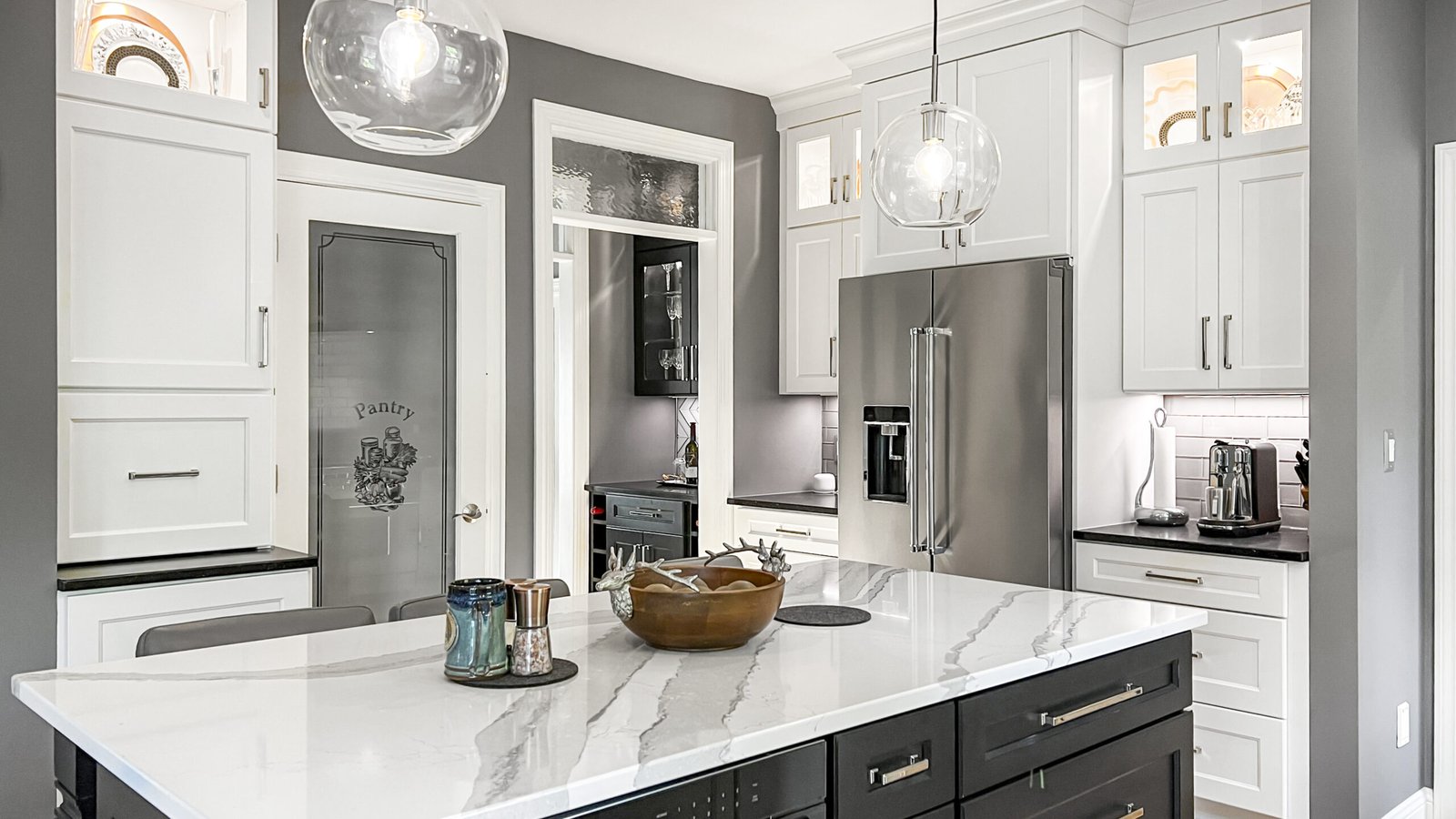
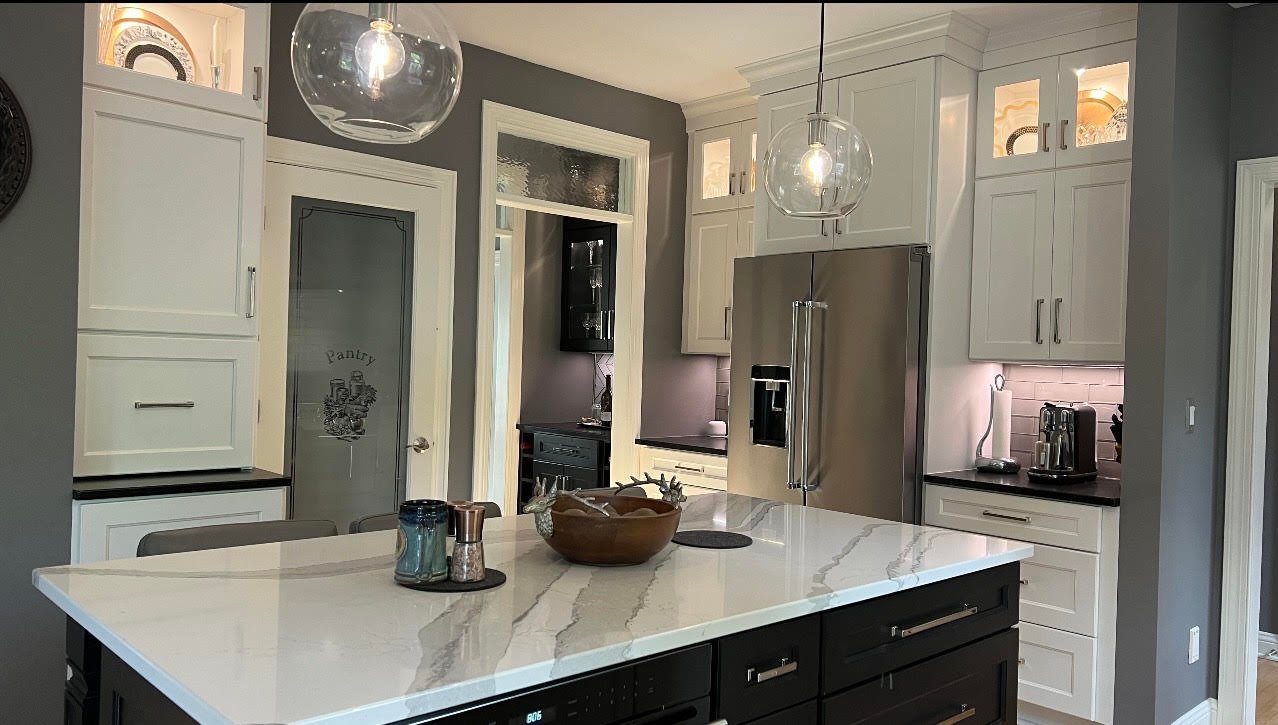
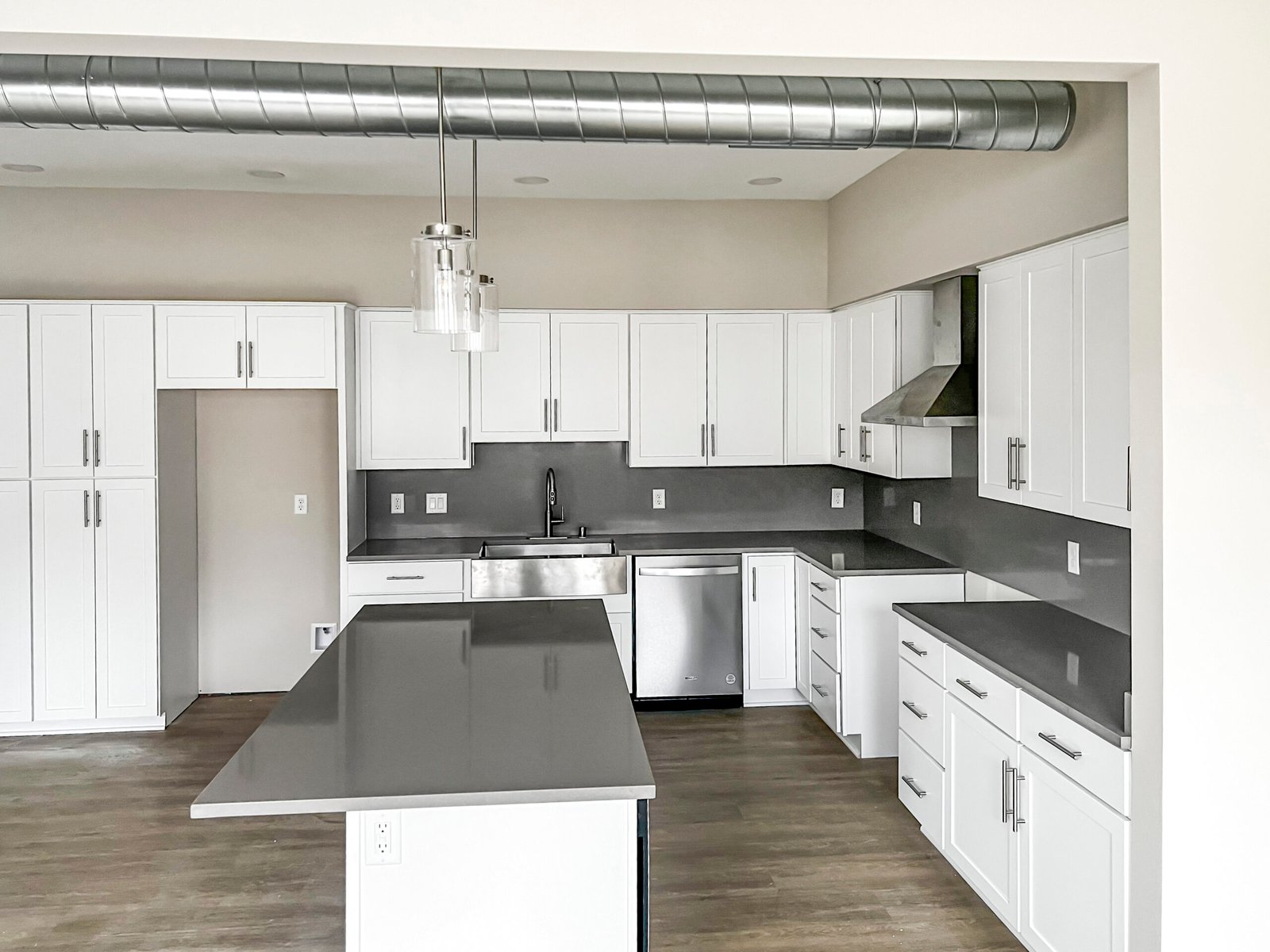
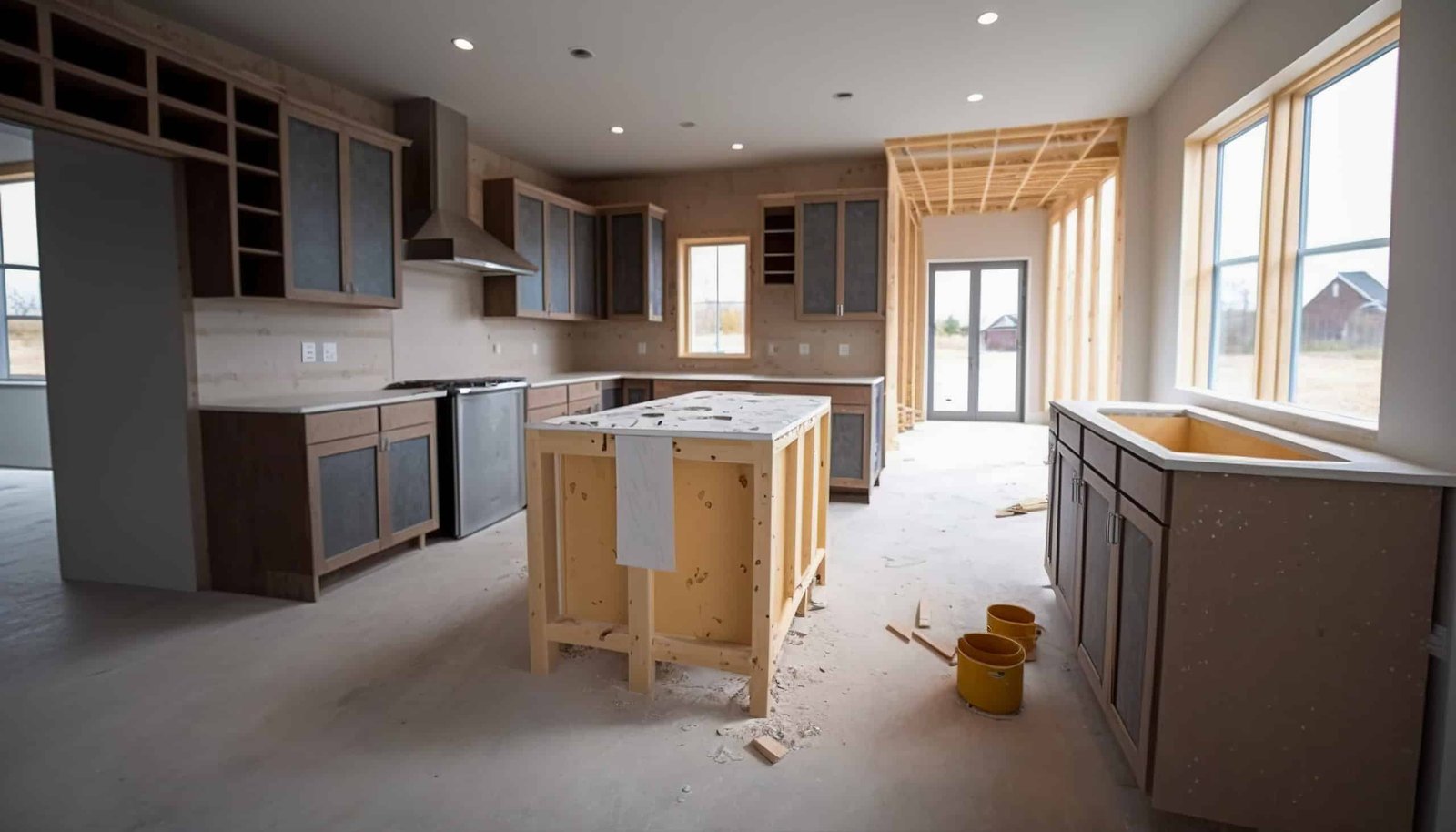
Three things move a kitchen number: cabinet grade, whether the layout changes, and appliance tier. Stock cabinets with a countertop, backsplash, sink, and faucet start around $20,000. Move the sink or open a wall and you're adding a plumber and possibly a structural detail, which pushes toward the $60,000+ custom tier. Countertop material matters too, but that's a sibling topic we cover elsewhere.
Bathroom Cost Factors
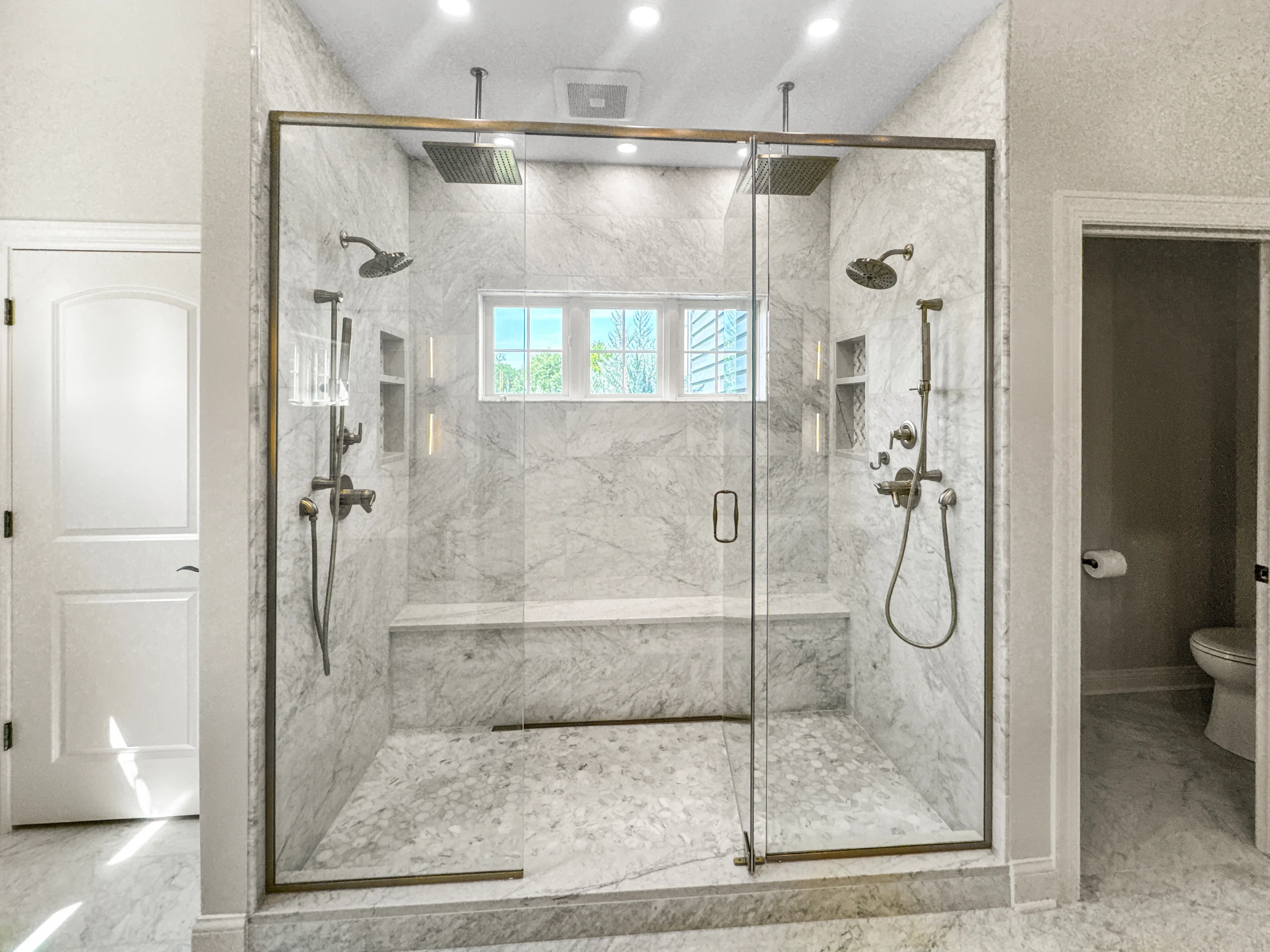
The single biggest lever is plumbing. A same-footprint refresh (new tile, fixtures, vanity) stays in the $8,000-$15,000 simple range. The moment you relocate the toilet or shower drain, you're in mid-range territory: $35,000-$40,000 in Wisconsin once electrical, a vent fan, lighting, and trimwork get added. On resale, a mid-range bathroom recoups about 60.7% in Greater Madison, which is respectable for a project you actually use every day.
Pro Tip: If your bathroom is already plumbed where you want fixtures to stay, keep that layout. Moving a drain line 3 feet can add thousands in labor and re-open drywall you'd otherwise leave intact.
Living Room and Bedroom Cost Factors
Living rooms and bedrooms are the cheapest rooms in the house to remodel because they rarely touch plumbing, and most land in the $5,000-$15,000 range. But that range has real levers inside it. Flooring is the biggest one: laminate or luxury vinyl plank runs well below solid hardwood per square foot, and hardwood also adds subfloor prep and finishing labor. Lighting is the second lever. Swapping fixtures is cheap, but adding recessed cans or moving a switch means an electrician and new circuit work, which is where the electrical permit comes in. Paint stays inexpensive unless you're doing a full skim-coat on old plaster walls, common in pre-1960 Waukesha and Wauwatosa homes, which adds drywall labor. Built-ins (window seats, bookshelves, entertainment walls) are custom carpentry and climb fast toward the top of the range. Relocating electrical for a wall-mounted TV or new outlet placement adds cost too, because opening finished walls means patching and repainting afterward. Bundle this room with your kitchen and the shared crew days and shared drywall and paint work keep it efficient.
Does Combining Rooms Save Money? The Bundling Math
Yes, combining rooms typically runs less than three separate contracts, often in the range of 10-20% cheaper, and the reason is mobilization cost. Every remodel carries a fixed overhead: the contractor shows up, pulls permits, coordinates subs, and manages the schedule. Split that overhead across three rooms and it's proportionally cheaper per room than paying it three times over on three separate jobs.
Three specific efficiencies drive the savings. First, one permit application can cover multiple scopes instead of three trips to the building department. Second, subcontractor visits get batched. One plumber trip handles the kitchen and bathroom rough-in instead of two. Third, demo, drywall, and painting can be sequenced together across rooms rather than mobilizing a crew twice.
Watch Out: Bundling only pays off if your contractor can actually sequence the work. This is exactly where the cheap bid is riskiest. A contractor who underprices a multi-room job to win it will lean on change orders to recover margin once demo starts, and the disorganized ones stall between trades while your house sits open.
A good real-world example: a 1960s Brookfield ranch we completed in Q2 2024, original 2x4 framing and a full basement, combined a roughly $35,000 kitchen, a $38,000 hallway bathroom, and an $8,000 living room refresh for a total in the low $80,000s on a 12-week timeline. Run as three separate contracts, that same work would have carried three separate mobilization and permit cycles and easily pushed past $95,000. Multi-room projects reward real project management discipline. That's the trade-off: more savings potential, but more that can go wrong without a tight schedule.
What a Complete Bid Looks Like, and What Low Bids Leave Out
A complete bid is a written scope of work that names every line, not a one-page number. When you're comparing two or three quotes, the gap between them is almost never profit. It's scope. The lowest bid usually looks cheaper because it quietly omits items you'll pay for later. Here's what a complete scope of work should spell out:
- Demo and haul-away (who tears out and who disposes)
- Permit pull with cost, and who applies (should be the contractor)
- Subcontractor coordination: plumber, electrician, tile setter
- Material allowances with specific dollar amounts per category
- Project management as a named line, not assumed
- Final cleanup
- Warranty terms in writing
The most expensive trap is the allowance trap. A bid with a $500 tile allowance looks cheaper than one with a $2,500 allowance right up until selection day. Then you fall in love with $8-per-square-foot tile, the placeholder covered $2, and the difference comes out of your pocket as a change order. The lowball bid didn't save you money. It moved the cost to a place you couldn't see when you signed.
Code Note: Wisconsin's electrical code (SPS 316, which adopts the National Electrical Code) requires a permit for new circuits and relocated outlets, and the plumbing code (SPS 382) governs any fixture or drain relocation. The Waukesha County building departments and municipal offices in cities like Waukesha and Pewaukee require a plumbing permit before any drain relocation, and that filing plus inspection can add 2-3 weeks to your timeline. A complete bid names these permit lines. A bid that skips them is either leaving the filing to you or planning to skip inspection, and both create resale problems.
This is where a single point of contact earns its keep. On every T&J project, John (our co-founder and project manager, and a credited contractor in the state of Wisconsin with 35+ years of combined shop experience behind the company) handles the communication directly, so scope questions get answered before you sign, not discovered mid-project. We walk through the entire scope with you first, which is why our quotes tend to be more complete than the low bid sitting next to them. If a contractor won't put the scope in writing, that reluctance is your answer. For context on what triggers a permit line in the first place, see what work requires a permit in Wisconsin.
5 Questions to Ask Every Contractor Before You Sign
These five questions surface the gaps that make one bid look cheaper than another. A contractor who answers all five confidently and in writing is the one you want.
Is the permit included in this price, and who pulls it?
In Wisconsin the contractor should pull it. If the permit is missing from the bid, either they're leaving it to you or they don't plan to permit the work, and both are problems.
What are your material allowances for tile, countertops, and fixtures, and what happens if I go over?
This flushes out the allowance trap. Real numbers mean a real bid. A vague answer means a change order is coming.
Who is my single point of contact during the project?
On a three-room job, you need one person who knows the whole schedule, not a rotating cast. If they can't name that person, the coordination isn't there.
How do you handle change orders, written only or verbal?
Written-only protects you. Verbal change orders are how budgets balloon quietly.
Can you show me a sample scope of work from a similar project?
A contractor who runs organized jobs has this on hand. Hesitation here tells you how they document everything else.
 Kitchen - T&J
Pro Tip: Ask all three contractors the same five questions in the same order. The differences in their answers will explain the differences in their prices faster than staring at the bottom-line numbers ever will.
Wisconsin Permits for Multi-Room Remodels: What Triggers One
Multi-room remodels almost always trigger permits in Wisconsin. Any work touching plumbing, electrical, or structural elements requires one under the state Uniform Dwelling Code (UDC), the framework governing one- and two-family homes. A kitchen plus bathroom plus living room job typically needs at least a plumbing permit and an electrical permit, and a structural permit too if you're removing a wall.
Here's the wrinkle for the Milwaukee metro: each municipality runs its own building department. Waukesha, Pewaukee, Brookfield, New Berlin, and Wauwatosa each process differently, with their own fees and lead times. The Waukesha city building division, for instance, reviews residential permits separately from Wauwatosa's department, so the office you file with depends on your exact address. Your contractor should know which department applies and how fast they turn around. Unpermitted work is not a shortcut. It surfaces at resale during inspection, and it can void homeowner's insurance on any related claim. For bathroom-specific detail, see our guide on Wisconsin bathroom plumbing permit requirements.
Code Note: Wisconsin's UDC applies statewide to one- and two-family dwellings, but enforcement and permit processing happen at the municipal level, so a plumbing permit filed in Elm Grove follows a different queue than one filed in West Allis.
Timeline: How Long Does a Multi-Room Remodel Take in Wisconsin?
A combined kitchen, bathroom, and living room remodel typically runs 10-20 weeks from demo to final walkthrough, depending on scope and permit lead times. On their own: a kitchen runs roughly 6-12 weeks, a bathroom 3-6 weeks, and a living space the shortest of the three. Combined, the work overlaps rather than stacking end to end, which is part of the bundling savings.
Two things stretch the timeline in Wisconsin. First, material lead times set the critical path. Custom cabinetry can run 8-12 weeks by itself, so ordering early matters. Second, winter affects scheduling for material delivery and any exterior-adjacent work. T&J's typical lead time to start is 4-8 weeks after your consultation, depending on season. That's honest, and it sets the right expectation.
Watch Out: A contractor who promises to start a complex multi-room job in three weeks is a yellow flag. Either they're not busy for a reason, or they haven't ordered materials and are underestimating the schedule. Neither is comforting.
Why Multi-Room Remodel Quotes Vary So Much in Wisconsin
When you get three bids and they're $40,000 apart, the natural instinct is to assume the high one is gouging. Almost always, that's wrong. The gap means the scopes aren't the same document. The higher quote likely includes permits, realistic material allowances, project management overhead, subcontractor coordination, and a written warranty. The lower one may use placeholder allowances, leave permits to you, assume you'll manage the subs, and carry no warranty. The $40,000 isn't margin. It's scope.
The fix is simple: ask both contractors to itemize every line, then compare the same categories side by side. Our quote process is built around this. We walk through the full scope with you before anything gets signed so there are no surprises mid-project. As a credited contractor in the state of Wisconsin with roughly a decade working across Waukesha County and the Greater Milwaukee suburbs, we'd rather lose the bid on an honest number than win it on a low one and fight over change orders later. You can see the full range of our remodeling services in Waukesha County for context on what we take on.
 Kitchen - T&J
Ready to Get a Real Number for Your Wisconsin Remodel?
Here's the takeaway. Multi-room remodels in Wisconsin range widely, from around $55,000 to $120,000 for a typical mid-grade kitchen, bath, and living room job in 2026. But the right number for your project doesn't come from the lowest bid. It comes from a complete, written scope of work you can actually compare against the others on your table.
That's what we do at T&J All In Remodeling. Ready to get a complete, itemized bid? Run your project through our home remodeling cost calculator to see what your three-room project should cost in your Waukesha County neighborhood, then schedule a free in-home consultation with T&J. No cost, no obligation, and a transparent quote you can hold up against any other bid.
Frequently asked questions
How much does it cost to remodel a kitchen and two bathrooms in Wisconsin?
A realistic combined budget runs $90,000-$120,000 before structural changes or premium finishes. That's a mid-range kitchen at $20,000-$40,000 plus two mid-range bathrooms at roughly $35,000-$40,000 each for hallway baths in Wisconsin. Each room carries its own permit, labor mobilization, and subcontractor coordination cost, and finish tier plus whether plumbing moves remain the two biggest levers.
Why does Milwaukee cost more than Madison for the same remodel?
Metro Milwaukee trade labor costs more than Madison and Green Bay, so identical scopes in Wauwatosa, West Allis, or Elm Grove tend to land at the higher end of the state range. A mid-range Greater Madison bathroom came in around $26,219 for a standard 5x7 layout, while the same job in the Milwaukee suburbs usually runs higher once you factor local labor rates and permit fees. The room count and finishes are the same, but the labor market underneath the number is different.
What permits do I need for a multi-room remodel in Wisconsin?
Any work touching plumbing, electrical, or structural elements requires a permit under Wisconsin's Uniform Dwelling Code. A kitchen, bathroom, and living room remodel almost always triggers at least a plumbing permit and an electrical permit, plus a structural permit if walls come out. Your contractor should pull them through the correct municipal building department (Waukesha, Pewaukee, and Wauwatosa each process separately), because unpermitted work creates problems at resale and can void your homeowner's insurance.
How long does a 3-room remodel take in Wisconsin?
A combined kitchen, bathroom, and living room remodel typically runs 10-20 weeks from demo to final walkthrough, depending on scope and permit lead times. Custom cabinetry alone can run 8-12 weeks and often sets the critical path, and Waukesha County permit approval can add 2-3 weeks on top. A contractor promising completion in four weeks on a complex multi-room project is either underestimating or hasn't ordered materials yet.
Can I live in my home during a multi-room remodel?
Often yes, but it depends on which rooms are down at once. If your only kitchen and only bathroom are both torn out in the same week, you'll need a temporary setup or a short stay elsewhere, because you can't cook or shower without them. A good contractor phases the demo so at least one essential room stays functional, and dust control matters since you're effectively breathing the jobsite.
What's the difference between a bid and a contract?
A bid is the contractor's proposed scope and price. A contract is the signed agreement that makes that scope legally binding, including payment schedule, change-order rules, warranty terms, and timeline. A complete bid should read almost identically to the eventual contract, so if a contractor's bid is vague and the contract suddenly adds exclusions, that's a red flag worth catching before you sign.