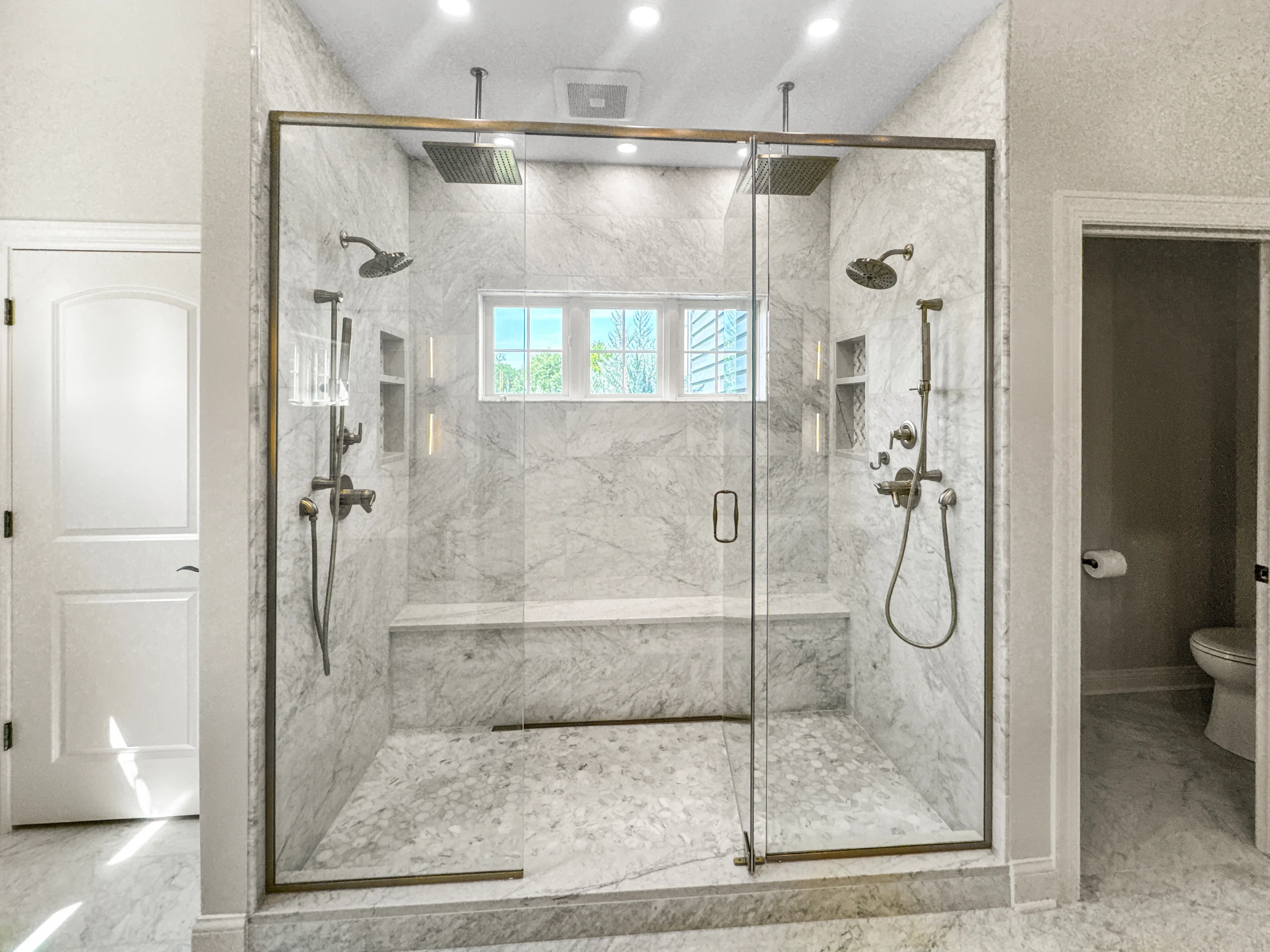
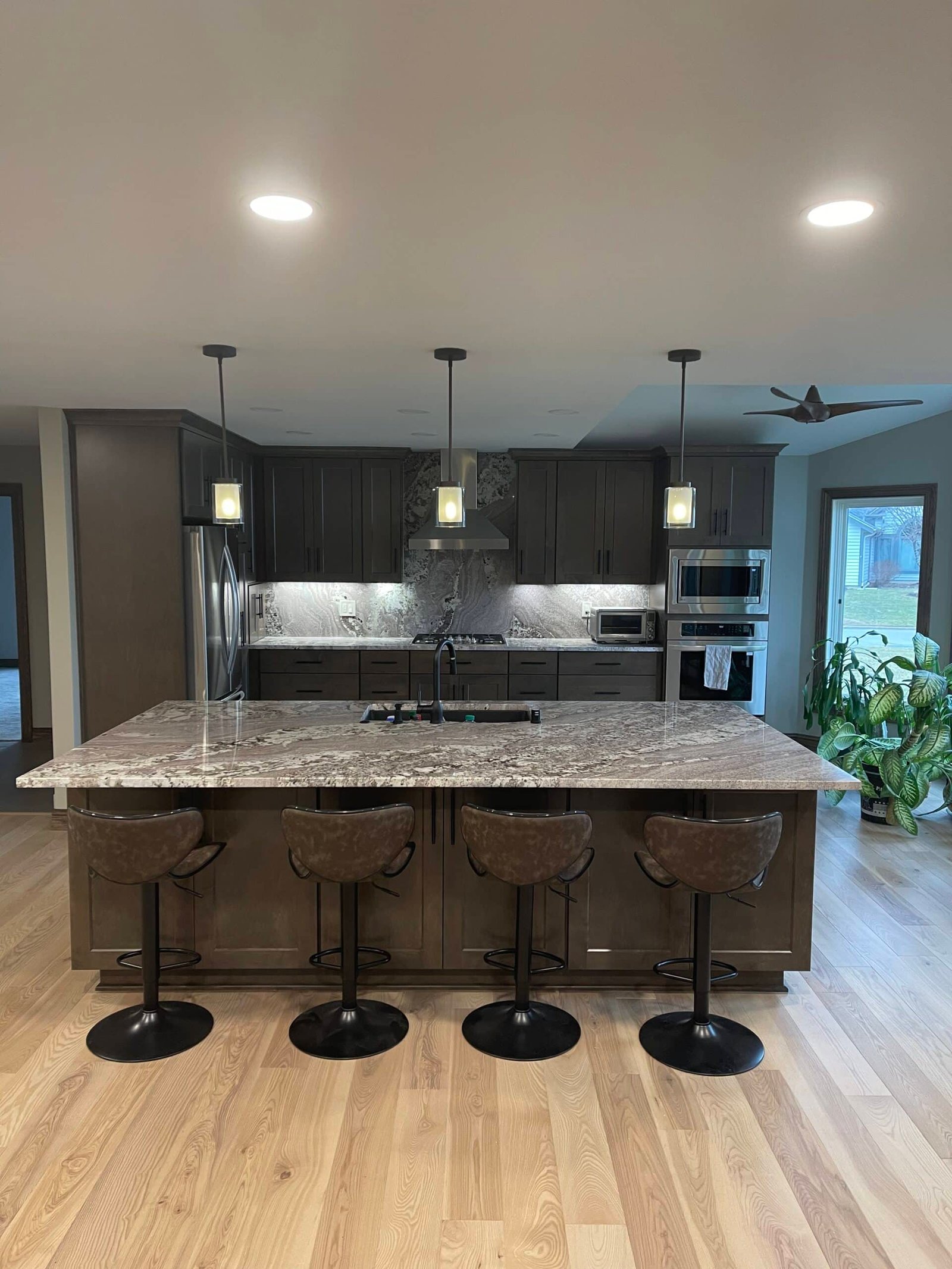
 Kitchen project - T&J
We've built kitchens across Pewaukee and Waukesha County for roughly a decade, from dated colonials to lakefront homes, so the ranges below come from real local jobs, not national averages.
What a Kitchen Remodel Costs in Pewaukee, WI (2026 Ranges)
Kitchen remodel pricing in Pewaukee breaks into three tiers, and where you land depends on scope, not luck. These are Waukesha County ballpark figures shaped by local labor and material costs, so they read higher than the national averages you'll see online. Use them to place your own project.
- Budget cosmetic refresh: roughly $12,000-$20,000. New countertops, cabinet refacing or new doors, paint, updated fixtures. Same footprint, no walls or plumbing moving.
- Mid-range semi-custom remodel: roughly $35,000-$60,000. New semi-custom cabinets, quartz countertops, updated rough-in, better appliances. This is the workhorse remodel across Pewaukee's colonials.
- High-end gut remodel: roughly $75,000-$120,000-plus. Everything to the studs, relocated plumbing, an added island, custom cabinets, premium stone. Common in Pewaukee lakefront and near-lake builds.
Pewaukee's mix of 1980s-2000s colonials near Retzer Nature Center and newer lakefront homes downtown means both mid-range and high-end jobs are routine here. A dated colonial kitchen usually justifies a semi-custom remodel. A lakefront home's baseline value supports a full gut. For a wider view, see our breakdown of the average kitchen remodel cost across Wisconsin.
Before you call anyone, decide whether you're moving the sink or a wall. That one answer separates a $40K mid-range job from an $90K gut and lets every contractor quote apples to apples.
What's Actually Inside a Kitchen Remodel Quote
A complete kitchen remodel quote isn't one number. It's a stack of line items, and knowing the rough proportion of each lets you sanity-check any bid. When a contractor hands you a single lump sum with no breakdown, that's your first flag. A real quote separates cabinets, countertops, appliances, demo and disposal, rough-in labor, finish carpentry, permits, and project management. As a rough map: cabinets run 30-40% of the total, labor another 20-25%, countertops around 15-20%, appliances 10-15%, and demo, disposal, permits, and project management fill the rest.
Those last small lines are exactly what lowball bids drop. If two quotes are $15,000 apart, the gap almost always hides in rough-in, permits, disposal, and project management, not in the cabinets you can see.
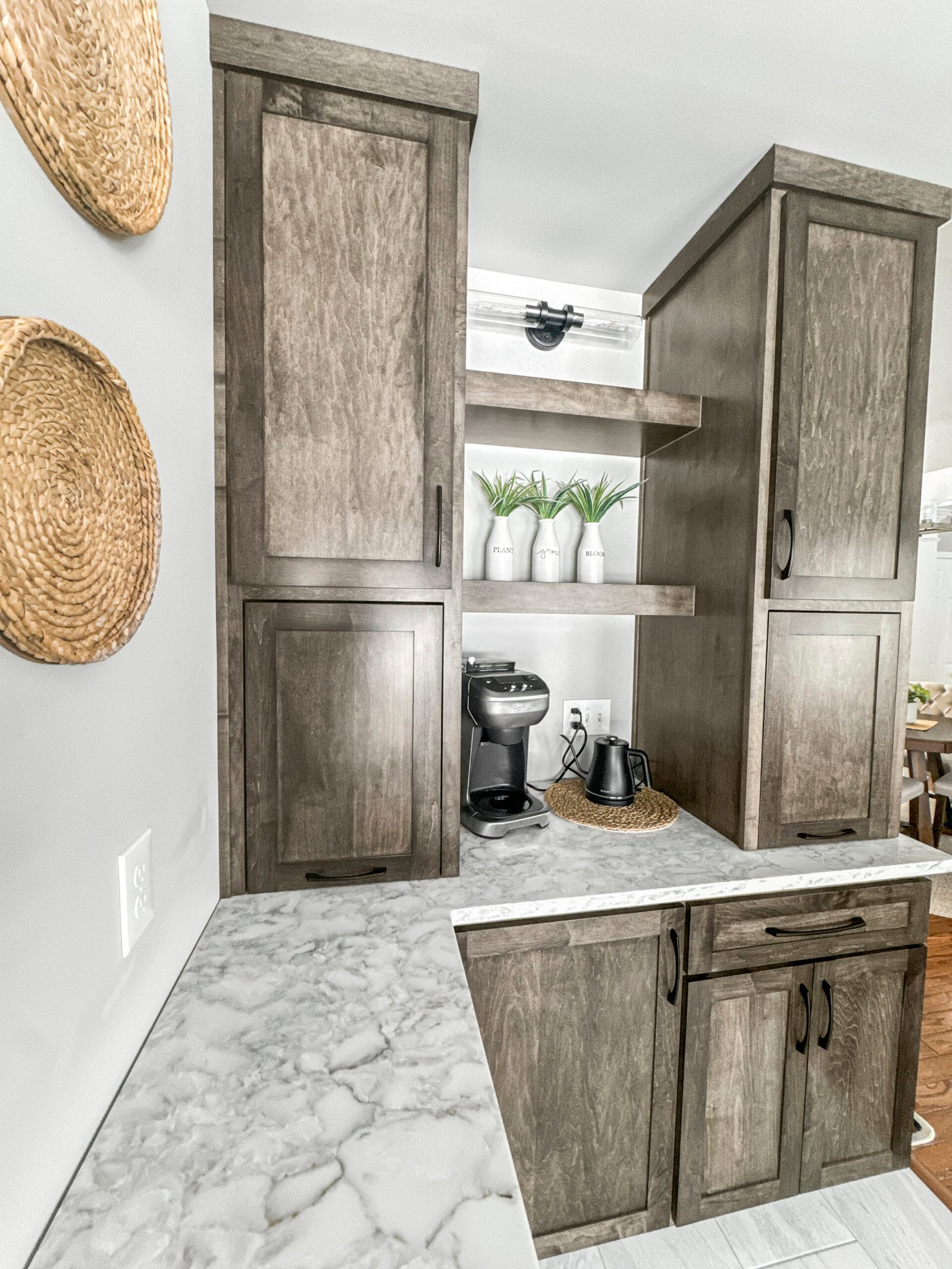 Kitchen - T&J
Want this priced for your kitchen?
John walks your space, measures it, and leaves a written itemized estimate. No cost, no obligation, no sales script.
Cabinets: The Biggest Variable
Cabinets are the single largest line item, and the tier you pick drives your total more than any other choice. Stock cabinets come in fixed sizes off the shelf and cost the least. Semi-custom cabinets (stock boxes with more door styles, finishes, and modification options) are the most common pick in Waukesha County mid-range remodels. Custom cabinets are built to your exact dimensions and finishes, and they cost the most. Explore both in our kitchen remodeling services in Waukesha County.
Custom cabinets can add eight to twelve weeks to your project start because they're built after you order. If a bid promises a fast start on custom boxes, ask how, because the math usually doesn't work.
Countertops
Countertops run from laminate at the low end up through quartz, granite, and quartzite. Quartz (an engineered stone that's durable and low-maintenance) dominates mid-range Pewaukee projects. Quartzite (a natural stone harder than granite) is the high-end favorite. Countertops are the line item lowball bids most often underestimate, because edge profiles, sink cutouts, and backsplash integration add real cost a quick estimate skips. Always ask what edge profile and backsplash are included in the number you were quoted.
Labor and Rough-In Work
Rough-in is the plumbing, electrical, and HVAC work inside your walls before finishes go on. It's the line item most commonly missing from lowball bids because you can't see it in finished photos. Waukesha County sits right next to Milwaukee, and that proximity plus a strong skilled-trades presence keeps local labor rates higher than rural Wisconsin, which is a real cost driver in every honest quote. If a quote doesn't break out rough-in separately, ask for it explicitly. A contractor who can't tell you how they're handling the wiring and plumbing behind the drywall isn't one you want in your kitchen.
Permits and Inspections
In Wisconsin, structural, electrical, and plumbing work requires permits. One- and two-family dwellings follow the state's Uniform Dwelling Code, administered by Wisconsin DSPS. In the City of Pewaukee, the licensed contractor pulls permits through the City of Pewaukee Building Inspection Department. If a bid says the homeowner pulls permits, that shifts liability onto you and often signals the contractor isn't properly licensed. For detail, see what work requires a permit in Wisconsin.
Under Wisconsin's Uniform Dwelling Code (SPS 320-325), covered kitchen work such as new circuits and relocated plumbing requires inspection. Skipping the permit can surface at resale during seller's disclosure and can void homeowner's insurance on that work.
What Makes Kitchen Remodel Quotes Vary So Much in Waukesha County
When two quotes for "the same kitchen" come back $15,000 apart, they're almost never the same scope. Four things drive the spread, and once you see them you stop comparing prices and start comparing what's actually being built. The instinct to grab the lowest bid is understandable, but the lowest bid is usually the one that left the most off the page.
Here's what actually moves the number:
Layout change versus cosmetic refresh.
A cosmetic refresh keeps the footprint and swaps surfaces. A gut remodel takes the kitchen to the studs and relocates walls, plumbing, or electrical. Moving the sink or adding an island means new rough-in, and that's a large cost jump. Same word, different projects.
Material tier.
Stock versus custom cabinets, laminate versus quartzite, builder-grade versus pro-style appliances. Each tier can double the line beneath it. Two honest contractors quoting different tiers will land far apart, and both can be right.
Scope completeness.
This is where the real gap hides. Lowball bids routinely omit rough-in labor, permit fees, demo and disposal, project management, and warranty work. Add those back mid-project as change orders and the cheap quote catches up, usually with more stress.
Contractor overhead.
A solo sub out of a truck carries almost no overhead and quotes low, but you're the project manager. A licensed general contractor with a dedicated project manager carries that cost in the number, and you get someone accountable for the whole job.
Cabinets alone often make up 30-40% of a kitchen remodel budget, which is why cabinet tier is the fastest lever to move your total up or down.
A recent job makes this concrete. In 2026 we remodeled a kitchen in a 1990s colonial on Silver Spring Drive in the Town of Pewaukee. The homeowners wanted the sink moved about eight feet, a nine-foot island added, semi-custom maple cabinets, and quartz counters. That project came in around $54,000 over a ten-week active build and passed final inspection on the first pass. A cosmetic refresh on that same footprint would have run roughly a third of the cost. Same kitchen, completely different scope, and that spread is exactly what confuses homeowners comparing bids.
Kitchen Remodel Timeline in Pewaukee: What to Expect
A mid-range Pewaukee kitchen remodel typically takes six to ten weeks from permit to final inspection on-site, but the full timeline from your first call to the final walkthrough usually spans three to five months once material lead times are folded in. The difference is ordering and waiting, not construction. A cosmetic refresh with no layout changes runs closer to two to four weeks of active work.
Here's the sequence:
Consultation and estimate.
One to two weeks to scope the job and get a transparent quote.
Material selection and lead times.
Semi-custom cabinets often take six to twelve weeks to arrive. This is the phase people rush, and it's the number-one cause of mid-project delays.
Permit approval.
Handled through the City of Pewaukee Building Inspection Department. Turnaround varies, so confirm current timing with the local permit office.
Active construction.
Demo, rough-in, cabinets, counters, finishes, in that order.
Punch list and final inspection.
The last details plus the inspector's sign-off.
Our typical lead time from signed contract to start is four to eight weeks depending on season. That's honest scheduling, not a stall. Order your cabinets before demo begins, or the whole job sits waiting on a delivery truck.
How to Read a Kitchen Remodel Quote: 6 Questions That Surface Gaps
The fastest way to compare bids fairly is to ask every contractor the same six questions. Each one exposes a place where scope quietly disappears. If a bidder gets vague on any of these, you've found the gap between their number and the higher one.
Is demo and disposal included?
Tearing out and hauling away an old kitchen costs real money and dumpster fees. If it's not in the quote, it lands on you later.
Who pulls the permits, and is the fee in the quote?
In Pewaukee the licensed contractor should pull them through the City of Pewaukee Building Inspection Department. "You pull your own" is a liability red flag.
Does this include rough-in plumbing and electrical, or just finish work?
This is the most common omission. Finish-only quotes look cheap until the wiring and plumbing bill arrives.
What's the change-order policy?
Ask how additions get priced and approved. A clear written policy means no surprise invoices halfway through the job.
Who is my single point of contact during the project?
You want one name, not a rotating cast. On our jobs, John handles every project's communication directly, so you're never chasing down who to ask. A good vetting habit is confirming your contact is the person actually running the schedule.
What does your warranty cover, and for how long?
A warranty is only as good as the company standing behind it. Get the coverage and duration in writing, and confirm the company will still be around to honor it.
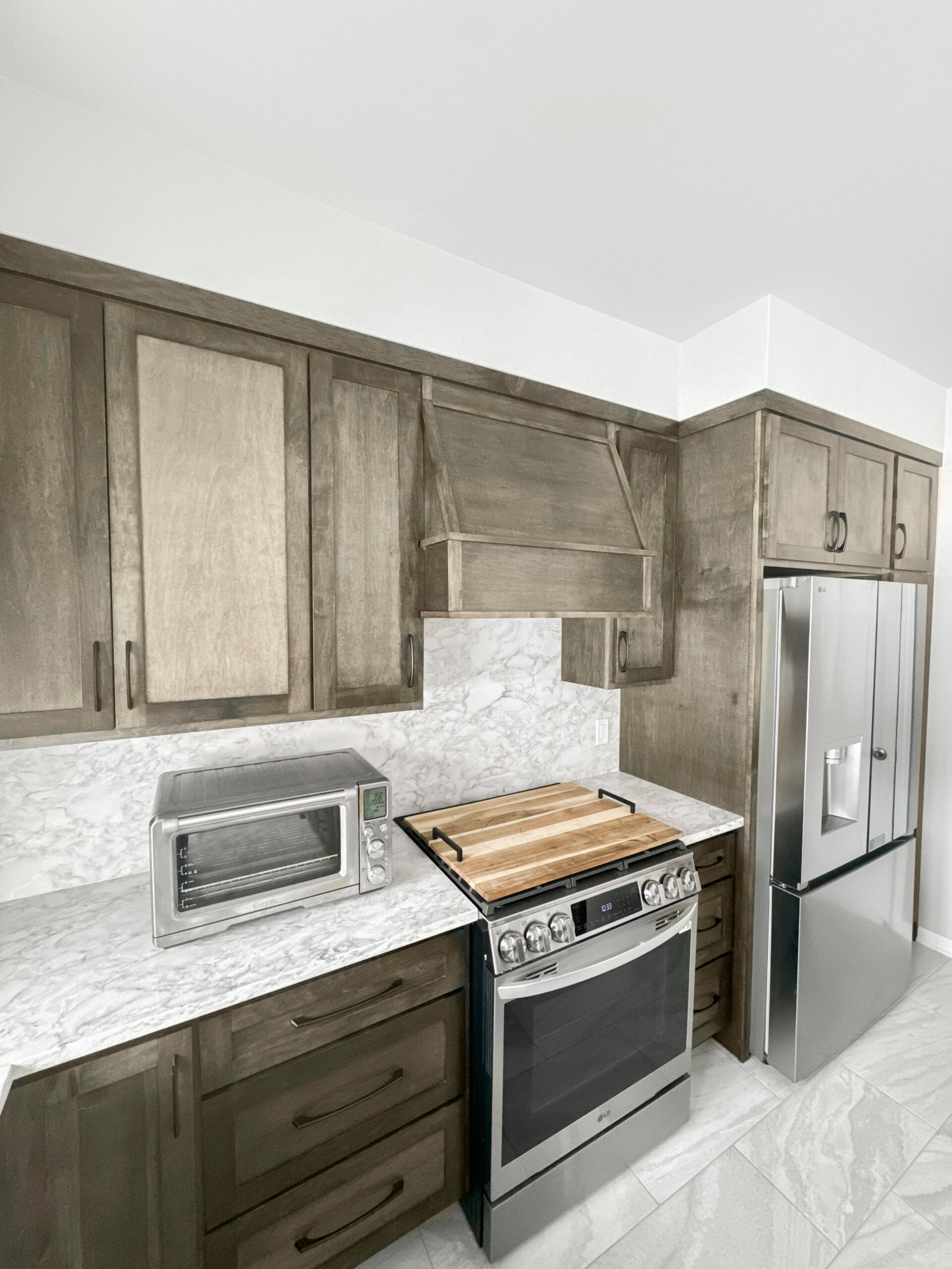 Kitchen - T&J
Run these past all three bidders. The exercise does more than protect you. It shows which contractor actually thought the job through and which one just wanted to win on price.
Does a Kitchen Remodel Add Value in Pewaukee?
A kitchen remodel usually adds value in Pewaukee, but how much you recover depends on where your kitchen sits against neighborhood comps and how much you spend. In Pewaukee lakefront and near-lake neighborhoods, and in nearby Hartland and Oconomowoc lake communities, higher baseline home values make kitchen investment more recoverable, because buyers there expect updated kitchens and discount hard for dated ones.
A few practical guardrails:
- Mind the 30% rule. Don't sink more than roughly 30% of your home's value into a single remodel. Our guide to the 30% rule for remodeling budgets walks through why that ceiling protects your resale math.
- Mid-range often recovers more percentage than high-end. In most Wisconsin markets, a sensible mid-range remodel returns a larger share of its cost than a top-tier gut. The Remodeling Cost vs. Value Report tracks this by region each year.
- Function beats finish. A gut that fixes a genuinely bad layout adds more real value than a cosmetic refresh on a kitchen that already works. Buyers pay for a kitchen that lives well before they pay for exotic stone.
Match your spend to your neighborhood, and fix problems before you chase upgrades.