Whole House Remodel Cost in Wisconsin: The Short Answer
Here are the 2026 ranges we're quoting on owner-occupied single-family homes in Brookfield, Elm Grove, Pewaukee, Waukesha, and surrounding cities:
| Scope tier | Cost per sq ft | 2,500 sq ft home |
|---|---|---|
| Cosmetic refresh | $80-$130 | $200K-$325K |
| Pull-and-replace | $150-$220 | $375K-$550K |
| Full gut (studs-out) | $230-$320 | $575K-$800K |
| Gut + addition | $300-$410 | $750K-$1.0M+ |
These numbers align with regional cost data. Renoworks pegs whole house renovation at $100-$400/sq ft by scope, with full gut renovations running $150,000-$300,000 and teardown-rebuilds pushing $250-$400+/sq ft. Milwaukee-area data puts the typical range at $120-$250/sq ft with a premium tier of $250-$350/sq ft. Wisconsin sits at the higher end of national figures because of UDC inspection requirements, frost-depth foundations, and a tight skilled-trade labor market.
A 2,500 sq ft studs-out gut in Waukesha County in 2026 runs $575K-$800K turnkey, roughly $230-$320 per square foot.
The Four Scope Tiers (and What Each One Buys You)
The single biggest reason two contractors quote $340K and $720K on the same house is they're pricing different tiers. Here's what each one actually includes.
Cosmetic refresh ($80-$130/sq ft)
 Remodel - T&J
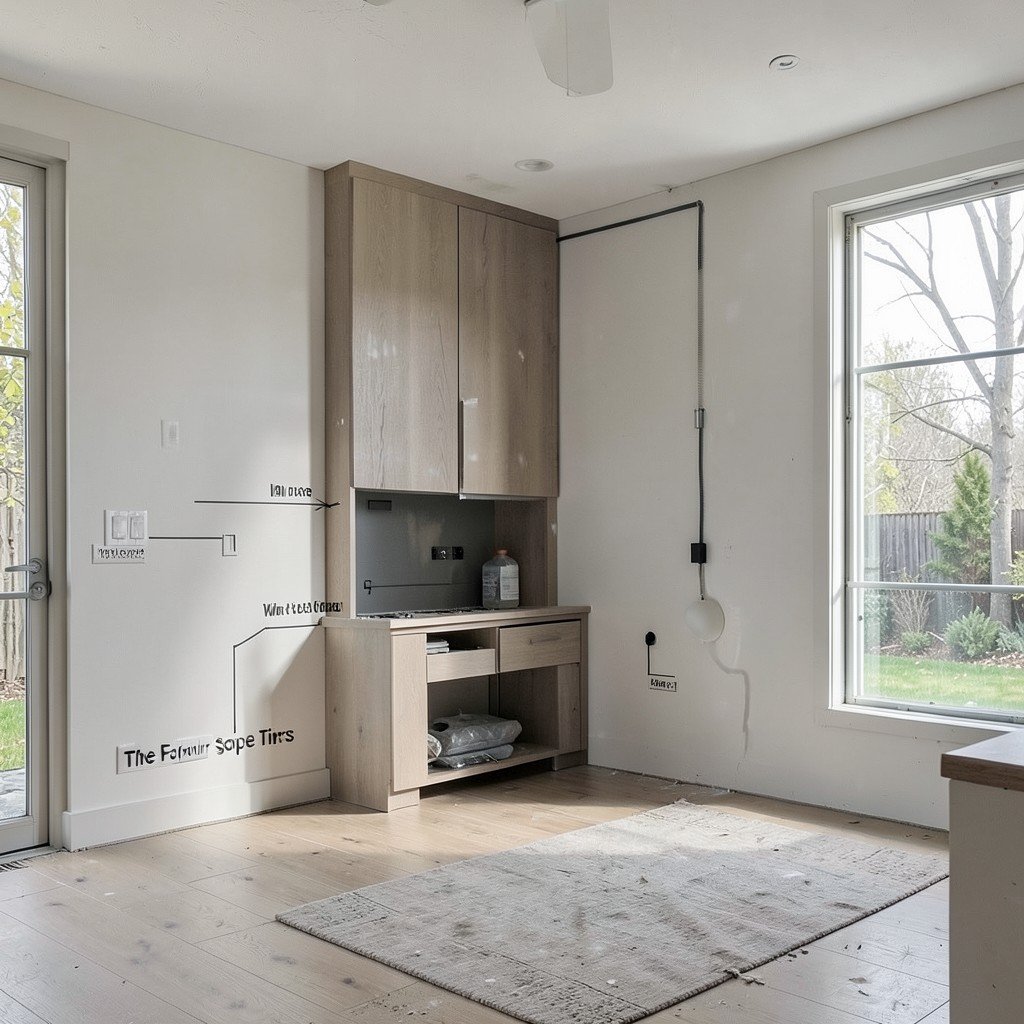
Paint everywhere, new flooring, lighting swaps, plumbing fixture swaps, cabinet refacing or repainting, maybe a new countertop. No walls move. No mechanicals touched. This works on a house where the bones are already good, a 2010s build where you just don't like the finishes.
Want this priced for your remodel?
John walks your space, measures it, and leaves a written itemized estimate. No cost, no obligation, no sales script.
Pull-and-replace ($150-$220/sq ft)
New kitchen, new bathrooms, new flooring throughout, minor layout tweaks (removing a non-load-bearing wall, expanding an opening). HVAC, electrical service, and plumbing stack stay where they are unless something's failing. This is the most common tier for a 1980s, 2000s home in Waukesha County where the systems still have life but the finishes are dated.
Full gut ($230-$320/sq ft)
Studs-out. New HVAC, new electrical panel and rewire, new plumbing supply and drain lines, insulation upgraded to current R-values, new windows, new drywall, all new finishes. This is the tier for 1920s, 1960s homes with knob-and-tube wiring, cast iron drains, plaster walls, and original windows. It's also where Wisconsin's Uniform Dwelling Code (SPS 321/323) starts to bite, once you alter structure significantly, mechanicals have to come to current code.
Gut + addition ($300-$410/sq ft blended)
Everything above plus square footage. Wisconsin's 48-inch frost depth means any new foundation work adds real money before a stud is set. If you're considering adding square footage with a home addition, price it as its own line item, the addition typically runs $300-$450/sq ft on its own, and the existing-house remodel runs at its own tier rate. The blended $/sq ft is just math, not a discount.
Where the Money Goes: Line-Item Budget Breakdown
Here's how a $500,000 mid-tier pull-and-replace on a 2,500 sq ft Waukesha County home typically allocates:
| Line item | % of budget | Dollar range |
|---|---|---|
| Kitchen (cabinets, counters, appliances, install) | 18-22% | $90K-$110K |
| Bathrooms (2.5 baths) | 14-18% | $70K-$90K |
| Flooring (whole house) | 6-8% | $30K-$40K |
| Mechanicals (HVAC / electrical / plumbing) | 12-16% | $60K-$80K |
| Windows + exterior touchpoints | 8-12% | $40K-$60K |
| Interior finishes, trim, paint, doors | 8-10% | $40K-$50K |
| Design + permits + engineering | 4-6% | $20K-$30K |
| GC fee, PM, supervision, insurance | 15-20% | $75K-$100K |
The kitchen and bath shares above line up with how the standalone projects price out. Kitchen remodel scope and pricing in this market runs $32K-$90K+ depending on size and selections, and bathroom remodel costs in Waukesha County run $21K-$50K+ per bath. Stack two baths plus a kitchen into a whole-house budget and you're already at $130K-$200K before touching a single bedroom.
The GC fee line is where low bids hide their margin. A bid with no explicit project-management line isn't free, that money either gets buried in inflated material allowances or shows up as change orders mid-project. Ask every contractor where supervision, scheduling, and change-order administration appears on their quote.
Want a rough number for your specific square footage and scope? You can estimate your whole house remodel cost and then refine it with a walk-through.
Three Real Wisconsin Project Examples
2,000 sq ft 1960s ranch in Brookfield, pull-and-replace
New kitchen with semi-custom cabinets and quartz, two full bath gut-and-replaces, LVP through the main level with carpet in bedrooms, removed the wall between kitchen and living room (load-bearing, engineered LVL beam), new interior doors and trim throughout, full repaint. HVAC and electrical panel stayed. Total: ~$340K = $170/sq ft. Surprise mid-project: asbestos vinyl floor tile under the kitchen linoleum. Handled via a $4,800 abatement change order, signed before demo continued. The $18K tile allowance covered the bathroom and kitchen backsplash selections without a delta.
2,800 sq ft 1920s colonial in Elm Grove, full gut
Studs-out on every floor. Knob-and-tube wiring discovered in three exterior walls during demo (expected, priced into the rewire scope). Full new 200-amp panel, all new plumbing (the cast iron drain stack was already weeping at the basement joint), new high-velocity HVAC to preserve plaster details on the second floor, R-19 batt insulation in exterior walls where access allowed, R-49 in the attic. Original red oak floors refinished, not replaced. 2.5 baths gutted. Total: ~$760K = $271/sq ft. This is what a real 1920s gut looks like in Waukesha County, and why it doesn't hit the bottom of the gut range.
4,000 sq ft 1990s home in Hartland with 600 sq ft addition
Main-level pull-and-replace plus a 600 sq ft primary suite addition over a new frost-depth foundation. Existing house at $185/sq ft, addition at $385/sq ft. Blended total: ~$1.45M. The surprise: the existing 100-amp electrical panel was undersized once the addition's load was added. Service upgrade to 200A was an $8,200 change order, written and signed before the electrician started rough-in.
In all three projects, John (T&J's co-founder and PM) ran weekly owner meetings with a running change-order log. Nothing happened verbally. That discipline is the difference between landing on budget and the horror stories you've read in Industry cost data forums.
Wisconsin-Specific Cost Drivers Most Out-of-State Guides Miss
A national average from NerdWallet pegs renovation at $15-$150/sq ft. Why is Wisconsin priced above that?
UDC and inspection load
 Remodel - T&J
Wisconsin's Uniform Dwelling Code (SPS 321 for one-and-two-family dwellings, SPS 323 for plan submittal) requires inspections at footing, foundation, rough framing, rough mechanical, insulation, and final. Most Waukesha County municipalities layer their own building permit and zoning review on top. None of that exists in the lower-cost states national guides average together. Each inspection cycle adds a half-day to a day of crew downtime if it's not scheduled tightly, that adds up across 6-8 inspection events on a gut.
48-inch frost depth
Any new foundation, addition pier, deck footing, or stoop has to reach below the 48-inch frost line. On a 600 sq ft addition, that's typically 8-12 cubic yards of additional excavation and concrete over a southern-state equivalent, call it $8K-$15K of cost that simply doesn't exist in Tennessee. Frost-protected shallow foundations are an option on heated additions but require engineered details and don't always pencil.
Skilled-trade labor market
Milwaukee-area trade rates run $75-$150/hr for general contractors, $60-$100/hr for electricians, $65-$120/hr for plumbers, and $40-$80/hr for carpenters. Across southeastern Wisconsin, licensed electricians and HVAC techs are in tight supply. On a whole-house remodel touching 8 trades, that supply tightness shows up as both higher hourly rates and longer scheduling windows.
Vintage housing stock
Pre-1978 lead paint protocols (EPA RRP rules), 1920s knob-and-tube, 1950s cast iron drain lines at end of life, 1960s aluminum branch wiring. Roughly half the Waukesha County housing stock has at least one of these. Out-of-state cost guides assume a 2010s subdivision; pricing a 1925 Elm Grove colonial off a national average will miss by 30-40%.
Winter premium
Heated enclosures for concrete work, crew productivity loss in single-digit weather, snow removal on active sites, December through February adds 5-8% on average. Winter starts also push design into fall, which compresses selection deadlines. We typically recommend signing a winter-start contract by early October to keep selections paced reasonably.
Wisconsin SPS 321/323 requires permits for structural alterations, electrical changes, plumbing changes, and HVAC modifications. Unpermitted work can void homeowner insurance coverage on those systems and shows up as a disclosed defect at resale. Permit fees themselves are modest, typically $500-$2,500 on a whole-house project depending on municipality, but the inspection schedule drives real calendar time.
How Allowances and Change Orders Actually Work
This is the part of the contract most homeowners gloss over and then regret. Get it right and the project stays on budget; get it wrong and you're the cautionary tale at the next neighborhood dinner.
Allowances are line-item budgets baked into the contract for selections you haven't made yet. A typical mid-tier whole-house contract might include: $45K cabinet allowance, $18K tile allowance, $12K plumbing fixture allowance, $8K lighting allowance, $9K appliance allowance. When you pick a $22K tile package against an $18K allowance, you pay the $4K delta at cost, no contractor markup on the overage. When you pick under, you get credited back.
Change orders are scope additions or modifications discovered mid-project (asbestos behind a wall, you decide to move a doorway, the panel needs upsizing). Every change order should be: written, priced, signed before work proceeds. No exceptions. That last sentence is where projects go sideways.
The process discipline that prevents scope creep:
Finish design and selections before construction starts. Not during.
Weekly owner meeting with the PM and a printed change-order log.
Every change has a one-page change order with scope, price, schedule impact, and both signatures.
No verbal agreements ever. If the homeowner says "can you also..." the answer is "yes, I'll have a change order ready tomorrow."
Ask every contractor you're interviewing to show you a sample change-order log from a recent project. If they don't have one, that tells you everything.
Timeline: What 9-14 Months Actually Looks Like
A mid-tier whole-house remodel in Waukesha County runs 9-14 months from contract signing to move-in:
- Design + product selections: 8-14 weeks.
- Permitting: 3-6 weeks. Varies by municipality.
- Construction: 18-32 weeks. Pull-and-replace 18-22; full gut 24-32; gut + addition 36+.
- Punch list + final inspection: 2-3 weeks.
The design phase feels slow and most homeowners try to compress it. Don't. Every week saved in design typically costs three weeks and 4-6% of the budget in mid-project change orders.
If your family needs to live in the house during construction, a phased remodel typically adds 8-12% because trades re-mobilize and finished areas need dust protection. For some families that premium is worth it, for others, a short-term rental for the construction phase is cheaper. Some homeowners reach this point and run a remodel-vs-move analysis, a reasonable exercise on projects past $600K.
Design-Build vs. Architect + Separate GC
For a whole-house project touching 8+ trades, this is the most consequential decision you'll make.
Separate architect + GC gives you maximum design freedom. The architect designs without construction constraints, you bid the drawings to 2-3 GCs, you pick one. The risk: when bids come back 30% over budget (and they often do on whole-house work), you pay the architect to re-design and re-bid. You also mediate every dispute between designer and builder yourself.
Design-build puts design and construction under one contract. The designer and the PM sit at the same table while you're still in schematic phase, so cost feedback is immediate, you don't design a $900K project and then find out you have a $650K budget. Single point of contact across all trades.
Neither is inherently better. For a whole-house remodel of an existing Waukesha County home where the goal is on-budget execution across 8 trades, design-build wins on most projects we see. T&J runs design-build.