 Siding Project project - T&J
How Much Does Siding Replacement Cost in Hartland, WI?
Home size and story count do more to move your final number than most homeowners expect. A single-story 1,200 sqft ranch near Nixon Park typically sits at the lower end of the $6,000-$14,000 range, while a two-story colonial with dormers in the 2,000-2,400 sqft class, common in some of Hartland's newer subdivisions off Capitol Drive, climbs toward $12,000-$14,000 even using the same mid-grade vinyl. Labor hours scale with ladder time and cutting complexity, not just total square footage.
Hartland tracks close to its Lake Country neighbors. Regional pricing data puts the average siding job in Waukesha at $11,250, Milwaukee at $11,000, and Madison at $11,500. Hartland runs a bit under those city averages, mostly because home sizes here skew smaller and the housing stock leans toward straightforward ranch and split-level shapes rather than the steeper, multi-gabled colonials common in parts of Delafield. If your Hartland quote comes back at $9,500 for a 1,300 sqft ranch, you're square in the expected range. If it comes back at $18,000 for that same house in standard vinyl, something in the scope needs a second look.
Most Hartland homeowners land at $9,000-$10,000 for a full siding replacement, inside a $6,000-$14,000 range driven mainly by material grade and home complexity.
Siding Cost Per Square Foot by Material
Vinyl siding installs for $2.90-$4.20 per square foot in most Wisconsin markets, and a Hartland-specific cost estimate for a 1,282 sqft home shows a similar $3-$4/sqft band with a wider $2-$7/sqft spread depending on grade. Fiber cement runs closer to $4.45/sqft installed. Premium wood, steel, or insulated siding costs $5-$7/sqft. Labor alone, separate from material, runs $6-$12/sqft depending on how complex the home's shape is.
Thickness explains most of the spread within vinyl alone. Builder-grade panels run thinner gauge, roughly 0.42-0.46mm, while heavier gauge panels resist warping and impact better and cost more per square foot. Insulated vinyl, which has a rigid foam backing laminated to the panel for added R-value, sits at the top of that range. Color and texture, wood-grain embossing, deeper shadow lines, dutch lap profiles, add cost too, though usually less than the gauge does.
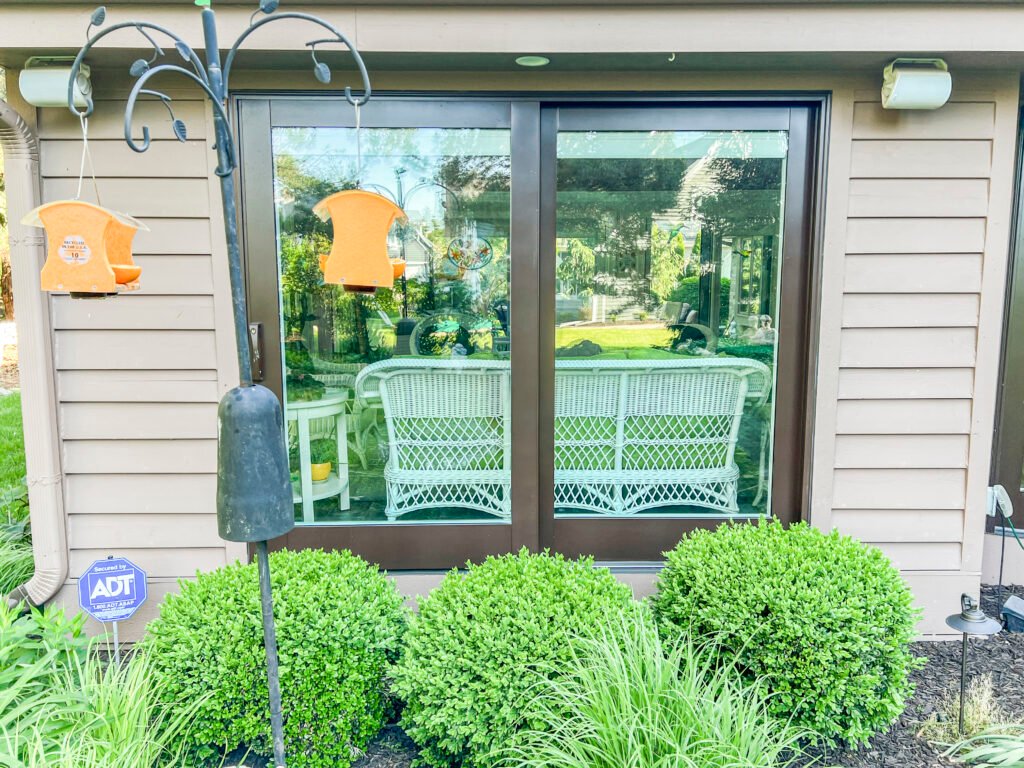 Siding Project - T&J
Want this priced for your siding project?
John walks your space, measures it, and leaves a written itemized estimate. No cost, no obligation, no sales script.
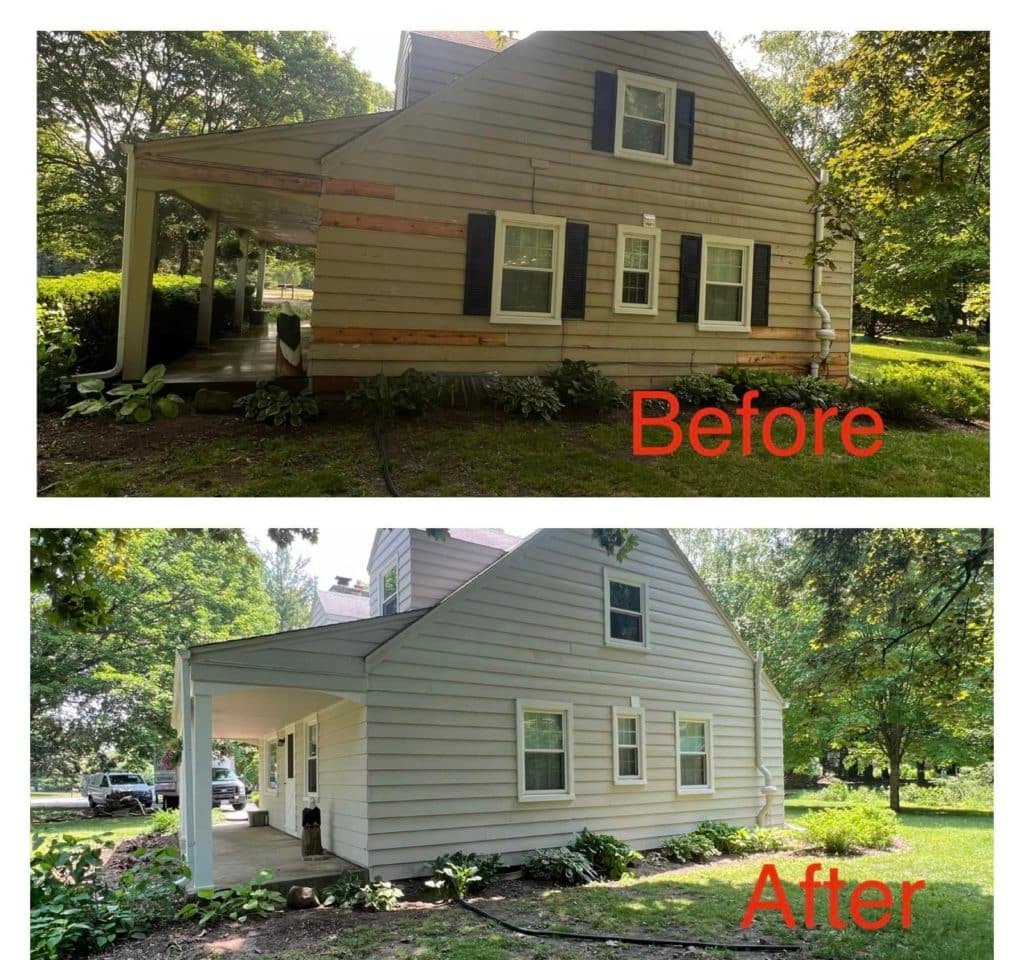
We resided a ranch off Cottonwood Ave in Hartland last fall where the homeowner's original plan was to install over the existing siding to save money. Telli walked the exterior first and found soft spots near two window headers, a sign water had been getting behind the old siding for years. We talked the homeowner through a full tear-off instead, and once the old siding came off we found rotted sheathing behind one corner that needed replacing before any new house wrap could go on. They ended up choosing a mid-grade insulated vinyl at roughly $3.60/sqft, landing near the middle of the local $3-$4/sqft band, and the extra sheathing repair added a few hundred dollars to the job, a fraction of what a future wall repair would have cost if that rot had sat sealed under new siding for another decade.
On a similarly sized 1,282 sqft Hartland home, total installed cost (material, labor, supplies, and equipment combined) runs $3,864-$5,268. Materials alone for that size job land at $2,378-$3,592, and labor for roughly 30.4 hours of install time runs $997-$1,134. On a slightly smaller 1,200 sqft job, materials and supplies alone run $436-$472.
| Material | Installed cost/sqft | Notes |
|---|---|---|
| Vinyl (mid-grade) | $2.90-$4.20 | Most common choice in Hartland |
| Vinyl (full range) | $2-$7 | Thickness, insulation, texture drive the spread |
| Fiber cement | ~$4.45 | Longer lifespan, higher upfront cost |
| Wood | $4-$10 | Premium look, more maintenance |
| Insulated/steel/premium | $5-$7 | Best performance, highest entry cost |
If two vinyl quotes are $1,500 apart on the same house, ask for the panel thickness spec sheet. Thin-gauge panels save money now but oil-can (ripple visibly) in summer heat, which is a callback you'll be making in year two.
What Drives Your Quote Up or Down
A handful of concrete factors decide whether your quote lands near the $6,000 floor or the $14,000+ ceiling. Home size is the obvious one: more square footage means more material and more labor hours. Size isn't the whole story, though. Story count matters just as much, since a two-story home needs ladders, scaffolding, or lift rental that a single-story ranch never requires.
Tear-off versus install-over changes the number too. Removing and disposing of old siding costs more upfront than installing new panels directly over the existing layer, but it's the only way to inspect what's underneath, as our Cottonwood Ave job showed. Trim detail is another lever. A house with lots of window and door trim, corner boards, or fascia detail takes longer to wrap correctly than a plain rectangular box.
House shape plays a real role here too. A 1960s Hartland split-level with a simple gable roof installs faster and cheaper than a home with dormers, bump-outs, or a wraparound porch, because each corner, valley, and transition adds cutting and flashing time. Material grade, covered above, is the other major swing factor. And if you're upgrading house wrap or adding insulated backing at the same time, expect that to add cost. It's usually worth doing while the walls are already exposed, since opening them back up later costs more than doing it once.
A quote that seems oddly low for a two-story home with multiple dormers is worth a second look. That combination almost always needs more labor hours than a simple ranch, so a bargain price usually means something's been left out of scope.
What a Complete Siding Quote Should Include
A complete siding quote covers six line items. Check any bid against this list before you compare the bottom-line price:
- Full tear-off and disposal of the old siding
- House wrap or moisture barrier replacement
- Corner posts and J-channel trim
- Flashing around every window and door
- Permit pulling with inspection scheduling
- Warranty terms, materials and labor listed separately
If a bid is missing more than one of these, it isn't a lower price so much as a smaller job wearing the same dollar figure.
The house wrap gap
House wrap (a moisture barrier installed over the sheathing, under the siding, that lets water vapor escape while blocking liquid water from getting in) is the piece that gets skipped most often on lowball bids, because it's invisible once the new siding goes up. Skipping it, or reusing old, torn wrap from decades ago, saves a contractor a few hundred dollars in material and labor. It also sets the house up for trapped moisture behind the siding, which rots sheathing you won't see until a wall starts feeling soft, exactly what we found on Cottonwood Ave.
The install-over shortcut
Installing new siding directly over old siding, rather than tearing off, looks cheaper on the estimate because there's no dumpster fee and no tear-off labor. But it means nobody ever looks at the sheathing or house wrap underneath, so any hidden rot or moisture damage stays hidden, sealed under two layers of siding instead of one.
The permit line item
Most Waukesha County municipalities, including the Village of Hartland's building inspection department, require a permit for full siding replacement (more on this below). A legitimate contractor builds that fee into the quote rather than surprising you with it after signing. When we walk a Hartland homeowner through their quote before they sign anything, we go through each of these line items specifically so nothing gets discovered mid-project. That's the whole point of a stress-free quote process: catch the scope gaps on paper, not on a change order three weeks in. You can see the full breakdown of what's covered under our siding replacement services in Waukesha County, or look specifically at siding replacement in Hartland for what a local job typically involves. For what you can reasonably tackle yourself before calling in a crew, our page on what Wisconsin homeowners can safely DIY is worth a look too.
Questions to Ask Every Siding Contractor You're Comparing
Six questions separate a real apples-to-apples comparison from a guessing game, and you can ask every one of them on your next contractor call.
Is tear-off and disposal included, or are you installing over my existing siding?
This single answer can explain a $2,000-$3,000 gap between two bids on the same house.
What's included in the house wrap or moisture barrier line?
Ask if it's being replaced entirely or patched, and what brand or product they use.
Are you pulling a permit, and who's responsible for scheduling the inspection?
If the answer is "you don't need one" or "that's on you," get a second opinion.
What's the warranty on materials versus labor, and who backs it if the company isn't around in 10 years?
Manufacturer warranties on the siding itself are separate from a contractor's labor warranty. Ask both.
Are you licensed and insured to do this work in Wisconsin? Can I see proof?
A legitimate contractor hands this over without hesitation.
What's your realistic start date and how many working days will the job take?
This surfaces whether they're being straight with you about scheduling.
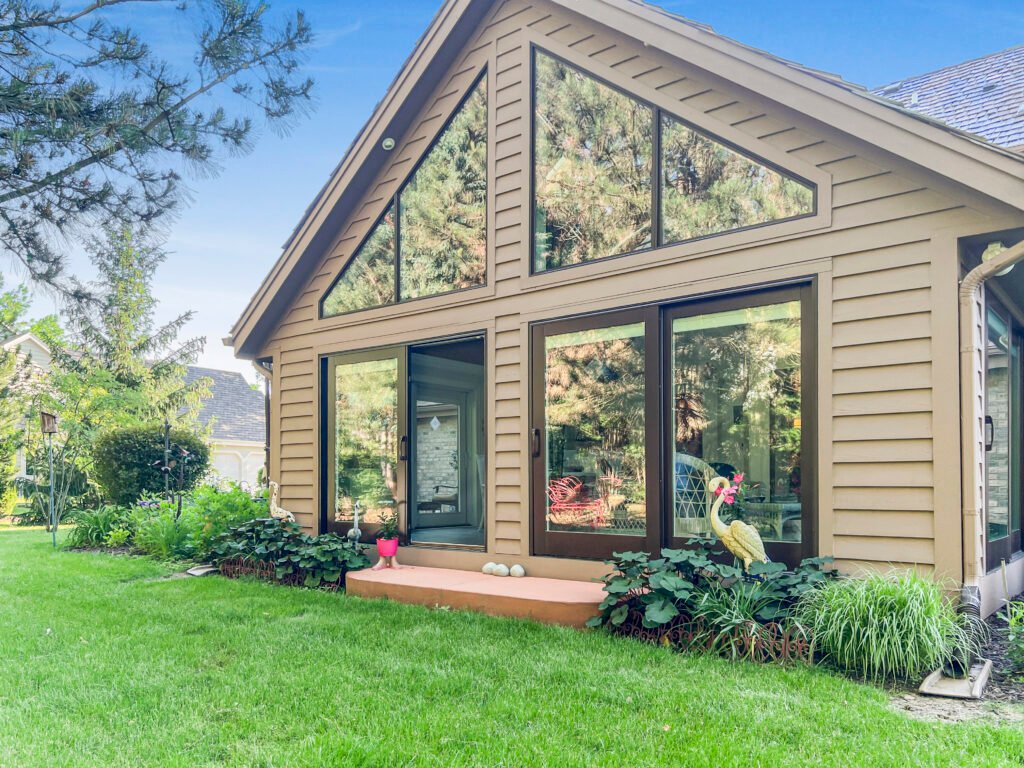 Siding Project - T&J
Ask specifically whether the quoted price includes the permit fee or lists it as a separate line item. Either is fine, but it should be written down, not verbal.
Run these same six questions past every bid you collect. The contractor who answers clearly and specifically, without dodging, is usually the one whose number you can trust.
Permits and Timeline for Siding Replacement in Waukesha County
Most full siding replacement jobs in Waukesha County require a building permit, because re-siding is exterior weatherproofing work tied directly to the building envelope. Permit applications and inspections in Hartland run through the Village's building inspection department, and neighboring Delafield and Pewaukee follow the same general requirement. Inspectors check that house wrap and flashing went in correctly before the siding goes back on, which is a big part of why tear-off matters. Exterior work that alters the building envelope generally falls under Wisconsin's Uniform Dwelling Code, which municipalities enforce through their local permit process, according to the Wisconsin Department of Safety and Professional Services. A legitimate contractor includes permit pulling as part of the quoted price, not as an add-on that shows up later. For more detail on how local permitting works, our page on Wisconsin building permit requirements covers the process. It's written primarily around roofing, but the permitting logic for exterior envelope work runs similar for siding.
Once permits are in place and materials are on site, a typical Hartland-area home in the 1,200-1,500 sqft range takes roughly 3-7 working days to complete, weather permitting. Rain and extreme cold both pause siding work, since panels need to be installed within their manufacturer's temperature tolerance to lock in properly.
Lead time matters more than most homeowners plan for. Contractors are commonly booking siding jobs 4-8 weeks out depending on the season, so if you're gathering quotes now, build that window into your calendar rather than assuming a crew can start next week. Spring and fall book up fastest since the weather cooperates best for install.
Why Bids for the Same House Can Vary by Thousands
A $4,000-$5,000 spread between two bids on the identical house almost always traces back to scope, not just markup. The lower bid is usually missing one of the items covered above: no tear-off, no house wrap replacement, thinner trim detail, or no permit fee built in. Sometimes it's simply a thinner-gauge material quoted at a lower per-square-foot rate that looks like a deal until you compare specs side by side.
Every quote we write includes project management, change-order discipline, and warranty backing, because that's what keeps a job from turning into a surprise. When a crew discovers rotted sheathing mid-tear-off that a cheaper bid never planned to inspect (like we found on Cottonwood Ave), that discovery becomes a change order on someone else's job. On ours, it's already accounted for in how we scope the work up front. The cheap bid tends to catch up in cost once those gaps surface, and by then you're paying for the fix on top of the original price, not instead of it.
This isn't about knocking a competitor's number. It's honest math: a bid missing tear-off, house wrap, or permit costs was never actually competing on the same scope to begin with. Ask the six questions above and you'll know within one phone call whether you're comparing real numbers or comparing a shortcut. Homeowners who compare at least three itemized bids side by side, according to the National Association of the Remodeling Industry, are far less likely to face unplanned costs mid-project.
Get a Clear, Itemized Siding Quote in Hartland
Comparing quotes only works if every bid is itemized the same way, and you now have the checklist to make that happen on your next call. T&J Remodeling is a father-son operation: Telli, a master carpenter, runs the work on-site, and John handles every project's communication personally from first quote through final walkthrough, so nothing gets lost in translation between the bid and the build. We offer a free in-home consultation with a transparent, itemized quote, plus financing options for homeowners who'd rather spread the cost over monthly payments than pay the full amount upfront, so you know exactly what your Hartland siding job includes and how you can pay for it before you sign anything.
Ready for the full breakdown? Call (262) 352-9525 or book a free Waukesha County consultation and we'll walk your home in person. You can also learn more about T&J Remodeling and how we run every project from start to finish.
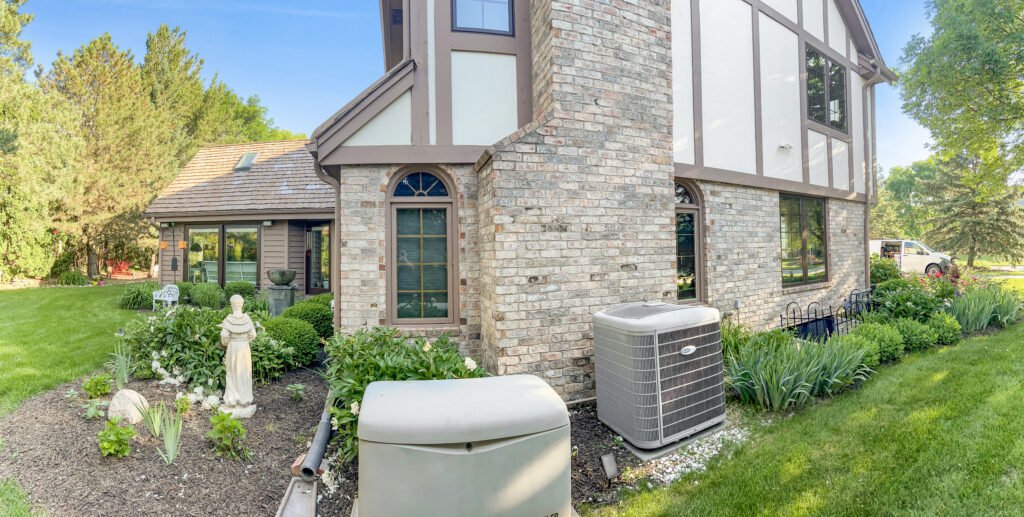 Siding Project - T&J
For a firm number on your own project, free in-home estimate.
Frequently asked questions
What is the average cost to replace siding on a house in Hartland, WI?
Most Hartland homes run $9,000-$10,000 for a full siding replacement, inside a broader $6,000-$14,000 range depending on material and home size. The range exists mainly because of material grade and home complexity, not just square footage. A 1,200 sqft ranch and a 2,400 sqft two-story with dormers require very different labor hours even with the identical siding product, since story count, trim detail, and roofline shape all add or subtract install time.
Is vinyl or fiber cement siding a better value in Wisconsin?
Vinyl siding installs for roughly $2.90-$4.20/sqft and is the most common choice because it balances upfront cost with Wisconsin's freeze-thaw climate reasonably well. Fiber cement runs closer to $4.45/sqft installed and holds up considerably longer, often decades, with better fire and impact resistance, but it costs more upfront and needs correct fastening technique to avoid cracking in cold weather. The right choice depends on how long you plan to stay in the house and your tolerance for the higher initial spend.
Why do siding quotes vary so much between contractors?
The dollar swing almost always traces back to what's included, not just markup. A bid that skips tear-off, house wrap replacement, or permit pulling looks cheaper on paper, but it leaves gaps that surface later as change orders or moisture problems. Comparing bids fairly means checking each one against the same scope checklist (tear-off, house wrap, trim, permits, warranty) before comparing the bottom-line number at all.
Do I need a permit to replace siding in Waukesha County?
Yes, most municipalities in Waukesha County, including Hartland, Delafield, and Pewaukee, require a building permit for full siding replacement, since it's exterior weatherproofing work tied to the building envelope and inspectors check that house wrap and flashing went in correctly. A legitimate contractor includes permit pulling in their quoted price. If a bid doesn't mention it, ask directly whether that responsibility falls on you as the homeowner.
How long does a siding replacement project take?
A typical Hartland-area home in the 1,200-1,500 sqft range takes about 3-7 working days once materials are on site, though weather can push that out since siding installation pauses during heavy rain or extreme cold. Homeowners should also plan for a 4-8 week lead time before work even starts, which is typical scheduling for contractors booking siding jobs by season.
Can a contractor install new siding over my old siding to save money?
It's possible, and it does lower the upfront quote, but skipping tear-off means the crew can't inspect or replace the sheathing and house wrap underneath, which is often exactly where moisture damage is hiding. That shortcut trades a lower price today for the risk of trapped water damage discovered years later, which is why a full tear-off is usually worth the extra cost, especially on an older home.
Does T&J offer financing for siding replacement?
We walk through financing options as part of the free in-home consultation, so you can see what a monthly payment looks like alongside the full cash price before deciding which makes sense for your budget. Ask about it directly when you call, since terms depend on the size of the project and the lender we route it through.