 Bathroom project - T&J
If you're comparing contractors right now, this guide covers what your project should cost, which permits you'll need, and how to vet a contractor before you sign anything.
A 100 sq ft space is the benchmark for a reason: it's a full master bath or a generous guest bath, not a powder room, not a spa suite. It's large enough that every trade shows up on the invoice, which makes it the clearest lens for understanding where remodeling money actually goes. Run your own numbers with our bathroom cost calculator before your first contractor meeting.
Cost Breakdown: Where the Money Actually Goes
Every line item below represents a real trade with real labor and material costs. When you're comparing bids, check each category, a quote that skips a line isn't cheaper, it's incomplete.
| Line Item | Typical Range | Notes |
|---|---|---|
| Demo & haul-away | $1,000-$2,500 | Often omitted from low-ball quotes |
| Tile labor + waterproofing | $3,000-$7,000 | Ceramic baseline; stone adds labor |
| Plumbing, fixture swap | $2,000-$5,000 | Same-location swap only |
| Plumbing, moving rough-in | Add $2,000-$5,000 | Cutting floor system or concrete |
| Electrical (GFCI, fan, lighting) | $1,200-$2,500 | Per Wisconsin SPS 316 requirements |
| Permits & inspections | $100-$1,000 | Municipality-dependent |
| Vanity, mirror, storage | Varies by tier | Stock vs. semi-custom vs. custom |
| Shower/tub (tile-in custom) | Varies by spec | Frameless glass enclosure adds cost |
| Drywall, paint, trim | Varies by scope | Moisture-resistant board in wet areas |
Demo and Haul-Away
Stripping a 100 sq ft bathroom to the studs, tile, drywall, fixtures, subfloor if needed, runs $1,000-$2,500 in labor. Dumpster or haul-away fees are separate and frequently omitted from low-ball quotes. Ask every contractor: is debris removal a line item in your bid?
Tile, Floor and Shower/Tub Surround
Ceramic tile (the budget workhorse) costs significantly less per square foot than porcelain or natural stone. Professional tiling and waterproofing labor runs $3,000-$7,000 for a bathroom this size. A straight-lay ceramic floor is at the low end; large-format porcelain with a herringbone shower surround requires more cuts, more waste, and more labor hours.
Pro Tip: Ask your contractor what tile allowance is baked into the quote, typically expressed as a dollar-per-square-foot material budget. If you pick tile above that allowance, the difference comes back as a change order. Know the number before you fall in love with a slab at the tile showroom.
Plumbing, Fixture Swap vs. Moving Rough-In
Swapping a toilet, vanity faucet, and shower valve in their existing locations is a half-day job. Moving a drain line, relocating a toilet, shifting a shower pan, or adding a second sink, can add $2,000-$5,000 in rough-in labor alone. That single decision is the biggest cost lever in any bathroom remodel.
Electrical, GFCI, Exhaust Fan, Lighting
Wisconsin's electrical code (SPS 316, which adopts the National Electrical Code) requires GFCI protection, ground-fault circuit interrupter outlets that cut power instantly if they detect a ground fault, within 6 feet of any water source. An exhaust fan upgrade and new vanity or recessed lighting typically run $1,200-$2,500 in labor.
Watch Out: Some low-ball quotes list "electrical" without specifying whether the exhaust fan is replaced or just reconnected. An undersized exhaust fan in a 100 sq ft bathroom causes moisture buildup, mold, and paint failure within two years. Specify CFM rating in the scope.
Permits and Inspections
Wisconsin permit fees for plumbing, electrical, and construction work run $100-$1,000 depending on municipality and scope. They're not optional if you're moving plumbing or changing electrical circuits, and they protect you at resale.
What Pushes the Price Up, and What Keeps It Down
Four decisions drive most of the cost variance in a 100 sq ft bathroom remodel. Three are yours to control; one isn't.
1. Moving vs. keeping plumbing in place. This is the single biggest variable. Keeping the toilet, shower, and vanity in their existing drain locations saves thousands. The moment you move a drain line, even a few inches, you're cutting into a floor system or concrete slab, and the cost jumps accordingly.
 Bathroom - T&J
Want this priced for your bathroom?
John walks your space, measures it, and leaves a written itemized estimate. No cost, no obligation, no sales script.
2. Tile selection and pattern complexity. Ceramic tile in a standard straight lay is the budget baseline. Porcelain adds cost. Natural stone adds more, plus requires sealing and more careful installation. Pattern complexity, herringbone, basketweave, large-format with tight grout joints, increases labor hours and tile waste across 100 sq ft of floor and a full shower surround.
3. Fixture grade. Builder-grade fixtures are functional and affordable. Mid-grade fixtures from brands like Kohler or Moen hit a quality-to-cost sweet spot. Luxury fixtures, Brizo, Waterworks, are a different price tier entirely. The fixture spec in your quote should match what you actually want in the finished bathroom.
4. Structural surprises after demo. This one isn't in your control. In a 1970s Menomonee Falls colonial or a 1980s Brookfield ranch with a bathroom that's never been fully gutted, there's a real chance of finding subfloor rot, mold behind the shower wall, or deteriorated backer board once tile comes off.
In 2024, we quoted a Pewaukee bathroom at $19,000. The homeowner's initial budget was $18,500. After demo, we found the subfloor under the toilet had been slowly rotting from an undetected wax ring leak, sistering new joists and replacing the subfloor section added $2,800 to the final bill, bringing the total to $21,800. The learning point: always budget a 10-20% contingency for homes built before 1990. Water damage behind tile is invisible until the wall comes down.
Labor accounts for roughly 50% of a typical bathroom renovation budget, which means the cheapest labor quote often carries the most schedule and quality risk.
What a Complete Scope of Work Looks Like (vs. a Low-Ball Quote)
The construction industry has no standardized quote format. That's why two bids at the same price can represent completely different projects, and why the homeowner who goes with the lowest number sometimes ends up paying more than the highest bid by the time the job is done.
A complete bid for a 100 sq ft bathroom remodel should include, in writing:
- Every trade listed explicitly, demo, plumbing, electrical, tile, carpentry, painting.
- Material allowances called out, tile at $X/sqft, vanity at $X budget. Not buried in a lump sum.
- Permit pulling, included or explicitly excluded with a stated reason.
- Debris removal, demo generates a full dumpster of material. Who hauls it?
- Subcontractor names or "owner-performs", who is actually doing the plumbing, and are they licensed?
- Waterproofing membrane, a product like Schluter Kerdi or RedGard behind shower tile is non-negotiable. It's also one of the first things cut from a low-ball quote.
- Backer board specification, cement board in wet areas, not standard drywall.
- Warranty terms, what's covered, for how long, and who you call.
- Payment schedule, milestone-based, not front-loaded.
Watch Out: The most commonly omitted line items are permit fees, haul-away, waterproofing membrane, backer board, exhaust fan upgrade, finish carpentry, and touch-up paint. None are optional, they get added back as change orders after you've signed.
The cheapest quote often has the shortest scope, not the best price. A $14,000 bid that excludes permits, waterproofing, and haul-away will cost more than a $17,000 bid that includes all three, you just won't know it until you're mid-project. Understanding the most common bathroom remodel mistakes that blow budgets starts with recognizing an incomplete scope before you sign.
John walks through scope line-by-line with every homeowner before a contract is signed, not to upsell, but because mid-project surprises are worse for everyone.
5 Questions to Ask Every Contractor Before You Sign
These questions surface the gaps between a complete bid and a short-scope low-ball. Ask all five to every contractor you're considering.
1. Is the permit included, and who pulls it? In Wisconsin, the contractor of record pulls the permit, and doing so means they're legally responsible for the work meeting code. If a bid excludes the permit, ask why. A contractor who asks you to pull your own permit is shifting liability onto you. Wisconsin's Uniform Dwelling Code (UDC) requires permits for plumbing moves, electrical circuit changes, and structural work. John holds a credited contractor license in the state of Wisconsin, that credential means he's accountable to the state, not just to you.
2. What's your tile allowance, and what happens if I pick something above it? If the quote includes a $3/sqft tile allowance and you pick $8/sqft tile, the difference becomes a change order. Know the allowance before you start shopping. A contractor who can't name the allowance hasn't priced the job completely.
3. Who is on-site daily, you, a foreman, or a sub? This question reveals project management structure. A crew that shows up without a consistent point of contact produces inconsistent work and slow decisions. Ask specifically: if I have a question on a Tuesday afternoon, who do I call and how fast do I get an answer?
4. What's your change-order process if demo reveals rot or mold? Hidden water damage is the most common budget surprise in bathrooms over 20 years old. A contractor with a clear change-order process, written, signed, priced before work continues, protects you from open-ended cost creep. A contractor who says "we'll figure it out" is telling you they'll figure out how to charge you later.
5. What does your warranty cover and for how long? Tile delamination, grout cracking, and fixture leaks are the most common callbacks. Ask specifically: does the warranty cover tile and grout, or just fixtures? Does it cover labor to fix, or just materials? A one-year labor warranty is the floor; longer is better. Get it in writing.
Pro Tip: In our experience remodeling bathrooms across Waukesha County, from Brookfield and New Berlin to Wauwatosa and Muskego, the contractors who answer these five questions clearly and without hesitation are almost always the ones who deliver on time and on budget. Vague answers to specific questions are a red flag, not a personality quirk.
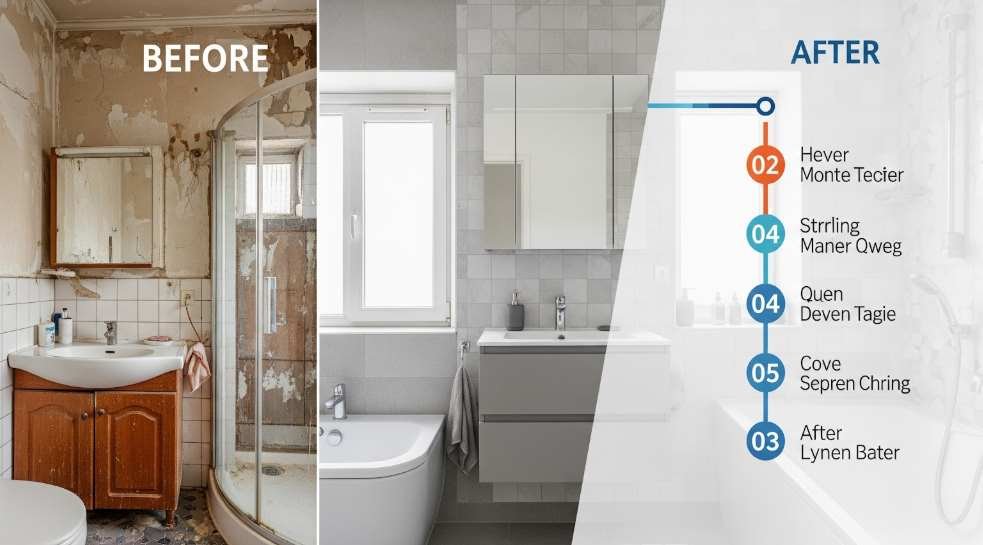
How Long Does a 100 Sq Ft Bathroom Remodel Take?
A full gut-and-redo at 100 sq ft typically runs 2-4 weeks from demo to final walk-through, assuming no hidden structural damage.
| Phase | Typical Duration |
|---|---|
| Demo & haul-away | 1-2 days |
| Rough-in plumbing & electrical | 2-3 days |
| Rough-in inspections | Variable, build in buffer |
| Tile (floor + shower surround) | 3-5 days |
| Tile mortar + grout cure time | 24-72 hours minimum |
| Fixtures, vanity, finish work | 2-3 days |
| Final inspection | Variable |
 Bathroom - T&J
Wisconsin permit inspections add calendar time, rough-in plumbing and electrical must pass inspection before walls close. That's not a delay; it's the protection you're paying for. A contractor who promises a 5-day full bathroom remodel is either skipping inspections, skipping cure time, or both.
Our typical booking lead time is 4-8 weeks depending on season, spring and fall book fastest in Waukesha County. For a deeper look at what affects the schedule, see how long a full bathroom remodel typically takes.
Permits for a Bathroom Remodel in Wisconsin: What You Need to Know
Code Note: Wisconsin's Uniform Dwelling Code (UDC), administered by the Wisconsin DSPS, requires permits when you move or add plumbing, change electrical circuits, or make structural changes. Wisconsin Plumbing Code SPS 382 governs drain, waste, and vent work, any relocation of a drain line requires an inspection before the floor closes. A cosmetic swap, new vanity in the same location, new tile over existing substrate, typically doesn't require a permit.
Three reasons you don't skip a required permit:
Insurance.
If unpermitted plumbing or electrical work causes a water leak or fire, your homeowner's insurance carrier can deny the claim on the grounds that the work wasn't inspected and approved.
Resale.
Wisconsin requires disclosure of known unpermitted work at sale. Buyers' inspectors find it. It becomes a negotiating chip against you at closing.
Retroactive inspection.
A municipality can require you to open finished walls to inspect unpermitted work. The cost of reopening tile and drywall is entirely yours.
In Wauwatosa and New Berlin, plumbing permit fees for a standard bathroom rough-in typically run $200-$350; in Brookfield and Elm Grove, expect a similar range. Permit fees vary by municipality, your contractor should know the local schedule before quoting. Read more about whether your bathroom remodel needs a permit in Wisconsin before you decide.