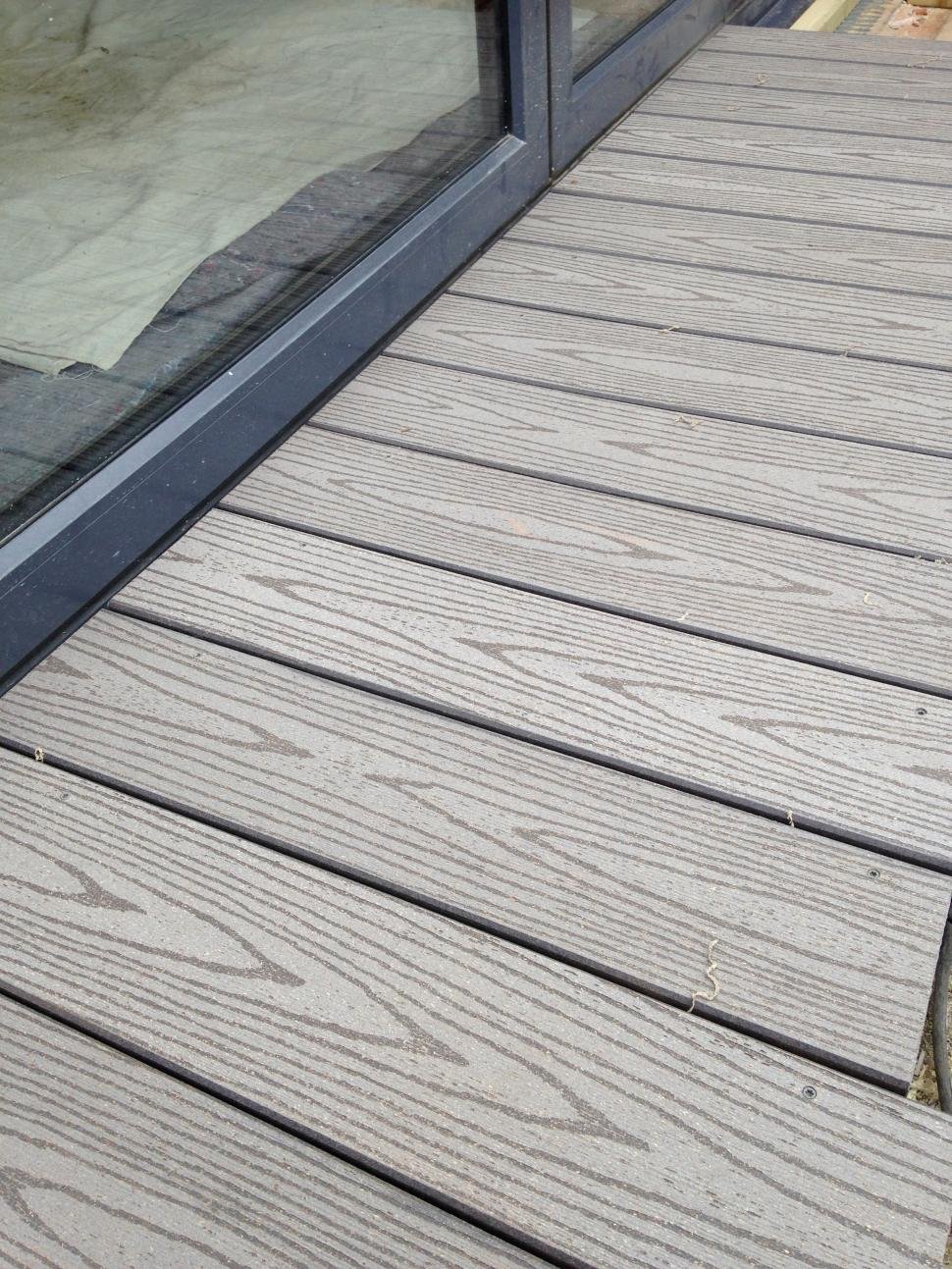
 Deck project - T&J
Deck Replacement Cost in Wisconsin
| Scope | 300 sq ft deck | Per sq ft |
|---|---|---|
| Resurface only: new boards and rail on sound framing | $9,000-$16,500 | $30-$55 |
| Rebuild on existing footings | $13,500-$21,000 | $45-$70 |
| Full tear-out and rebuild, new footings | $19,500-$28,500 | $65-$95 |
| Composite or PVC upgrade, full rebuild | $24,000-$36,000 | $80-$120 |
Demolition and disposal alone typically runs $1,200 to $3,000 depending on size and access, and it belongs as a visible line rather than folded into a total.
These ranges reflect what we quote across Waukesha County and the Milwaukee metro.
Can You Keep the Frame and Footings?
This is the question that decides your price, and it cannot be answered from a photo.
Footings. Wisconsin requires footings below frost depth, commonly 48 inches. Many decks built decades ago sit on shallow footings, on precast blocks, or on posts set directly in soil. Those move with every freeze-thaw cycle, and a deck that has visibly shifted or that bounces underfoot is usually telling you the footings are the problem. Reusing bad footings under a new surface guarantees the new deck fails the same way.
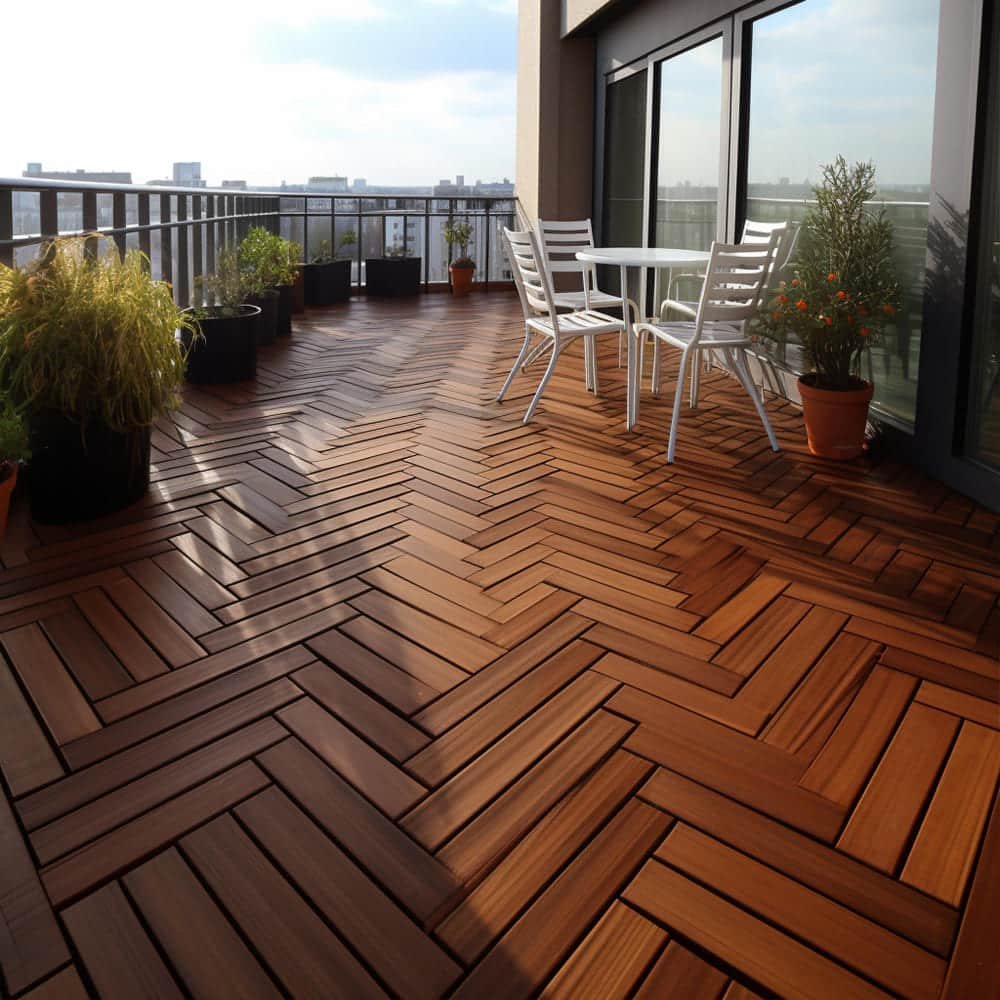 Deck - T&J
Want this priced for your deck?
John walks your space, measures it, and leaves a written itemized estimate. No cost, no obligation, no sales script.
Ledger board. Where the deck attaches to the house is the single most common failure point and the one that causes injuries. Older decks were frequently nailed rather than bolted, and often installed without flashing, so water has been running into the rim joist for years. Any replacement should include exposing, inspecting and correctly flashing the ledger.
Framing. Joists and beams can often be reused if they are sound, but pressure-treated lumber at ground level in our climate has a finite life. Soft spots, splitting around fasteners and rot at beam ends are all disqualifying.
The honest sequence is that a contractor cannot commit to reusing the structure until the decking comes off. A good quote prices the resurface and states what the rebuild would cost if the frame proves unsound, so you are not renegotiating mid-project.
Decking Material and What It Costs
Pressure-treated pine, $3 to $7 per square foot in material. Cheapest and the standard for framing. It needs cleaning and re-sealing every couple of years in Wisconsin, and neglected boards cup and split.
Cedar, $6 to $12. Attractive and naturally more rot-resistant, still needs maintenance, and it weathers grey if you let it.
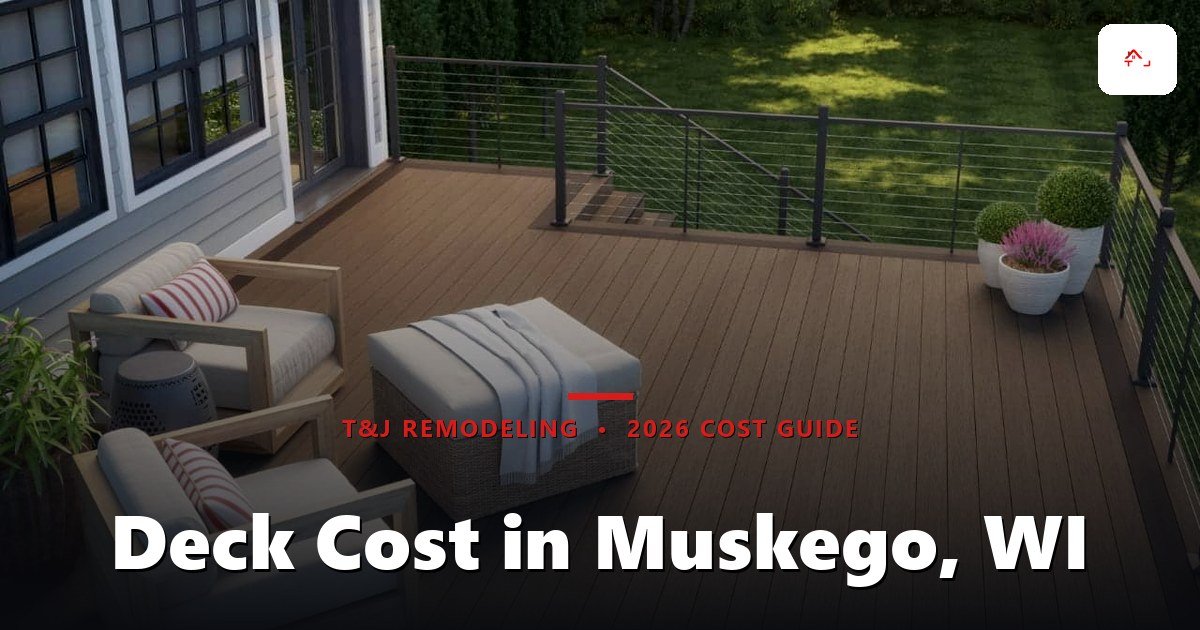
Composite, $9 to $18. The most common upgrade here. Higher up-front cost, essentially no maintenance beyond washing, and it does not splinter. Modern boards handle our temperature swings well. This is what most clients choose when they are replacing rather than repairing.
PVC, $12 to $22. Lightest, most stain-resistant and most expensive. Worth considering around a pool or under heavy tree cover.
Composite and PVC change the maintenance calculation rather than the structural one. The frame beneath is still pressure-treated lumber and still has a service life.
Where Money Goes Beyond the Boards
Railing. Often a quarter of the visible cost. Aluminium and cable systems cost considerably more than wood and last far longer.
Stairs. Priced per tread and labour-intensive. A deck with two stair runs costs meaningfully more than one with a single run.
Height. Anything more than a couple of feet above grade brings guard requirements and more structure. A second-storey deck is a different project.
Permits. Deck replacement generally requires a permit in Waukesha County municipalities, particularly where footings or structure change.
Access. If a machine cannot reach the back yard, demolition and excavation become hand work, and that is time.
Permits
Replacing decking boards on a sound existing structure often does not require a permit, since it is maintenance rather than structural work. Rebuilding the structure, changing the footprint, changing height, or installing new footings does, under the Wisconsin Uniform Dwelling Code as administered by your municipality.
Ledger attachment and guard height are what inspectors look at hardest, because those are the failure modes that hurt people. That scrutiny is a feature, not an obstacle. Our guide to Wisconsin home addition permits covers the general sequence.
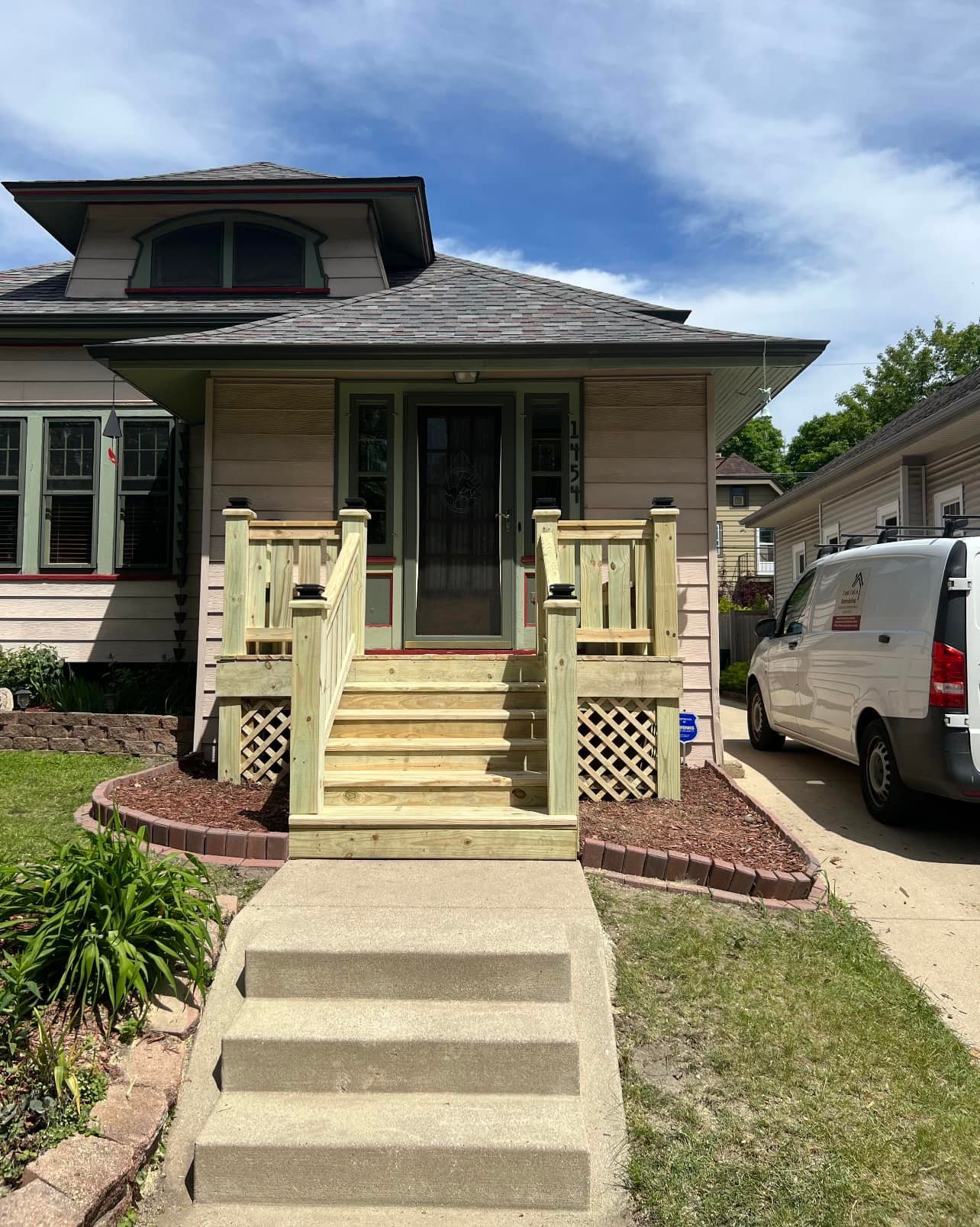 Deck - T&J
How to Read a Deck Replacement Quote
Does it state what happens if the frame is unsound? The most likely change order on the job. Get the rebuild rate in writing.
Is the ledger addressed explicitly? Inspection, flashing and correct fasteners should appear.
Are footings named? Reused, added, or all new.
Is demolition and disposal itemised?
Is railing specified by material? "Railing included" spans a very wide price range.
Are stairs counted? By run and tread.
Is the substructure being replaced or reused, in writing?
Timeline
Resurfacing a sound deck typically runs three to six days. A rebuild on existing footings runs one to two weeks. A full tear-out with new footings runs two to three weeks, longer if inspections sit between phases.
Footings cannot be dug into frozen ground, so full rebuilds are a spring-to-autumn project in Wisconsin. Resurfacing can be done in a wider window. Demand peaks in May and June, so booking over the winter gets you a better slot and often a better price.
Replace, Resurface, or Rebuild?
Resurface when the frame and footings are sound and only the walking surface and railing are tired. It is the cheapest route by a wide margin and it is genuinely the right answer more often than homeowners expect.
Rebuild on existing footings when the framing has aged out but the footings are at proper depth and have not moved.
 Deck - T&J
Full replacement when the deck moves, bounces, sits on shallow or block footings, or when the ledger has been leaking into the house. At that point you are not repairing a deck, you are removing a liability.
If you are weighing a deck against enclosing the space instead, our screened porch cost guide covers that comparison, and many Wisconsin households get more actual use from a smaller covered space than a larger open one.
Get a Deck Replacement Quote in Waukesha County
Whether you need a resurface or a full replacement comes down to the footings, the ledger and the condition of the framing. Those take about twenty minutes to assess properly and cannot be judged from the surface.
John will look under the deck, tell you plainly whether the structure has life left in it, and leave a written itemized estimate that prices the likely outcomes rather than presenting one and revising it later. We are a licensed and insured Wisconsin remodeling contractor serving Waukesha County and the Milwaukee metro since 2016.
Frequently asked questions
How much does it cost to replace a deck in Wisconsin?
Between $45 and $95 per square foot installed in 2026, so a typical 300 square foot deck runs $13,500 to $28,500. Rebuilding on sound existing footings sits at the lower end and a full tear-out with new frost-depth footings at the top. Resurfacing alone, where the frame is sound and only boards and railing are replaced, drops to $30 to $55 per square foot.
Can I reuse my existing deck footings?
Only if they are below frost depth, commonly 48 inches in Wisconsin, and have not moved. Many older decks sit on shallow footings, precast blocks or posts set directly in soil, all of which shift with freeze-thaw cycling. A deck that has visibly moved or bounces underfoot is usually reporting a footing problem, and building a new surface on bad footings guarantees the new deck fails the same way.
Is composite decking worth the extra cost in Wisconsin?
For most people replacing rather than repairing, yes. Composite costs $9 to $18 per square foot in material against $3 to $7 for pressure-treated pine, but it needs no sealing, does not splinter and handles our temperature swings well. Pressure-treated boards need cleaning and re-sealing every couple of years here, and neglected boards cup and split. Note the frame underneath is still treated lumber either way.
Do I need a permit to replace a deck in Wisconsin?
Usually yes if the structure changes, footings are installed, or the footprint or height changes, all of which fall under the Wisconsin Uniform Dwelling Code as administered by your municipality. Replacing only the decking boards on a sound existing structure is often treated as maintenance and may not need one. Inspectors focus hardest on ledger attachment and guard height, since those are the failure modes that injure people.
What is the most commonly missed cost in a deck quote?
What happens when the frame turns out to be unsound once the decking comes off. Nobody can confirm the condition of joists, beams and the ledger until the surface is removed, so an honest quote prices the resurface and states the rebuild rate if the structure fails inspection. Demolition and disposal, typically $1,200 to $3,000, is the second most commonly folded-in item and should be a visible line.
When is the best time to replace a deck in Wisconsin?
Book over the winter for a spring or early summer slot. Footings cannot be dug into frozen ground, so full rebuilds are a spring-to-autumn project, while resurfacing has a wider window. Demand peaks in May and June, which means homeowners who commit in January get better scheduling and often better pricing than those calling once the weather turns.