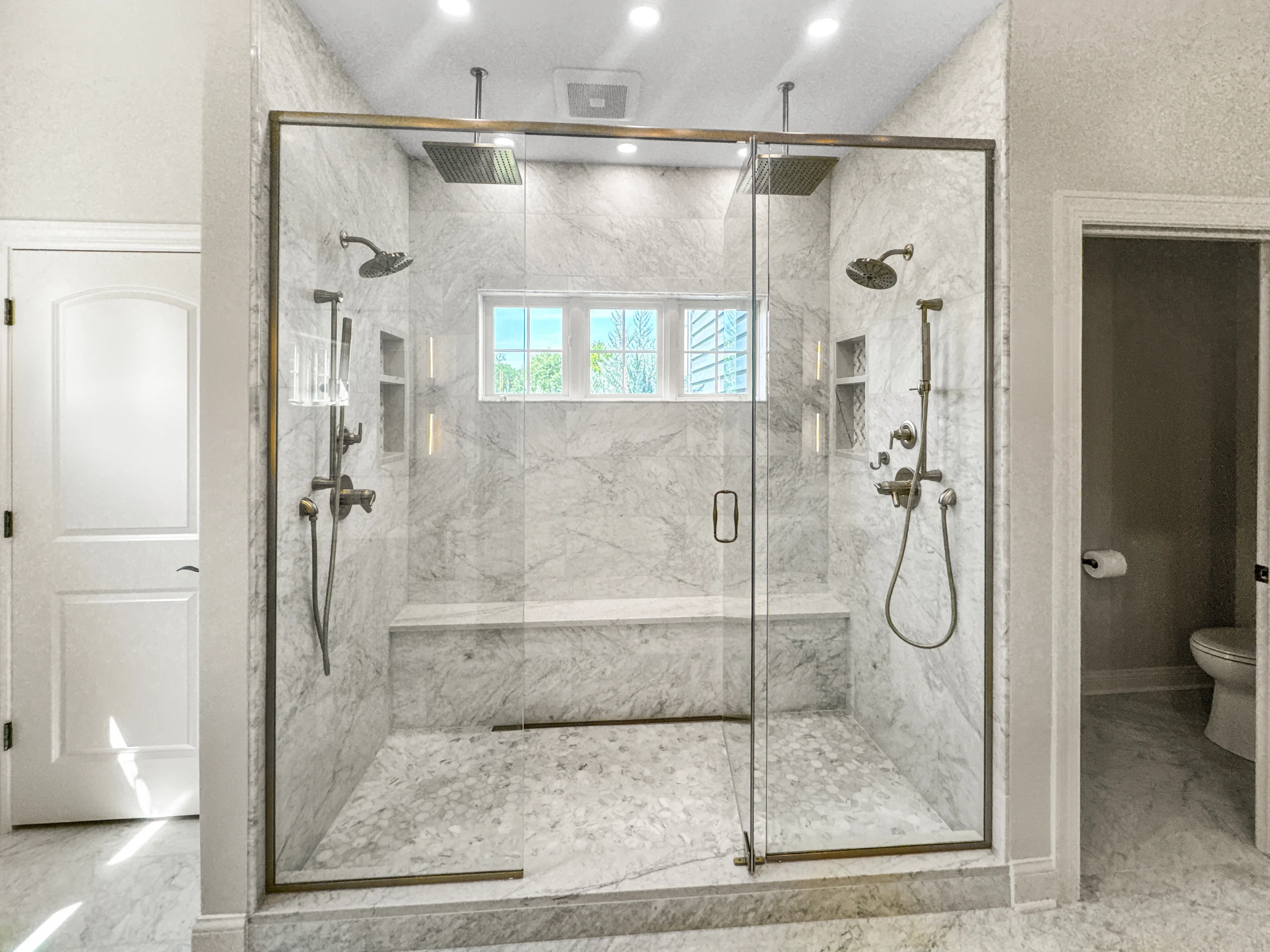
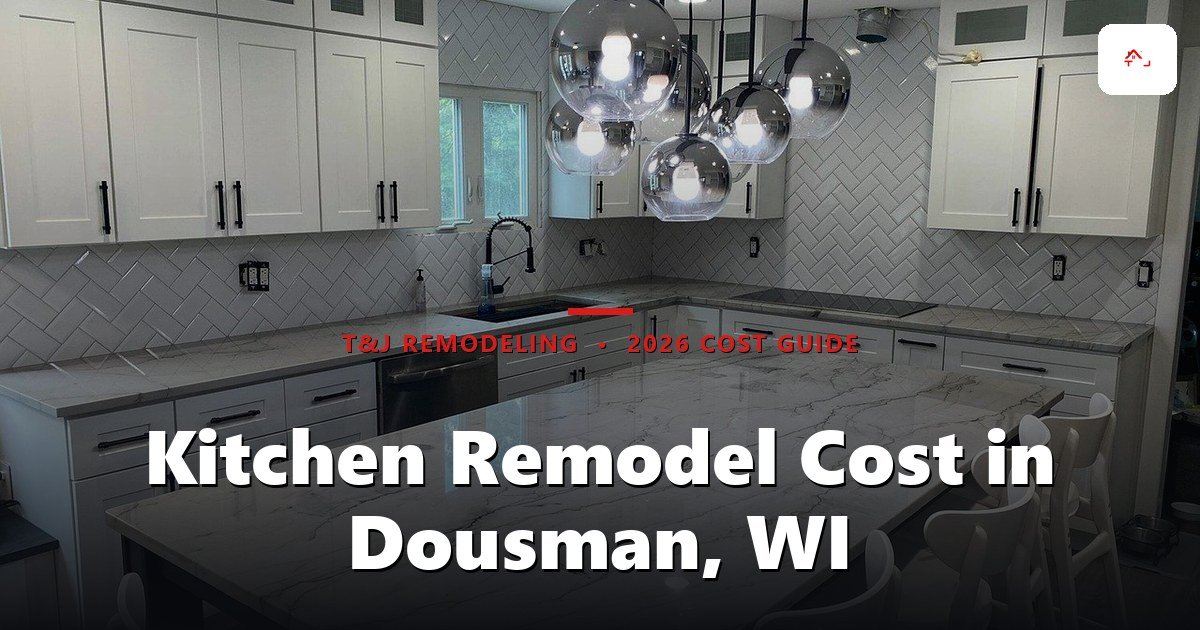
Kitchen project - T&J
Before your first quote call, run a rough number through our kitchen remodel cost estimator so you walk into every conversation knowing your budget range, not guessing at it.
The 5 Non-Negotiables Every Menomonee Falls Homeowner Must Confirm First
Think of these as your pre-screening filter. Any contractor who can't clear all five isn't worth a second conversation.
Wisconsin DSPS DCQ credential, verified online.
Not just claimed. You look it up yourself at dsps.wi.gov.
Active general liability + workers' comp certificate of insurance (COI), in your hands before demo starts.
Not promised by email later.
Permit pulled by the contractor.
The Village of Menomonee Falls requires permits for electrical, plumbing, and structural work. The contractor's name goes on that permit, not yours.
Written, line-item contract with a milestone payment schedule.
"Kitchen remodel, $28,000" is not a contract. It's a handshake with a number attached.
At least two local references from Waukesha County projects completed in the last 12 months.
Not testimonials on their website, actual homeowners you can call.
If you want to see how we handle these on our end, take a look at our remodeling projects in Menomonee Falls for context on what a properly managed local project looks like.
Wisconsin Contractor Licensing: What the Law Actually Requires
Wisconsin requires any contractor performing residential remodeling work valued over $1,000 to hold a Dwelling Contractor Qualifier (DCQ) credential, issued by the Wisconsin Department of Safety and Professional Services (DSPS) under administrative code SPS 305 (the chapter governing one- and two-family dwelling construction and remodeling). This is not a general business license. A contractor can be fully registered as an LLC with the state and still be operating illegally without a DCQ.
To verify: go to dsps.wi.gov, click License Lookup, and search by the contractor's business name or the individual qualifier's name. The result should show an active status. If it's expired, suspended, or simply absent, stop there.
 Kitchen - T&J
Want this priced for your kitchen?
John walks your space, measures it, and leaves a written itemized estimate. No cost, no obligation, no sales script.
A general business license (DBA registration, LLC filing) is not the same as a DCQ credential. Contractors sometimes present one when you ask for the other. If the document doesn't say "Dwelling Contractor Qualifier" and show an active DSPS status, it's not the right credential.
John, T&J's co-founder and project manager, holds the credited contractor credential in Wisconsin, which means when T&J pulls a permit in Menomonee Falls, a licensed qualifier's name is on the line, not a subcontractor's.
Why this matters beyond compliance: if an unlicensed contractor causes structural damage or a worker is injured on your property, your homeowner's insurance carrier has grounds to deny the claim entirely. The DCQ requirement exists precisely to create that accountability chain.
Insurance You Must See Before Anyone Touches Your Kitchen
A COI (Certificate of Insurance) is a one-page document your contractor's insurance agent generates that summarizes active coverage. You need two specific policies confirmed on that certificate before demo starts:
General liability
, the practical floor for a kitchen remodel in Wisconsin is $1,000,000 per occurrence. This covers property damage if a contractor cracks your floor joists or floods a lower level.
Workers' compensation
, required by Wisconsin law for any contractor with employees. If a worker falls off a ladder in your kitchen and there's no workers' comp, you may be liable for their medical costs.
Ask to be named as an additional insured on the general liability policy, not just handed the certificate. An additional insured endorsement means the policy actually covers incidents on your property. A certificate alone just proves the policy exists.
Red flag: any contractor who says "I'll email the COI before we start" and then delays past the demo date. Get it before you sign the contract, full stop.
Menomonee Falls Permits: Who Pulls Them and Why It Matters
The Village of Menomonee Falls Building Inspection Department (reachable at 262-532-4800) issues building permits for any residential work that touches electrical, plumbing, or structural systems. For a kitchen remodel, that covers a wide range of common scope items: adding a circuit for a new range or refrigerator, relocating a sink drain, adding a dishwasher water line, or removing even a non-load-bearing wall (which still triggers a structural review under Wisconsin SPS 305).
In Menomonee Falls, unpermitted electrical or plumbing work discovered during a future home sale can require full remediation before closing, at the seller's expense. The Village inspector's sign-off is what converts the work from a liability into a documented improvement.
The contractor, not the homeowner, should pull every permit. Here's why that matters: when a contractor pulls the permit, their DCQ credential is attached to the inspection record. They're legally accountable for code compliance. If they suggest you pull it yourself "to save money," what they're actually doing is transferring all liability to you if the work fails inspection or causes damage later.
At T&J, permit pulling is part of standard project management, it's not a line-item surprise on the invoice, and it's not something we ask homeowners to handle.
The Contract Checklist: 7 Clauses That Protect You
A kitchen remodel contract should be specific enough that a stranger could read it and know exactly what's being built, with what materials, on what schedule, and for what payment. Here are the seven clauses that matter most:
Line-item scope of work.
Every task listed individually, demo, rough-in electrical, rough-in plumbing, cabinet installation, countertop fabrication and install, tile, flooring, trim. "Kitchen remodel" as the only description is not enforceable.
Milestone-based payment schedule.
A reasonable structure: 10-30% deposit at signing (to cover materials ordering), draws at demo completion / rough-in completion / cabinet installation / substantial completion, and a 5-10% holdback released only after your final walkthrough sign-off. This keeps the contractor's cash flow tied to actual progress.
Written change-order requirement.
A change order (a signed document authorizing any addition to or deletion from the original scope, with a revised price) must be signed by both parties before the additional work begins. Verbal approvals are unenforceable in Wisconsin.
Start and substantial completion dates with a delay clause.
"We'll start in the spring" is not a date. Get a calendar date for mobilization and a target substantial completion date, with language specifying what happens if the contractor misses it without cause.
Materials specification sheet attached.
Brand, model number, and finish for every fixture, appliance, cabinet line, countertop material, and tile. If it's not specified, the contractor can substitute down without technically breaching the contract.
Lien waiver delivery at each payment milestone.
A lien waiver (a signed document from the contractor, and ideally from their subs and suppliers, releasing their right to file a mechanic's lien against your property for work covered by that payment) should accompany every draw check. Without these, a subcontractor your contractor didn't pay can lien your home even after you've paid the GC in full.
Warranty terms in writing.
Labor warranty minimum one year; manufacturer warranties on appliances, cabinets, and fixtures passed through to you in writing at project close.
 Kitchen - T&J
If a contractor pushes back on the lien waiver clause or the written change-order requirement, that resistance is itself the answer. Contractors who run clean projects don't fear paperwork, they already have it.
T&J's pre-sign scope walkthrough is built specifically to lock in these details before anyone picks up a demo hammer, so there are no change-order surprises mid-project.
Red Flags That Wisconsin Homeowners Actually Encounter
These aren't hypothetical. They're the patterns that show up in Waukesha County remodeling disputes:
Demanding more than 50% deposit upfront. A contractor who needs more than half the job funded before work starts has a cash-flow problem, and your money may be covering their last project's overruns, not your materials.
No physical address, or only a P.O. box. If something goes wrong, you need to be able to find them. A contractor operating without a verifiable business address is hard to pursue through Wisconsin small claims or DSPS complaint channels.
Refusing to provide Waukesha County references specifically. Regional experience matters. A contractor who's done 50 jobs in Milwaukee proper but none in Menomonee Falls may not know the Village's inspectors, permit timelines, or the construction quirks common to local homes.
Quoting without a site visit. A kitchen remodel quote done over the phone or via photos is a guess, not a price. Wall conditions, existing plumbing stack locations, electrical panel capacity, none of that is knowable without walking the space.
Subcontracting the entire job without disclosure. You hired a contractor, not a broker. If the person you signed with plans to hand the entire project to a sub they've never worked with before, you have no visibility into that sub's credentials or insurance.
Permit avoidance. "We don't need a permit for that" is false for any electrical, plumbing, or structural work in Menomonee Falls. Full stop.
On the cheap-bid question: low bids typically exclude permit fees, project management overhead, and warranty callback labor. Those costs don't disappear, they surface as change orders after demo is done and you have no kitchen. T&J's pre-sign scope walkthrough is designed to price the full project once, correctly, so that number doesn't move.
Questions to Ask Every Contractor Before You Sign
Print this list. Use it on every call.
| Question | Good Answer | Red Flag |
|---|---|---|
| Who will be on-site daily, you or a sub? | Owner or named lead carpenter | "My crew" with no specifics |
| Can I see your DSPS DCQ credential right now? | Provides it immediately | Deflects, says "I'll send it" |
| How do you handle change orders? | Written, signed before work starts | "We'll figure it out as we go" |
| Who pulls the permit? | We do | "You should, saves money" |
| What's your current lead time to start? | Honest 4-8 week range | "We can start Monday" with no explanation |
| Can you provide two Waukesha County references from the past year? | Yes, here are names and numbers | Website testimonials only |
| What does your payment schedule look like? | Milestone-based with holdback | More than 50% upfront |
| What warranty do you provide on labor? | Minimum one year in writing | "We stand behind our work" (no specifics) |
The "who's on-site daily" question is the most important one on this list. At T&J, John handles every communication personally from first call to final walkthrough, and Telli, who's been swinging a hammer since 1989, is on-site running the physical work. That's the direct answer to "will you actually show up?"
Why Local Experience in Waukesha County Matters for Your Kitchen
Menomonee Falls has a significant housing stock from the 1960s through the 1990s, ranch-style and split-level homes that were built in eras that predate modern electrical codes, and that frequently hide surprises: knob-and-tube wiring in older sections, galvanized plumbing that's past its service life, and in some cases, asbestos-containing materials in floor tiles or pipe insulation. A contractor who knows this going in prices for it. One who doesn't will hand you a change order when they open the wall.
Familiarity with the Village of Menomonee Falls Building Inspection Department also matters practically: a contractor who's worked with the same inspectors across multiple projects knows what documentation they want at each inspection stage, which reduces delays between rough-in sign-off and the next phase of work.
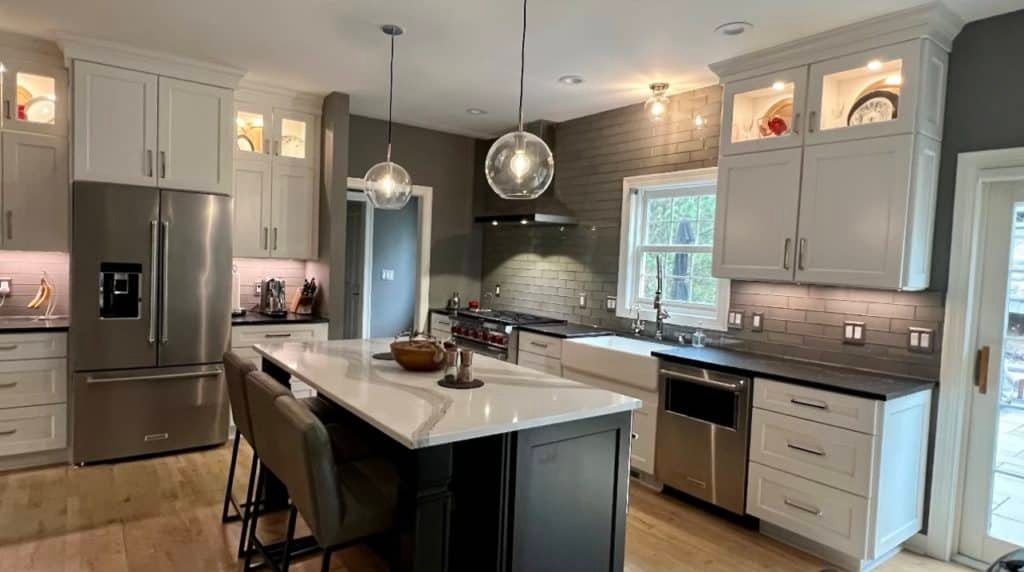 Kitchen - T&J
T&J has been working specifically in Waukesha County and the broader Milwaukee area for roughly a decade, long enough to know the permit office, the local suppliers, and what's behind the walls of a 1970s Menomonee Falls ranch. You can see more about our kitchen remodeling work across Waukesha County and what that local experience looks like on a real project.
Next Step: Get a Transparent Quote for Your Menomonee Falls Kitchen
T&J offers a free in-home consultation, no cost, no obligation, and no sales pressure. John handles every communication personally, from the first phone call through final walkthrough sign-off. Lead time to get on the schedule is typically 4-8 weeks depending on the season, and we'll tell you that honestly on the first call rather than promise a start date we can't keep.
T&J is a father-and-son operation, the owners are on every project, not delegated to a junior PM or a sub you've never met. If you want to see what that looks like on a local job, see our Menomonee Falls remodeling work before you call.
Ready to get a real number? Call (262) 352-9525 or use the form below.
Frequently asked questions
Does a kitchen remodel in Menomonee Falls require a permit?
Yes, almost certainly, if the project touches electrical, plumbing, or structural elements. The Village of Menomonee Falls Building Inspection Department requires permits for any work that changes wiring (adding circuits, moving outlets), moves or adds plumbing (sink relocation, dishwasher line), or alters walls (removing a wall, even non-load-bearing, triggers a structural review under Wisconsin SPS 305). Permits exist so a licensed inspector verifies the work meets code, protecting your home's resale value and your homeowner's insurance coverage. Unpermitted work can be flagged during a home sale and may require expensive remediation before closing. A reputable contractor pulls the permit themselves; if yours suggests skipping it, walk away.
How do I verify a contractor's license in Wisconsin?
Go to the Wisconsin DSPS license lookup at dsps.wi.gov and search by the contractor's business name or individual name. You're looking for an active Dwelling Contractor Qualifier (DCQ) credential, this is the specific license required for residential remodeling in Wisconsin, not just a general business registration. The DCQ means the individual has passed a state exam, carries the required insurance, and is accountable to the DSPS for code compliance. If an unlicensed contractor causes damage or a worker is injured on your property, your homeowner's insurance may deny the claim and you could face personal liability.
What's a fair payment schedule for a kitchen remodel?
A reasonable structure is: 10-30% deposit at contract signing (to cover materials ordering), followed by milestone-based draws, typically at demo completion, rough-in (electrical/plumbing) completion, cabinet installation, and substantial completion, with a 5-10% holdback released only after your final walkthrough sign-off. Milestone payments align the contractor's cash flow with actual progress, giving you leverage if work stalls or quality falls short. Red flag: any contractor demanding more than 50% upfront is either cash-poor or planning to fund another job with your money. Wisconsin lien law provides some protection, but a well-structured payment schedule is your first line of defense.
How long does a kitchen remodel take in Menomonee Falls?
A mid-range kitchen remodel, cabinet replacement, new countertops, updated electrical and plumbing, flooring, typically runs 4-8 weeks of active construction once the project starts. Add 2-4 weeks for permit approval from the Village of Menomonee Falls before demo begins. Lead time to get on a reputable contractor's schedule is typically 4-8 weeks from signed contract, depending on season, spring and fall are the busiest booking windows in Waukesha County. Timeline variation is largely driven by cabinet lead times: custom cabinets run 6-10 weeks; semi-custom 3-5 weeks; stock ships in days. Your contractor's supplier relationships directly affect your move-back-in date.
What should a kitchen remodel contract include in Wisconsin?
At minimum: a line-item scope of work (not just "kitchen remodel"), a materials specification sheet with brand/model/finish for every fixture and surface, a milestone-based payment schedule, a written change-order clause requiring both parties' signatures before any additional work begins, start and substantial completion dates, lien waiver delivery at each payment milestone, and warranty terms (labor minimum one year; manufacturer warranties passed through in writing). The change-order clause is especially critical: verbal agreements about scope changes are unenforceable in Wisconsin, if it's not in writing, the contractor can bill you for it and your recourse is limited. A contractor who resists any of these clauses is telling you something important about how they run projects.
Can I hire an unlicensed contractor to save money on my kitchen remodel?
Legally, Wisconsin allows homeowners to act as their own general contractor, but hiring an unlicensed individual to do the work creates serious exposure: your homeowner's insurance may deny claims for damage caused by unlicensed work; you assume liability if a worker is injured on your property without workers' comp coverage; and unpermitted or non-code work will surface as a defect during any future home sale. The apparent savings typically evaporate once you account for permit fees the unlicensed contractor skips (which you'll owe anyway), the absence of warranty callbacks, and the risk premium you're absorbing. In Waukesha County's real estate market, permitted and warranted work adds verifiable value, unpermitted work subtracts it.