 Remodel project - T&J
What to Do in the First 48 Hours
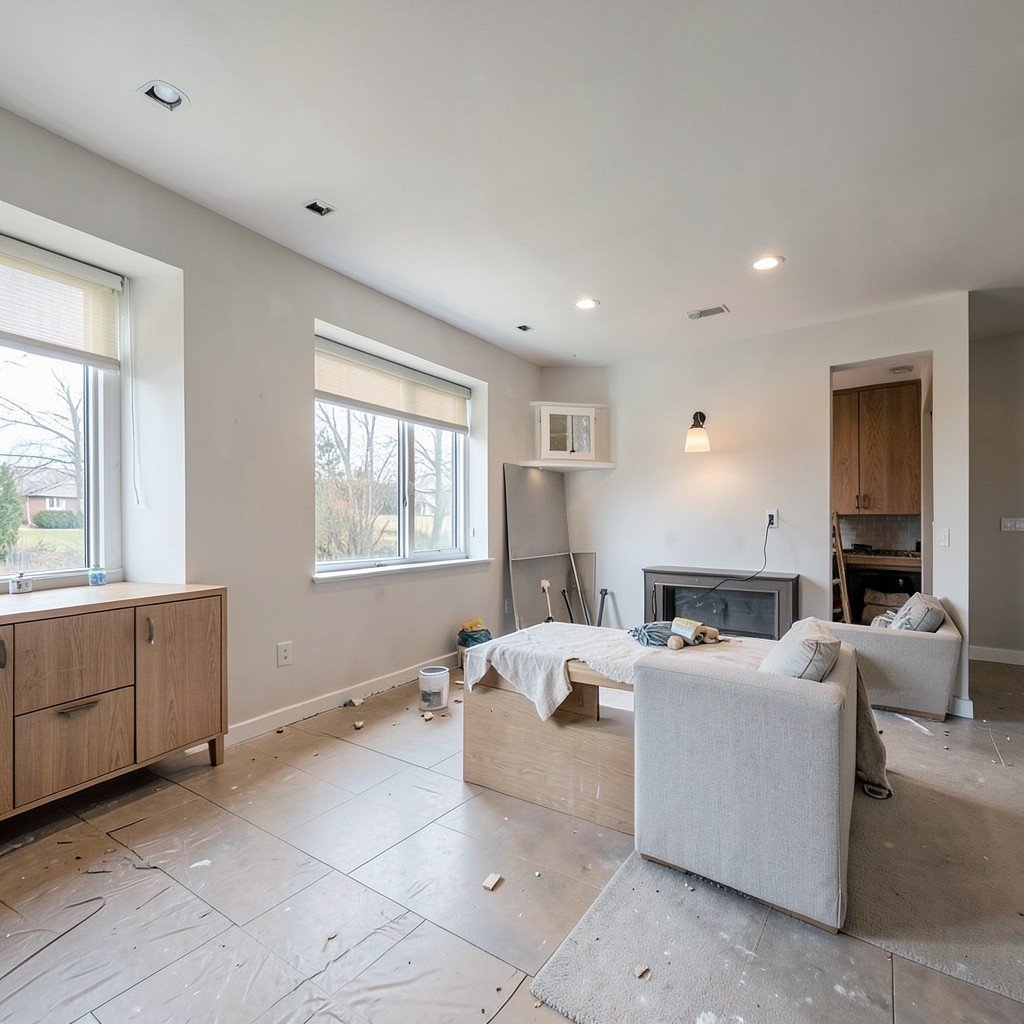
The 48-hour window after a contractor goes dark is your most important triage period. Four actions preserve every legal option you have. First, stop all further payments immediately. Second, photograph the job site today: every unfinished wall, every pile of abandoned materials, every area that was supposed to be completed. Third, screenshot every text thread and save every email. Fourth, gather your paper trail into one folder: the signed contract, every payment receipt, any written estimates, and any permits that were pulled.
Wisconsin statute Wis. Stat. § 100.20 authorizes the Department of Agriculture, Trade and Consumer Protection to regulate home improvement contracts and prohibit unfair trade practices. If the contractor never gave you a written contract, note that. Written contracts are required for most home improvement projects under Wisconsin law, and the absence of one is itself a violation worth documenting in every complaint you file.
The FTC puts the median contractor fraud loss at $2,800. That figure reflects real homeowners across the country. Your 48-hour documentation window is when evidence is freshest and your legal options are widest.
Send a Formal Written Notice Before You File Anything
Before filing a complaint or going to court, send the contractor a formal written demand. This step matters because it creates a dated paper trail, satisfies most courts' good-faith-attempt requirement, and occasionally produces a response when phone calls have not.
The letter should be brief and factual. State the contract date, the deposit amount paid, the work agreed to, and the fact that work has not been performed. Give the contractor a 7-day deadline to either resume work or return the deposit in full. Keep the tone neutral. Factual letters outperform angry ones in court.
 Remodel - T&J
Want this priced for your remodel?
John walks your space, measures it, and leaves a written itemized estimate. No cost, no obligation, no sales script.
Send it two ways: certified mail (so you have a return receipt) and email (so you have a timestamp). Keep copies of both.
If you have a signed contract, quote the specific payment and performance terms back to the contractor in the letter. That signals you know your rights and are prepared to use them. If the contractor never provided a lien waiver with your deposit payment, note that too. Wis. Stat. § 779.02 governs mechanic's liens in Wisconsin, and contractors are required under state law to provide lien waivers with partial and final payments (Document Center / Wisconsin Home Improvement Laws / De Pere) to protect homeowners from subcontractor claims.
File a Complaint with Wisconsin Consumer Protection and the DSB
These are two separate filings, both free, and both worth doing even though neither puts money directly back in your pocket today.
Wisconsin Consumer Protection (1-800-422-7128) (Document Center / Wisconsin Home Improvement Laws / De Pere) tracks complaint patterns statewide. A single complaint may not trigger an investigation on its own, but if this contractor has done this before, your filing adds to a record that can. Consumer Protection operates under Wis. Stat. § 100.20 and can refer cases to the Wisconsin Department of Justice for enforcement.
The Division of Safety and Buildings (1-608-266-3151) (Document Center / Wisconsin Home Improvement Laws / De Pere) handles contractor registration violations under DSPS 102. Contractors working on one- or two-family homes built after 1980 must be registered with DSB and carry workers' compensation insurance, unemployment insurance, and minimum liability coverage or a surety bond (Document Center / Wisconsin Home Improvement Laws / De Pere). If the contractor who took your money was not registered, that is a violation on top of the deposit issue.
DSPS 102 requires contractors pulling permits on one- or two-family homes built after 1980 to be registered with DSB and carry workers' comp, unemployment insurance, and minimum liability or a bond (Document Center / Wisconsin Home Improvement Laws / De Pere). An unregistered contractor cannot legally pull permits. Any work they completed may not pass inspection, which can leave you with a code violation on top of an empty wallet.
Neither filing directly recovers your money. What they do is create an official record that strengthens your position in small claims court and in any attorney consultation. They also help the next homeowner who searches this contractor's name before signing. For a full picture of what Wisconsin contractor registration actually requires, see our breakdown of Wisconsin contractor registration and permit requirements.
Small Claims Court: Wisconsin's $10,000 Path
Wisconsin small claims court handles disputes up to $10,000, requires no attorney, and costs $30 to $100 to file depending on your county. For most deposit disputes in Wisconsin, this is the right first move.
You file in the county where the contractor lives or does business. For Waukesha County homeowners, that is Waukesha County Circuit Court. For Milwaukee County homeowners, file at Milwaukee County Circuit Court. For Brown County (Green Bay) homeowners, file at Brown County Circuit Court. For Outagamie County (Appleton) homeowners, file at Outagamie County Circuit Court. The process is the same across all Wisconsin counties: the forms are designed for non-lawyers and the judge is accustomed to exactly this type of case.
Bring everything in your documentation folder: the signed contract, payment receipts, job-site photos, your certified mail receipt, a copy of your demand letter, and any texts or emails. What the judge looks at is straightforward. Was there a contract? Was payment made? Was the work not performed?
Bring a printed one-page timeline to small claims court, chronological, with dates for the contract signing, each payment, each attempted contact, and the demand letter. Judges see dozens of cases per session. A clean timeline makes yours easy to decide in your favor.
If your losses reach $15,000 to $20,000 or more, small claims will not cover the full amount. At that level, a construction attorney consultation is worth the cost. The attorney can advise on filing in Wisconsin Circuit Court and whether additional claims apply under Wis. Stat. § 100.20.
For a broader look at the mistakes Waukesha homeowners most often encounter when hiring contractors, see common contractor mistakes Waukesha homeowners encounter.
Credit Card Chargeback: Often the Fastest Recovery
If you paid any portion of the deposit by credit card, call your card issuer today. This is often the fastest path to recovery and runs parallel to, not instead of, the complaint and court process.
Tell the card issuer that services were contracted and not rendered. Ask to initiate a chargeback. Provide your documentation: the contract, payment record, and evidence of non-performance. Chargebacks typically resolve in 30 to 60 days, which is faster than any court process.
 Remodel - T&J
The card company investigates and can reverse the charge directly to your account. Success rates are strong when you have a written contract showing what was promised and photos showing it was not delivered.
Cash and check payments do not have this option. That is the single biggest reason to pay contractors by card, especially for deposits. If you paid by cash or check, your recovery paths are the demand letter, Consumer Protection complaint, DSB complaint, and small claims court.
Some card issuers have a 60-day or 120-day window from the transaction date to initiate a chargeback. If the contractor strung you along for months before disappearing, check your card agreement immediately. A missed chargeback window closes that recovery path permanently.
Contractor Surety Bond Claims: A Recovery Path Most Homeowners Miss
If the contractor carried a surety bond, you may have a direct claim against that bond, separate from small claims court and faster than litigation.
A surety bond (a three-party agreement between the contractor, a bonding company, and the public) is required for Wisconsin DSB registration on one- and two-family homes (Document Center / Wisconsin Home Improvement Laws / De Pere). The bond exists specifically to compensate homeowners when a registered contractor fails to perform. If the contractor was registered, call DSB at 1-608-266-3151 (Document Center / Wisconsin Home Improvement Laws / De Pere) and ask for the bonding company's name and the bond number.
Contact the bonding company directly. Explain the situation, provide your documentation, and ask how to file a claim. Bond claims are handled by the bonding company's claims department, not by a court. The process is administrative, not legal, which means no filing fees and no court dates.
The bond amount varies by contractor and state requirements. Wisconsin's minimum liability or bond requirement for DSB registration is set by DSPS 102 (Document Center / Wisconsin Home Improvement Laws / De Pere). If your loss is within the bond amount, this can be the cleanest recovery path available.
If the contractor was not registered and carried no bond, this path is closed. That is one more reason why verifying DSB registration before signing is worth five minutes of your time.
How to Spot a Contractor Scam Before It Happens
Three signals separate a legitimate contractor from one who will take your money and disappear.
Deposit size. Consumer advocates recommend no more than one-third of the total project cost as an upfront deposit, and only when materials need to be specially ordered. A contractor demanding 50% or more before any work begins is a recognized warning sign.
DSB registration. Verify before you sign. Call 1-608-266-3151 or search the DSB online database (Document Center / Wisconsin Home Improvement Laws / De Pere). This takes five minutes and tells you whether the contractor is legally permitted to pull permits in Wisconsin.
Written contract. Wisconsin statute Wis. Stat. § 100.20 requires it for most home improvement projects. If a contractor resists putting the scope, payment schedule, and timeline in writing, walk away.
Wisconsin's 3-day cancellation right. For contracts solicited at your home or away from the contractor's regular place of business and valued at $25 or more, you have three business days to cancel without penalty (Document Center / Wisconsin Home Improvement Laws / De Pere). The contractor must disclose this right in writing. If they did not, that is a separate violation to include in your Consumer Protection complaint.
Hiring a Replacement Contractor in Waukesha County
Once you have started the recovery process, you still have an unfinished project. That is the real problem you need to solve.
A mid-project takeover is different from a clean-start job. Any legitimate replacement contractor will need to assess what was done before quoting, because they are inheriting someone else's work and possibly someone else's mistakes. Get two or three bids, and ask each contractor to walk the existing work before they give you a number.
 Remodel - T&J
Ask every contractor you interview: Are you registered with the Wisconsin DSB? Can you provide proof of insurance and a surety bond? Will you give me a written contract with a payment schedule tied to project milestones, not calendar dates? Will you provide lien waivers with each payment?
At T&J All In Remodeling, John handles every project communication directly from first call to final walkthrough, and Telli is on-site running the work. We are a registered Wisconsin contractor and we pull our own permits. If you are looking for a home remodeling contractor in Waukesha County who can assess an unfinished project and give you a straight answer, we offer a free in-home consultation with no obligation.
When to Call a Construction Attorney
Small claims court caps at $10,000. If your total loss reaches $15,000 to $20,000 or more, an attorney consultation is worth the cost.
Two situations push you toward an attorney faster. First, if the contractor pulled permits in your name and then abandoned the project, you may have liability exposure for code violations on work that was never inspected. Second, if unpaid subcontractors have filed a mechanic's lien against your property under Wis. Stat. § 779.02, you need legal help to clear that title before it affects a sale or refinance. Do not wait on either of those.
When you are ready to move forward with a vetted contractor, book a free Waukesha County consultation with T&J Remodeling to assess your project and get a transparent quote.
Frequently asked questions
Can I sue a contractor in Wisconsin small claims court for taking my deposit?
Yes. Wisconsin small claims court handles disputes up to $10,000, requires no attorney, and costs $30 to $100 to file. You file in the county where the contractor lives or does business: Waukesha County Circuit Court for Waukesha County homeowners, Milwaukee County Circuit Court for Milwaukee County homeowners, Brown County Circuit Court for Green Bay area homeowners. Bring your contract, payment receipts, job-site photos, and proof you attempted to contact the contractor in writing. The reason the written demand letter matters is that courts want to see a good-faith attempt to resolve the dispute before a judge's time is used. The reason documentation matters is that the judge's question is simple: was there a contract, was money paid, and was work not done? If your loss exceeds $10,000, you will need to either limit your claim to that amount or file in a higher court, which typically means hiring an attorney.
What is a mechanic's lien and how does it affect me?
A mechanic's lien is a legal claim recorded against your property title by an unpaid subcontractor or material supplier, governed in Wisconsin by Wis. Stat. § 779.02. It can be filed even though you already paid the contractor in full. The reason this matters is that a lien on your title can block a home sale or refinance until it is resolved. The reason it happens is that contractors can take your deposit and disappear without paying their subs, leaving those subs with no recourse except your property. The reason Wisconsin law requires lien waivers with every payment (Document Center / Wisconsin Home Improvement Laws / De Pere) is to give you a signed record that the money flowed downstream before you release the next payment. If your contractor skipped lien waivers, include that in your DSB complaint and consult an attorney if a lien has already been filed.
Can I recover my deposit if I paid cash?
Cash is the hardest payment method to recover. You lose the credit card chargeback option entirely. Your best paths are a formal demand letter, a Wisconsin Consumer Protection complaint at 1-800-422-7128 (Document Center / Wisconsin Home Improvement Laws / De Pere), a DSB complaint at 1-608-266-3151 (Document Center / Wisconsin Home Improvement Laws / De Pere), and small claims court if you have documentation. The reason documentation still matters with cash is that a signed written contract with a payment record, even a handwritten receipt, is your evidence before a judge. The reason Wisconsin statute Wis. Stat. § 100.20 requires written contracts for home improvement projects is precisely this situation: a signed contract with a payment schedule creates a paper trail even when cash changes hands. If you have no contract and no receipt, texts or emails confirming the payment amount and scope can substitute as evidence in small claims.
How long does small claims court take in Wisconsin?
Most Wisconsin small claims cases are scheduled for a hearing within 30 to 90 days of filing, depending on the county's docket. Waukesha County and Milwaukee County courts are generally efficient, but scheduling varies by season and case volume. The reason the timeline matters for your recovery strategy is that a credit card chargeback, which typically resolves in 30 to 60 days, may return money faster than a court judgment. Running both tracks simultaneously is the right approach. The reason the court process still matters even if the chargeback succeeds is that a judgment creates a public record that can affect the contractor's ability to operate, which protects the next homeowner.
What if the contractor is out of state?
You can still file in Wisconsin small claims court if the contractor performed work in Wisconsin, because Wisconsin courts have jurisdiction over work done within the state. The reason this matters is that some contractors operate across state lines specifically to make recovery harder. The reason you should still file the DSB complaint is that DSB can flag the contractor's registration status and alert other Wisconsin homeowners. The reason an attorney becomes more valuable in out-of-state cases is that serving the contractor with court papers across state lines adds procedural complexity that a construction attorney handles routinely.
How much deposit is normal for a contractor to ask for in Wisconsin?
Consumer advocates recommend no more than one-third of the total project cost as an upfront deposit, and only when materials need to be specially ordered. The reason that threshold exists is that a legitimate contractor ties deposit amounts to actual material costs, not their cash flow. The reason demanding 50% or more upfront is a warning sign is that it gives the contractor most of their profit before any work is done, removing the financial incentive to finish. The reason Wisconsin law requires written contracts is so the payment schedule, including deposit amounts, is documented before a single dollar changes hands.
Do I have a right to cancel a home improvement contract in Wisconsin?
Yes. Under Wisconsin law, if a contractor solicited the contract at your home or away from their regular place of business, and the contract is worth $25 or more, you have three business days to cancel without penalty (Document Center / Wisconsin Home Improvement Laws / De Pere). The reason this right exists is to protect homeowners from high-pressure sales tactics used in their own homes. The reason the contractor must disclose this right in writing is so you know the window exists before it closes. The reason a missing cancellation notice is a separate violation worth reporting is that it gives Consumer Protection an additional enforcement hook, which strengthens the overall complaint record against that contractor.
What is a lien waiver and why does it matter when a contractor abandons a job?
A lien waiver is a document your contractor signs confirming that subcontractors and material suppliers have been paid. Wisconsin law requires contractors to provide lien waivers with every partial and final payment under Wis. Stat. § 779.02 (Document Center / Wisconsin Home Improvement Laws / De Pere). The reason this matters when a contractor abandons a job is that unpaid subcontractors can file a mechanic's lien against your property even though you already paid the contractor. The reason that is a serious problem is that a lien on your title can block a home sale or refinance until it is resolved, potentially costing you far more than the original deposit. The reason you should include missing lien waivers in your DSB complaint is that it documents a statutory violation, which strengthens both the complaint and any subsequent legal action.