What Basement Waterproofing Costs in Wisconsin
| Solution | What it addresses | 2026 cost |
|---|---|---|
| Grading, downspouts, extensions | Surface water against the foundation | $800-$3,500 |
| Crack injection, per crack | Isolated poured-wall cracks | $400-$900 |
| Interior drain tile with sump pump | Hydrostatic pressure at the footing | $6,000-$15,000 |
| Sump pump replacement with battery backup | Failed or undersized pump | $1,200-$3,000 |
| Exterior excavation and membrane | Persistent wall seepage | $15,000-$35,000 |
| Egress well drainage correction | Water pooling in a window well | $600-$2,000 |
Most Wisconsin basements that get water do not need the top of that table. Our climate delivers the two conditions that cause most problems: heavy spring thaw combined with saturated ground, and summer downpours arriving faster than gutters can move water away from the house.
These ranges reflect what we quote across Waukesha County and the Milwaukee metro.
Diagnose Before You Buy
The order matters, and skipping steps is how homeowners end up with a $12,000 system that did not fix the problem.
Start outside. Look at grading within the first ten feet of the foundation. Soil should fall away from the house, and over decades it settles flat or back toward the wall. Check that downspouts discharge well away from the foundation rather than a foot from it. A surprising share of wet basements in this county are gutters and grading, and that is a low four-figure fix rather than a five-figure one.
 Basement - T&J
Want this priced for your basement?
John walks your space, measures it, and leaves a written itemized estimate. No cost, no obligation, no sales script.
Then look at where water appears. Water at the joint between floor and wall usually means hydrostatic pressure at the footing, which points to drain tile. Water down the middle of a wall points to a crack or a failed penetration. Water in one corner after a storm often points to a downspout or a window well.
Then check the window wells. Egress and utility wells fill up and overflow into the basement more often than people expect, particularly wells without drains or with drains that silted up years ago.
Then look at the sump. If you have a pump, is it working, is it sized right, and does it have a battery backup? Wisconsin storms bring power cuts, and a pump without backup fails precisely when it is needed.
Only after all of that does full exterior excavation make sense. Any contractor who quotes the largest solution on the first visit without walking the exterior has not diagnosed anything.
Interior vs Exterior Systems
Interior drain tile, $6,000 to $15,000. A channel is cut around the interior perimeter of the slab, perforated pipe is laid in gravel, and it drains to a sump that pumps water out. It manages water rather than blocking it, which is the honest description. It is far less disruptive than exterior work, it can be done in winter, and it is the right answer for most Wisconsin basements with recurring water at the floor-wall joint.
Exterior excavation and membrane, $15,000 to $35,000. The foundation is excavated to the footing, cleaned, sealed with a membrane, and exterior drain tile is laid. It stops water at the wall rather than managing it inside. It is expensive, it destroys landscaping, decks and driveways in the excavation path, and it cannot be done in frozen ground. It is the right answer when a wall is actively seeping through its full height, or when you are already excavating for another reason.
For most homeowners here, interior drain tile plus corrected grading solves the problem at a third of the cost.
What Makes a Quote Go Up
Linear footage. Interior systems are priced by the perimeter treated. Doing three walls rather than four saves money and is legitimate when only three have a problem.
Slab thickness and access. Cutting a thick slab, or working around a finished basement, adds labour. If the basement is already finished, expect demolition and reinstatement costs.
Sump discharge routing. Where the water goes matters. It has to leave far enough from the house not to return, and it must not discharge into the sanitary sewer, which is prohibited.
Battery backup and alarms. Worth including. A pump failure during a spring thaw while you are away is the scenario that ruins a finished basement.
Foundation type. Block foundations often need wall-cavity drainage as well, since water travels inside the block cores. Poured concrete is usually simpler.
Do Not Finish Over a Water Problem
This is the most expensive mistake in basement work, and we see it regularly. Framing, insulating and drywalling over a basement that takes water destroys the finishes and often means starting again.
If you are planning to finish the space, waterproofing comes first and it is not optional. Our guide to choosing a basement finishing contractor covers the questions that expose whether a contractor intends to address moisture or just cover it, and it is the first thing to ask about.
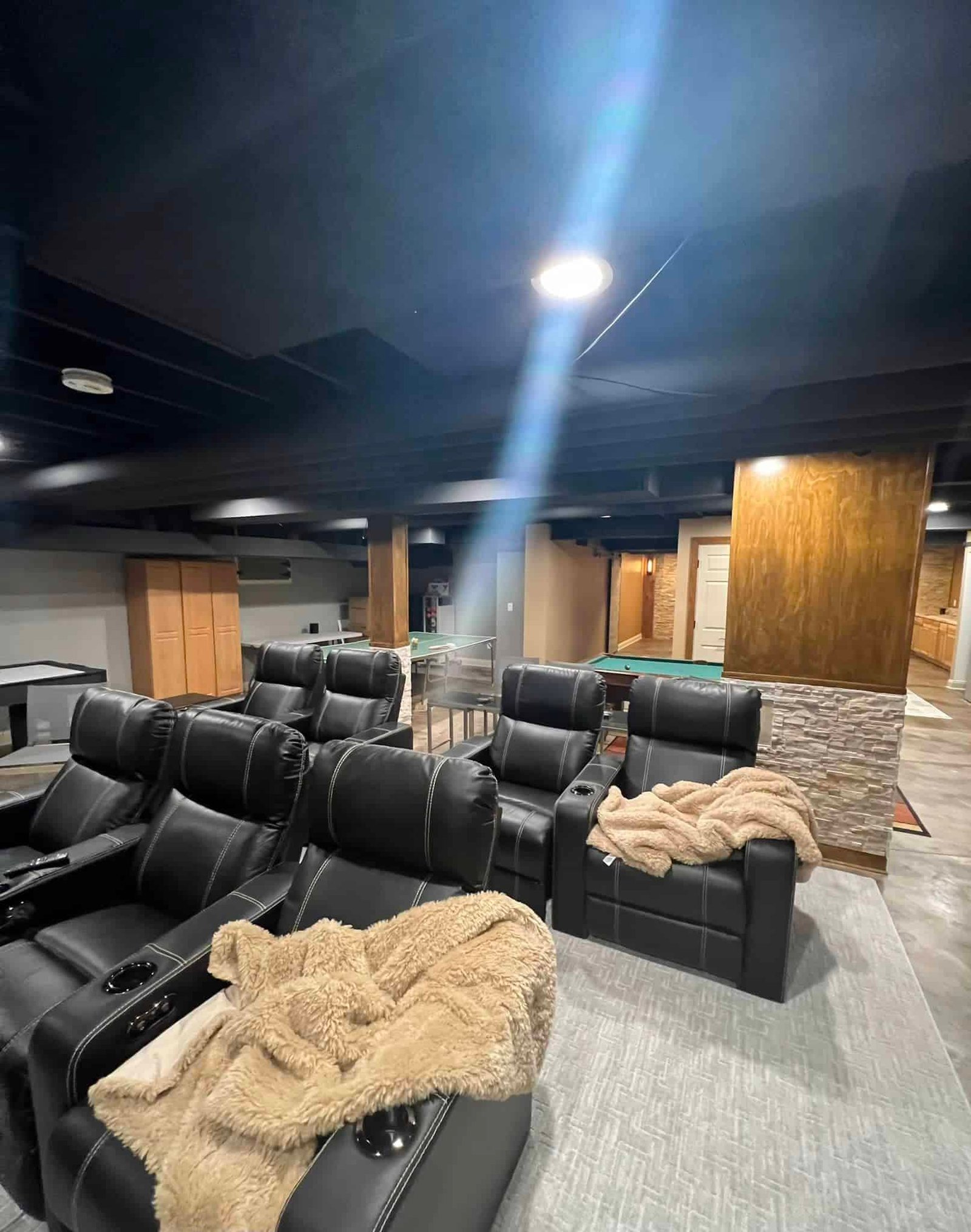 Basement - T&J
If you plan a basement bedroom, sequence the egress window work with the waterproofing while the excavation equipment is on site. Our egress window cost guide covers that.
Permits
Interior drain tile and sump installation generally requires a plumbing permit in Waukesha County municipalities, since it involves a pump, discharge piping and a connection to the exterior. Exterior excavation work may require permits depending on the scope and whether any structural work is involved.
Discharge routing is the part inspectors care about, because pumping groundwater into the sanitary sewer is prohibited and overloads the system. Your municipality is the authority for your address, under the Wisconsin Uniform Dwelling Code as administered locally.
How to Read a Waterproofing Quote
Did they walk the exterior? If grading and downspouts were not examined, the diagnosis is incomplete.
Is the linear footage stated? Interior systems should say which walls and how many feet.
Is the sump specified? Pump capacity, pit size, and whether a battery backup is included.
Where does the discharge go? In writing.
Is slab cutting and concrete reinstatement included?
Is there a warranty, what does it actually cover, and is it transferable? Read this carefully. Many warranties cover only the specific wall treated and exclude water arriving anywhere else.
Is finished-basement demolition and reinstatement included if your basement is already finished?
Timeline
Grading and downspout work is typically one to two days. Crack injection is a few hours per crack. An interior drain tile system in an unfinished basement usually runs three to five days. Exterior excavation runs one to three weeks depending on depth and access.
Interior work can be done year-round, which matters here. Exterior excavation is a spring-to-autumn project because frozen ground makes digging slow and expensive.
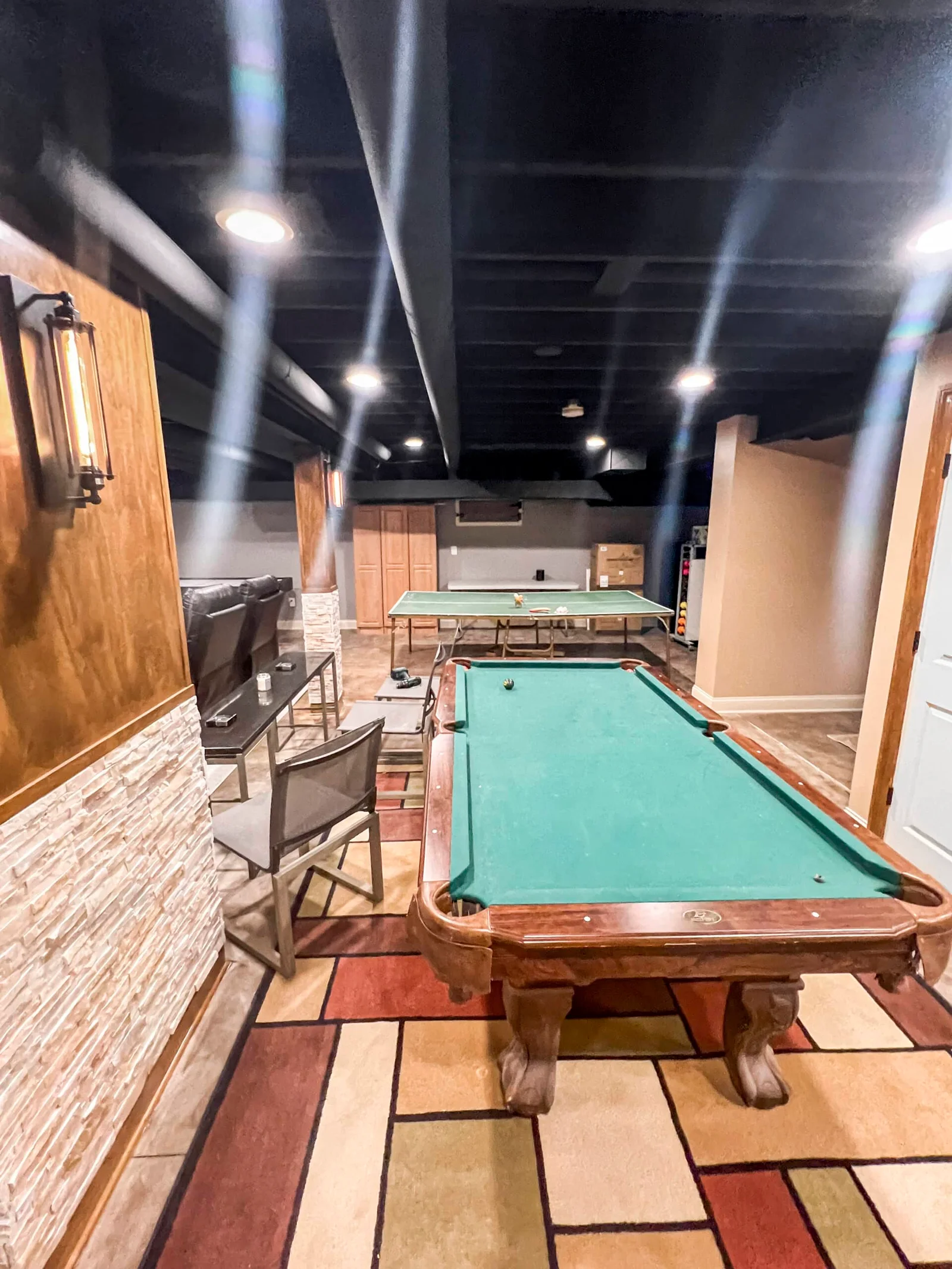 Basement - T&J