 Bathroom project - T&J
Wisconsin labor rates and local permit requirements tend to add modestly to national averages, and the single most-missed line item is a water heater upgrade. We'll get to that. First, the number you came for.
What a Walk-In Tub Costs in Wisconsin (2026 Snapshot)
A walk-in tub in Wisconsin typically costs $10,000-$18,000 installed for a mid-range hydrotherapy or air-bath unit with standard installation. National installed averages run $3,000-$17,000 (per Mad City's 2026 price guide, which cites National Council on Aging survey data), and premium acrylic models with professional installation and full warranties push $10,000-$25,000. The widest possible range, combining tub, accessories, and install, is $5,500-$33,000+ (per Kohler's manufacturer cost data). Where you land inside that band comes down to two things: the unit tier you pick and how much your home fights the install.
Picture a 1960s ranch in Brookfield with a standard 60-inch alcove tub. If the new unit drops into that same footprint, you're near the middle of the range. If the jets need a dedicated circuit and the water heater can't fill the deeper basin, you drift up. Milwaukee homeowners with older homes often face aging supply lines that add labor, and Waukesha County's per-municipality permit steps add a bit versus loose national numbers. Both mean the work gets done to code.
Total installed walk-in tub cost in Wisconsin ranges from $5,500 to $33,000+, with most projects landing at $10,000-$18,000 (per Kohler's 2026 data).
Want a number tuned to your own bathroom? You can get a free estimate or run the figures yourself with the calculator further down this page.
Walk-In Tub Types and Their Price Ranges
Walk-in tub prices are usually quoted for the tub alone, before installation. The tier you choose is the biggest driver of your total. A basic soaking model with a door, low-step entry, and a seat starts around $7,000-$10,000, while a two-seater built for couples runs $18,000-$30,000 (per Mad City's 2026 price guide). Here's how the common tiers break down, and who each one fits.
| Tub type | Tub-only price | Who it's for |
|---|---|---|
| Soaking | $7,000-$10,000 | Warm bathing, no jets, simplest option |
| Hydrotherapy | $10,000-$15,000 | Targeted joint and muscle relief |
| Air bath | $10,000-$15,000 | Gentle full-body warmth |
| Combination jet | $12,000-$18,000 | Both water and air jets |
| Bariatric | $15,000-$20,000 | Higher weight capacity, wider door |
| Luxury / premium | $15,000-$30,000 | Upgraded finishes and comfort features |
| Two-seater | $18,000-$30,000 | Two users at once |
 Bathroom - T&J
A few terms worth defining as you shop. Hydrotherapy means pressurized water jets that target specific muscle groups, similar to a hot tub, which is why it's the pick for arthritis or stubborn joint pain. An air bath circulates heated air through small floor and wall jets for a gentler, bubbling warmth that's easier on sensitive skin. A bariatric tub is simply a reinforced, wider unit with a higher weight rating and a broader door.
Want this priced for your bathroom?
John walks your space, measures it, and leaves a written itemized estimate. No cost, no obligation, no sales script.
Think of hydrotherapy and air baths as spa-style features, not medical hardware. Modern units read as a clean bathroom fixture, not a clinic. We don't push any one brand because the right tub depends on your actual needs, not our margins. The right unit is the one matched to how the person will actually use it, not the flashiest showroom model.
Installation Costs: Labor, Plumbing, and Electrical
Installation labor for a walk-in tub in Wisconsin generally runs $2,500-$8,000, including plumbing and electrical work (per Kohler and Mad City). Premium units with heavy scope can climb to $8,000-$12,000 for installation alone (per Safe Step's 2026 cost guide). The difference is complexity: a straight swap into an existing footprint sits at the low end, while an electrical upgrade, a plumbing reroute, or tearing out an old tub surround pushes you toward the top.
Three components make up most of that number.
- Demo of the existing tub: some companies charge $250-$700 to haul out the old unit (per Kohler).
- Plumbing: most walk-in tubs use the existing drain and supply footprint, since the standard 60" x 30"-32" fit matches a traditional alcove. Jetted models often need dedicated lines, which adds labor.
- Electrical: air and hydrotherapy jets require a dedicated GFCI circuit. This is where costs spike, because it means a licensed electrician and, sometimes, panel work.
We recently installed a hydrotherapy tub in a 1970s Brookfield ranch where the existing 40-gallon water heater simply couldn't keep up with the deeper basin. A 50-gallon upgrade solved it, but it was a line item the homeowner hadn't budgeted for until we flagged it during the site visit. You can see our bathroom remodeling projects to get a feel for how we scope this work. Over 35+ combined years, we've learned the site visit is where these surprises get caught, not the invoice.
The most commonly forgotten line item is your water heater. A walk-in tub holds more water than a standard tub, so a typical 40-gallon tank may not fill it at a comfortable temperature. Upgrading to a 50+ gallon tank can run up to $3,000 (per Kohler). We've seen this miss on plenty of low-bid quotes, and it's exactly the kind of surprise that turns a cheap bid into an expensive one.
When we quote a project, these items are on the estimate up front. A vague labor number that leaves out the water heater or the GFCI circuit is exactly how a cheap bid balloons mid-job. If you'd rather talk it through than guess, call us at (262) 352-9525.
Add-On Features and What They Actually Cost
Add-ons let you tailor the tub to a real mobility situation, and they range from a $50 handheld wand to an $8,000 jet upgrade (per Mad City). Sort them into two buckets: need-to-have for safety and nice-to-have for comfort. Grab bars and quick-drain technology are near-universal recommendations. Chromotherapy and aromatherapy are pure comfort.
- Handheld shower wand: $50-$200 - Extra grab bars: $50-$100 per bar - Heated backrest or headrest: $100-$200 - Aromatherapy system: $200-$300 - Quick-drain technology: $250-$400 - Chromotherapy lighting: $300-$600 - Custom seat or bench: $500-$800 - Tub/shower combo add-on: $500-$1,000 - Massage jets upgrade: $3,000-$8,000 - Wheelchair-accessible outward-swinging door: $2,000-$8,000 Pro Tip: Quick-drain technology is worth the $250-$400 for almost every buyer. A standard walk-in tub can take several minutes to empty while you sit and wait in cooling water, since the door can't open until the tub drains. Quick-drain does it in 60-90 seconds (per Mad City). For anyone with limited circulation, that's not a luxury, it's comfort and safety.
Grab bars are the other easy call. At $50-$100 each, adding two or three in the right spots costs little and matters daily. We fit those to the actual user's reach and grip, not a generic diagram.
Wisconsin Permit Requirements for Walk-In Tub Installation
Yes, most walk-in tub installs in Wisconsin require permits. Any work that modifies your plumbing supply or drain lines triggers a plumbing permit under the state's SPS 382 plumbing code, administered through the Wisconsin Department of Safety and Professional Services. Wisconsin's SPS 382 plumbing code requires licensed contractors for any supply or drain modifications, which protects homeowners and keeps the job code-compliant. If your tub has air or water jets, the new dedicated GFCI circuit means an electrical permit under SPS 316 as well.
Waukesha County municipalities each run their own building department, so Brookfield, Elm Grove, and Pewaukee handle fees and inspections separately. For this scope, permit fees are typically in the $100-$400 range, and Brookfield's building department generally turns around a walk-in tub permit within about a week when the paperwork is complete. Madison and Milwaukee timelines run similar for this scope. The details of what your city requires are worth confirming, and our guide to Wisconsin bathroom plumbing permit requirements walks through the process.
 Bathroom - T&J
Skipping permits is a false economy. Unpermitted plumbing and electrical work can surface as a problem at resale, and it can void the manufacturer's warranty on some units. A credentialed Wisconsin contractor pulls every permit as part of the project. Chasing paperwork should never be the homeowner's burden.
Walk-In Tub vs. Walk-In Shower: Which Makes More Sense?
This is a real decision, and the answer depends on how the bathroom gets used. A curbless walk-in shower (zero-threshold, no lip to step over) usually costs less than a walk-in tub. You can see current numbers in our breakdown of tub-to-shower conversion cost in Wisconsin. But cheaper isn't automatically better for your situation.
A walk-in tub wins when therapeutic soaking is the priority. Warm water immersion helps with arthritis, joint pain, and circulation, and seated bathing feels secure. The tradeoff is the wait: you sit while it fills and, unless you added quick-drain, while it empties.
A curbless shower wins for daily use. There's no waiting in cooling water, entry and exit are simpler, and the design flexibility is broader. Younger aging-in-place buyers often prefer it. On resale, curbless showers appeal to a wider pool of buyers, while walk-in tubs speak to a narrower group. Our frame is simple. If therapeutic soaking drives the decision, choose the tub. If daily showering is the main use, a curbless walk-in shower often delivers more value per dollar.
Financing and Assistance Programs Worth Knowing
Several programs may help pay for an accessibility remodel, though eligibility is specific and only the agency can confirm it. These are worth a phone call before you assume you're paying out of pocket.
- VA benefits: Specially Adapted Housing grants and Home Improvement and Structural Alteration (HISA) grants may apply. Contact your VA regional office directly.
- Wisconsin Medicaid: Family Care and IRIS programs may cover home accessibility modifications for eligible members. Contact Wisconsin DHS for current waiver details.
- USDA Section 504: Home Repair loans and grants for low-income rural homeowners.
- Home equity loan or HELOC: the most common financing path for this project.
- Manufacturer financing: some brands offer their own plans. Read the terms carefully.
We can't advise on eligibility, and we won't pretend to. What we can do is hand you a detailed, line-item written estimate, which is exactly what these programs ask for when you apply.
How to Hire a Contractor for a Walk-In Tub in Waukesha County
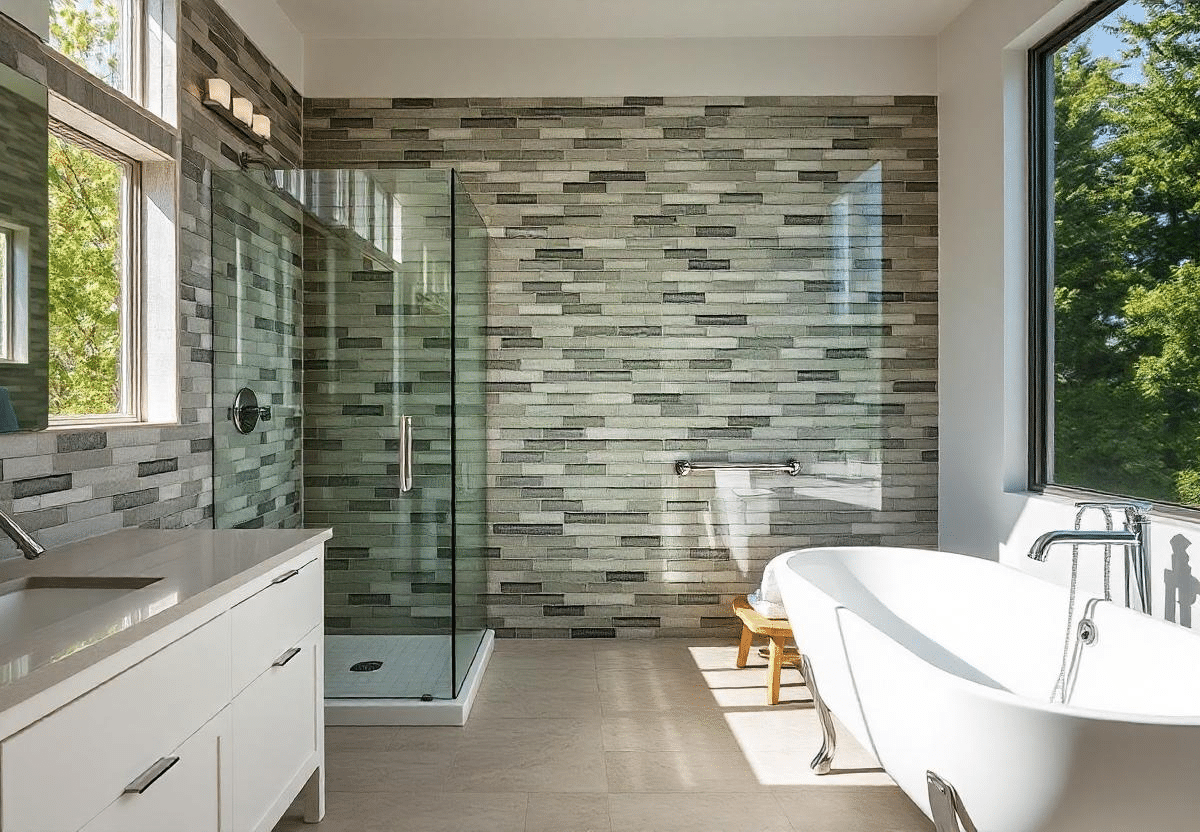
Hire a Wisconsin-credentialed contractor who coordinates plumbing and electrical, not just a tub-drop-in crew. For an accessibility remodel, look for CAPS certification, the Certified Aging-in-Place Specialist credential from the NAHB, which signals training in mobility-focused design rather than a one-size install. The right hire treats the surrounding walls, floor, and lighting as part of the job, so the finished bathroom reads as a spa, not a clinic.
Ask these questions before signing:
 Bathroom - T&J
- Who pulls the permits?
- Who coordinates the plumber and the electrician?
- What's the warranty on the labor versus the unit itself?
- Will the same person manage the project start to finish?
Red flags are easy to spot. A quote with no site visit, no mention of permits, or a subcontractor-only crew with no owner oversight tells you the surprises are coming later. You can review our remodeling services in Waukesha County to see how we scope this work.
Here's our one differentiator that matters most for this project: John handles every project's communication personally. No junior PM, no handoff to voicemail. Telli is on-site running the work. When you're mid-project and have a question about a grab bar height or a threshold, you talk to the person who can actually answer it. We're a father-son team, credited in the state of Wisconsin, and our name is on every job. Schedule a free in-home consultation with a T&J estimator and get a transparent quote before you commit to anything.
Frequently asked questions
How much does it cost to install a walk-in tub in Wisconsin all-in?
Total installed cost in Wisconsin, covering the unit, installation labor, plumbing, electrical, and demo, typically runs $10,000-$20,000 for a mid-range hydrotherapy or air-bath unit. The full range is $5,500 on the low end for a basic soaking tub with a simple install, up to $33,000+ for a premium combination-jet or luxury unit with extensive modifications (per Kohler's 2026 pricing). The wide spread comes down to two variables: the unit tier and how much your home resists the install. A drop-in swap into an existing footprint stays cheap because no walls move, while a jetted model needing a dedicated circuit, a plumbing reroute, and a water heater upgrade (up to $3,000 on its own) climbs fast.
Do I need a permit for a walk-in tub in Wisconsin?
Yes, in most Wisconsin municipalities. Any change to your plumbing supply or drain lines requires a permit under SPS 382, and a new jetted circuit triggers an electrical permit under SPS 316 (per Safe Step's code notes). This matters for three reasons. First, code: unpermitted plumbing and electrical can fail an inspection later. Second, resale: an unpermitted bathroom modification is a red flag inspectors catch, and it can stall a closing. Third, warranty: some manufacturers void coverage on units installed without the required permits. A licensed contractor pulls all of this as part of the job, so it's never your paperwork to chase.
What should I ask a contractor before hiring for a walk-in tub?
Ask four questions up front: who pulls the permits, who coordinates the plumber and electrician, what the warranty covers on labor versus the unit, and whether the same person manages the project start to finish. The answers tell you whether you're hiring a coordinated remodeler or a drop-in installer who leaves the trades to you. Also look for CAPS certification, the Certified Aging-in-Place Specialist credential, which signals real accessibility training. A contractor who insists on a site visit before quoting is showing you they take the scope seriously, and that's the behavior you want.
Are walk-in tubs covered by insurance or Medicare?
Standard Medicare generally does not cover walk-in tubs, because it classifies them as home modifications rather than durable medical equipment. That said, other paths exist. Wisconsin's Medicaid Family Care and IRIS programs may cover accessibility modifications for eligible members, so contact Wisconsin DHS for current waiver details. Veterans may qualify for VA Specially Adapted Housing or HISA grants through their regional loan center. Eligibility is specific and only the agency can confirm it, but every one of these programs requires a detailed line-item written estimate when you apply, which is exactly what a good contractor provides.
What is the difference between a hydrotherapy tub and an air bath walk-in tub?
A hydrotherapy tub uses water jets to deliver targeted, pressurized streams to specific muscle groups, similar to a hot tub. It's effective for joint pain and muscle tension but needs regular jet cleaning to prevent bacterial buildup. An air bath circulates heated air through small jets across the tub floor and walls for a gentler, full-body sensation, more like a warm bubble effect. Air baths are lower maintenance and gentler on sensitive skin. Combination units offer both at a higher price, $12,000-$18,000 for the unit (per Mad City). The right pick depends on whether the user needs targeted relief or general warmth.
How long does it take to install a walk-in tub?
A straightforward install, where the new unit fits the existing 60" x 30"-32" footprint and no major rerouting is needed, typically takes 1-2 days of trade work (per Kohler's fit specs). If the project includes a water heater upgrade, a new electrical circuit, tile work, or demo of a tub surround, the timeline extends to 3-5 days. Unlike a full bathroom remodel, a walk-in tub swap is a contained project, so you're not looking at weeks of an unusable bathroom. There will be 1-2 days without a functioning tub or shower, so plan a temporary alternative with your contractor upfront.
Will a walk-in tub look like a hospital fixture in my bathroom?
Not with the right unit and the right contractor. Modern walk-in tubs come in clean, contemporary profiles with chrome or brushed-nickel hardware, neutral acrylic finishes, and low-profile designs that read as a spa feature, not a medical device. The key is choosing a footprint and finish that match your existing bathroom, then pairing it with coordinated tile, lighting, and fixtures. A contractor experienced in aging-in-place work treats the surrounding walls, floor, and lighting as part of the project, not an afterthought, which is the difference between a fixture that fits in and one that stands out.