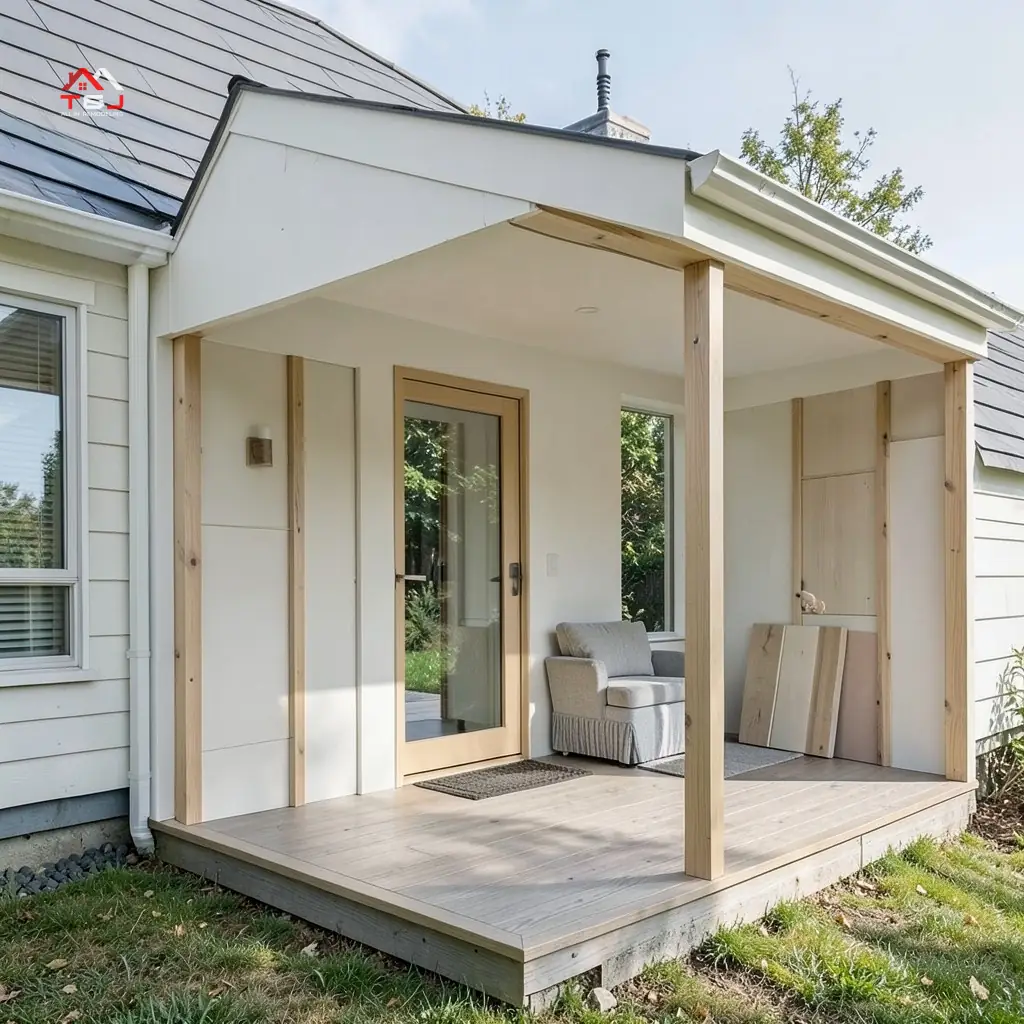
 Addition project - T&J
Where you land in that range comes down to four things: foundation type, whether plumbing or a kitchen goes inside, finish level, and ground-floor vs second-story. The rest of this guide walks each one with the same numbers we hand homeowners during free in-home consults across Waukesha County.
Written by the team at T&J All In Remodeling, Brookfield, WI. Father-son shop, 35+ years combined, credited Wisconsin contractor. Last 20x20 we wrapped: a primary-suite addition on a 1960s Brookfield ranch.
20x20 Room Addition Cost in Wisconsin: The Short Answer
Here's the honest range for a complete 400 sq ft addition in Waukesha County in 2026:
- Basic ground-floor bedroom or family room: $80,000-$130,000
- Mid-range ground-floor with upgraded finishes: $130,000-$180,000
- Ground-floor with a bathroom or kitchenette inside: $150,000-$200,000+ - Second-story 20x20: $100,000-$250,000+ Key Stat: A turnkey 20x20 in Wisconsin runs $200-$500 per finished square foot in 2026. The contractor who quotes you $125 a foot is quoting a shell, not a finished room.
The range is wide because scope is wide. A slab-on-grade family room with no plumbing is a different project from a second-story primary suite over a 1960s ranch. National averages run as low as $32,000-$80,000 for a basic 400 sq ft addition, but those numbers reflect southern markets without frost footings, lighter energy code, and lower trade rates. They don't translate to Brookfield or New Berlin.
What a Complete 20x20 Addition Scope Actually Includes
This section earns its keep when you're holding three quotes side by side. A real, turnkey 20x20 bid should list, by name, every one of these items. If yours doesn't, ask why before you sign.
- Site prep and excavation, tree clearing, dig-out, hauling spoil off the property
- Frost-depth footings poured to Wisconsin's 48-inch minimum (the depth below frozen-ground line that footings must reach so the freeze-thaw cycle can't heave them)
- Foundation, slab-on-grade, crawlspace, or full basement walls
- Framing, floor system, walls, roof structure
- Roof tie-in to the existing house, flashing, valleys, ice & water shield. This is where leaks start when it's done wrong.
- Sheathing, house wrap, roofing matched to existing shingles
- Siding matched to existing profile and color (this line bites budgets when the original siding is 20 years discontinued)
- Windows and exterior doors
- Electrical rough-in and finish, circuits, outlets, switches, lighting, panel capacity check
- HVAC extension, ductwork off the existing furnace, or a dedicated mini-split if the furnace can't carry the new load
- Plumbing, only if there's a bath, laundry, or wet bar inside
- Insulation, walls, ceiling, rim joists to UDC R-values
- Drywall, taping & mud, prime, paint
- Flooring, hardwood, LVP, tile, or carpet, with a stated allowance per square foot
- Interior trim, doors, hardware
- Permits, plan review, inspections
- Dumpster, port-a-john, final clean
- GC overhead and project management, typically 15-25% Watch Out: If a quote skips three or more of these line items, it's not a competitive bid, it's an incomplete one. Ask in writing whether HVAC tie-in, permit fees, and finish flooring are inside or outside the number. "Outside" is where the $40,000 surprise lives.
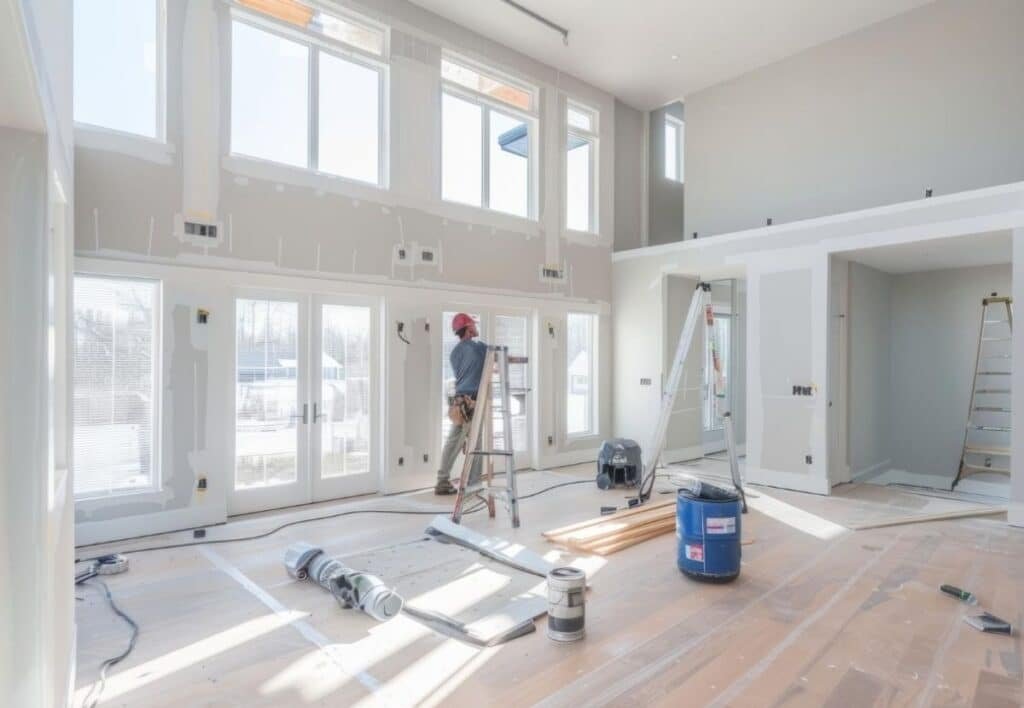 Addition - T&J
Cost Breakdown by Line Item (2026 Numbers)
Here's what a realistic 2026 Wisconsin 20x20 looks like, line by line. These reflect a mid-range ground-floor addition with a crawlspace foundation and no interior plumbing. Adjust up for a basement or a bathroom; adjust down for a slab and builder-grade finishes. Ranges below come from Greater Boston Contractors' 2026 pricing breakdown and Rocket Loans' 2026 home addition data, adjusted to reflect Wisconsin labor and 2026 material levels.
| Line Item | 2026 Range (Wisconsin) | Source |
|---|---|---|
| Foundation (slab/crawl/full basement) | $15,000-$45,000 | |
| Framing & sheathing | $8,000-$16,000 | |
| Roofing (shingles, underlayment, flashing) | $4,000-$8,000 | |
| Siding match to existing | $6,000-$12,000 | |
| Windows & exterior doors | $3,000-$10,000+ | |
| Electrical (rough + finish) | $6,000-$12,000 | |
| HVAC extension or mini-split | $4,000-$10,000 | |
| Plumbing (only if bath/wet area) | $3,000-$15,000 | |
| Insulation | $2,000-$4,000 | |
| Drywall & paint | $4,000-$8,000 | |
| Flooring | $3,000-$12,000+ | |
| Interior trim & fixtures | $2,000-$6,000 | |
| Permits & engineering | $2,500-$15,000+ | |
| GC overhead / PM (15-25%) | $12,000-$50,000 | |
| Subtotal | ~$83,500-$240,000+ | |
| Recommended contingency (10-20%) | add 10-20% |
Materials run roughly 30-40% of the total. Labor and trades carry 30-50%. GC and soft costs round out the rest.
Want this priced for your addition?
John walks your space, measures it, and leaves a written itemized estimate. No cost, no obligation, no sales script.
A word on year-over-year movement: per the NAHB Building Materials Price Index, framing lumber moved up roughly 7% and skilled-trade labor moved up around 6% from late 2026 through early 2026 in the East North Central region, with HVAC equipment leading the pack at closer to 9% on a unit-cost basis. If you're reading a 2026 article quoting $75,000 for the same scope, add about 6-8% to land in 2026 reality.
Get a real estimate on your specific scope. Use our room addition cost calculator to model the number based on your foundation type, finish level, and whether plumbing is inside the addition. It runs the same math we run on the first consult.
What Drives the Price Up, and What Brings It Down
The levers homeowners control:
- Full basement under the addition? That's $30-$100 per square foot of footprint just on foundation, essentially a small house's worth of concrete. A slab-on-grade saves you $15,000-$30,000 right there.
- Going up instead of out? Add 20-35% for the second-story premium. We'll cover why in the next section.
- Bath, kitchenette, or laundry inside? Plumbing rough-in alone runs $3,000-$15,000, plus the fixtures and tile that follow it.
- Vaulted or coffered ceilings? Custom framing, custom drywall, and custom trim. Plan on a 10-15% bump on framing and finish lines.
- Matching obsolete siding or brick? If your home's siding profile is discontinued, you're either re-siding the whole house or chasing salvage. Both are expensive.
- Winter foundation pour? Heated enclosures and blanket curing tack on a few thousand. Book your foundation for April, October if the calendar allows.
- Builder-grade vs upgraded finishes? The same 400 sq ft can land at $60,000 or $160,000 depending on what goes on the floor and out the windows.
Ground-Floor vs Second-Story Addition: The Cost Gap
For the same 400 sq ft of finished space, expect a ground-floor 20x20 to land $80,000-$200,000 and a second-story 20x20 to land $100,000-$250,000+. That 20-35% premium isn't because framing a second floor is harder, it's everything around the framing.
A second-story addition on a typical 1960s Brookfield ranch means: removing a section of existing roof, tarping the house against Wisconsin weather for two to four weeks, having a structural engineer verify (and often reinforce) the existing foundation and load-bearing walls, building a new staircase that eats square footage from the floor below, and rerouting HVAC and electrical up. The framing crew is on site about the same number of days. The engineering, weatherproofing, and structural reinforcement are what add the cost.
The ground-floor 20x20 has its own premium item, a brand-new foundation, but the rest of the existing house stays sealed and livable while you build. For most homeowners, that liveability difference is decisive. If you're weighing an addition against moving to a bigger house, the ground-floor option also tends to recoup more on resale because it adds true new square footage rather than reorganizing existing space.
Why Quotes for the Same 20x20 Vary by $40,000+
You get three bids on the same drawing. They come back at $92,000, $138,000, and $171,000. Most homeowners assume the cheap one is the deal and the expensive one is markup. Almost always, it's the opposite, the cheap bid is missing scope.
Four places the gaps usually hide:
 Addition - T&J
1. Scope omissions. Permit fees ($500-$5,000 depending on municipality and project value ), HVAC tie-in, final flooring, exterior siding match, or the dumpster get quietly excluded. A $92,000 bid often reads "plus permits, flooring allowance by owner, HVAC by others" in fine print. By the time those land, you're at $130,000.
2. Allowance games. Two bids both say "flooring included." One has a $2 per square foot allowance, the other $8. On 400 square feet that's a $2,400 spread before you've picked a single sample. Same trick happens with windows, lighting, and trim packages.
3. Foundation assumptions. One bid quoted a slab. Another quoted a crawlspace. A third assumed a basement. The dollar gap between those three is $15,000-$30,000 by itself, and unless the contractor walked the lot with you and confirmed the type, the assumption is buried in the bid.
4. Insurance, warranty, and license. A credited Wisconsin contractor carrying real general liability, workers' comp, and a written warranty costs more than a side-job framer with a pickup. The reason matters at three levels: if a worker is hurt on your property without comp, your homeowner's policy is exposed; if the addition leaks at year three, only a licensed contractor with a written warranty answers the phone; and at resale, your buyer's inspector checks for permits in the contractor's name, unpermitted work shows up and forces drywall to come down.
Real example: On a recent 20x20 family-room addition in New Berlin, the homeowner showed us a competing $94,500 bid. Walking through it: no permit fee included (~$1,200), $3/sq ft flooring allowance vs the $7 they actually wanted ($1,600 short), HVAC "by separate contractor" (~$6,500), and a slab assumption when the lot needed a crawlspace because of grade (~$11,000). True comparable number: roughly $115,000, within $4,000 of our quote. The cheap bid wasn't cheap; it was incomplete.
Ask every contractor these five questions in writing, Is the building permit included? What's the per-square-foot flooring allowance? Slab, crawl, or basement? Has HVAC capacity been verified for the added load? Do you provide a written warranty, and for how long? Whichever bid won't answer all five in writing is the bid that's about to balloon mid-project.
This is the part of our process Telli walks through before anyone signs anything, scope on paper, allowances named, foundation type confirmed. The goal isn't to be the lowest bid. It's to be the bid that matches the final invoice.
Wisconsin-Specific Factors That Affect Your Addition Cost
A few realities specific to building in Waukesha County that don't show up in national cost calculators:
- 48-inch frost-depth footings. Wisconsin SPS 321.18 (the UDC) requires footings poured at least 48 inches below grade so the freeze-thaw cycle can't heave them. Deeper excavation, more concrete, more rebar than a Texas equivalent.
- Wisconsin Uniform Dwelling Code (UDC). Sets minimum insulation R-values, egress window sizes for any sleeping room, smoke and CO detector locations, and stair geometry. Your contractor pulls the permit under UDC; an inspector checks the work at framing and final.
- Zoning setbacks. Most Waukesha County municipalities require a zoning review before the building permit, especially if your addition pushes toward a side or rear lot line.
- Season effect. Excavation and foundation pours from November through March require heated enclosures or get pushed to spring. April through October is usually cheaper and faster.
- HVAC sizing. Many older Waukesha-area furnaces were sized to the original square footage. Adding 400 finished feet often means upgrading the furnace or running a dedicated mini-split. Your contractor should run a Manual J load calc, not eyeball it.
20x20 Addition Cost by Waukesha County & SE Wisconsin Municipality
Labor markets, permit fees, and inspection turnaround vary city to city. Typical 2026 figures for a 20x20 addition:
| City | Typical Permit Fee | Cost Index vs County Avg |
|---|---|---|
| Brookfield | $600-$1,500 | baseline |
| New Berlin | $500-$1,200 | -2% to -5% |
| Elm Grove | $400-$1,000 | +3% to +7% |
| Hartland | $400-$900 | -3% to -6% |
| Wauwatosa | $500-$1,300 | +2% to +5% |
| Milwaukee | $500-$1,500 | -3% to +2% |
All municipalities follow the Wisconsin UDC for 48-inch frost depth and insulation R-values, that part doesn't change. Engineering or architectural plans add $2,000-$10,000 if your design needs a stamped drawing. Always verify current fees with the municipal building department before signing, fee schedules update annually.
Financing & Timeline for a 20x20 Addition in Wisconsin
How long does the project actually take?
From signed contract to walking on the new floor, plan on 4-8 months for a 20x20 with plumbing and HVAC. Active build on site is 3-5 months. Here's a realistic sequence:
- Design, engineering, permits: 4-8 weeks before construction starts. Plan review in Waukesha County typically runs 2-4 weeks once the application is submitted.
- Excavation & foundation: 1-2 weeks (longer if cold-weather pour)
- Framing & roof dry-in: 2-3 weeks
- Windows, doors, siding: 1-2 weeks
- MEP rough-ins: 2 weeks
- Inspections, insulation, drywall: 2-3 weeks
- Interior finishes: 3-4 weeks
- Punch list & final inspection: 1 week
If a contractor promises a 20x20 done in six weeks, they're either skipping inspections, working with a phantom crew, or setting up a change-order conversation. Wisconsin weather has the final vote.
How most homeowners pay for it
A $130,000 addition is a different financing problem than a $40,000 kitchen. The common paths:
- Home-equity loan. Fixed rate, lump sum, predictable monthly payment. The right tool when scope is locked.
- HELOC. Revolving credit, useful when scope might shift mid-project. Variable rate is the trade-off.
- Cash-out refinance. Worth running the math on if your current first-mortgage rate is higher than today's.
- Renovation-specific loans (RenoFi, FHA 203(k), Fannie Mae HomeStyle). These appraise the home after improvement, so they let you borrow against the future value, useful when current equity is thin.
Walk through the ways homeowners finance a project this size before the consultation so you arrive with a budget ceiling in mind. A good lender will pre-approve you off a written contractor scope, which is another reason a properly itemized bid matters.
Getting an Honest Quote on Your 20x20 Addition
The right contractor isn't the cheapest bid, it's the one whose scope matches reality and whose number doesn't move once the work starts. That means a written, walked scope; named allowances; a foundation type you actually agreed to; permits in the contractor's name; and a warranty you can read.
We run a father-son model on purpose. Telli is on site running the work, the same craft his family has been doing since 1989. We do home addition projects across Brookfield and the surrounding area, and you can see our home addition work in Waukesha County before you call. The in-home consultation is free and there's no obligation.
 Addition - T&J
Frequently asked questions
Why is a 20x20 addition more expensive in Wisconsin than the national average?
Frost depth, energy code, and labor market, in that order. Wisconsin SPS 321 requires footings poured to at least 48 inches below grade, because soil here freezes roughly four feet down and frozen soil heaves. Why does that matter to your wallet? A heaved foundation cracks, and a cracked foundation under a finished addition is a $10,000-$50,000 repair you don't want to pay twice. Beyond footings, the UDC's insulation R-values are higher than southern states, adding a few thousand to the wall and ceiling assemblies, and skilled trade labor in southeast Wisconsin runs above the national median because the housing stock is older and demand for renovation work is steady year-round.
Is it cheaper to build up or build out for a 20x20 addition?
Building out (ground-floor) is almost always cheaper. The second-story premium runs 20-35% in Wisconsin's 2026 market. Why? Three reasons stack on top of each other. First, structural: a second-story load has to transfer through the existing walls into the existing footings, and most older homes need engineered reinforcement of both, sometimes new microlam beams, sometimes pier additions to the foundation. Second, weatherproofing: removing a section of roof exposes the house to Wisconsin weather for two to four weeks, which means tarping, temporary roofing, and accepting interior damage risk has to be priced in. Third, displacement: most homeowners can't live in the house during second-story framing, so plan for 4-6 weeks of alternate housing on top of the build cost.
What's included in a 'turnkey' 20x20 addition quote vs a shell quote?
A turnkey quote means you walk into a finished, painted, heated room, flooring down, trim up, electrical and HVAC running, ready for furniture. A shell stops at framed-and-roofed, sometimes with windows in but no insulation, drywall, or finishes. Why does the distinction matter? The dollar gap is often $40,000-$80,000 because finishes and MEP carry most of the labor on a 20x20. Most homeowners assume turnkey when they read a number; many low bids quietly assume shell. If a quote looks suspiciously low, ask the contractor in writing which one you're getting.
Do I need a permit for a 20x20 addition in Wisconsin?
Yes, every habitable addition needs a building permit under the Wisconsin Uniform Dwelling Code, plus a zoning review for setbacks in most municipalities. You'll typically also need separate electrical, plumbing (if applicable), and HVAC permits, each pulled by the licensed trade doing that work. Why three layers? The UDC building permit covers the structure and code compliance. Zoning protects neighborhood setback lines and property values. Trade permits ensure the people working on life-safety systems are actually licensed in Wisconsin. Skipping any one of them shows up at resale when a buyer's inspector pulls municipal records, and unpermitted work can force drywall to come down for inspection.
How much does the foundation alone cost on a 20x20 addition?
In 2026 Wisconsin, a 400 sq ft foundation runs roughly $15,000 for a slab-on-grade, $20,000-$28,000 for a crawlspace with frost-depth footings, and $35,000-$45,000+ for a full basement. Why such a wide range? The driver is excavation volume and concrete yardage. A basement is essentially a small house's worth of concrete plus waterproofing, drain tile, and a sump system. Wisconsin code requires footings at 48 inches minimum to avoid frost heave, which is why even a slab here costs more than the same slab in a southern state.
Will a 20x20 addition pay for itself when I sell?
Partially. National data shows roughly 47-67% cost recoup at resale for bathroom and family-room additions. Why isn't it 100%? Buyers value finished square footage on a per-foot basis, and an addition's per-foot cost ($200-$500) usually exceeds the local market's $/sq ft. The cases where it does pay back better: adding a missing primary bath or bedroom that bumps the home into a higher buyer pool, a 2-bed becomes a 3-bed, or a 1-bath becomes a 2-bath. For pure space, you build it because you want the space, not as an investment.
Can I live in my house during a 20x20 ground-floor addition?
Yes, for the most part. The existing exterior wall stays intact until the new addition is dried-in, then it gets cut open in a single day. There's noise and dust, but the house stays heated and watertight. Why this works: the addition is essentially built outside your existing envelope until the last possible moment. The exception windows are the day the wall comes down (plan to be out) and any day existing electrical or HVAC is being tied into the new system (often a few hours without power or heat). Ask your contractor for those specific dates in writing so you can plan around them.
What happens if a contractor's quote balloons mid-project?
It usually means one of three things: scope was incomplete on the original bid, an allowance was set artificially low to win the job, or a real surprise came up (rotted sheathing, an unmarked utility line). The first two are preventable with a properly walked scope and named allowances. The third is what a 10-20% contingency budget is for. A disciplined contractor brings every change to you in writing with a price and a reason before any work starts on it. If you're getting verbal change orders or invoices that don't match the contract, stop the job and ask for the written change-order log. That's your right under any reputable Wisconsin remodeling contract.
T&J All In Remodeling, 985 Georges Ave, Brookfield, WI · (262) 352-9525 · Credited contractor in the State of Wisconsin · 35+ years combined experience · Owner-operated, father-son team. Free in-home consultations across Waukesha County and the Greater Milwaukee area.