 Remodel project - T&J
What Actually Happens When the Money Runs Out
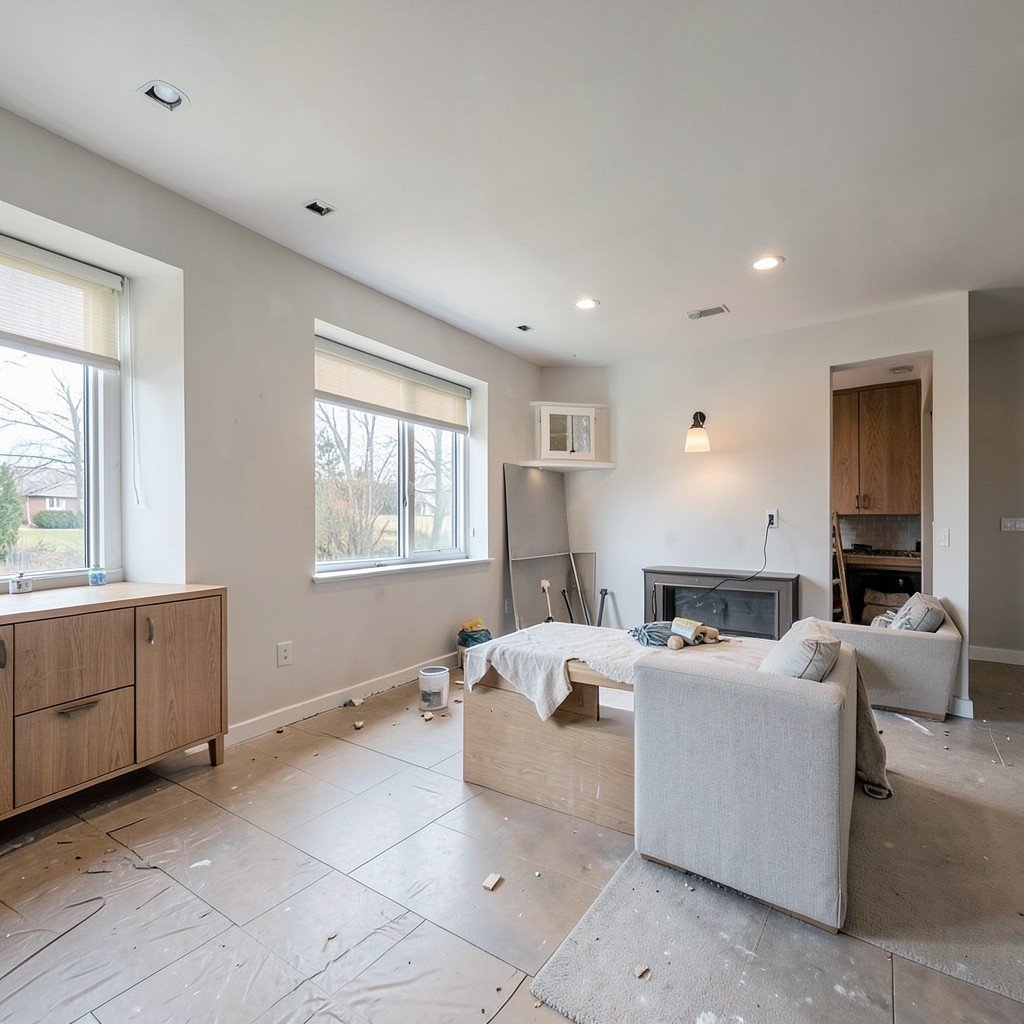
When a remodel budget runs dry, the contractor stops work at the last completed, paid milestone. That's how draw-based contracts work in Wisconsin: you pay for work as it's finished, not all at once up front. If there's no money left for the next draw, there's no obligation for the crew to keep working, and you're left with torn-out drywall, exposed subfloor, or a shower pan with no tile.
Two triggers cause almost every stalled remodel. The first is unplanned change orders: hidden rot behind a 1960s Brookfield ranch's exterior wall, outdated wiring that has to be brought to code before a new kitchen ceiling goes up, plumbing that wasn't where the drawings said it was. The second is simpler: nobody set aside a cushion for exactly that kind of surprise. We build a roughly 10% contingency into every T&J quote for change orders and unknowns, a figure that lines up with what NARI's remodeling guidance recommends for older housing stock. Homeowners who skip that line are the ones who run dry at draw three or four.
We took over a stalled hallway bathroom project in Menomonee Falls last year where the original contractor had priced zero contingency and no allowance for the plumbing relocation the layout actually required. By the time the homeowner called us, the shower was framed but the vanity plumbing was capped off with nowhere near enough budget left to finish. That's a completely avoidable outcome, and it's the same pattern we see in Germantown and New Berlin projects that stall for the same reason.
This is not a rare event. It's the direct downstream result of an underscoped bid signed months earlier. We've covered exactly how that happens, bid by bid, in our piece on why remodels go over budget, if you want the full mechanics. For now, let's deal with where you are today: money's gone, work's stopped, and you need a plan.
Your Options If the Budget Just Ran Dry
You have four realistic paths, and they're not equally good. In order of what actually makes sense: pause and reassess in writing, cut scope to a livable stopping point, bring in gap financing, or renegotiate the remaining work with your current contractor before shopping a new one.
Pause and reassess. Get a written pause agreement from your contractor. It should spell out what's been completed, what's outstanding, and how the warranty is affected by the gap. Without this in writing, you're relying on memory when work eventually resumes, and warranty terms get fuzzy fast once a project sits idle for weeks.
 Remodel - T&J
Want this priced for your remodel?
John walks your space, measures it, and leaves a written itemized estimate. No cost, no obligation, no sales script.
Cut scope to a stopping point that's actually livable. If you're mid-bathroom, finish the working shower and delay the backsplash tile rather than stopping with a torn-out vanity and no working fixture. A kitchen mid-demo with no functioning sink isn't a pause, it's a crisis. Get it to a point where the space is usable, even if it's not finished.
Gap financing. A HELOC, personal loan, or contractor-facilitated financing can bridge the difference between what's left in the budget and what's left to build. This isn't ideal, but it beats a house that sits half-torn-apart for months in a Wisconsin winter.
Renegotiate before you shop around. Talk to your current contractor about the remaining scope before you call a second one. A new contractor inheriting someone else's unfinished work almost always quotes higher, because they're pricing the unknown of what's behind the walls, not just the labor left to do.
Walking away from a mid-demo kitchen or bathroom isn't really an option. A torn-out kitchen with no counter and no sink isn't usable, and leaving it exposed for weeks invites pests, moisture, and structural damage. Pausing safely, meaning capped plumbing lines and secured openings, is a different move than just stopping cosmetically and hoping for the best.
How to Tell If You're at Risk of a Mechanic's Lien
A mechanic's lien is a legal claim filed against your property by a subcontractor or supplier who wasn't paid for labor or material they provided. Wisconsin's lien law, found in Chapter 779 of the state statutes, allows this even if you paid your general contractor in full. If the GC didn't pass that payment down to the plumber, electrician, or cabinet supplier, those parties can still file a lien against your home to recover what they're owed.
We've seen this play out on a stalled kitchen in West Bend, where the homeowner had paid every draw on schedule but the cabinet supplier still hadn't been paid by the general contractor. The lien surfaced during a title search months later when the family tried to refinance.
The practical protection is simple: ask for lien waivers at every payment milestone. A lien waiver is a signed document from the sub or supplier confirming they've been paid for that phase of work. If your contractor can't produce them, that's a red flag before you sign anything, not after.
A transparent draw and payment structure matters more than chasing the lowest bid, because a quote missing lien-waiver documentation as part of its payment process isn't actually cheaper. The risk lands on you, the homeowner, not the contractor who underbid the job. If a lien does get filed, Wisconsin's Department of Agriculture, Trade and Consumer Protection (DATCP) also handles complaints against contractors for unfair trade practices, which is a separate avenue worth knowing about if the general contractor themselves is the one at fault.
Could This Have Been Avoided? What a Complete Quote Looks Like
Yes, in most cases. A complete quote includes four things a lowball bid typically skips: itemized allowances, a stated contingency line, a written change-order process, and a draw schedule tied to inspected milestones, not arbitrary calendar dates.
Here's the side-by-side that matters when you're comparing bids from Waukesha, Milwaukee, or Ozaukee County contractors:
| Complete Quote | Lowball Quote |
|---|---|
| Itemized allowances for cabinets, countertops, fixtures | Vague lump sum, "we'll figure it out" |
| Stated contingency line (~10% standard) | No contingency line at all |
| Written change-order process with pricing method | Verbal "if it comes up we'll deal with it" |
| Draw schedule tied to inspected milestones | Payment schedule tied to dates, not progress |
Allowances matter more than people expect. Cabinets alone are typically the single biggest cost decision in a kitchen remodel, and pricing that line item as one vague number instead of a stated allowance range is where a lot of quotes fall apart by draw two.
Run your own project through our home remodeling cost calculator before your next bid meeting, so you walk in with a realistic range for cabinets, countertops, and fixtures instead of relying on whatever number a contractor hands you verbally.
When you're on your second or third bid, ask three questions point-blank: "What's your contingency policy?" "Are your allowances itemized or lump-summed?" and "What triggers a change order, and how is it priced?" A contractor who answers all three clearly, on the spot, has done this enough times to know where budgets actually break. A contractor who gets vague is telling you where your project will stall.
If You're Mid-Project Right Now: Immediate Next Steps
If your project is stalled today, here's the order of operations. Get everything in writing: current lien waivers, what's been paid, and what's still owed to subs and suppliers. Don't rely on a verbal recap from your contractor.
Get a written scope of exactly what's left to finish, not a rough verbal estimate but an actual list tied to the remaining rooms or systems. Then get a second opinion on just the remaining work before you sign anything new. A second contractor's number on the leftover scope tells you whether your original bid was realistic or whether you were underscoped from day one.
 Remodel - T&J
Secure the space. Capped plumbing lines, weatherproofed openings, and covered exposed framing prevent a paused project from becoming a water-damage claim. An open wall through a Wisconsin winter, especially in older Waukesha or Washington County housing stock, is how a stalled remodel turns into a much bigger repair bill.
A reputable contractor stepping into someone else's stalled project will ask to see your original contract and payment history before quoting. That protects you too, since it confirms exactly what's already been paid for and what isn't their liability to inherit.
How T&J Structures Quotes to Prevent This
On every T&J project, John, our co-founder and project manager, runs the communication directly as the single point of contact. Change orders and budget status get discussed as they come up, not discovered three draws later when it's too late to adjust course. On the Menomonee Falls bathroom takeover mentioned earlier, John walked the homeowner through the full remaining scope, including the plumbing relocation the original contractor never priced, before a single dollar changed hands.
If you're comparing our quote against a lower bid: our quotes include the project management, permit pulling, and change-order discipline that a bare-bones bid often leaves out entirely. That's usually exactly where the cheaper number catches up to you mid-project, once costs that weren't priced in the first place start showing up as change orders.
Before you sign anything with us, we walk through the full scope together so there are no surprises once the work starts. If you're still gathering quotes and want a straight answer on what your project should realistically cost, book a free Waukesha County consultation and we'll walk the space with you before you commit to anyone.
For a firm number on your own project, free in-home estimate.