What a Wet Bar Costs in Wisconsin: The Short Answer
For most Wisconsin homeowners, a wet bar installs for $6,000-$20,000 in 2026. A compact 6-8 ft bar with stock cabinets and a basic appliance package sits near the bottom. A 9-11 ft bar with custom cabinetry, quartz, an undercounter fridge, and an ice maker climbs into the middle and upper part of that band. The typical finished-basement project most comparison shoppers are pricing lands around $10,000-$14,000.
These ranges come from 2026 Midwest regional wet bar cost data, cross-checked against what we actually bid on projects across Waukesha County. The local reality: Midwest pricing runs 10-25% below coastal cities for the same scope, so national averages you'll read online tend to overstate what you'll pay here. It also means a bid quoted off national numbers can look inflated. The rest of this guide breaks down where every dollar goes so you can normalize two or three bids to the same scope and see which contractor is actually cheaper.
Midwest wet bar installs run $6,000-$20,000, roughly 10-25% below coastal metro pricing for the same scope.
Cost by Bar Size: Small, Medium, and Large Tiers
Bar length is the first number that moves the price, and most contractors quote off it. Per-linear-foot pricing runs $950-$4,800/linear ft, which is a huge spread. That range isn't about contractor greed. A $950/ft quote is stock cabinets, a laminate top, and a basic sink. A $4,800/ft quote is full-height custom millwork, quartz with a specialty edge profile, and a full appliance suite. Same length, completely different scope. When you compare bids, match the finish level before you compare the per-foot number.
Small (6-8 ft): $6,000-$16,000
 Basement - T&J
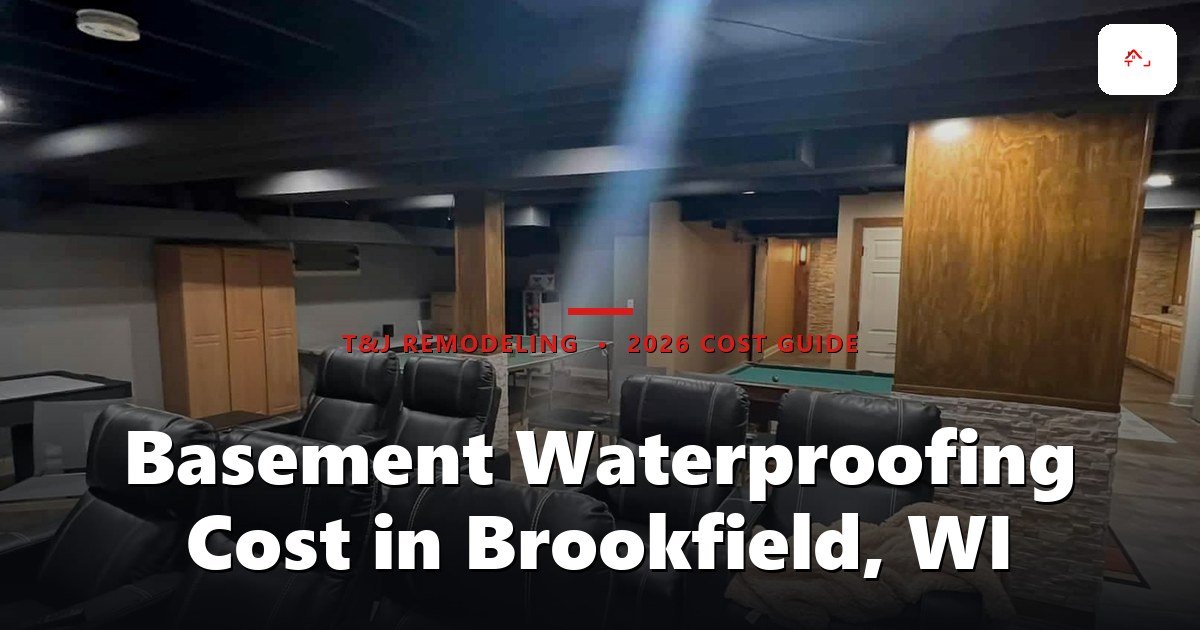
A compact bar in the corner of a finished basement runs $6,000-$16,000 total, with 20-40 labor hours. At the low end you get stock cabinets, a laminate or entry quartz top, a basic sink and faucet, and maybe an undercounter fridge. This is the tier most first-time basement bars fall into. The upper end shows up when you add custom cabinet fronts or a second appliance.
Want this priced for your basement?
John walks your space, measures it, and leaves a written itemized estimate. No cost, no obligation, no sales script.
Medium (9-11 ft): $9,000-$28,000
Mid-size bars run $9,000-$28,000 with 40-50 labor hours. The upper end reflects premium finishes plus a full appliance suite. In the Midwest, the typical project sits well below that ceiling, usually in the low-to-mid teens. To put real numbers on it: in spring 2026 we built a 10-ft bar in a Waukesha ranch basement that came in around $12,400, and the biggest single driver was that the nearest drain stack sat roughly 15 feet away across the slab. Had the homeowner been willing to shift the bar a few feet closer to that stack, we could have trimmed the plumbing labor and the vent run noticeably. This is the most common tier for a Waukesha County entertaining space.
Large (12-14 ft): $12,000-$36,000
A large bar runs $12,000-$36,000 with 50-60 labor hours. At this size you're usually looking at custom cabinetry, a full appliance package, and a countertop with seam work. The upper figures come from curved layouts, specialty wood, and premium stone, features that are more common on main-level installs than in basements.
Component Cost Breakdown: Where the Money Goes
When you strip a wet bar down to line items, the money concentrates in three places: cabinetry, countertops, and the trades (plumbing and electrical). Here's the 2026 breakdown by component, all from the same Midwest wet bar cost data set:
| Component | 2026 Range |
|---|---|
| Cabinetry (stock to full custom/curved) | $2,000-$14,000 |
| Countertop (laminate to quartz/granite) | $1,000-$8,000 |
| Plumbing rough-in (hot/cold, drain, vent) | $800-$5,000 |
| Electrical + lighting | $600-$5,500 |
| Sink + faucet | $200-$2,000 |
| Appliances (fridge, ice maker, disposal) | $500-$4,000 |
| Backsplash | $150-$2,000 |
| Permits | $0-$1,200 |
| Delivery + disposal | $100-$1,000 |
Source: 2026 Midwest wet bar installation cost data.
A few of these deserve context. The undercounter refrigerator alone runs $900-$2,500, an ice maker $1,000-$2,800, and a waste disposal $150-$500. That's why a "full appliance suite" line item can swing by thousands depending on what you actually pick.
Plumbing is the sneaky one. That $800-$5,000 spread is almost entirely about distance from the existing drain stack. A bar sitting a few feet from the main stack is a short, cheap tie-in. A bar on the far side of the basement, requiring a slab penetration and a long horizontal drain run, lands near the top of that range. This is the single biggest reason two bids for the "same" bar don't match. If you're planning the bar as part of a larger project, our page on basement remodeling in Waukesha County walks through how the bar fits into the overall layout and rough-in.
Before you fall in love with a bar location, find your nearest drain stack. Placing the sink within a few feet of it can shave more off your plumbing line than any cabinet decision you'll make.
Want a rough number before you call anyone? Use our wet bar cost calculator to estimate your project in about two minutes based on size and finish level.
Questions to Ask Every Contractor Before You Sign
The fastest way to normalize two or three bids is to ask the same short list of questions and see who has clean answers. These aren't gotcha questions. They surface scope gaps so you're comparing apples to apples.
Is the plumbing permit included in this quote, or billed separately?
Is the electrical rough-in a fixed price or an allowance?
Who pulls the permits, you or me?
A homeowner-pulled permit shifts the inspection liability onto you.
Is debris removal included?
What's your change-order policy if we hit an unexpected condition behind the wall?
Are you a credited contractor in the state of Wisconsin?
That matters for permit-pulling authority.
If you want to understand what you can and can't handle yourself, our guide to what counts as a finished basement in Wisconsin lays out the line between DIY-friendly work and work that legally needs a licensed trade. Run this list past all three bidders and the "cheapest" quote often stops looking cheapest.
If a contractor pushes you to pull the permit yourself "to save money," understand what you're accepting: you become the responsible party at inspection, and any failed inspection or code correction lands on you, not them.
Wet Bar Cost in Waukesha County: What to Expect Locally
For Waukesha County and the Greater Milwaukee area, a mid-size 8-11 ft wet bar with standard finishes lands in the lower-to-mid part of the national range, realistically inside the Midwest band of $6,000-$20,000. Midwest pricing runs 10-25% below coastal metros, so if you've been reading national cost guides, expect to pay less here than those averages suggest. Within the county, denser suburbs like Brookfield and New Berlin can run slightly higher than rural townships because of labor availability and permit fees, though your finish choices still swing the number far more than the ZIP code does.
T&J All In Remodeling serves Waukesha, Brookfield, New Berlin, and the surrounding communities, and most wet bar projects we take on fall right in that mid-band once the scope is complete and honest. Lead times typically run 4-8 weeks from signed contract depending on the season and permit turnaround, with 1-3 weeks of active work once materials are on site.
 Basement - T&J
Ready to price your Waukesha wet bar? Get a free, no-obligation estimate from T&J Remodeling below.
Frequently asked questions
How much does a wet bar cost in a Wisconsin basement?
For a Midwest basement, most wet bar installs land between $6,000 and $20,000 depending on size, finish level, and how far the plumbing has to run. A compact 6-8 ft bar with standard cabinets and a basic appliance package sits at the lower end, while a 9-11 ft bar with quartz, an undercounter fridge, and an ice maker pushes toward the middle and upper range. Wisconsin pricing generally runs 10-25% below coastal metros, so national averages tend to overstate what you'll actually pay here.
Do I need a permit for a wet bar in Wisconsin?
Yes. In most Wisconsin jurisdictions a wet bar requires both a plumbing permit (for the supply lines, drain, and vent) and an electrical permit (for dedicated circuits and GFCI outlets near the sink). Permit costs range from $0 to $1,200 depending on the municipality. The plumbing work falls under Wisconsin's SPS 382 code, administered by the Wisconsin Department of Safety and Professional Services, and the electrical must meet NEC 210.8 for GFCI protection near the sink. Ask your contractor whether the permit is included and who pulls it. A contractor who pulls the permit takes on the inspection liability, which is the right arrangement.
Why is the plumbing so expensive on a wet bar?
It comes down to distance from your existing drain stack. A bar a few feet from the main stack is a short, cheap tie-in near the bottom of the $800-$5,000 range. The moment the bar sits on the far side of the basement, you're into a concrete slab penetration plus a long horizontal drain run, and because Wisconsin's SPS 382 code requires the fixture trap to be vented within a set distance, that long run usually means adding vent piping too. All of that is billed labor hours and material. In practical terms, moving the bar closer to the stack is the single biggest lever you have to cut the plumbing line.
Why are two wet bar quotes so different in price?
Usually it's scope gaps, not contractor quality. A low bid often excludes the plumbing permit, treats electrical as an "allowance" rather than a fixed price, or leaves debris removal off entirely. It may also assume the drain stack is nearby when it isn't, and a long plumbing run or a below-grade drain requiring an ejector pump can add thousands. When you normalize two bids to the same complete scope, including permits and a fixed electrical number, the gap usually shrinks significantly.
What's the difference between a wet bar and a dry bar?
A wet bar has a plumbed sink with running water: hot and cold supply lines, a drain, and a vent. A dry bar has no plumbing, just cabinetry, a countertop, and storage. The plumbing rough-in ($800-$5,000) and the permit it requires are what make a wet bar more expensive. If your basement already has a nearby drain stack, the cost difference narrows. If it doesn't, the plumbing run becomes the single biggest cost variable, which is why some homeowners choose a dry bar to sidestep the slab work entirely.
How long does it take to install a wet bar?
Labor hours range from 20-40 for a small 6-8 ft bar to 50-60 for a large 12-14 ft bar. That's trade labor only. Cabinet delivery lead times, permit processing, and inspection scheduling add calendar time. In practice, most wet bar installs in Wisconsin run 1-3 weeks of active work once materials are on site, with total project timelines of 4-8 weeks from signed contract to finished bar depending on schedule and permit turnaround.
What appliances should I include in a wet bar budget?
The core appliance package for most basement bars includes an undercounter refrigerator ($900-$2,500), an ice maker ($1,000-$2,800), and a waste disposal ($150-$500). A wine cooler adds another layer. Budget roughly $2,000-$6,000 for a full appliance suite. Each appliance that draws significant power needs its own dedicated circuit, and that's the electrical cost driver most homeowners don't anticipate until they see the electrician's line item.