 Basement project - T&J
The Short Answer: Plumbing, Then Electrical, Then Waterproofing
For most Waukesha County homeowners finishing a basement in 2026, the single most expensive decision is whether to add a bathroom. A full basement bath runs $10,000-$15,000; a half bath runs $5,000-$8,000. Skip the bathroom and electrical becomes the top line item at $5,000-$10,000 for a typical finish. Waterproofing, which you cannot skip regardless, runs $3-$10/sqft, or $1,500-$5,000 for a 500 sqft basement.
These three dominate the budget for the same reason: hidden labor, strict code requirements, and licensed-only work. A framing mistake costs you lumber. A plumbing rough-in mistake costs you a jackhammer and a re-inspection.
Full Cost Snapshot: What a Basement Finish Actually Costs
A basic 500 sqft basement finish runs $5,000-$15,000 at the budget end. Larger projects with a general contractor start around $34,000. Labor alone accounts for 20-40% of total project cost.
Permit fees vary by municipality. The City of Waukesha Building Inspection Division requires a building permit for any basement conversion to finished living space, plus separate electrical and plumbing permits when that work is included. A realistic Wisconsin ballpark for the building permit alone is $1,160-$1,350, confirm the exact fee schedule with your local building department before budgeting.
 Basement - T&J
Want this priced for your basement?
John walks your space, measures it, and leaves a written itemized estimate. No cost, no obligation, no sales script.
Labor is 20-40% of your total basement finishing cost, meaning the theoretical max DIY savings on a $40,000 project is $8,000-$16,000. But only on the right phases.
Here's a phase-by-phase snapshot for a typical 500-800 sqft Wisconsin basement:
| Phase | Typical Cost Range |
|---|---|
| Plumbing, full bath | $10,000-$15,000 |
| Plumbing, half bath | $5,000-$8,000 |
| Electrical (wiring + fixtures) | $5,000-$10,000 |
| Waterproofing | $1,500-$5,000 |
| Framing + drywall | $500-$1,600 |
| Flooring | $1,500-$5,500 |
| HVAC extension | $3,000-$7,000 |
| Egress window (per window) | $2,500-$5,000 |
| Ceiling | $500-$1,000 |
| Painting | $1,500-$3,500 |
| Building permit | $1,160-$1,350 |
Plumbing: Why Adding a Bathroom Is the Biggest Budget Decision
On a 1960s Brookfield ranch we finished, the drain stack ran through the center of the slab. Adding a bathroom meant cutting and removing concrete, running new drain lines at the correct slope, code requires 1/4 inch of drop per foot of run, tying into the existing stack, and pouring new concrete over the trench before a single stud went up. That sequence is what makes basement plumbing expensive: it's not the fixtures, it's the slab work underneath them.
Rough-in plumbing, the drain, waste, and vent lines installed before walls close, as opposed to finish plumbing which connects visible fixtures, is the phase where a single misaligned slope means jackhammering the slab a second time. We've seen homeowners attempt this themselves and face exactly that outcome: a failed rough-in inspection, a second concrete cut, and a bill that exceeded what a licensed plumber would have charged from day one.
Cost breakdown for basement plumbing:
- Full bathroom addition: $10,000-$15,000 - Half bathroom addition: $5,000-$8,000 - Wet bar with sink: $2,000-$5,000 - Overall plumbing range: $3,000-$15,000 - Per fixture (professional installation): $450-$1,000 If your existing electrical panel can't handle the added load from a bathroom exhaust fan, GFCI circuits, and lighting, budget an additional $1,500-$3,000+ for a panel upgrade.
If you're not adding a bathroom, the cost hierarchy shifts, electrical becomes the top line item. The rest of this guide still applies; just reweight accordingly.
For a closer look at how T&J approaches basement finishing projects, including how we sequence rough-in work before framing begins, that page walks through our process.
Electrical: What a Licensed Electrician Actually Does (and What It Costs)
Electrical work for a typical basement finish runs $5,000-$10,000. For a 1,000 sqft basement, wiring and fixtures alone run $3,000-$5,000. Licensed electricians charge $50-$100/hour, and if the existing panel can't handle the added circuits, a panel upgrade adds $1,500-$3,000+.
Here's where that money goes in a standard finish:
- Outlets: ~$1,100 - Light fixtures: $90-$250 each, up to $500 for specialty fixtures - Total lighting: ~$2,880 - Other electrical components: ~$1,325 Electrical typically represents 10-15% of the total basement finishing budget.
Wisconsin requires a permit and rough-in inspection before walls close on any finished basement electrical work. The Wisconsin Department of Safety and Professional Services (DSPS) licenses electricians and sets the inspection standards, unlicensed work that fails inspection means opening walls. The permit process exists to catch mistakes before they're buried in drywall, which is also why it protects you as the homeowner.
For more on what Wisconsin permit requirements actually look like in practice, that page covers the specifics for bathroom and basement work.
Waterproofing and Moisture: The Cost You Can't Skip
Waterproofing runs $3-$10/sqft. For a 500 sqft basement, that's $1,500-$5,000, with an average around $3,250. A sump pump, a submersible pump installed in a pit at the basement's lowest point that automatically ejects groundwater before it reaches the slab, costs $250-$375 for the unit alone; professional installation runs $600-$2,000.
Wisconsin's clay-heavy soils hold moisture against foundation walls, and freeze-thaw cycles push that moisture inward every winter. Drywall and flooring installed over a damp slab will show mold, efflorescence (white mineral deposits that bloom through concrete as water evaporates), and flooring delamination within two to three seasons. Mold remediation in a finished basement, tearing out drywall, treating framing, replacing flooring, costs far more than the waterproofing system would have cost upfront.
 Basement - T&J
Before any waterproofing quote, tape a 2-foot square of plastic sheeting to the slab for 48 hours. Moisture beading on the underside means water is migrating through the concrete itself, a different and more expensive fix than surface drainage alone. Any contractor who doesn't ask about your moisture history before quoting is skipping a diagnostic step that matters.
This is the phase most DIYers underestimate or skip. Don't.
Egress Windows and HVAC: The Costs That Surprise People
Egress windows, openings in the foundation wall that meet minimum size requirements so an occupant can escape in an emergency, required by the International Residential Code (IRC Section R310) any time a basement room is used as a bedroom, run $2,500-$5,000 per window installed, including excavation and the window well. The window unit alone ranges from $100-$800 for pre-fabricated models to $500-$2,000 for custom units. If you want a basement bedroom that legally counts as a bedroom on an appraisal or listing, the egress window is not optional.
HVAC: Extending your existing forced-air system to the basement runs $3,000-$7,000. A mini-split, a ductless heating and cooling system with an outdoor compressor and one or more indoor air handlers, requiring no ductwork, runs $4,000-$10,000 depending on size and zones; simpler systems start around $2,500, complex multi-zone systems reach $10,000.
If your existing HVAC is already near capacity, common in older Waukesha County homes with 1970s-era systems, a mini-split is often the smarter long-term choice even at higher upfront cost. Adding basement load to an overworked furnace shortens its life.
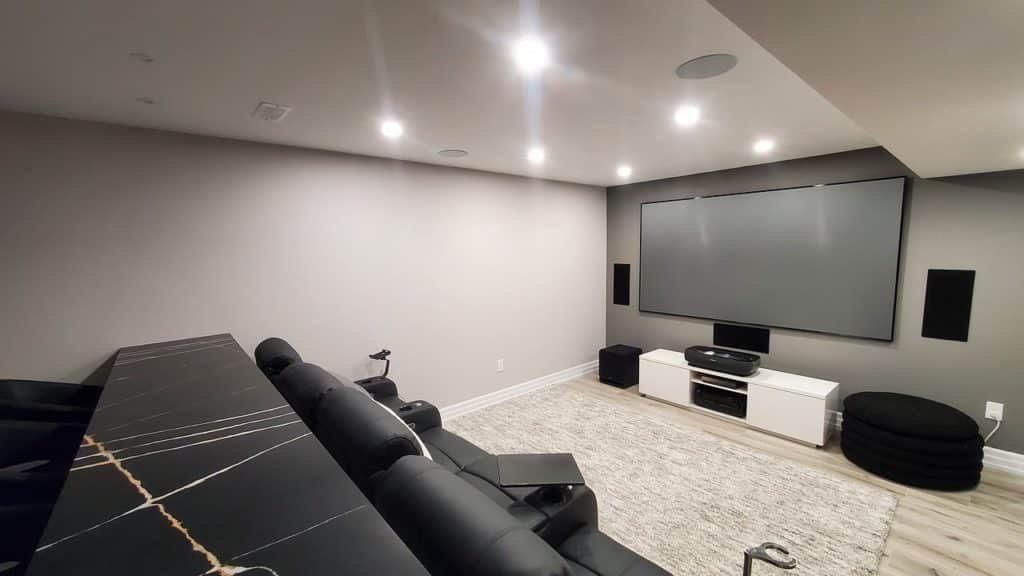
Optional add-on: soundproofing for a home theater or music room runs $5,000-$30,000, depending on wall assembly and ceiling treatment.
Framing, Drywall, Flooring, and Ceiling: Where DIY Can Actually Help
These are the phases where a capable DIYer can legitimately save money, but only after the rough-in work passes inspection. Don't frame walls over uninspected plumbing.
- Framing: $3-$6/linear ft basic; add $5-$10/linear ft for drywall. Combined average around $1,200, range $500-$1,600.
- Drywall: $1.50-$4/sqft, or $750-$2,000 for a 500 sqft basement.
- Flooring: $3-$11/sqft installed, average $3,500, range $1,500-$5,500. In a basement, material choice matters more than labor savings, luxury vinyl plank (LVP), tile, and engineered hardwood handle moisture; solid hardwood and standard laminate do not.
- Ceiling: $1-$6/sqft depending on type; $500-$1,000 for 500 sqft. Drop ceilings cost more but allow access to mechanicals.
- Painting: $3-$7/sqft contractor-installed, $1,500-$3,500 for 500 sqft.
- Interior doors: $150-$500 each.
Frame interior walls with pressure-treated bottom plates where they contact the concrete slab. Standard lumber in contact with concrete wicks moisture and rots, this is a Wisconsin code requirement and a detail that separates a durable finish from one that fails in a decade.
Framing and painting are genuinely learnable. Flooring installation is learnable with the right material. Drywall taping and mudding takes more practice than most people expect, factor that into your timeline.
DIY vs. Hiring a Pro: Where the Math Actually Works Out
Labor is 20-40% of total project cost. On a $40,000 project, that's $8,000-$16,000 in theoretical savings. Real number, worth pursuing on the right phases.
But rough-in plumbing, electrical panel work, and egress window excavation require licensed contractors and permits in Wisconsin regardless of who physically does the work. A DIY rough-in that fails inspection means opening walls or jackhammering slab, the cost of that mistake often exceeds what a licensed plumber would have charged from the start.
 Basement - T&J
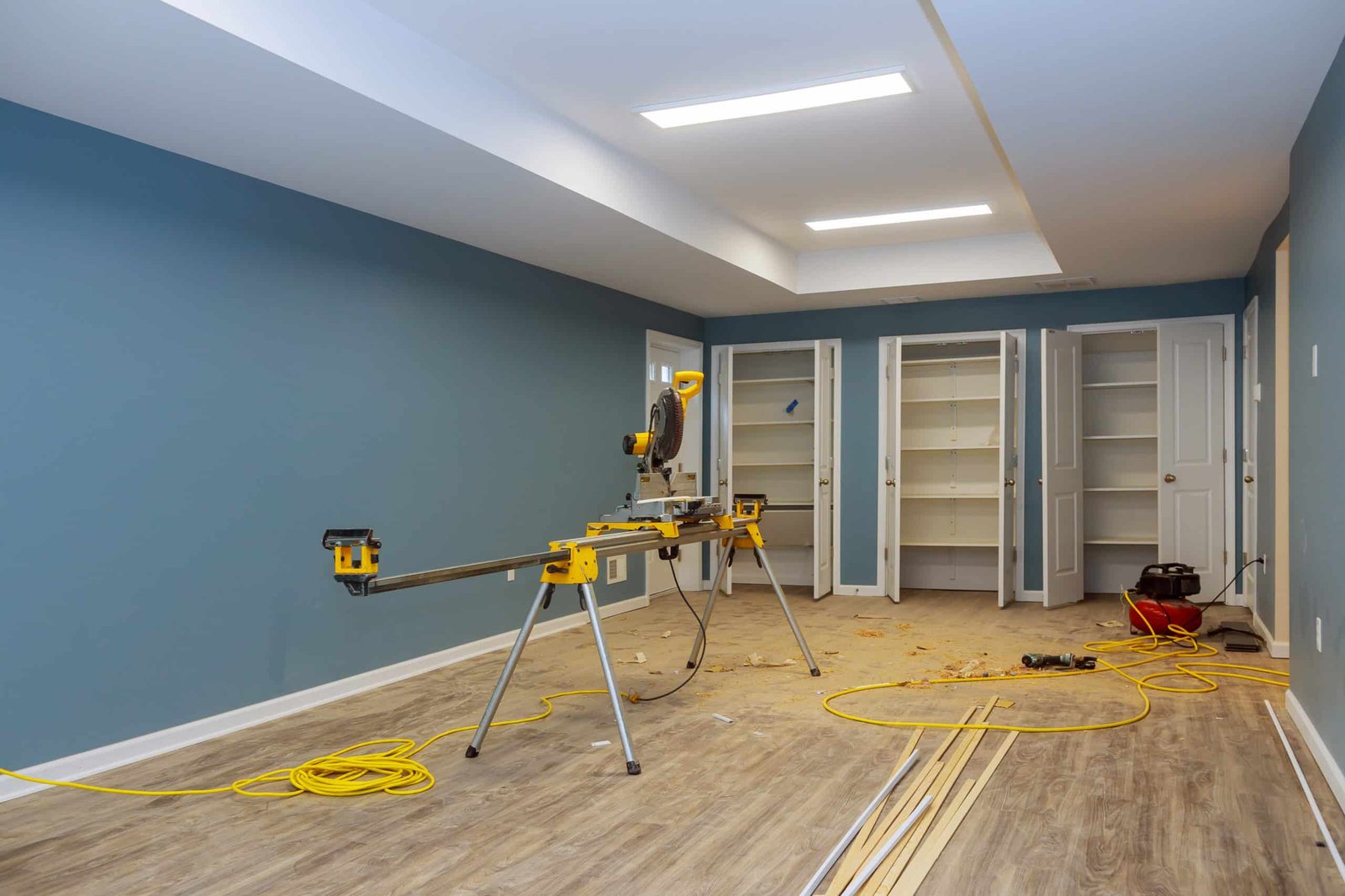
Honest DIY-viable list: framing, drywall finishing (with practice), painting, flooring installation, ceiling tile.
Honest hire-a-pro list: plumbing rough-in, electrical panel and circuit wiring, waterproofing system, egress window excavation, HVAC.
A finished basement returns roughly 70-75% of its cost at resale, meaning a well-executed finish is an investment, not just an expense. Cutting corners on rough-in phases is exactly where that ROI evaporates.
John manages every T&J project from first call to final walkthrough and walks through scope with homeowners before anything is signed, so there are no surprises when the concrete is already open. That's not a sales pitch; it's how you avoid the most common cost overrun in basement finishing.
What to Budget: A Simple Tier Framework for Waukesha County Homeowners
These are Wisconsin-area estimates extrapolated from the evidence ranges above. Actual quotes vary by municipality, existing conditions, and material choices, use these as planning anchors, not contract numbers.
Budget finish, no bathroom, standard materials, some DIY finish work: $15,000-$25,000 for a typical 600-800 sqft Wisconsin basement.
Mid-range finish, half bath, LVP flooring, recessed lighting, HVAC extension: $30,000-$50,000.
Full finish, full bath, egress windows, mini-split, custom ceiling, premium materials: $50,000-$75,000+.
The single biggest variable is whether you're adding plumbing. Know that answer before you call anyone for a quote, it determines which tier you're actually in.
If you're planning basement remodeling in Brookfield and the surrounding Waukesha County area, T&J offers a free in-home walkthrough, no cost, no obligation, so you know your actual number before committing to anything.
Frequently asked questions
Is adding a bathroom the most expensive part of finishing a basement?
Yes, in most cases. A full basement bathroom runs $10,000-$15,000; a half bath runs $5,000-$8,000. The reason is rough-in plumbing, connecting new drain lines to the existing stack requires breaking the concrete slab, running lines at the correct slope (1/4 inch per foot per code), and passing a rough-in inspection before walls close. That labor is expensive because the margin for error is zero. Skip the bathroom and electrical becomes the top cost driver instead.
Can I DIY basement plumbing to save money?
No, not the rough-in phase. In Wisconsin, plumbing rough-in requires a licensed plumber and a permit inspection before walls close. A misaligned drain slope means jackhammering the slab a second time, and that cost typically exceeds what a licensed plumber would have charged originally. You can legally handle some finish plumbing (connecting a faucet, for example), but the drain, waste, and vent lines that go under the slab are not a DIY phase in a permitted project.
Do I need a permit to finish my basement in Wisconsin?
Yes. Finishing an unfinished basement is considered new living space under Wisconsin building code and requires a building permit, plus separate electrical and plumbing permits when that work is included. Permit fees typically run $1,160-$1,350 for the building permit alone. Skipping permits risks voiding your homeowner's insurance, creates problems at resale, and can require tearing open walls for a retroactive inspection. The permit process also protects you, it's the mechanism that catches contractor mistakes before they're buried in drywall.
What happens if I skip waterproofing before finishing my basement?
Moisture will find the path of least resistance, through your new drywall, flooring, and insulation. Wisconsin's freeze-thaw cycles push groundwater against foundation walls seasonally. A basement finished over a damp slab typically shows mold, efflorescence, and flooring failure within two to three years. Mold remediation in a finished basement, tearing out drywall, treating framing, replacing flooring, costs far more than the $1,500-$5,000 waterproofing system would have cost upfront. Waterproofing isn't optional; it's the foundation everything else depends on.
How much does it cost to finish a 500-square-foot basement?
A basic 500 sqft finish, no bathroom, standard materials, runs roughly $5,000-$15,000 at the budget end. Add a half bath and the floor starts around $20,000-$30,000. A full finish with a bathroom, egress windows, and proper HVAC can reach $35,000-$50,000 or more. The wide range exists because the biggest cost drivers, plumbing, electrical, waterproofing, vary heavily depending on existing conditions: how far the drain stack is, whether the panel needs upgrading, how wet the slab is.
Does finishing a basement add value to my home?
Generally yes, a finished basement returns roughly 70-75% of its cost at resale. A basement with a legal bedroom (requiring an egress window), a bathroom, and proper HVAC adds more value than a basic rec room because it functions as genuine additional living square footage. In Waukesha County's market, finished basement square footage is valued lower than above-grade square footage but still meaningfully increases list price and buyer appeal.
How much does egress window installation cost?
Egress window installation, including excavation, window well, and the window unit, typically runs $2,500-$5,000 per window. The unit alone ranges from $100-$800 for pre-fab to $500-$2,000 for custom. Egress windows are required by code any time a basement room is used as a bedroom, not optional if you want the room to legally count as a bedroom on an appraisal or listing.