T And J All In Remodeling | Home Remodeling Waukesha & SE Wisconsin

What Is the 30% Rule in Remodeling? (2026 Guide)

What Is the 30% Rule in Remodeling? (2026 Guide)

35+ yrs combined|Father & son, on-site|WI Dwelling Contractor|Free in-home consultation
Waukesha County kitchen remodel with custom white cabinetry, quartz countertops, and stainless steel appliances

The 30% rule in remodeling is straightforward: don't spend more than 30% of your home's current market value on a single remodeling project . On a $400,000 home in Waukesha County, that's a $120,000 ceiling . The rule comes from real-estate appraisal logic, appraisers value your home against neighborhood comparables, not against what you spent on finishes. Spend past that ceiling and you risk investing money you won't recover at resale. Use the home remodeling cost calculator to sanity-check your own number before reading further. Or call John at (262) 352-9525.

The 30% Rule, Defined in Plain Terms

The rule originated as a resale-protection guideline, not a quality ceiling. The underlying logic: appraisers don’t care what your countertops cost, they care what the house three doors down sold for last spring. If comparable homes in your Brookfield or Pewaukee neighborhood top out at $450,000, no appraiser will value your $380,000 ranch at $560,000 because you put in a $180,000 remodel. The market sets the ceiling, not your invoice.

Over-improving, spending enough on renovations to push your home’s value above what the local market will support, is the specific risk the 30% rule guards against. It’s not that the work is bad. It’s that the return on that work is capped by what buyers in your zip code will pay.

For a $300,000 home, the 30% ceiling is $90,000 . For a $400,000 home, it’s $120,000 . Those aren’t magic numbers, they’re a starting point for a smarter budget conversation.

The number

On a $400,000 Waukesha County home, the 30% rule sets your single-project remodeling ceiling at $120,000 .

Finished basement remodel in Wisconsin featuring a kitchenette with wood cabinets, black countertops, barn door, and polished concrete flooring by T&J All In Re

Where the Rule Holds, and Where It Breaks Down

The rule is most useful in one specific scenario: you’re planning to sell within three to five years. In that case, every dollar you spend is being evaluated by future buyers and their appraisers. Over-improving relative to your neighborhood comps is a real financial risk, and the 30% ceiling keeps you honest.

Even well-executed kitchen remodels recoup roughly 60-80% of their cost at resale, and bathroom remodels recoup around 55-70% . That’s not a reason to skip the remodel, it’s a reason to size it correctly.

The rule matters much less when you’re staying put long-term. If you’re in a 1960s Elm Grove colonial and you’re not moving for fifteen or more years , the personal utility of a well-designed kitchen or a primary bath that actually functions is a legitimate return on investment. You’re not optimizing for an appraisal; you’re optimizing for daily life.

The third scenario is the one most homeowners miss: the neighborhood ceiling, the effective upper limit on home values set by comparable sales within roughly a half-mile of your property. If every similar home in your Brookfield or Muskego neighborhood sells between $480,000 and $520,000, a $200,000 remodel on a $400,000 home is financially risky regardless of whether it clears the 30% threshold. The ceiling isn’t your math, it’s the market.

Pro tip

Before finalizing any remodel budget, pull three to five recent sales of similar homes within a half-mile. That's your real ceiling, not a percentage formula. A local realtor can pull those comps in under ten minutes at no cost.

Plan the rough-in before you pick the finishes. People do it backwards and end up redesigning around a sink location they can't change.

Telli, T&J co-founder · remodeling expert since 1989

What the 30% Rule Looks Like by Project Type

How the rule plays out depends heavily on which room you’re remodeling. Here’s how it applies to the three project types we handle most often across Waukesha County.

Kitchen remodels, A mid-range kitchen runs roughly $35,000-$75,000; a luxury kitchen with custom cabinetry, high-end appliances, and structural changes can reach $80,000-$150,000 or more. For a $400,000 home with a $120,000 ceiling , even a full luxury kitchen remodel typically fits within the rule. To get your kitchen budget estimate and see where it lands relative to your home’s value, the cost calculator walks through it in a few clicks.

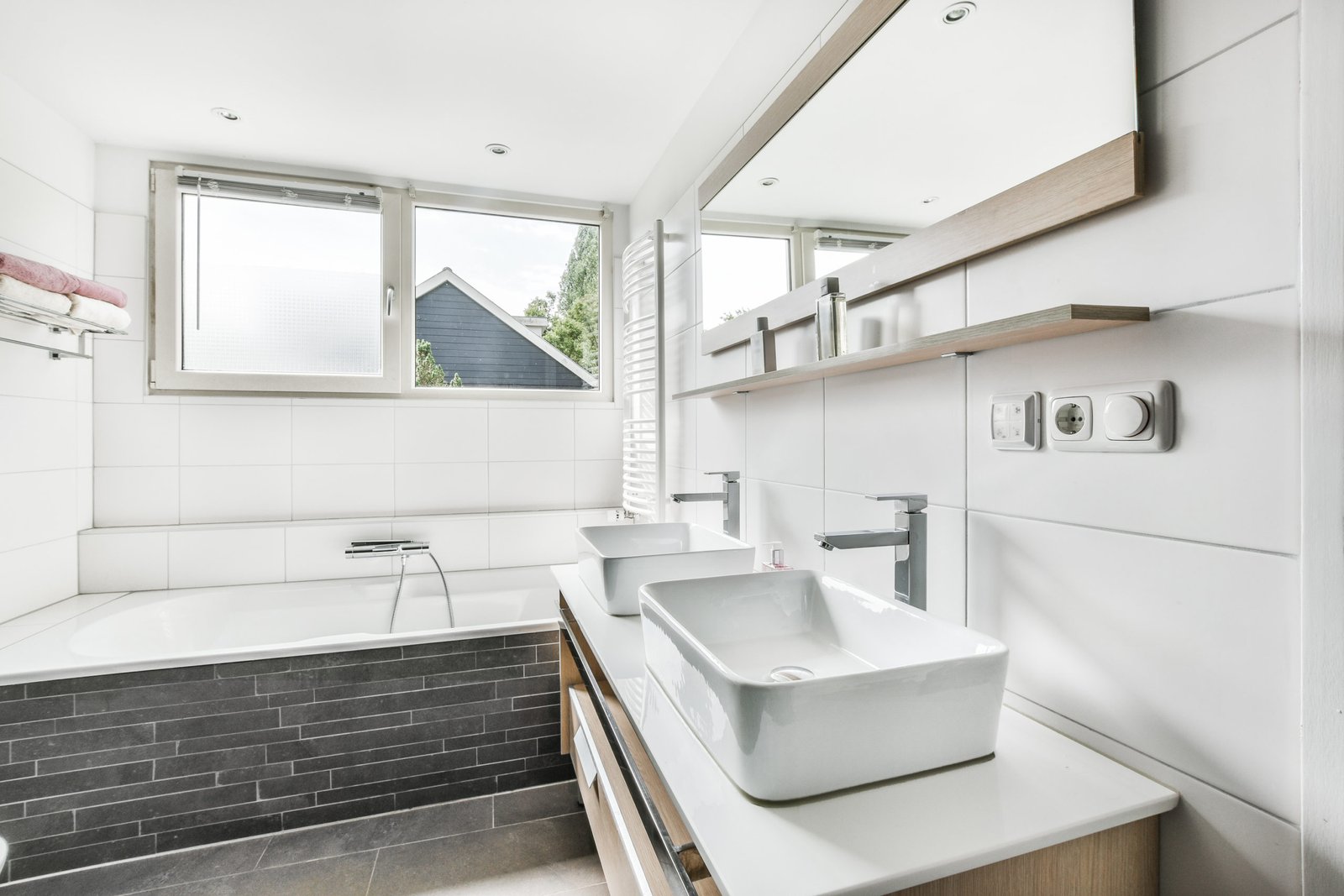
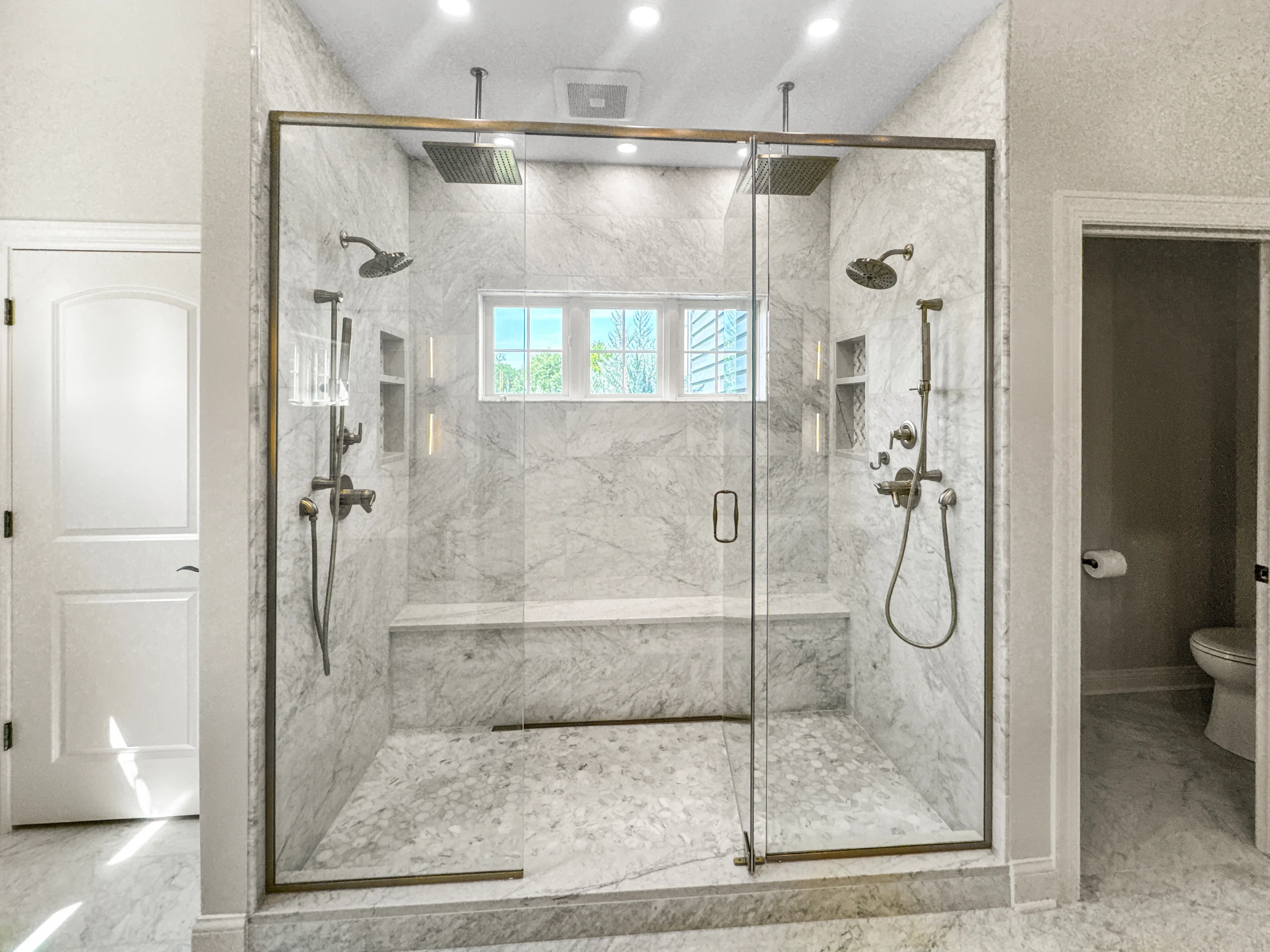
Bathroom remodels, A mid-range bathroom runs $12,000-$30,000; a primary bath with a walk-in tile shower, freestanding tub, and double vanity typically lands between $35,000-$60,000+. These almost always fit comfortably within the 30% ceiling for Wisconsin homes in the $350,000-$500,000 range.

Home additions, This is where the rule most commonly gets breached. A room addition or finished lower level can run $80,000-$200,000+ depending on square footage, foundation work, and mechanical integration. It’s also where the "staying put" logic matters most: an addition fundamentally changes the home’s baseline livable square footage, which does shift its market value, not always dollar-for-dollar, but more than a cosmetic remodel does.

For a detailed breakdown of what drives kitchen costs up or down in Wisconsin, see what a full kitchen remodel actually costs in Wisconsin, the cost-driver logic applies equally to bath projects.

The Real Reason Quotes Vary by 20-40%, It's Not Markup

If you’ve collected three quotes and one is significantly lower than the others, the instinct is to wonder whether the higher contractors are padding their margins. In most cases, that’s not what’s happening. The gap is almost always scope.

Here’s what stripped-down bids routinely leave out:

Permit fees, Permit costs vary by municipality across Waukesha County, and the differences are real. The City of Waukesha and City of Brookfield each publish their own fee schedules through their building inspection departments; for a mid-size kitchen remodel, permit fees in Waukesha County municipalities typically run in the hundreds of dollars and can climb higher for larger scopes, contact your specific city’s building department directly for current figures, since fee schedules update annually. A low-ball bid that excludes this line entirely isn’t saving you money; it’s hiding a cost you’ll pay regardless.

Watch out

Unpermitted work isn't just a code violation, it can trigger a failed inspection at resale and void your homeowner's insurance coverage on that scope of work. Always confirm in writing that permits are included in your contractor's quote.

Project management, demo labor, and disposal, These don’t disappear from a stripped-down bid. They either show up as change orders mid-project or get absorbed into corners cut on the work itself.

Low material allowances, A quote that reads "$3,000 tile allowance" sounds reasonable until you’re standing in the showroom and the tile you want runs $8-$12 per square foot. The allowance was written for $3/sq ft builder-grade. The difference comes back to you as a change order.

No change-order discipline, A vague contract with no defined change-order process or markup rate is a bid that will grow. Once demo is done and walls are open, you’re in a poor negotiating position.

Before you compare bottom-line numbers, ask every contractor these four questions:

  1. Does your quote include permit pulling and all associated municipal fees?
  2. What is your change-order process, and what markup do you charge on approved changes?
  3. Are demo labor and disposal included, or billed separately?
  4. What is your warranty on labor, and how long does it cover?

A contractor who answers all four clearly and in writing is giving you a complete scope. One who hedges or says "we’ll figure that out as we go" is signaling a bid that will grow. John manages every T&J project from first call through final walkthrough and answers all four of these questions in writing before a contract is signed, because a homeowner who understands their scope before demo day doesn’t get surprised after it.

Finished basement remodel in Wisconsin featuring a wet bar with wood cabinets, dark countertops, stacked-stone accent wall, barn door, and dark painted ceiling

How to Use the 30% Rule to Catch a Low-Ball Bid

Here’s a practical three-step process you can run before signing anything.

Step 1, Establish your home’s current market value. A recent appraisal is most accurate. A Zillow estimate or a quick conversation with a local realtor gets you close enough for budgeting purposes. Use today’s number, not what you paid.

Step 2, Multiply by 0.30. That’s your single-project ceiling. A $400,000 home → $120,000 ceiling . A $450,000 home → $135,000 ceiling .

Step 3, Compare quotes against that ceiling AND against each other, line by line, not just the total. Use the four questions above to verify that each quote covers the same scope before you compare numbers.

Here’s a concrete example: three quotes for a Waukesha kitchen remodel come in at $58,000, $61,000, and $41,000. The $41,000 quote excludes permit fees, uses a $2,500 cabinet allowance where the other two spec semi-custom cabinets at $12,000-$15,000, and has no project management line. That’s not a $17,000 savings, that’s a $17,000 scope gap that will resurface as change orders once the job is underway.

Pro tip

Ask for an itemized quote, not just a total. Cabinets, countertops, labor, permits, demo/disposal, and project management should each be their own line. If a contractor won't break it out, that tells you something.

A quote that’s 25-30% below the others isn’t a deal. It’s a signal to ask what’s missing.

When You Should Spend More Than 30% Anyway

The rule is a guideline, not a law. Three situations where exceeding the 30% ceiling is the right call:

You’re not selling. If you’re planning to stay in your home for ten or more years , the resale-ROI math matters far less than the quality of your daily life. A primary bath you actually enjoy using every morning has real value that doesn’t show up on an appraisal.

Your home is under-valued relative to the neighborhood. If comparable homes on your street in Pewaukee or New Berlin sell for $480,000-$520,000 and yours sits at $380,000 due to dated finishes, a $120,000 remodel isn’t over-improving, it’s bringing the home to market parity. The neighborhood ceiling actually supports the spend.

Structural or safety issues are involved. Water intrusion, outdated knob-and-tube electrical, or a failing foundation aren’t optional improvements, they’re deferred maintenance that affects insurability and safety. These don’t follow the 30% rule because they’re not discretionary.

Telli, who spent years doing high-end residential work in Athens before bringing that craft to Wisconsin, has worked with clients who deliberately exceed the 30% ceiling, not to over-improve, but because the quality of daily life in a well-built home is the return they’re after.

Putting It Together: A Simple Budget Sanity Check Before You Sign

Before you accept any quote, run through this five-point check:

  1. Know your home’s current market value, recent appraisal, realtor comp, or a reliable estimate.
  2. Calculate your 30% ceiling, that’s your single-project guardrail.
  3. Decide whether you’re optimizing for resale or livability, that changes how strictly the ceiling applies.
  4. Get two to three quotes with identical written scopes, not just the same project description, but the same line items.
  5. Ask the four contractor questions before comparing prices, permits, change-orders, demo/disposal, and labor warranty.

If you want a quote that walks through scope line by line before you commit, no surprises mid-project, see the full scope of remodeling services T&J offers in Waukesha County. Free in-home consultation, no obligation, and a transparent estimate so you know what your remodel actually costs before anything gets signed.

Want a real number for your kitchen, not a national average?See my number

Frequently asked questions

Does the 30% rule apply to every type of remodel?

The rule applies most cleanly to kitchen and bathroom remodels where resale ROI is well-documented. It's less reliable for home additions, whole-home remodels, or projects driven by structural necessity, because those projects change the home's baseline value, not just its finish level.

The deeper reason the rule works for kitchens and baths: those projects are cosmetic improvements to existing square footage. Appraisers can compare your updated kitchen directly against similar updated kitchens in recent neighborhood sales. With an addition, the comparison pool shrinks and the value attribution becomes less predictable.

The bottom line: use the 30% rule as a starting filter, not a final answer. If you're not selling, the math changes entirely, personal utility is a legitimate return that the rule doesn't measure.

Why do contractor quotes vary so much for the same project?

The most common reason isn't profit margin, it's scope. A quote that looks 20-30% cheaper often excludes permit fees, project management, demo disposal, or uses low allowances for materials you haven't selected yet.

Why does this happen? Because a stripped-down bid wins more jobs at the signing table. The contractor isn't necessarily dishonest, they may genuinely plan to handle those items as change orders. But once demo is done and walls are open, you have no leverage. The "cheap" bid becomes the expensive one.

The fix is to require every contractor to quote the same written scope, then compare line by line, not just the bottom number. The four questions in this article (permits, change-orders, demo/disposal, labor warranty) are the fastest way to surface those gaps before you sign.

What counts toward the 30%, materials only, or labor too?

Everything counts: materials, labor, permits, design fees, project management, and contingency. The rule is about total project spend relative to home value, not just what you buy at the supply house.

Why does this matter? Because a stripped-down bid that quotes materials and rough labor only will look 20-30% cheaper than a complete bid, until the missing line items get added back in as change orders mid-project. The complete bid reaches the same total; it just shows you the number honestly upfront.

A 10-15% contingency buffer on top of your base budget is also worth building in , because even well-scoped projects encounter surprises once walls are open, especially in older Wisconsin homes where insulation, plumbing, and electrical may not meet current code.

How do I know if I'm over-improving my home?

Over-improving happens when your remodel pushes your home's total value above the ceiling set by comparable homes in your neighborhood. If every similar home on your street sells for $450,000-$500,000, spending $150,000 on a remodel of a $380,000 home likely won't return that investment at resale.

The mechanism is specific: appraisers are required to value your home against comparable sales, homes of similar size, age, and condition within roughly a half-mile. They cannot appraise your home above what the market supports, regardless of finish quality. A $50,000 custom tile shower doesn't add $50,000 to your appraised value if the comps don't support it.

The practical check: pull recent sale prices of similar homes within a half-mile before finalizing your budget. If your planned post-remodel value exceeds those comps by more than 10-15%, you're likely over-improving for resale purposes, though not necessarily for livability.

Is the 30% rule the same as the 10% rule I've heard about?

No, they're different rules for different decisions. The 10% rule is sometimes cited for annual home maintenance budgeting (set aside roughly 1-2% of home value per year for upkeep and repairs). The 30% rule is specifically about single remodeling projects and their relationship to resale ROI.

Why the confusion? Both rules use home value as the reference point, so they get conflated. But the 10% rule is about ongoing maintenance cash flow, keeping your home from deteriorating. The 30% rule is about investment sizing, making sure a single project doesn't exceed what the market will return.

Neither is a hard law. Both are guidelines that require context. When you're comparing contractor quotes and deciding how much to invest in a specific project, the 30% rule is the relevant one.

What questions should I ask contractors before accepting a quote?

Four questions that surface scope gaps: (1) Does your quote include permit pulling and all associated municipal fees? (2) What is your change-order process, and what markup do you charge on changes? (3) Are demo labor and disposal included, or billed separately? (4) What is your warranty on labor, and how long does it cover?

Why these four specifically? Because they cover the four most common ways a low-ball bid hides its true cost. Permits are a fixed municipal cost that doesn't disappear. Change-order markup is where vague contracts get expensive. Demo and disposal are labor-intensive and often excluded from stripped-down bids. And a labor warranty tells you whether the contractor stands behind their work after the check clears.

A contractor who answers all four clearly and in writing is giving you a complete scope. One who hedges is signaling a bid that will grow.

Want help planning your project?

DIY parts of a remodel make sense; many parts don’t. Tell us what you’re considering and we’ll walk through where pros earn their fee.

Estimates: open this week. New project starts are typically 4-6 weeks out, so the earlier we walk your space, the more flexibility you have on a start date.

35+ yrs combinedFather & son, on-siteWI Dwelling ContractorFree in-home consultation

Share the Post :

Facebook
Twitter
LinkedIn
Pinterest

More Posts

Send Us A Message